Artwork
There Comes the Tsar
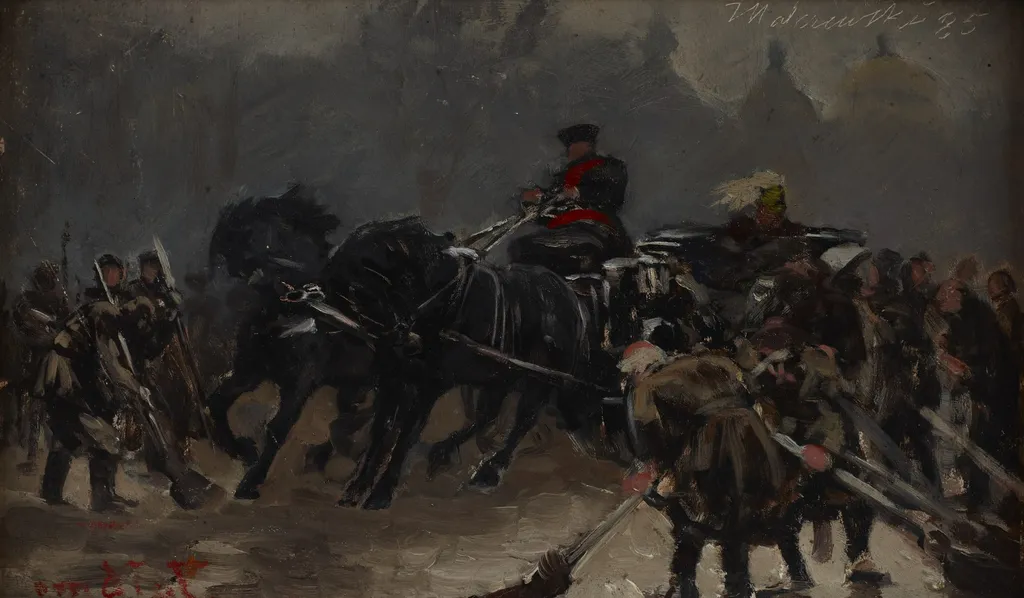
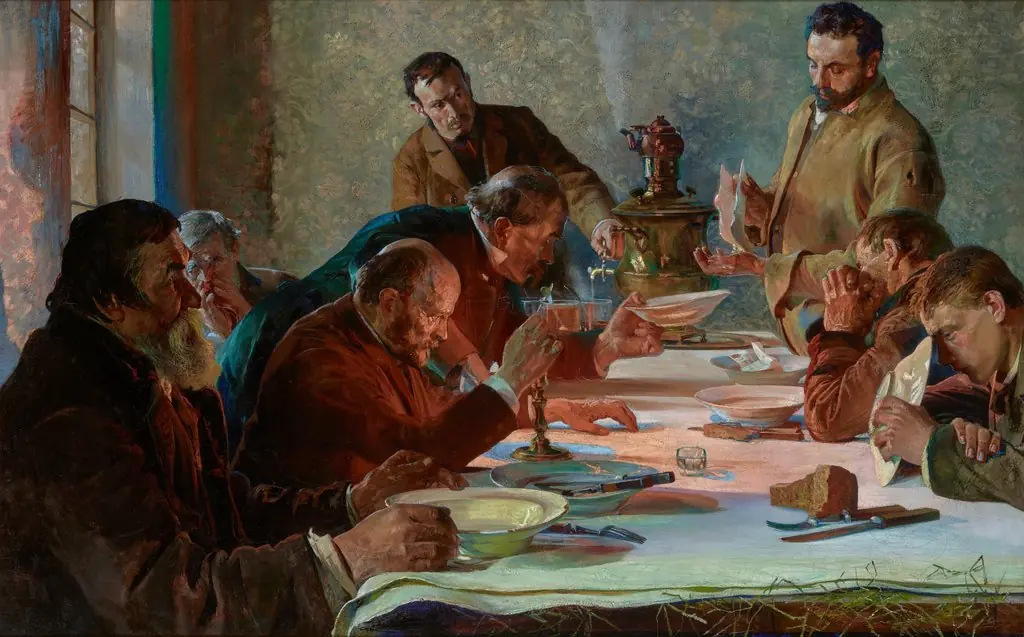
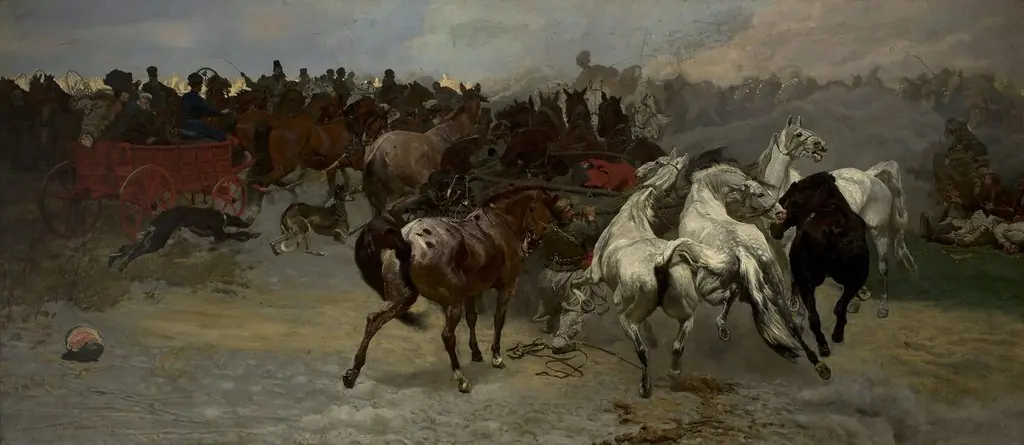
There Comes the Tsar is an oil painting by the Post-Impressionist artist Jacek Malczewski. It dates from 1893 and is held in the collection of the National Museum in Kraków.
About this work
Overview
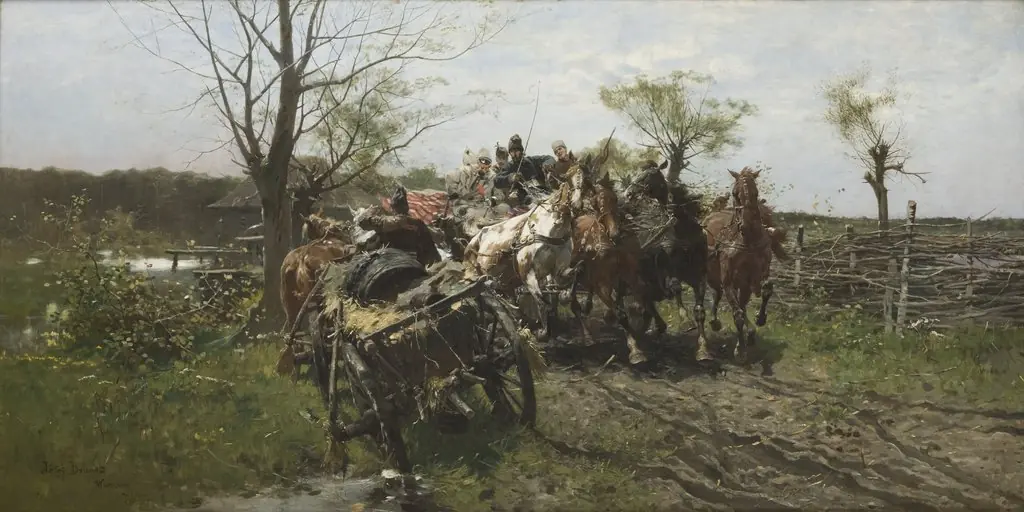
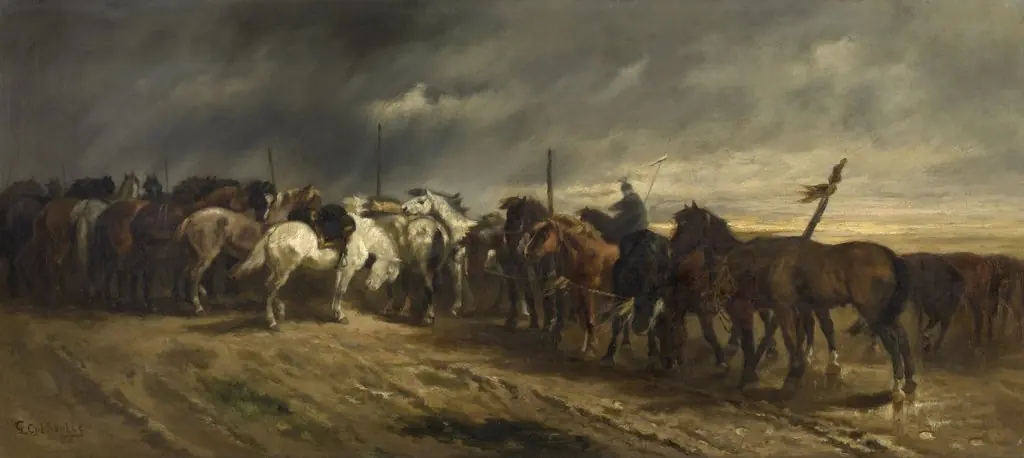
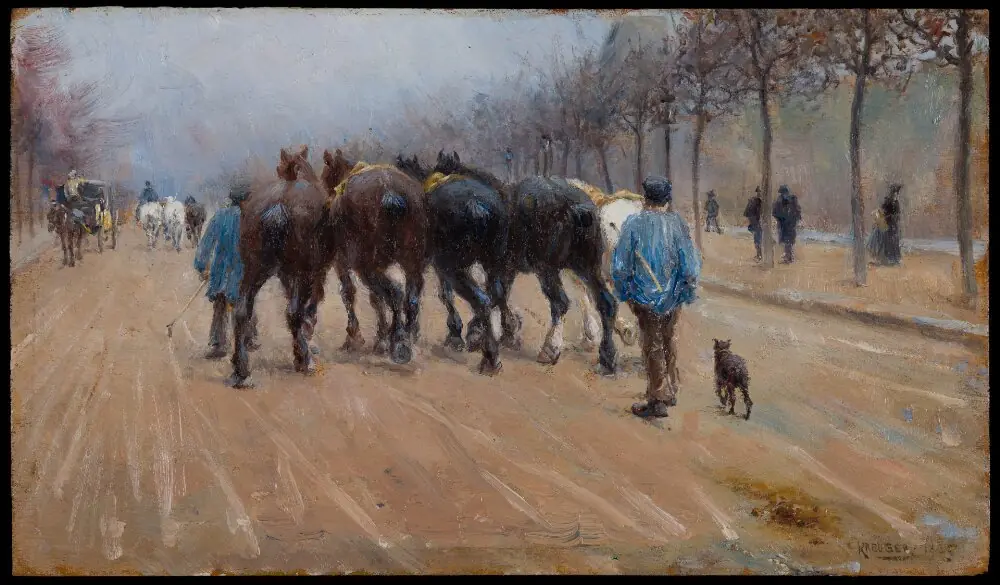
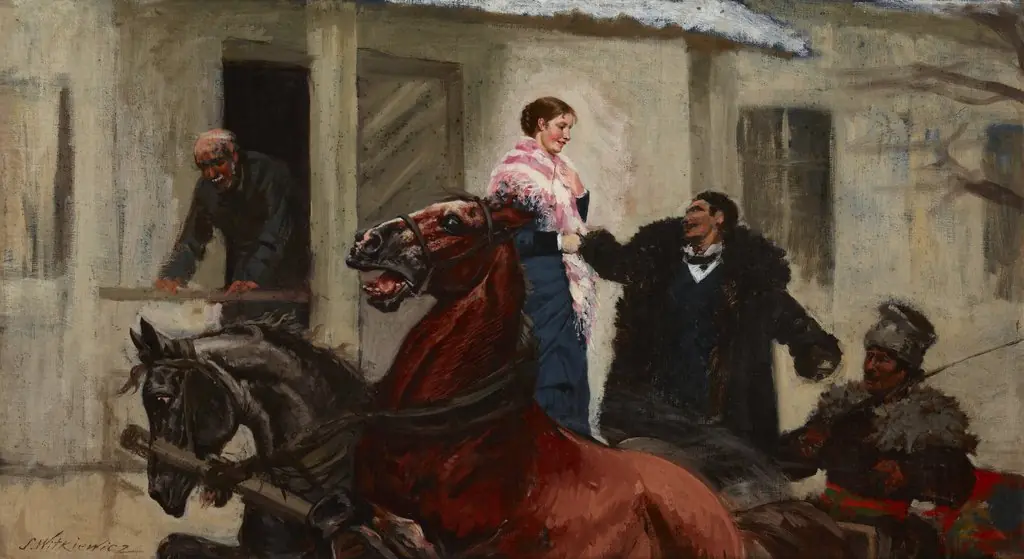
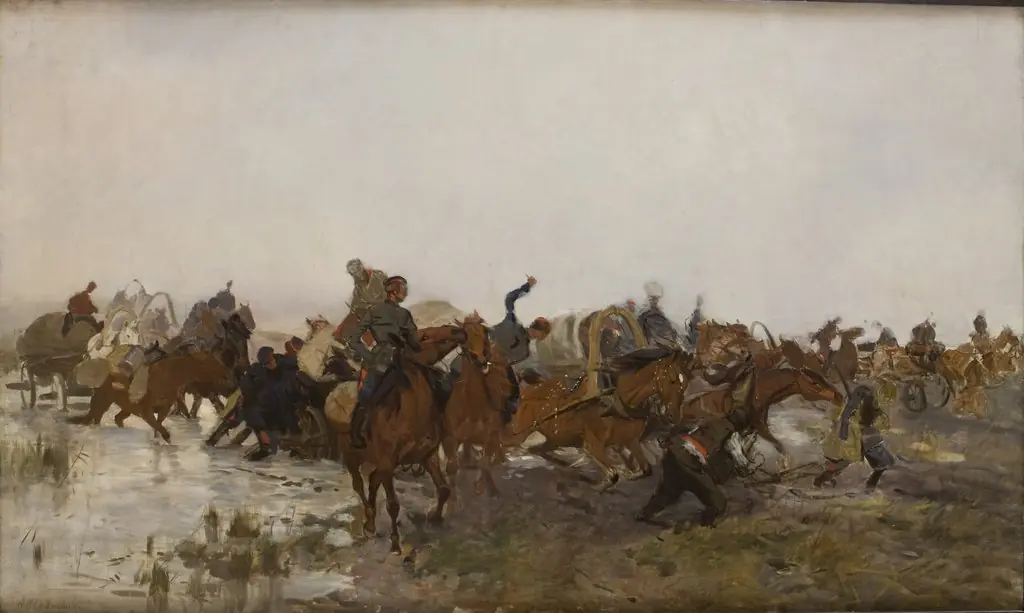
Jacek Malczewski created *There Comes the Tsar* in 1893, employing oil on canvas. The composition shows a black horse‑drawn carriage moving through a muted, gray‑toned landscape, surrounded by a crowd in dark attire. A figure in a black hat and coat occupies the carriage, while another man in a red scarf stands nearby, lending a subtle accent to the otherwise somber palette.
Subject & Meaning
The work portrays a formal procession, likely representing the arrival of a ruler, suggested by the title’s reference to a tsar. The gathered figures, their restrained gestures and the foggy backdrop, convey a mood of solemnity and collective anticipation, aligning with Malczewski’s interest in national and historical narratives.
Technique & Style
Executed in a post‑impressionist manner, the painting employs strong chiaroscuro to model forms and generate depth. Malczewski’s brushwork balances detailed rendering of the carriage and horse with broader, atmospheric treatment of the surrounding crowd and sky, reflecting his synthesis of contemporary European trends with Symbolist sensibilities.
History & Provenance
Painted during the height of the Young Poland movement, *There Comes the Tsar* exemplifies Malczewski’s engagement with Polish myth and history. The piece entered public collections in the early twentieth century, though specific ownership records prior to that remain limited.
Context
At the time of its creation, Poland was partitioned among neighboring empires, and references to a tsar carried political weight. Malczewski’s choice to depict such a figure within a nationalistic visual language reflects the era’s complex cultural negotiations and the artist’s role in articulating Polish identity through allegory.
Artist & collection
Artist
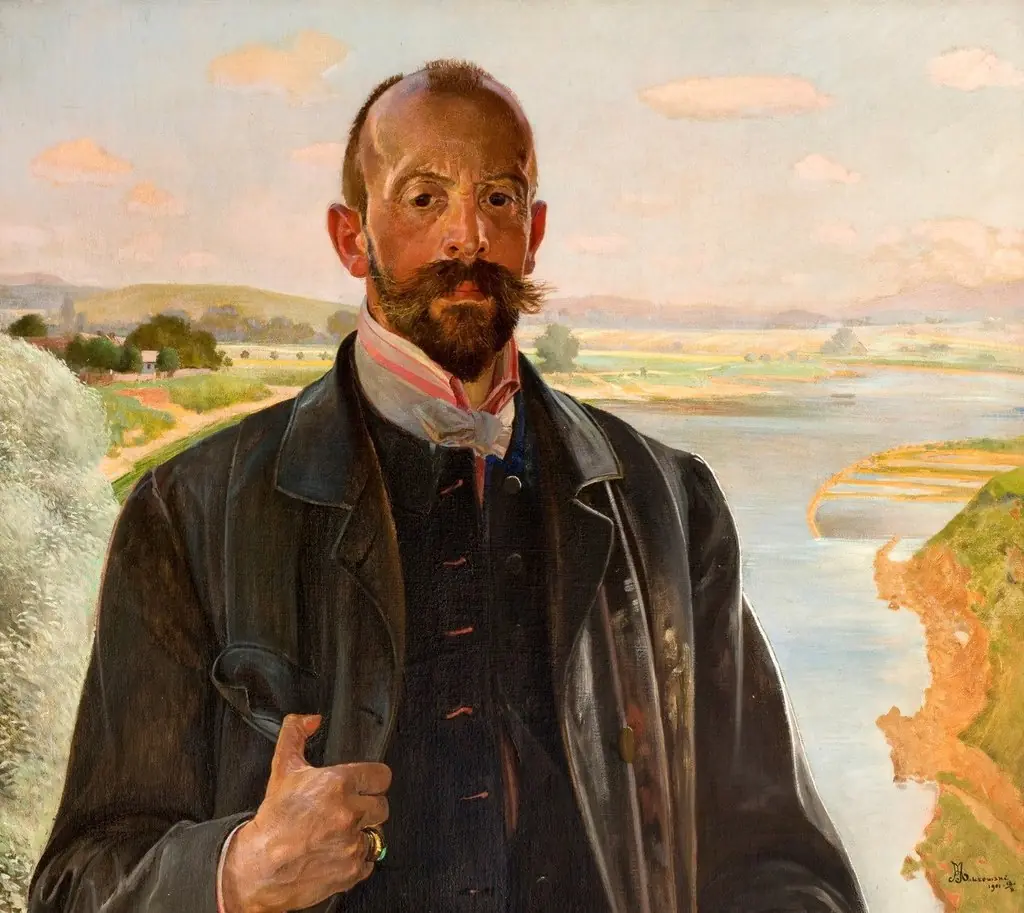
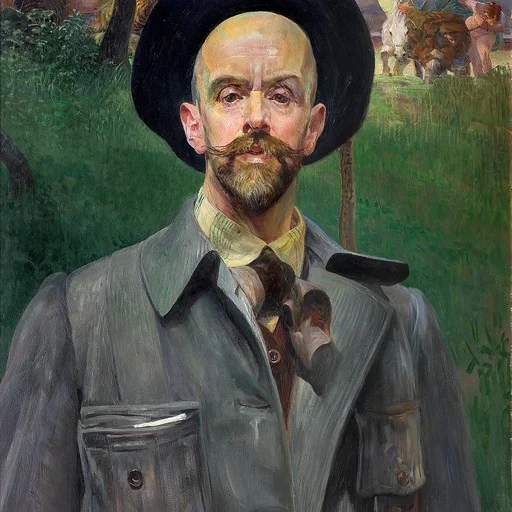
Jacek Malczewski (Polish: ; 15 July 1854 – 8 October 1929) was a Polish symbolist painter who was one of the central figures of the patriotic Young Poland movement.