Artwork
Decommissioned Omnibus Horses on Boulevard d’Enfer, Paris
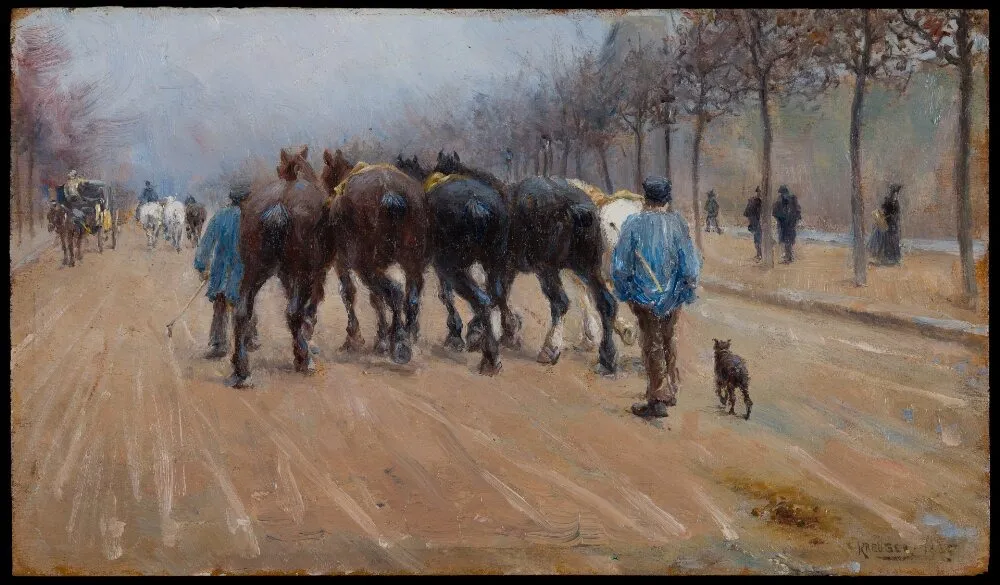
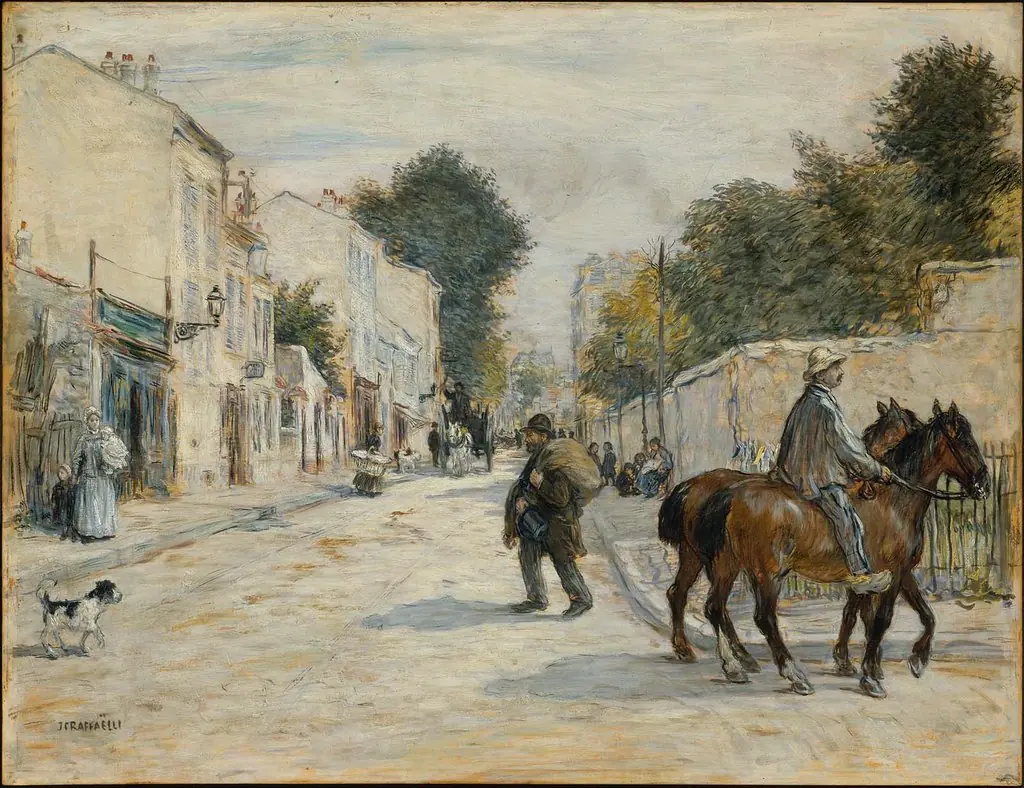
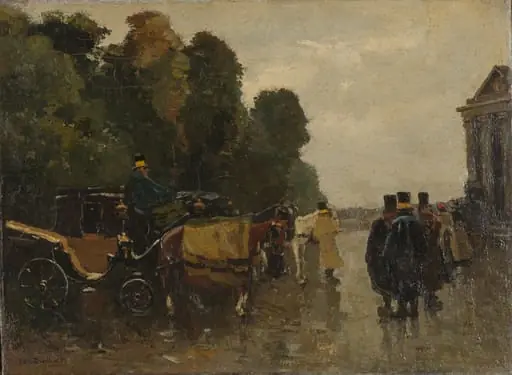
Decommissioned Omnibus Horses on Boulevard d’Enfer, Paris is an unspecified painting by the Post-Impressionist artist Nils Kreuger. It dates from 1893 and is held in the collection of the Nationalmuseum. Painted in 1893 by Swedish artist Nils Edvard Kreuger, this work captures a quiet moment in Parisian urban life.
About this work
Overview
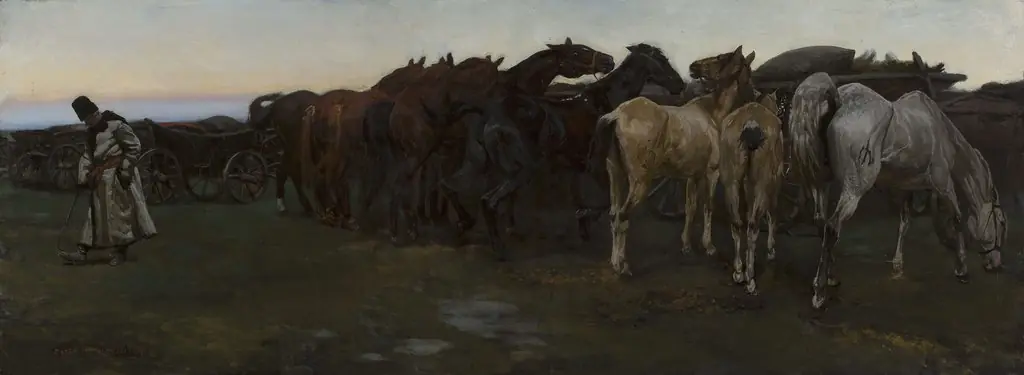
It portrays a line of retired omnibus horses being led along Boulevard d’Enfer, their motion slow and deliberate.
Painted in 1893 by Swedish artist Nils Edvard Kreuger, this work captures a quiet moment in Parisian urban life. It portrays a line of retired omnibus horses being led along Boulevard d’Enfer, their motion slow and deliberate. The scene is rendered with careful attention to atmosphere and everyday detail, reflecting Kreuger’s interest in ordinary subjects beyond the traditional rural themes he often favored.
Subject & Meaning
The painting depicts the transition of working animals in a modernizing city. The horses, no longer used for transport, are led by a handler toward an uncertain destination, perhaps a stable or pasture. A small dog follows behind, adding a subtle note of companionship. The image suggests obsolescence and quiet dignity, observing the overlooked rhythms of urban labor without overt sentimentality.
Technique & Style
Kreuger employs a muted palette of grays, browns, and muted greens to convey the overcast Parisian sky and damp street. Brushwork is precise yet loose enough to suggest texture in fur, fabric, and foliage. The composition is grounded in naturalistic observation, with figures and animals arranged in a shallow, horizontal plane, aligning with post-impressionist tendencies toward structured form and atmospheric tone over dramatic lighting.
History & Provenance
Created during Kreuger’s time in Paris, the painting entered the collection of Sweden’s Nationalmuseum shortly after its completion. It reflects the artist’s engagement with French urban life during a period when Scandinavian painters frequently traveled to Paris to study and exhibit. The work remained in Swedish institutional hands, preserving its connection to Kreuger’s broader oeuvre and national artistic legacy.
Context
In the 1890s, Paris was rapidly modernizing, with horse-drawn omnibuses being phased out in favor of electric trams. Kreuger’s focus on retired horses captures a transitional moment in urban infrastructure. His choice to depict this quiet scene—rather than grand architecture or bustling crowds—aligns with a broader European interest in the marginal and the mundane as subjects worthy of artistic attention.
Legacy
Though not widely exhibited outside Sweden, the painting remains a significant example of Kreuger’s ability to merge Scandinavian realism with French post-impressionist sensibilities. It contributes to the understanding of how Nordic artists interpreted urban change abroad, offering a restrained, empathetic view of industrial transition that contrasts with more celebratory or critical narratives of the era.
Artist & collection
Artist
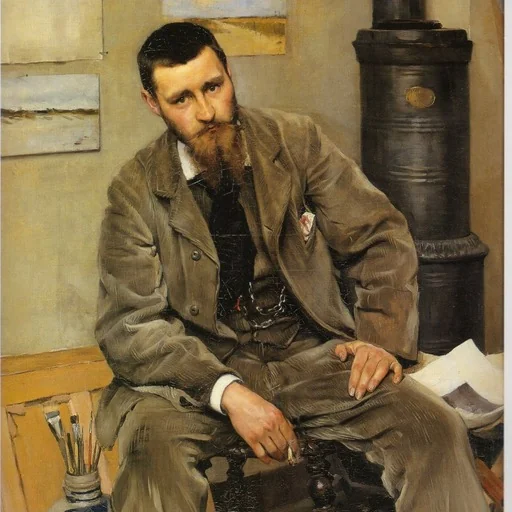
Nils Edvard Kreuger (11 October 1858 – 11 May 1930) was a Swedish painter. He specialized in landscapes and rural scenes.