Artwork
Untitled
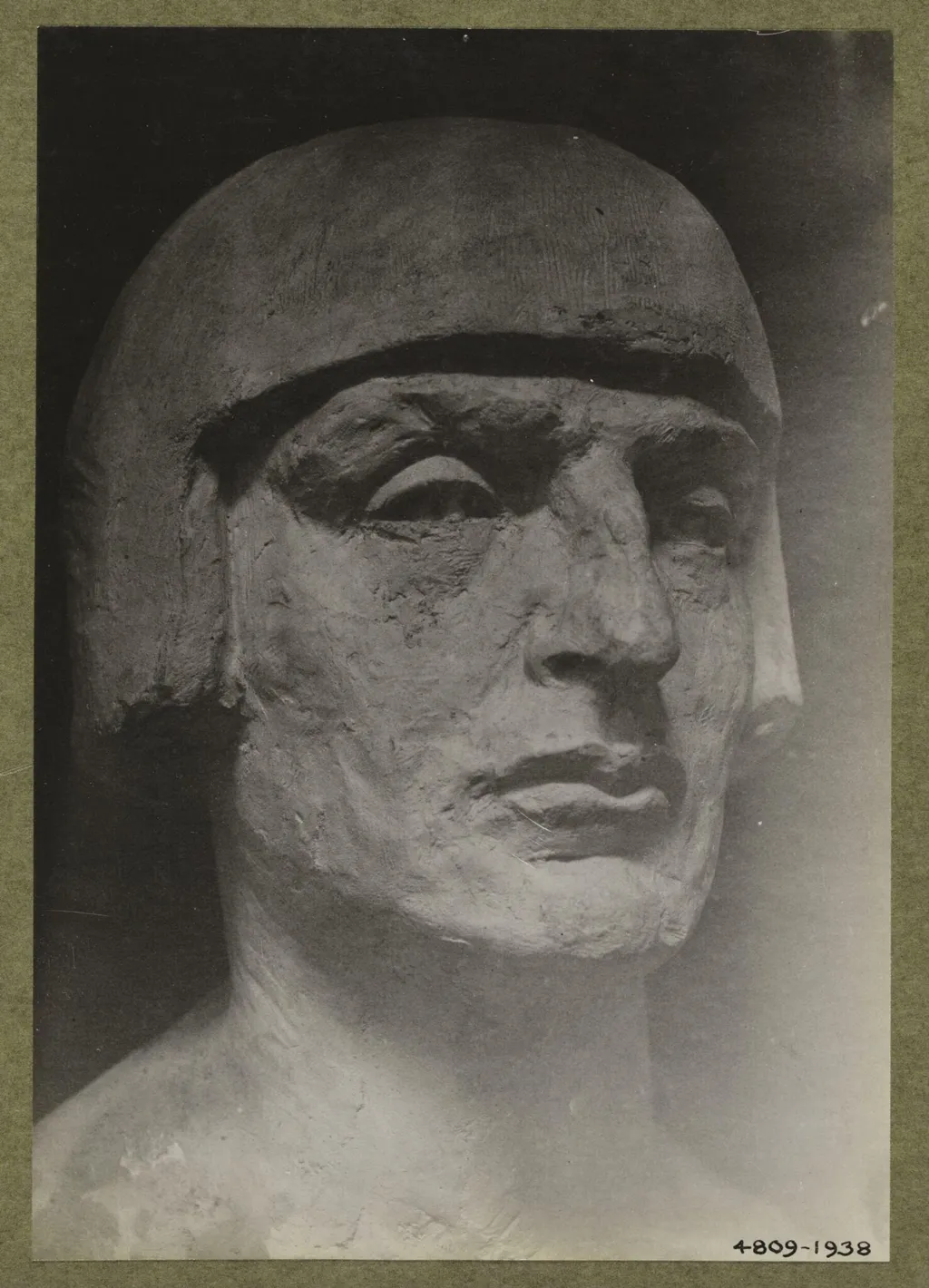
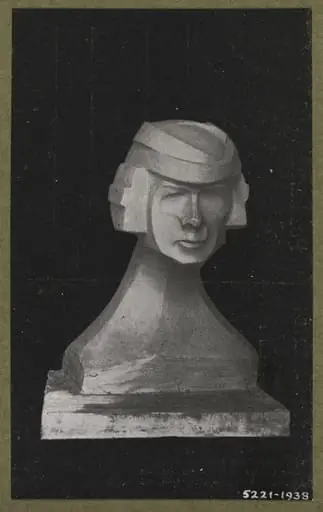
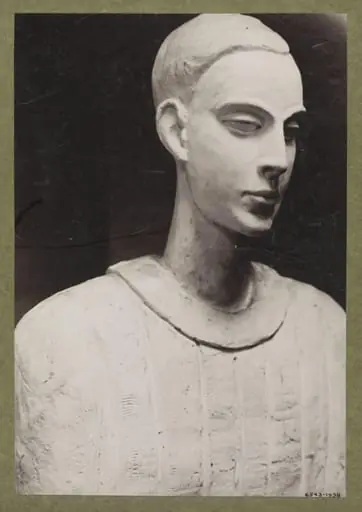
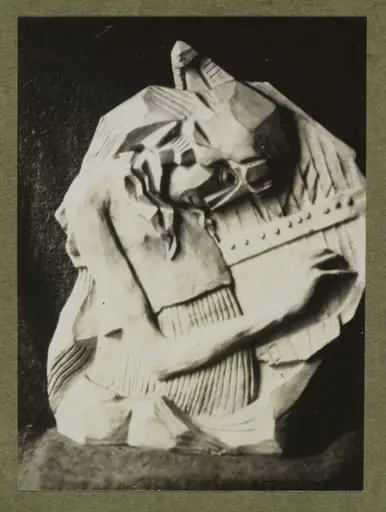
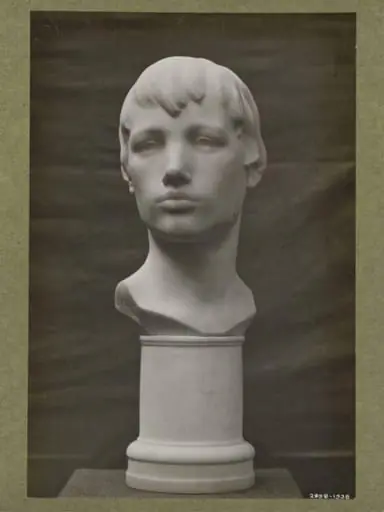
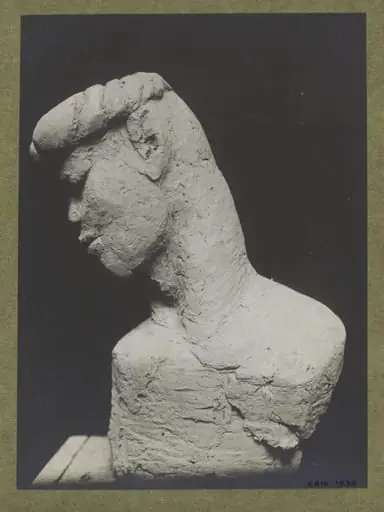
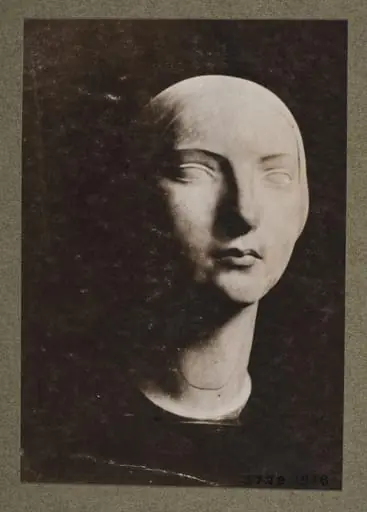
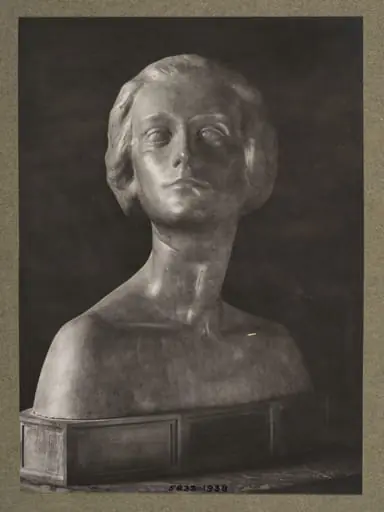
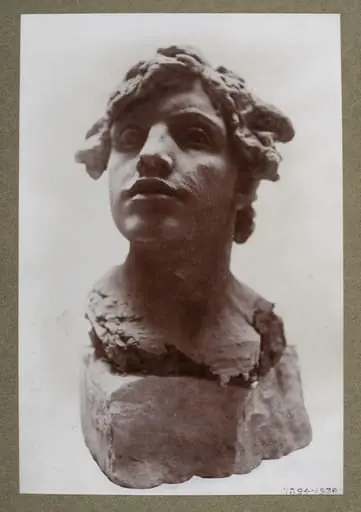
Untitled is a photographic photography by Nena Jackson de Brennecke. It is held in the collection of the Victoria and Albert Museum. This black-and-white photograph, taken by Jackson de Brennecke, captures a sculpted head and shoulders mounted on a green card.
About this work
Overview
This black-and-white photograph, taken by Jackson de Brennecke, captures a sculpted head and shoulders mounted on a green card.
This black-and-white photograph, taken by Jackson de Brennecke, captures a sculpted head and shoulders mounted on a green card. It was included in the Archive of Art and Design, part of a collection bequeathed by William Kineton Parkes in 1938. The image is one of many responses to questionnaires Parkes distributed to sculptors in the 1920s, documenting contemporary practices through direct submissions.
Subject & Meaning
The subject is a stylized human head, partially obscured by a helmet-like covering that encloses the ears, suggesting anonymity or functional disguise. The form avoids ornamentation, emphasizing volume and texture over individual identity. The simplicity of the pose and the absence of context imply an exploration of form rather than narrative, aligning with modernist interests in abstraction and material presence.
Technique & Style
The sculpture appears to be modeled in a coarse, unrefined material—likely clay or plaster—retaining the marks of handwork. The photograph’s dark background isolates the form, enhancing its tactile qualities and three-dimensionality. De Brennecke’s lighting is direct and even, avoiding dramatic shadows, which supports a documentary intent: to record the object clearly for archival purposes.
History & Provenance
The photograph entered the Archive of Art and Design through William Kineton Parkes, a novelist and art historian who systematically collected sculptural responses from artists in the 1920s. His initiative aimed to preserve contemporary sculptural practices. The work was bequeathed to the archive in 1938, where it remains as part of a broader effort to document artistic production outside institutional channels.
Context
In the 1920s, British sculptors were experimenting with direct carving and expressive materials, often rejecting academic conventions. Kineton Parkes’s questionnaire project captured this shift, gathering works from both established and lesser-known artists. This photograph reflects a moment when documentation itself became a form of art historical inquiry, valuing process and material over fame or exhibition history.
Legacy
The photograph endures as a record of a grassroots effort to map sculptural practice beyond traditional exhibitions. It exemplifies how archival collecting can preserve marginal or ephemeral works, offering insight into the diversity of mid-century British sculpture. Its value lies not in the artist’s renown but in its role as a witness to a broader, inclusive documentation project.
Artist & collection
Artist