Artwork
Untitled
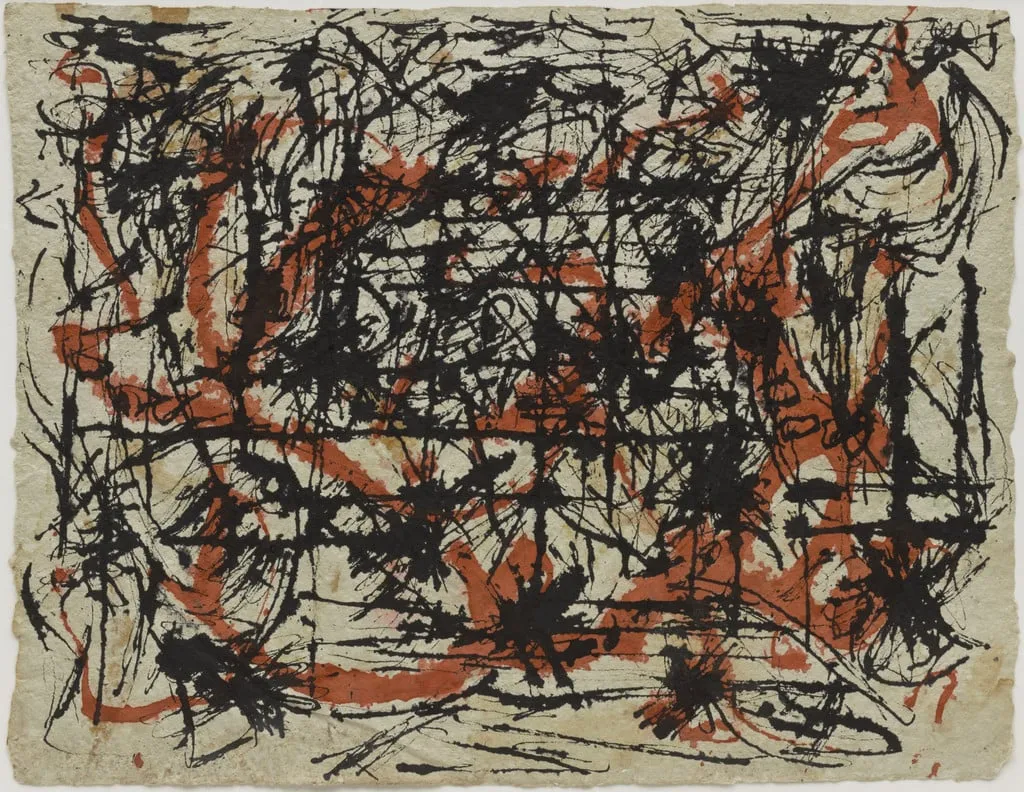
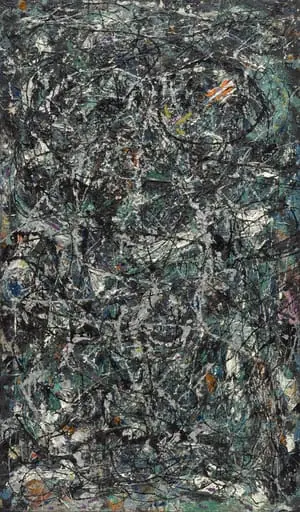
Untitled is an oil drawing by Jackson Pollock. It dates from 1954 and is held in the collection of the Museum of Modern Art.
About this work
Overview
Created in 1954, this work is a two-sided drawing by Jackson Pollock, featuring ink and colored ink on the front and oil with gouache on the reverse.
Created in 1954, this work is a two-sided drawing by Jackson Pollock, featuring ink and colored ink on the front and oil with gouache on the reverse. Unlike his large canvases, this piece is intimate in scale, yet retains the energetic mark-making characteristic of his practice. The use of paper as support and the presence of paint on both sides reflect Pollock’s interest in material experimentation and the physicality of the artistic process.
Subject & Meaning
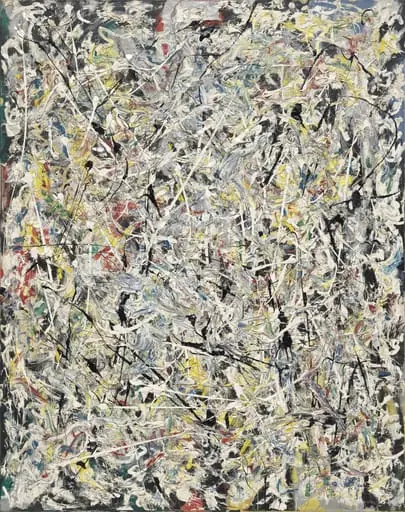
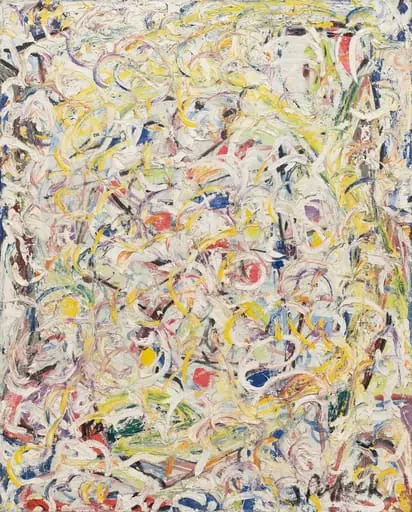
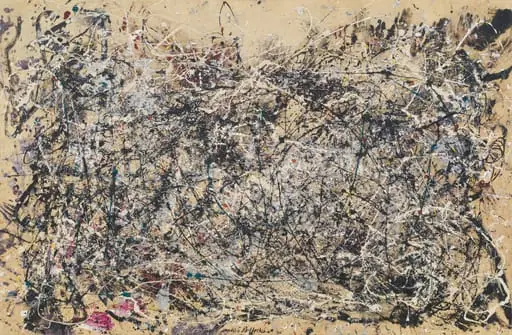
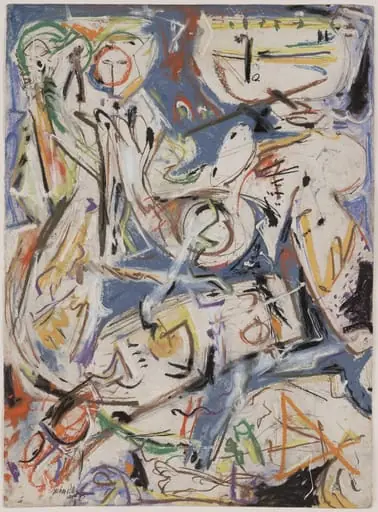
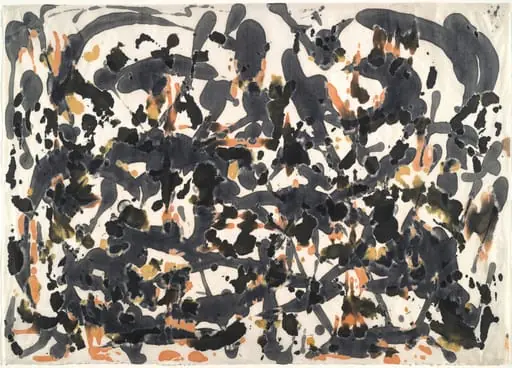
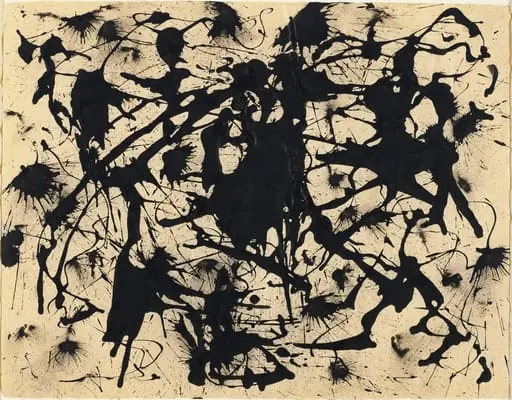
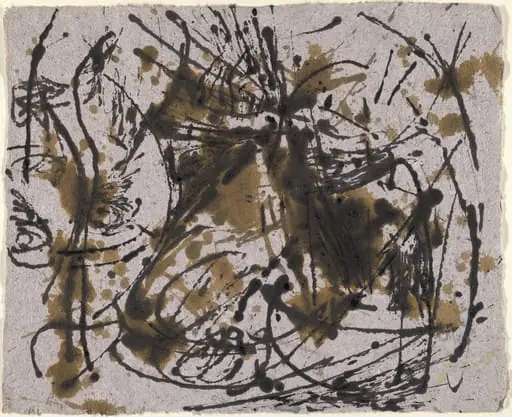
The work lacks representational forms, instead presenting a dense network of drips, splatters, and gestural lines. These marks do not depict a scene or object but convey movement and rhythm. The absence of a central focus invites the viewer to experience the piece as a record of bodily motion and spontaneous gesture, aligning with Pollock’s broader aim to externalize inner states through direct physical engagement with materials.
Technique & Style
Pollock applied ink by pouring, flicking, and dripping it onto the paper laid flat on the floor. The varying thickness of lines—some bold and saturated, others faint and wispy—suggests changes in pressure, speed, and paint consistency. The rough texture of the paper interacts with the fluid medium, enhancing the sense of unpredictability. The inclusion of oil and gouache on the reverse further underscores his willingness to blur boundaries between media and support.
History & Provenance
This work emerged during a period when Pollock was refining his approach to abstraction after his most famous drip paintings of the late 1940s. Though less publicly documented than his large-scale works, this piece is part of a broader body of paper-based studies from the early 1950s. Its two-sided composition suggests it was not intended as a finished display object but as a private exploration of form and material.
Context
In the mid-1950s, Pollock was navigating personal and artistic challenges, including declining public attention and increasing isolation. His works from this time often exhibit a more restrained yet complex layering of marks. This drawing reflects a shift from the expansive energy of earlier drip paintings toward a denser, more introspective language, consistent with broader trends in postwar American art seeking depth over spectacle.
Legacy
This piece exemplifies Pollock’s enduring influence on the perception of drawing as a site of radical experimentation. By treating paper as a field for action rather than a surface for depiction, he expanded the possibilities of graphic media. Its two-sided nature also challenges traditional notions of finished artworks, influencing later artists who embraced process, materiality, and the unseen aspects of creation.
Artist & collection

Artist
Paul Jackson Pollock (; January 28, 1912 – August 11, 1956) was an American painter.