Artwork
Untitled
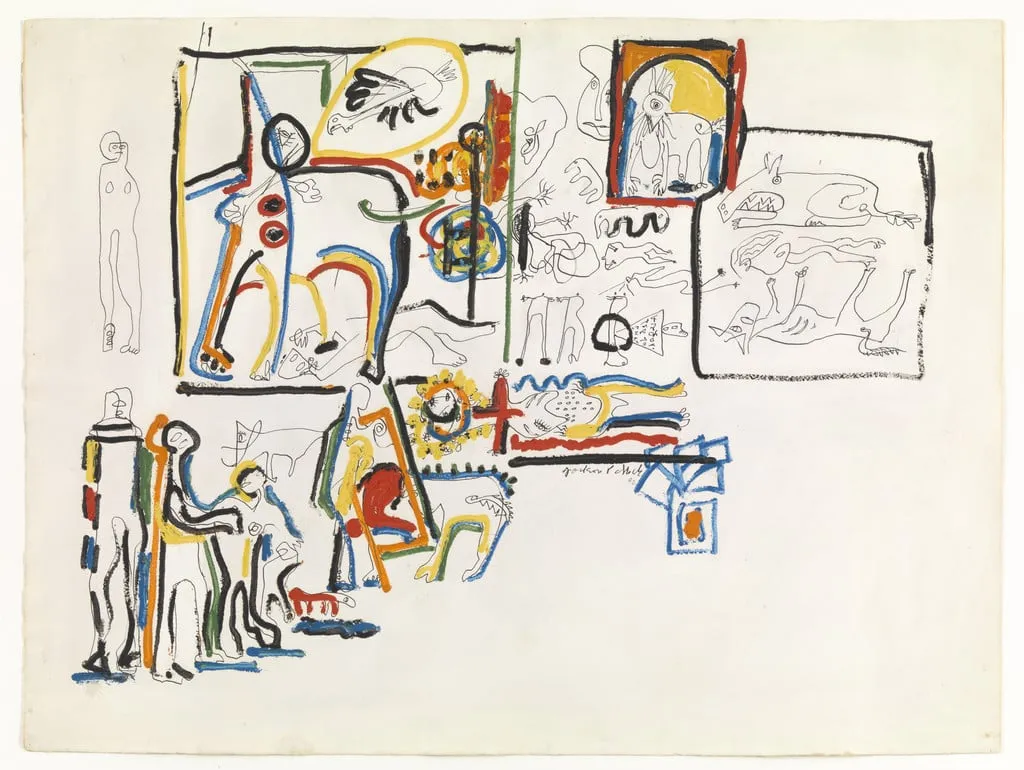
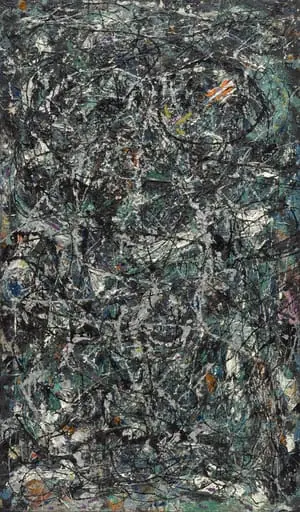
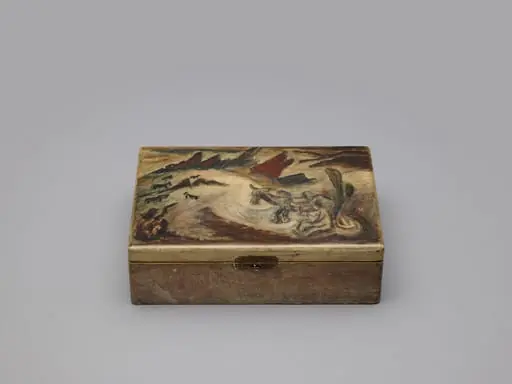
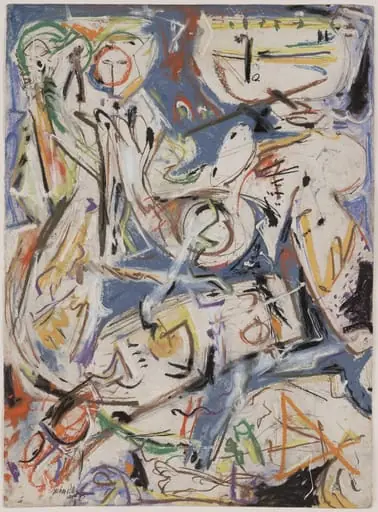
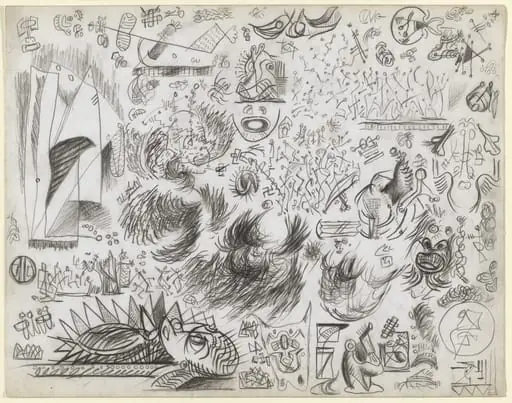
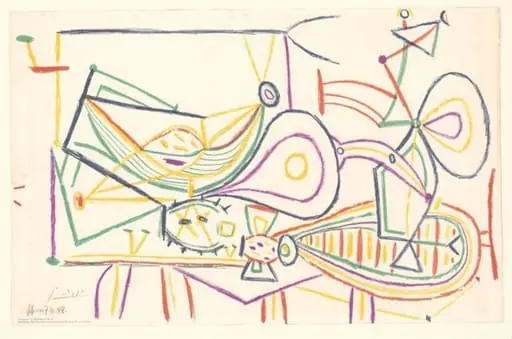
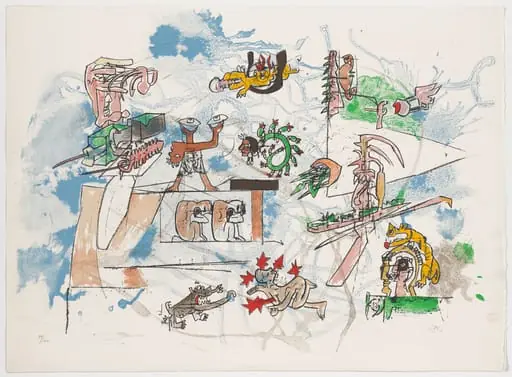
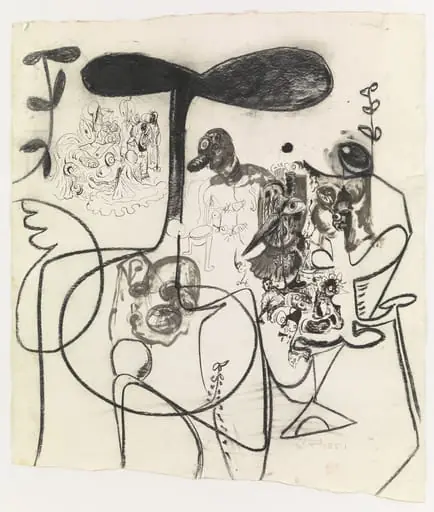
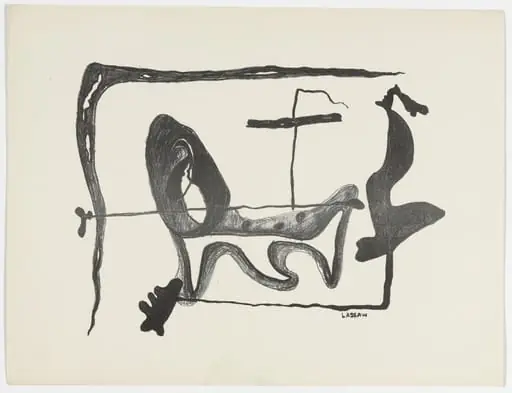
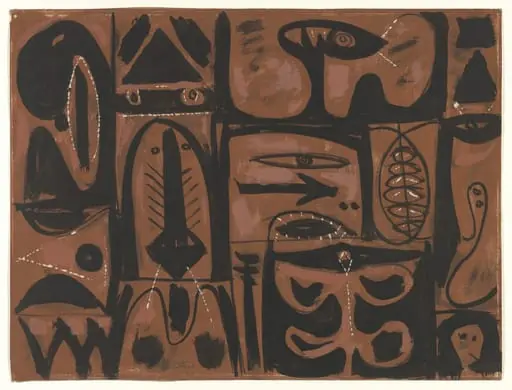
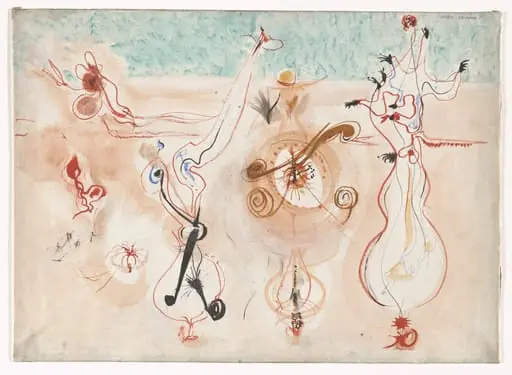
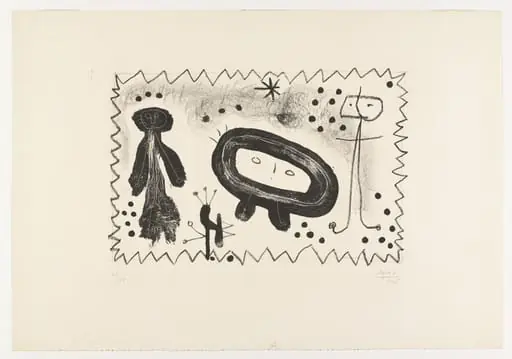
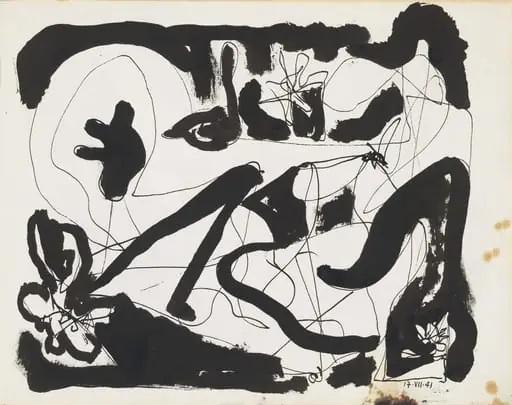
Untitled is a gouache drawing by Jackson Pollock. It dates from 1942 and is held in the collection of the Museum of Modern Art.
About this work
Overview
It belongs to a formative phase in his career, preceding his fully developed drip paintings.
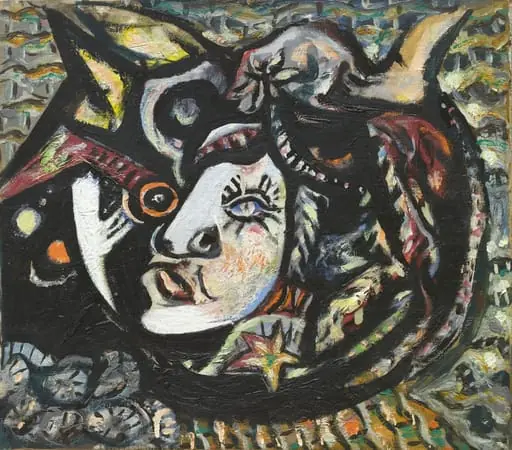
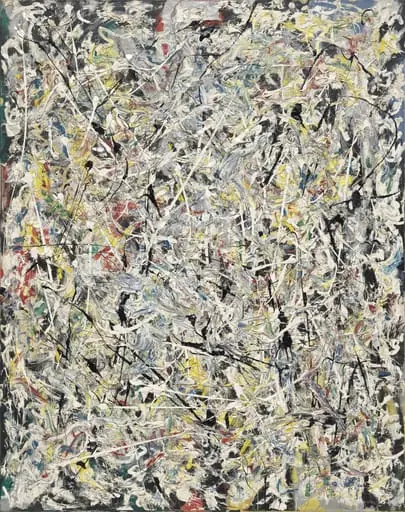
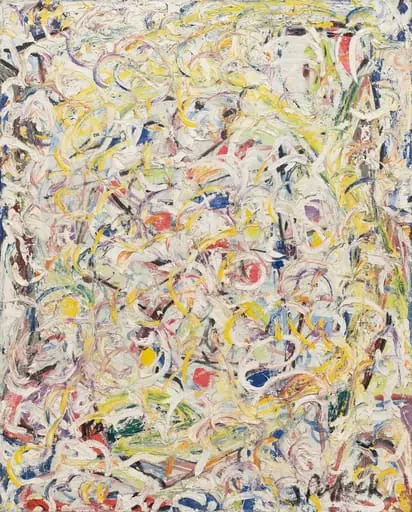
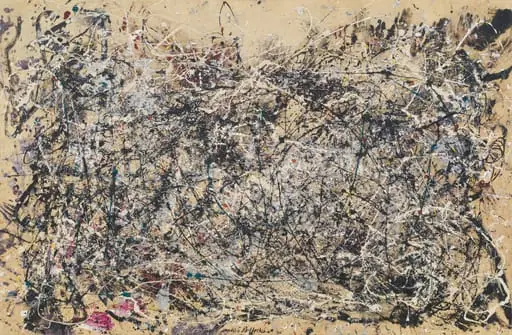
Created in 1942, this drawing by Jackson Pollock is executed in gouache and ink on paper. It belongs to a formative phase in his career, preceding his fully developed drip paintings. The work reveals an active engagement with symbolic imagery and gestural mark-making, bridging surrealist influences with emerging abstract expressionist concerns. Its scale and medium reflect an intimate, experimental approach to composition.
Subject & Meaning
The composition includes simplified, almost primal figures suggesting humans and animals, rendered with minimal lines. These forms coexist with non-representational swirls and splatters, creating a tension between figuration and abstraction. The imagery evokes mythic or subconscious themes, consistent with Pollock’s interest in Jungian symbolism and primitive art. The work resists clear narrative, instead inviting intuitive interpretation.
Technique & Style
Pollock applied gouache and ink with fluid, energetic strokes, allowing the materials to bleed and pool on the paper’s surface. Lines vary from deliberate contours to spontaneous drips, revealing a physical engagement with the medium. The use of bold primary colors—red, blue, yellow, green—contrasts against the unmodulated white ground, heightening the sense of movement and immediacy in each mark.
History & Provenance
This piece dates from a transitional period in Pollock’s career, when he was exploring personal iconography under the influence of Surrealism and Native American art. It was likely made in New York during his early association with the Art Students League and the Surrealist circle. The work remained in private hands until acquired by a major institution, where it now serves as a key example of his pre-drip experimentation.
Context
In the early 1940s, American artists were redefining painting beyond European traditions. Pollock’s work responded to wartime anxieties and a growing interest in the unconscious. His use of symbolic figures aligned with contemporaries like Rothko and Gottlieb, while his physical approach to mark-making foreshadowed the action painting ethos that would define his later work.
Legacy
Though less known than his drip paintings, this drawing illustrates the foundational elements of Pollock’s mature style: bodily movement, material spontaneity, and the fusion of figuration with abstraction. It demonstrates how his early explorations on paper directly informed the scale and energy of his subsequent canvases, anchoring his legacy in a broader evolution of modern American art.
Artist & collection

Artist
Paul Jackson Pollock (; January 28, 1912 – August 11, 1956) was an American painter.