Artwork
Interior of a Catholic Church
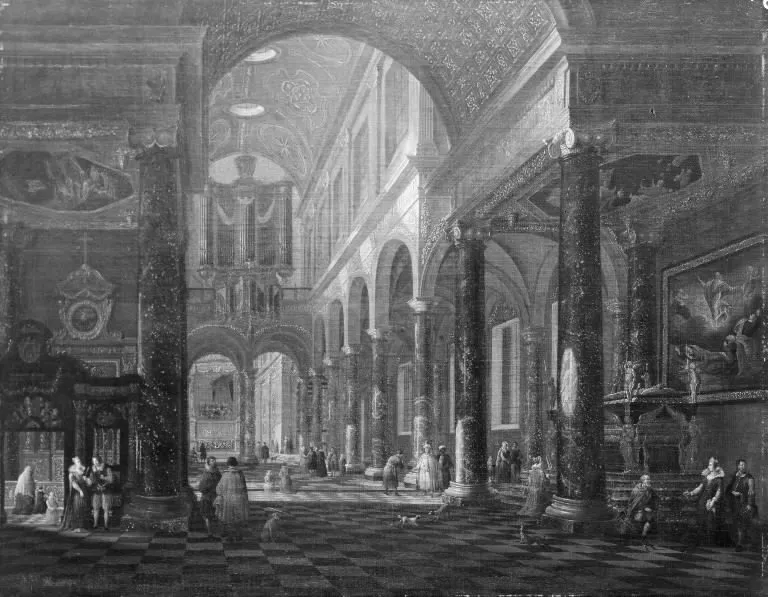
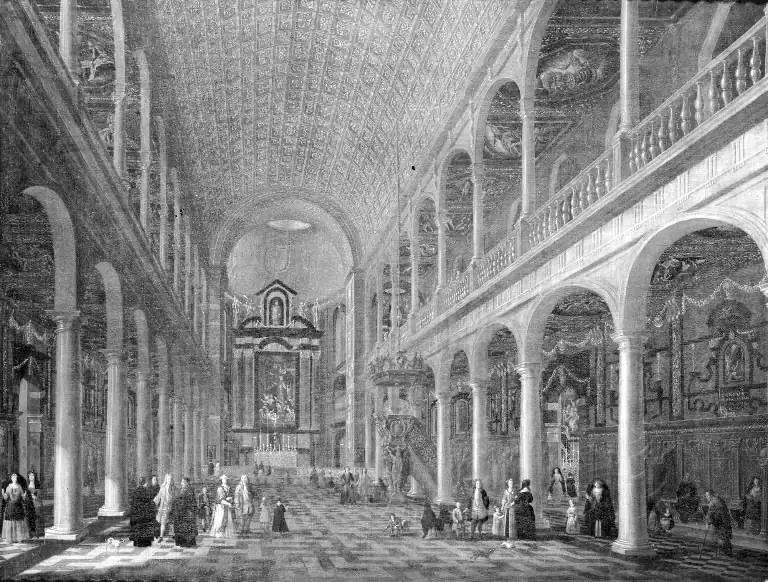
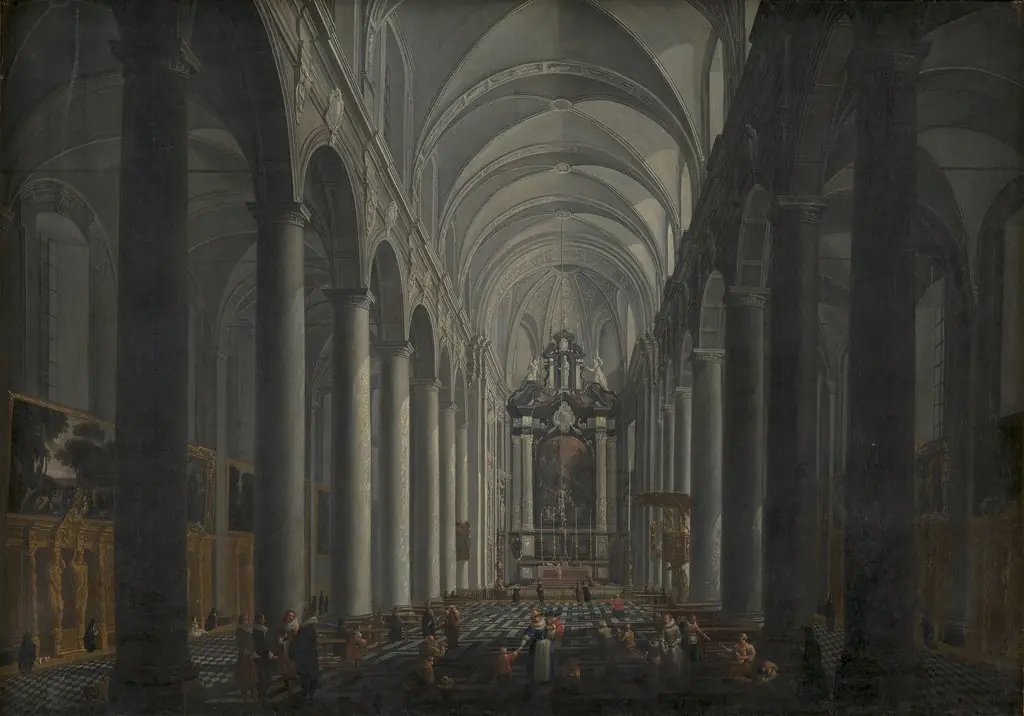
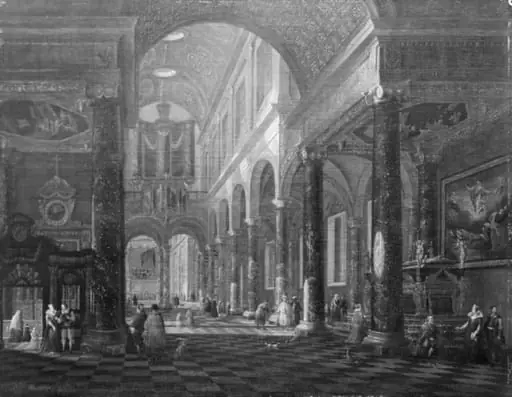
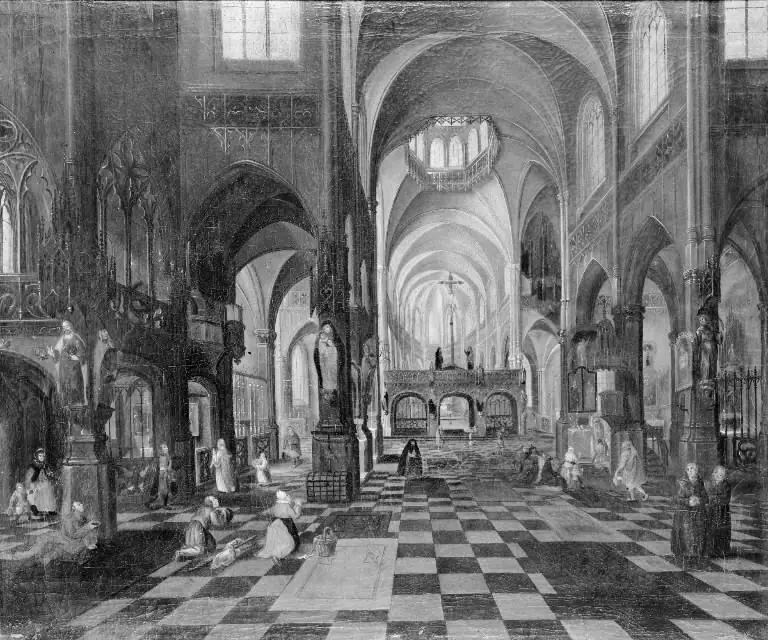
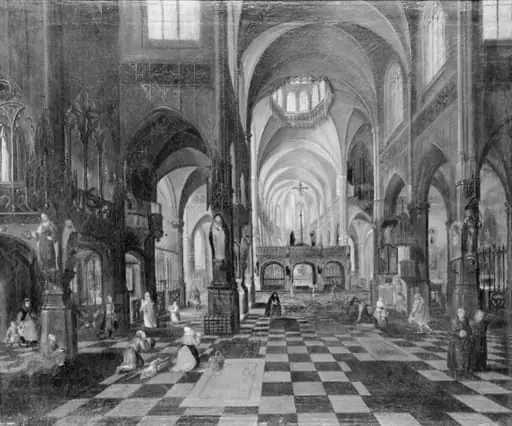
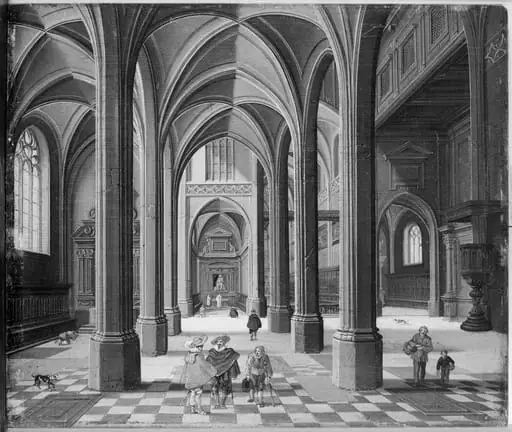
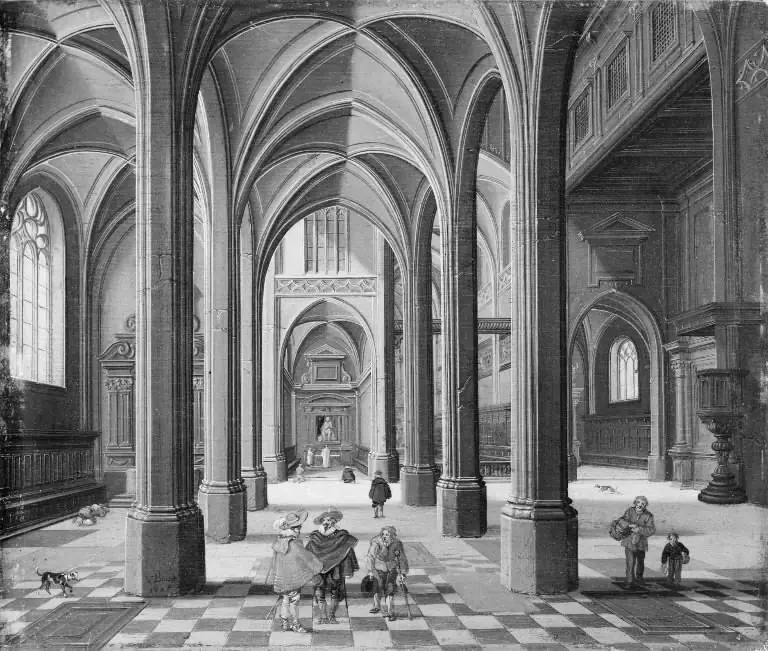
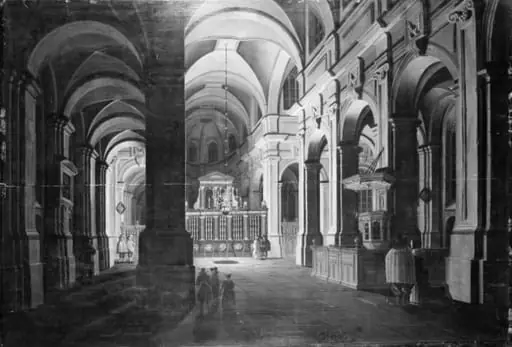
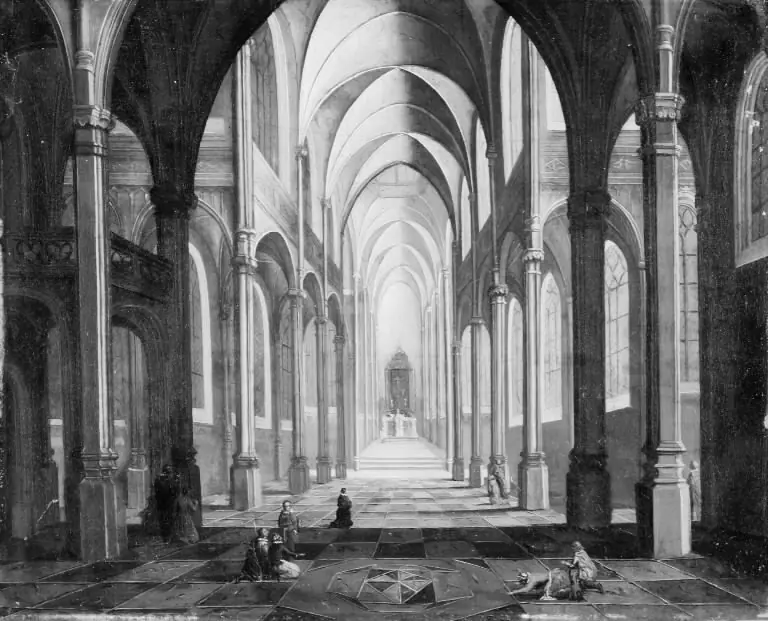
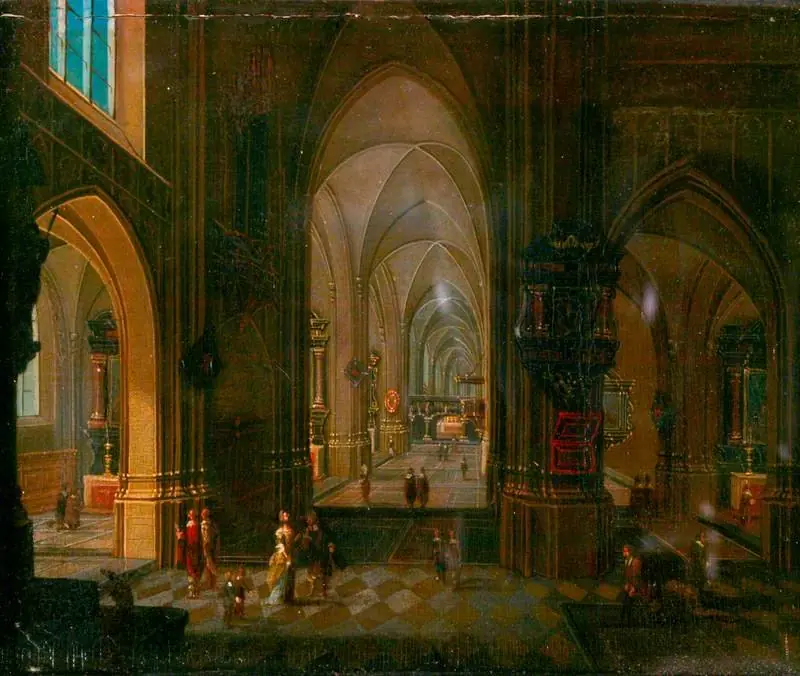
Interior of a Catholic Church is an oil painting by Jacob Balthasar Peeters. It dates from 1714 and is held in the collection of the Statens Museum for Kunst.
About this work
Overview
Jacob Balthasar Peeters, a Flemish artist active in the late 1600s and early 1700s, created this oil painting in 1714 as a detailed depiction of a Catholic church interior. His work merges observed architectural elements with carefully arranged human figures, creating a scene that feels both authentic and composed. The painting is part of the collection at Statens Museum for Kunst in Copenhagen.
Subject & Meaning
The painting portrays a bustling church interior populated by individuals engaged in quiet, varied activities—some gazing at artworks, others standing in contemplation. The figures are not devotional in a specific ritual sense but instead suggest the everyday presence of worshippers and visitors. This conveys a sense of lived religious space rather than ceremonial solemnity.
Technique & Style
Peeters employed precise linear perspective and controlled chiaroscuro to enhance spatial depth. Light enters from the apse, casting strong contrasts that define the vaulted ceiling and columns while subtly modeling the figures. His brushwork is meticulous in rendering stone, fabric, and decorative moldings, balancing architectural accuracy with a theatrical arrangement of people.
History & Provenance
Completed in 1714, the painting reflects Peeters’s established reputation for architectural interiors. It entered the Danish national collection at Statens Museum for Kunst in the 19th century, likely through acquisition or donation. No significant alterations or restorations are documented, preserving its original composition and tonal harmony.
Context
In early 18th-century Flanders, church interiors were popular subjects among artists, often commissioned to celebrate ecclesiastical grandeur. Peeters’s approach diverged from purely devotional imagery, instead focusing on the architectural setting as a stage for human presence. His work aligns with a broader Northern European interest in spatial realism and social observation.
Legacy
Peeters’s paintings contributed to the tradition of architectural vedute in Northern Europe, influencing later artists who sought to capture sacred spaces with both accuracy and narrative nuance. While not widely known today, his works remain valued for their technical discipline and quiet documentation of religious life in the Baroque era.
Artist & collection
Artist
Jacob Balthasar Peeters, also known as Jacob Peeters or Jacobus Peeters (1660-61 – after 1721) was a Flemish painter who specialized in architectural paintings depicting imaginary Renaissance and Baroque palaces…