Artwork
Henri IV (1553-1610), King of France
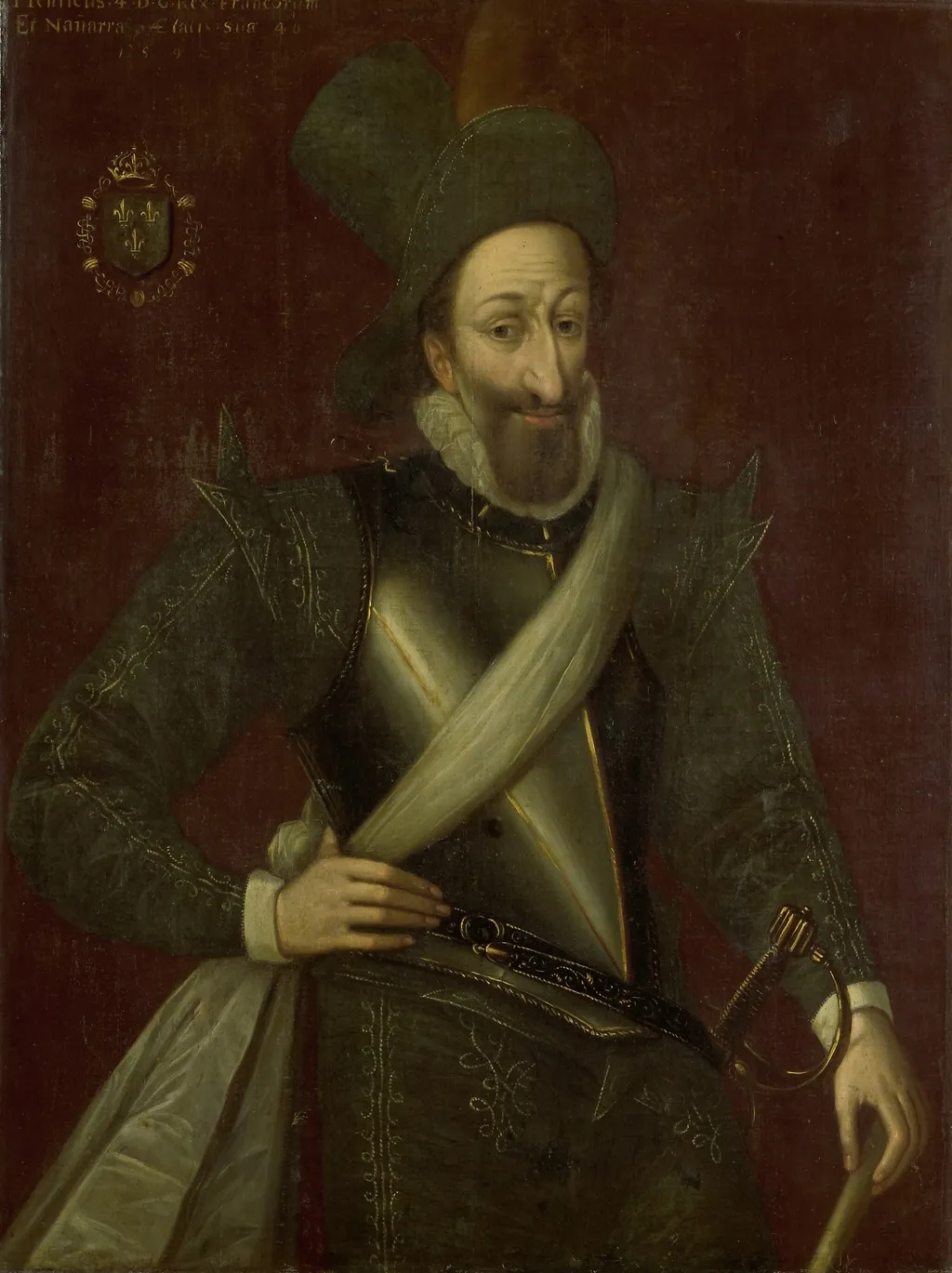
Henri IV (1553-1610), King of France is an oil painting by the Early Baroque Italian artist Jacob Bunel. It dates from 1596 and is held in the collection of the Rijksmuseum.
About this work
Overview
Jacob Bunel’s 1596 oil portrait presents Henry IV of France seated in elaborate attire, his hand resting on a cane and clutching a pair of small keys. A dark fur hat, ruffed collar, and gold‑trimmed doublet frame his bearded face, while a coat of arms occupies the upper left corner. The work resides in the Rijksmuseum’s collection.
Subject & Meaning
The painting depicts the reigning French monarch, emphasizing his authority through symbolic objects: the keys suggest custodial power, and the coat of arms identifies his royal lineage. Bunel’s portrayal balances regal dignity with a personal, approachable presence, reflecting the political need to project both strength and accessibility during Henry IV’s early reign.
Technique & Style
Bunel employs a pronounced chiaroscuro, contrasting deep shadows with bright highlights to model the fabrics and facial features in three dimensions. This handling of light and dark aligns the portrait with early Baroque tendencies, borrowing from Italian practices while retaining the decorative sensibilities of the Second School of Fontainebleau.
History & Provenance
Created in 1596, the portrait was likely intended for a courtly setting or diplomatic exchange. Over the centuries it entered the Dutch national collection, ultimately becoming part of the Rijksmuseum’s holdings, where it is displayed as an example of Franco‑Italian artistic exchange at the turn of the seventeenth century.
Own this work as a print
Artist & collection
Artist
Jacob Bunel (c.1558, Blois – 14 October 1614, Paris) was a French painter, associated with the Second School of Fontainebleau.