Artwork
Landscape with a Fowling Party
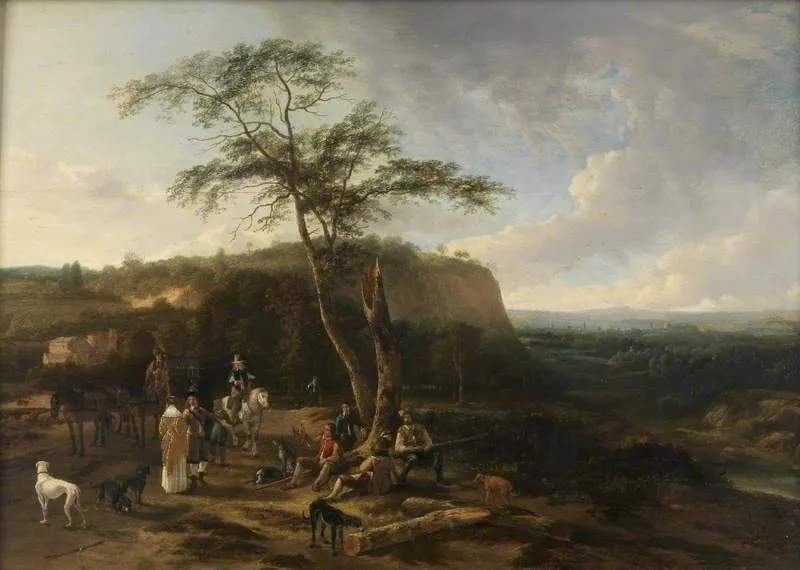
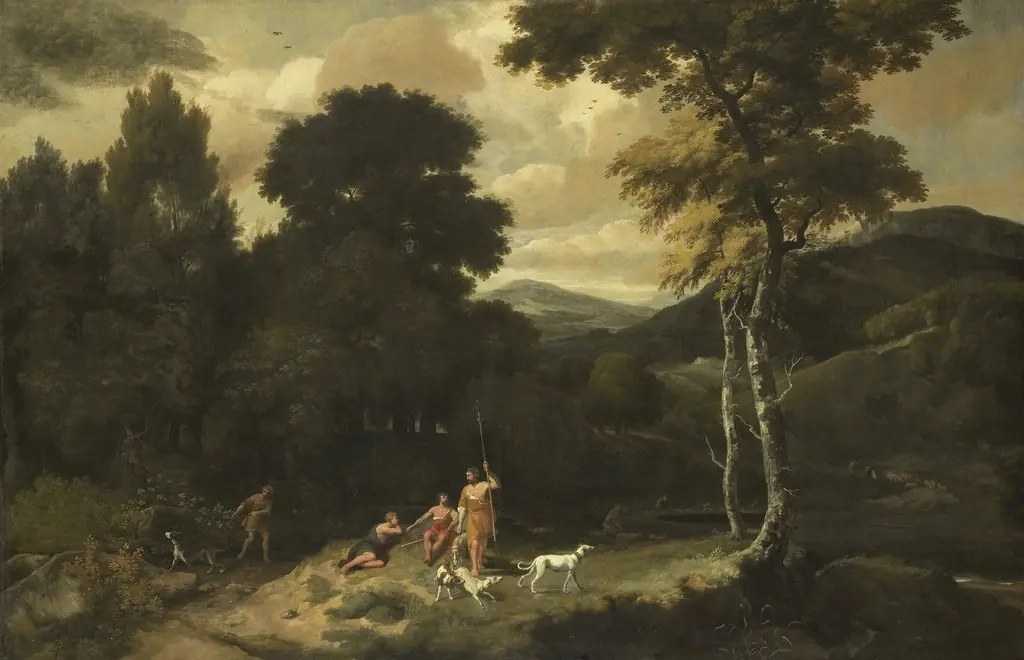
Landscape with a Fowling Party is an oil painting by the Dutch Golden Age artist Jacob Esselens. It dates from 1660 and is held in the collection of the Kelvingrove Art Gallery and Museum.
About this work
Overview
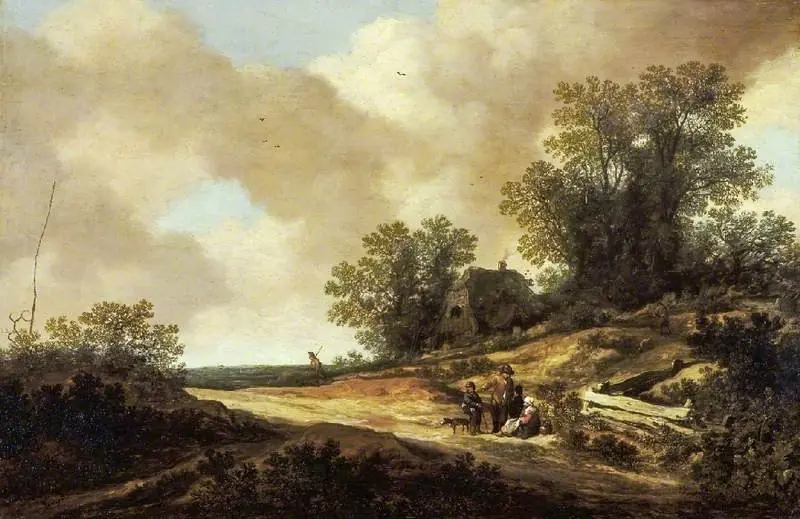
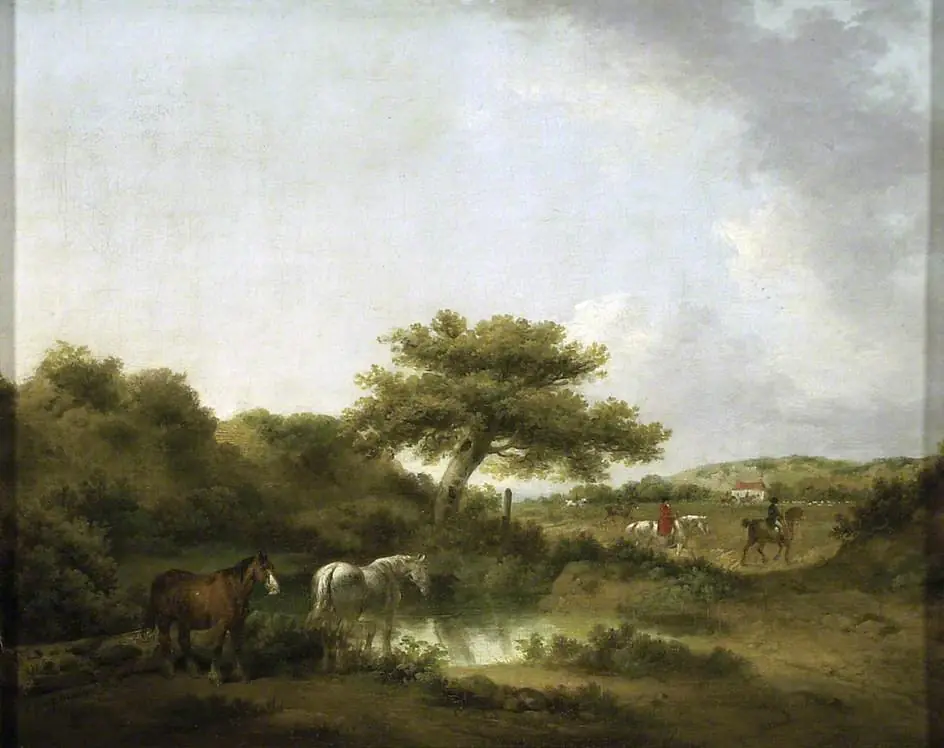
It depicts a rural scene in which a group of individuals engages in the activity of bird hunting, set against a quiet, rolling countryside.
Painted in 1660, Landscape with a Fowling Party is an oil-on-canvas work by Dutch artist Jacob Esselens. It depicts a rural scene in which a group of individuals engages in the activity of bird hunting, set against a quiet, rolling countryside. The painting is part of the collection at the Kelvingrove Art Gallery and Museum in Glasgow, where it remains a quiet example of 17th-century Dutch landscape tradition.
Subject & Meaning
The scene portrays a leisurely fowling expedition, a common pastime among Dutch landowners during the 17th century. Figures in period attire, accompanied by dogs, are arranged across the foreground—some seated, others standing or mounted. The activity is rendered without urgency, suggesting a contemplative rhythm to rural life. The composition emphasizes harmony between people and nature, reflecting a cultural appreciation for quiet outdoor pursuits.
Technique & Style
Esselens employs a restrained palette of earth tones—olive greens, muted browns, and soft grays—to render the landscape. Brushwork is subtle, with gentle transitions between land, sky, and figures. The background hill and clouded horizon are rendered with soft focus, enhancing the sense of depth without dramatic contrast. The figures are small in scale relative to the environment, aligning with the Dutch tradition of subordinating human presence to the natural world.
History & Provenance
The painting entered the Kelvingrove collection in the early 20th century, though its earlier ownership history remains undocumented. It is one of a limited number of known works by Esselens, a lesser-documented artist active in the Dutch Republic during the mid-1600s. Its survival and preservation reflect its status as a representative example of regional landscape painting rather than a widely celebrated work of its time.
Context
During the 1660s, Dutch landscape painting flourished as a genre independent of religious or mythological themes. Artists like Esselens captured everyday rural life, often emphasizing tranquility over narrative drama. Fowling scenes were popular among patrons who valued the depiction of controlled, harmonious interaction with nature—reflecting broader societal ideals of order and moderation in post-Reformation Holland.
Legacy
Jacob Esselens’s work contributes to the broader understanding of Dutch landscape painting beyond the most famous contemporaries. While not widely exhibited or studied, this painting offers insight into the quieter, more intimate side of 17th-century Dutch art. Its preservation in a public collection ensures continued access for scholars and viewers interested in the nuances of everyday life as rendered by minor masters of the period.
Artist & collection