Artwork
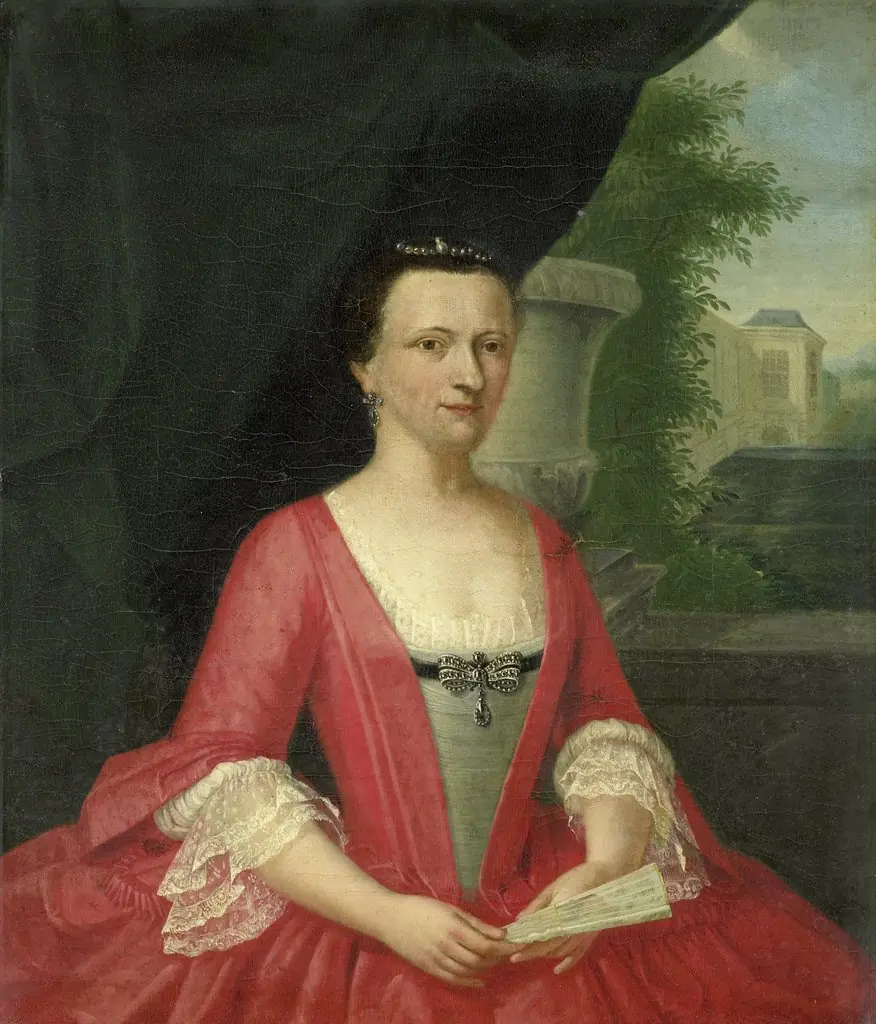
Jacoba Maria van Bueren gezegd van Regteren (1718-91), Wife of Johan Willem Parker
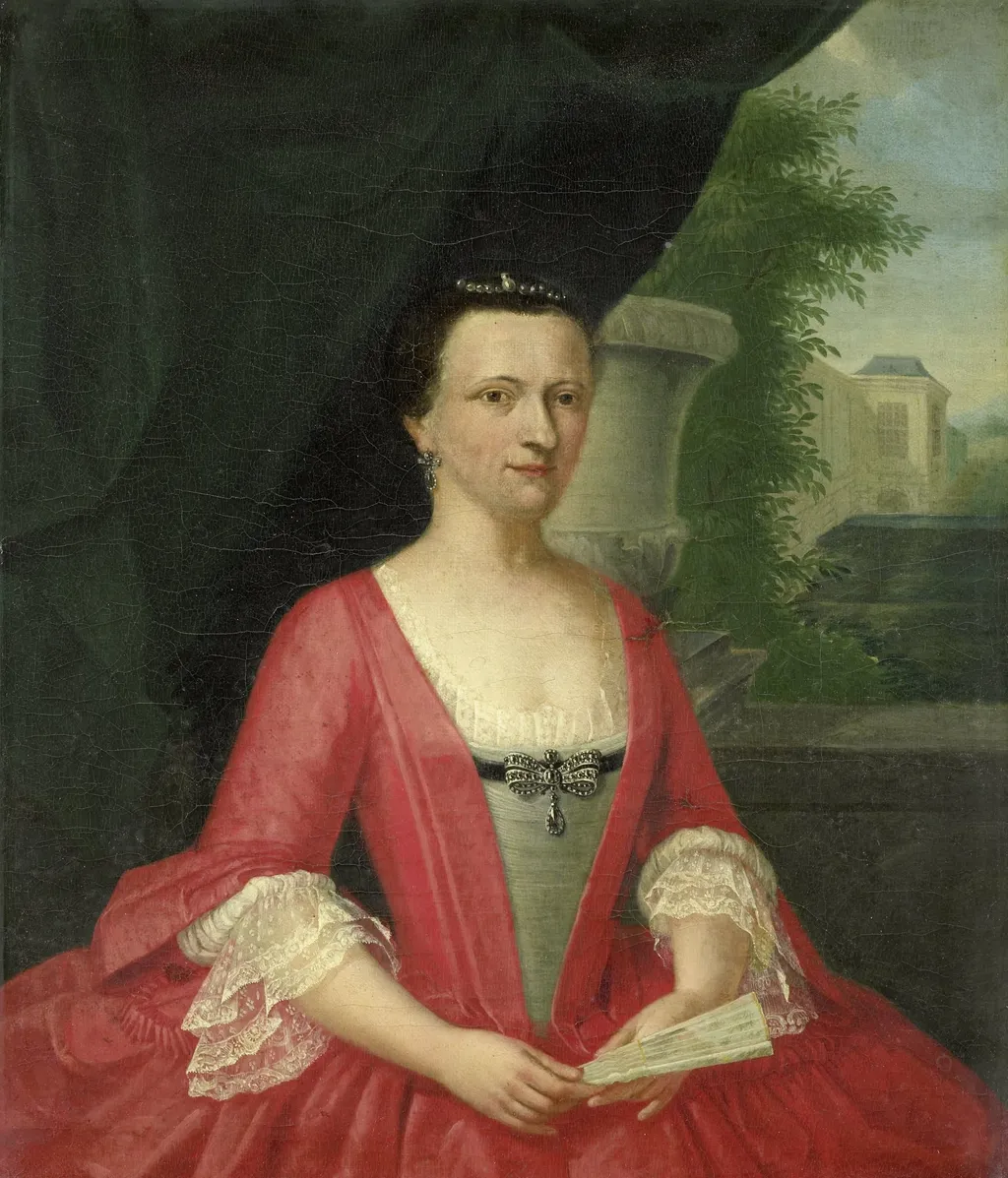
Jacoba Maria van Bueren gezegd van Regteren (1718-91), Wife of Johan Willem Parker is an unspecified painting by the Rococo painting artist Jacob Jan Nachenius. It dates from 1746 and is held in the collection of the Rijksmuseum.
About this work
Overview
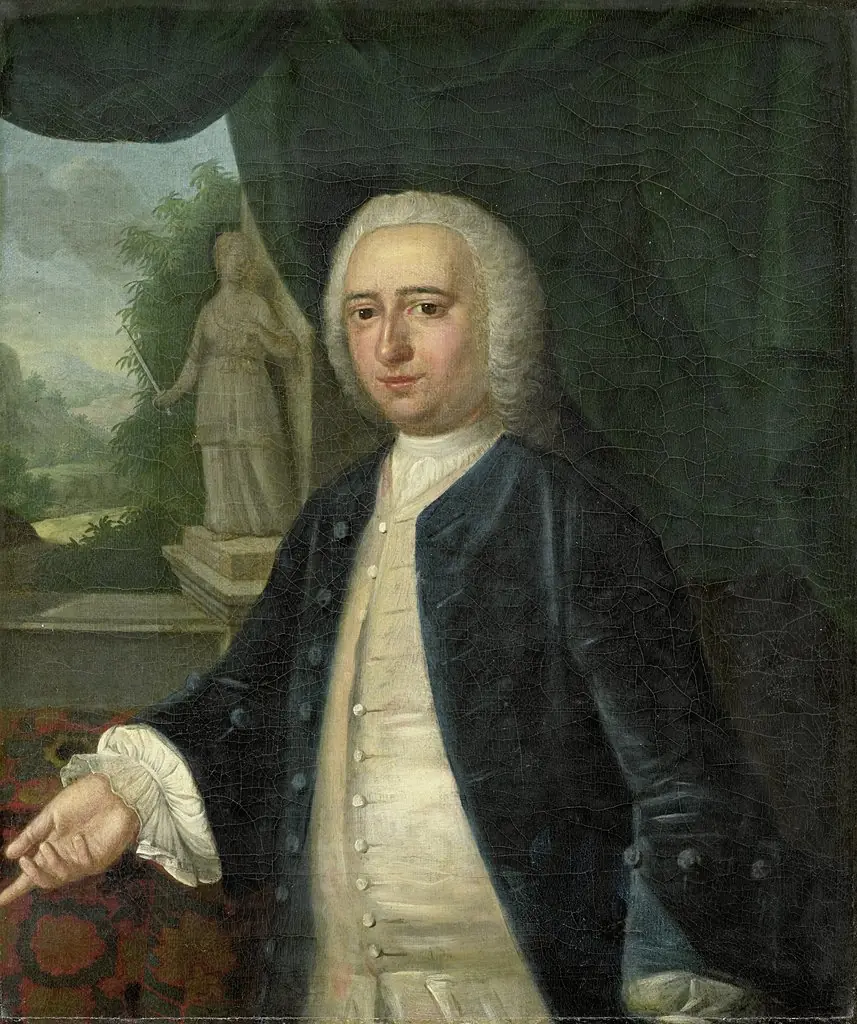
The painting was created as a pendant to her husband’s portrait, intended for display as a matched pair.
A half-length portrait depicts Jacoba Maria van Bueren, wife of Johan Willem Parker, seated beside a stone balustrade with a large garden urn and a distant landscape of trees and sky. She holds a fan, its presence deliberate yet natural. The painting was created as a pendant to her husband’s portrait, intended for display as a matched pair. The artist remains unidentified, though the rendering of light suggests attentive craftsmanship.
Subject & Meaning
The portrait presents Jacoba Maria in a composed, private moment, framed by elements of cultivated nature—balustrade, urn, and garden—suggesting refinement and social standing. The fan, a common accessory in 18th-century portraiture, conveys poise rather than mere fashion. Her gaze is calm, directed outward, inviting quiet engagement. The setting implies domestic tranquility and the cultivated ideals of her class, without overt symbolism or narrative.
Technique & Style
Soft, diffused lighting gently models her face and fabric, revealing subtle gradations in tone and texture. The brushwork is restrained, avoiding theatricality; details like the lace trim and fan ribs are rendered with precision but not excess. The background recedes into hazy greens and blues, emphasizing the figure without distraction. The composition balances symmetry and naturalism, typical of Dutch portraiture of the period.
History & Provenance
The portrait was painted between 1718 and 1791, likely during the mid-18th century, and paired with its pendant of Johan Willem Parker. Both works entered the museum’s collection as a unit, preserving their original intended relationship. Despite extensive research, the painter’s identity has not been established, though stylistic parallels exist with lesser-known Dutch portraitists of the time.
Context
In 18th-century Dutch society, paired portraits of married couples were common among the urban elite, serving as expressions of familial unity and social status. Gardens and architectural elements in such works signaled wealth and taste, often referencing the idealized landscapes of Dutch country estates. The inclusion of a fan, while fashionable, also reflected the performative nature of female decorum in portraiture.
Legacy
The portrait remains part of a rare surviving pair, offering insight into domestic representation in Dutch art. Its quiet dignity and unadorned elegance distinguish it from more flamboyant contemporary works. Though unsigned, its preservation and display affirm its role as a document of personal and cultural identity, rather than artistic fame.
Own this work as a print
Artist & collection