Artwork
Charles Ferdinand Pahud (1803-73). Gouverneur-generaal (1855-61)
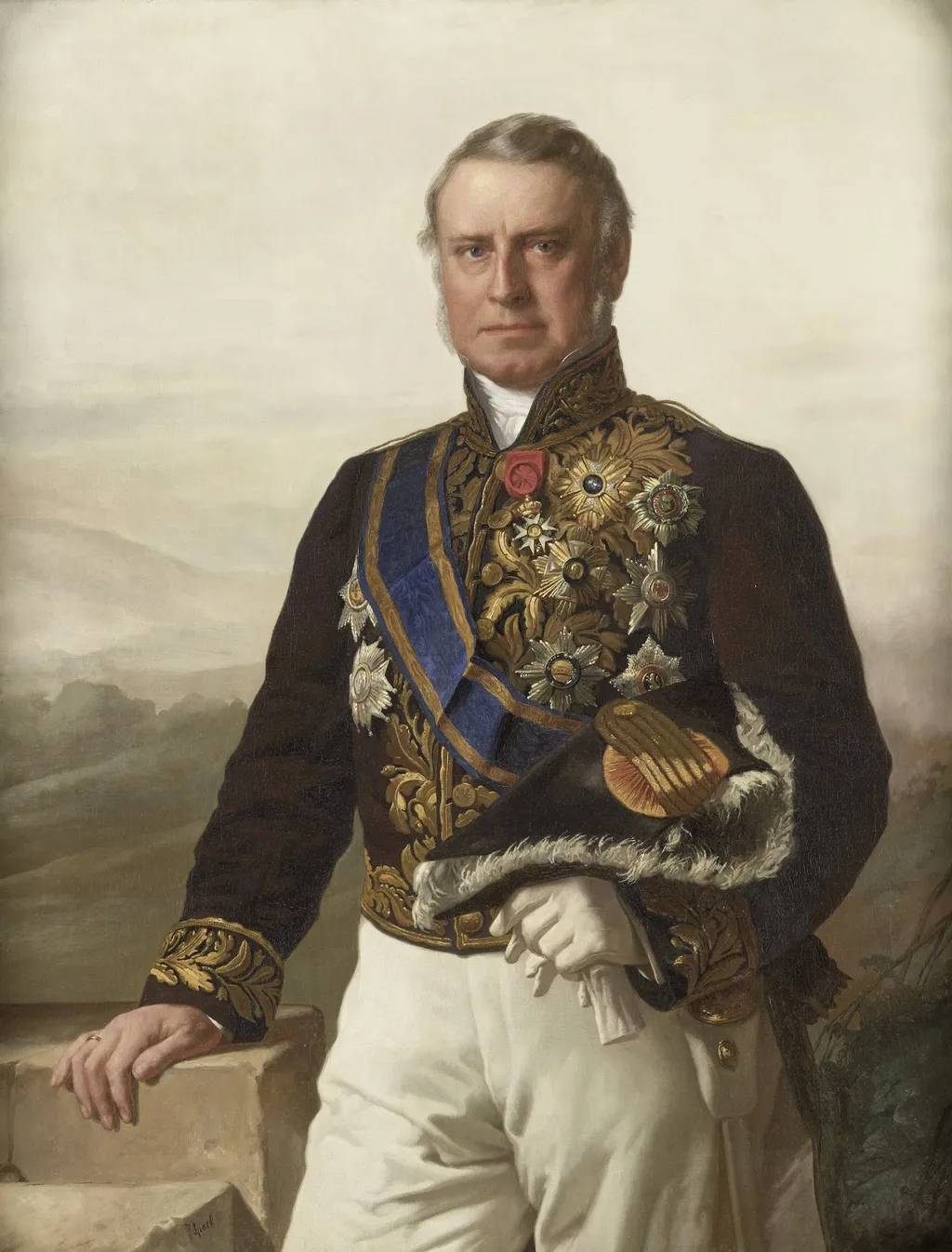
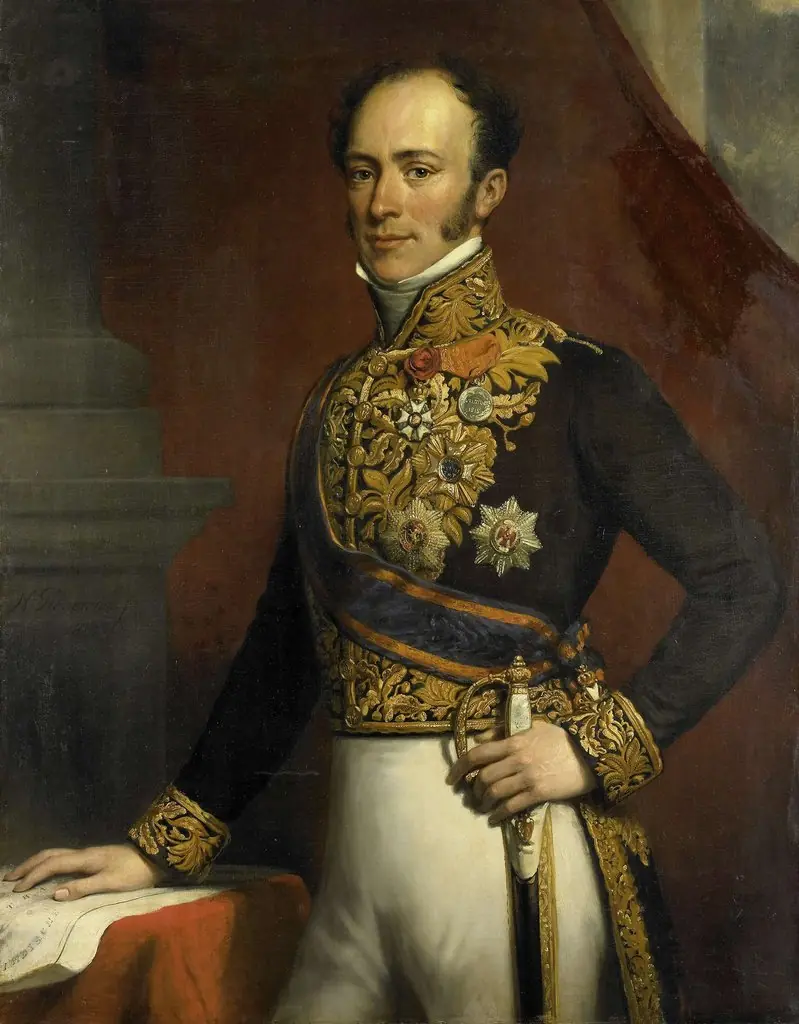
Charles Ferdinand Pahud (1803-73). Gouverneur-generaal (1855-61) is an oil painting by the Realist artist Jacob Spoel. It dates from 1863 and is held in the collection of the Rijksmuseum.
About this work
Overview
The background features a soft, indistinct landscape with faint hills and a pale sky, ensuring the viewer's focus remains on the sitter's dignified presence.
Painted in 1863 by Jacob Spoel, this oil portrait depicts Charles Ferdinand Pahud, who served as the Governor-General of the Dutch East Indies from 1855 to 1861. The composition presents Pahud in a formal three-quarter view, dressed in a dark military coat heavily adorned with gold medals and ribbons in red and blue, signifying his high rank and state honors. His attire is completed by crisp white trousers and gloves, emphasizing the ceremonial nature of the occasion. The subject stands with one hand resting on a stone ledge, a conventional device in portraiture to suggest stability and authority, while the other hand holds a folded paper or glove. The background features a soft, indistinct landscape with faint hills and a pale sky, ensuring the viewer's focus remains on the sitter's dignified presence. Created two years after Pahud's term ended, the work serves as a commemorative record of his colonial administration. Spoel, a Dutch portraitist active during the mid-19th century, executed this piece with the precise realism typical of official state portraiture of the era, capturing the specific regalia and bearing of a key figure in Dutch imperial history.
Subject & Meaning
Pahud is shown in a dark military coat adorned with numerous gold medals and ribbons, indicating his high civil and military standing. His solemn expression and upright posture convey authority and the gravitas expected of a colonial administrator, while the folded paper or glove in his hand hints at official duties.
Technique & Style
Spoel employs a restrained palette, using muted tones for the background that dissolve into a soft, indistinct landscape. The precise rendering of the medals and the crisp white of the trousers and gloves demonstrate a meticulous attention to detail, characteristic of mid‑nineteenth‑century Dutch portraiture.
History & Provenance
Completed in 1863, the portrait entered the Rijksmuseum’s collection as part of its holdings of Dutch governmental figures. Its provenance traces back to the period shortly after Pahud’s death in 1873, when the work was likely acquired to document the legacy of prominent colonial officials.
Context
The painting reflects the Dutch tradition of commemorating colonial administrators through formal portraiture, a practice that reinforced the legitimacy of imperial governance. By situating Pahud against a vague, pastoral backdrop, Spoel aligns the subject with the broader narrative of Dutch civilizing mission in the East Indies.
Own this work as a print
Artist & collection