Artwork
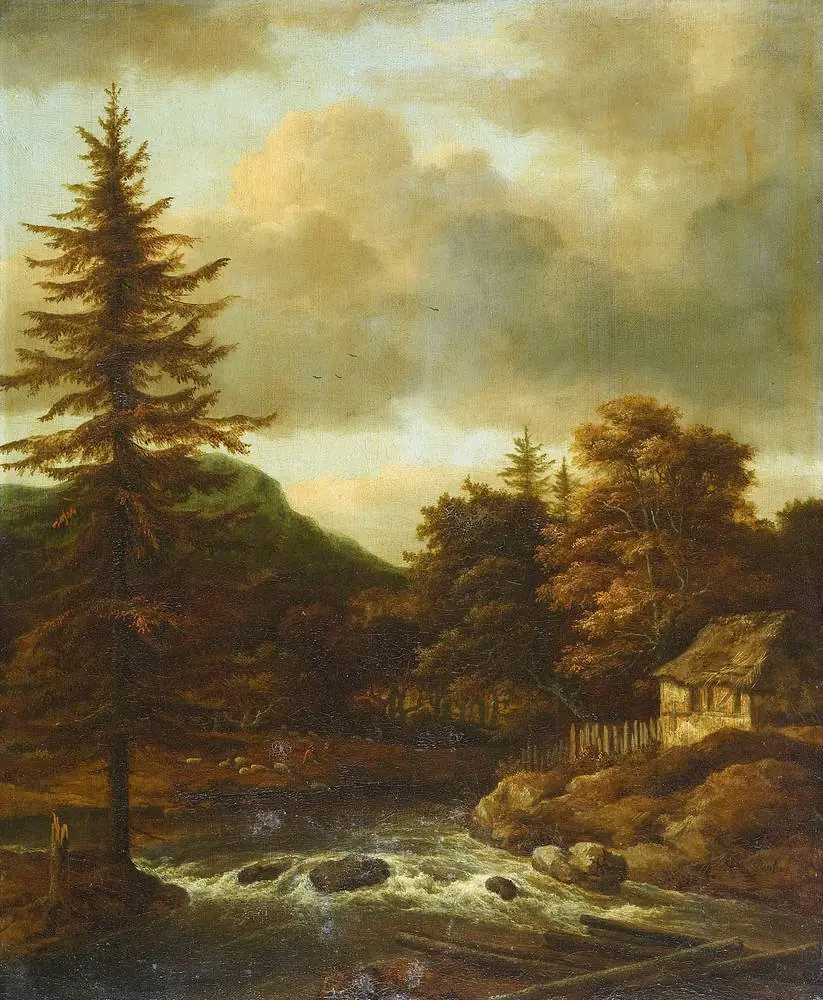
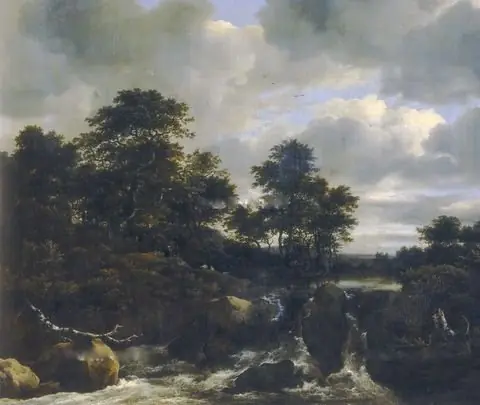
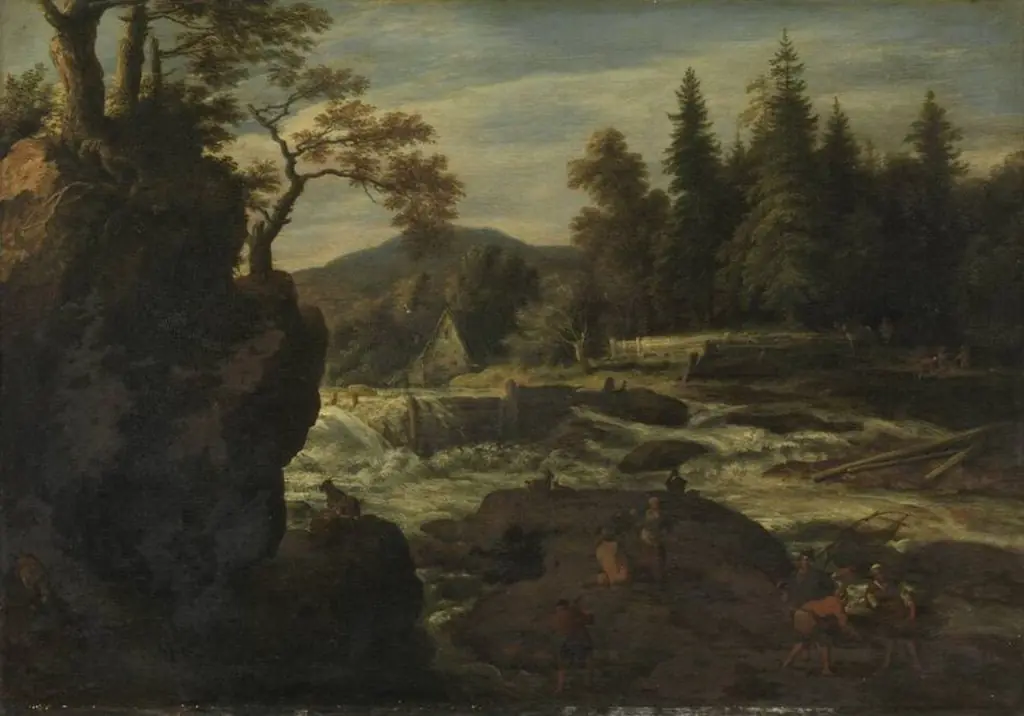
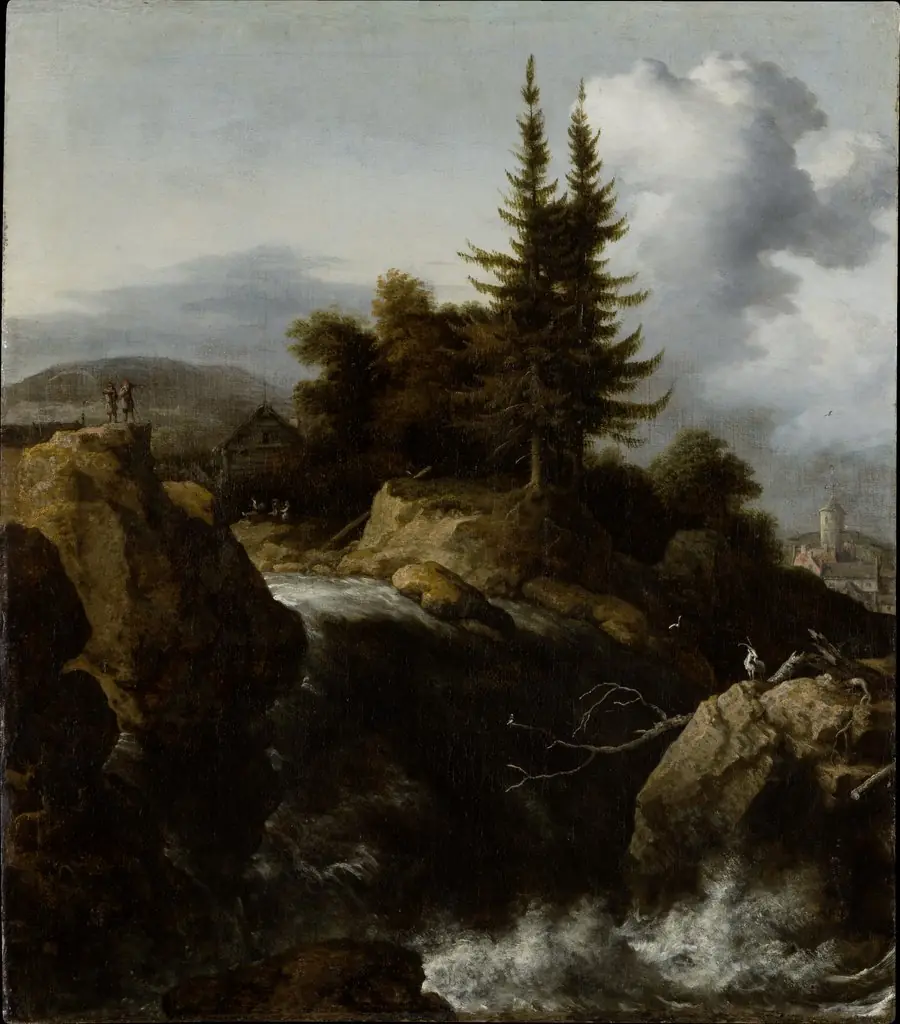
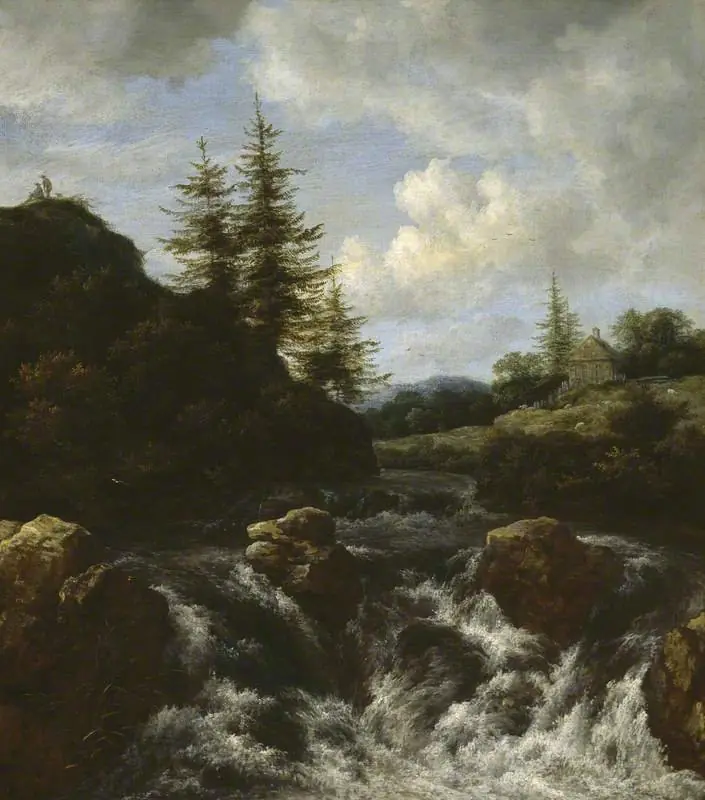
A Waterfall with village, footbridge and pine trees
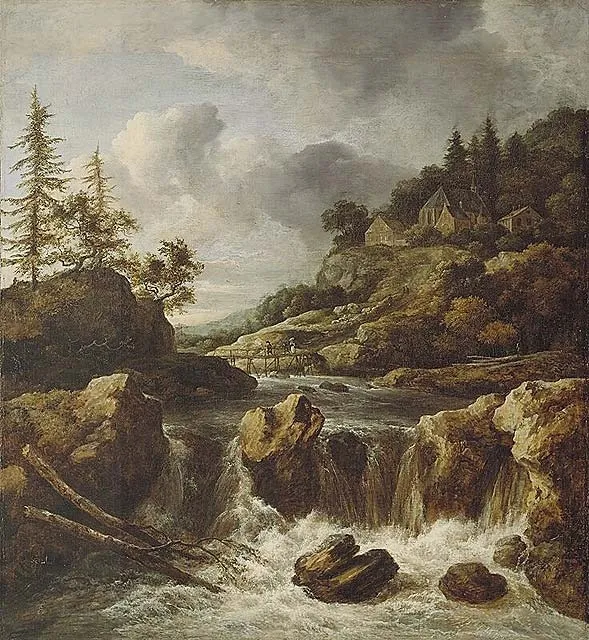
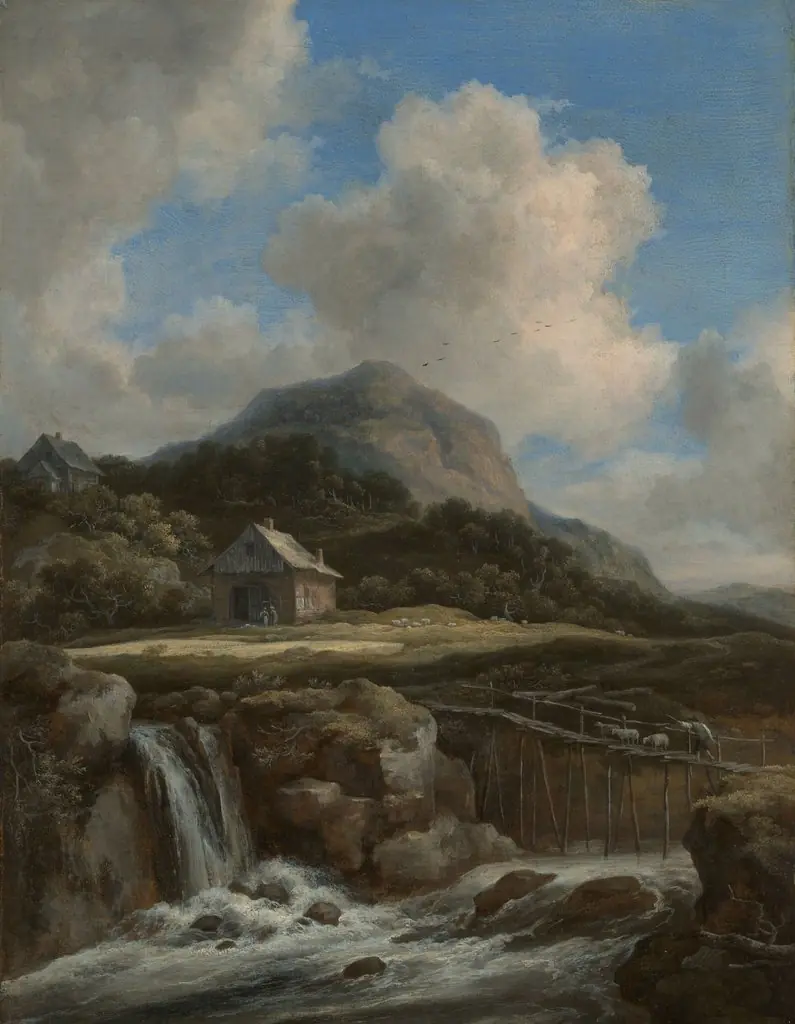
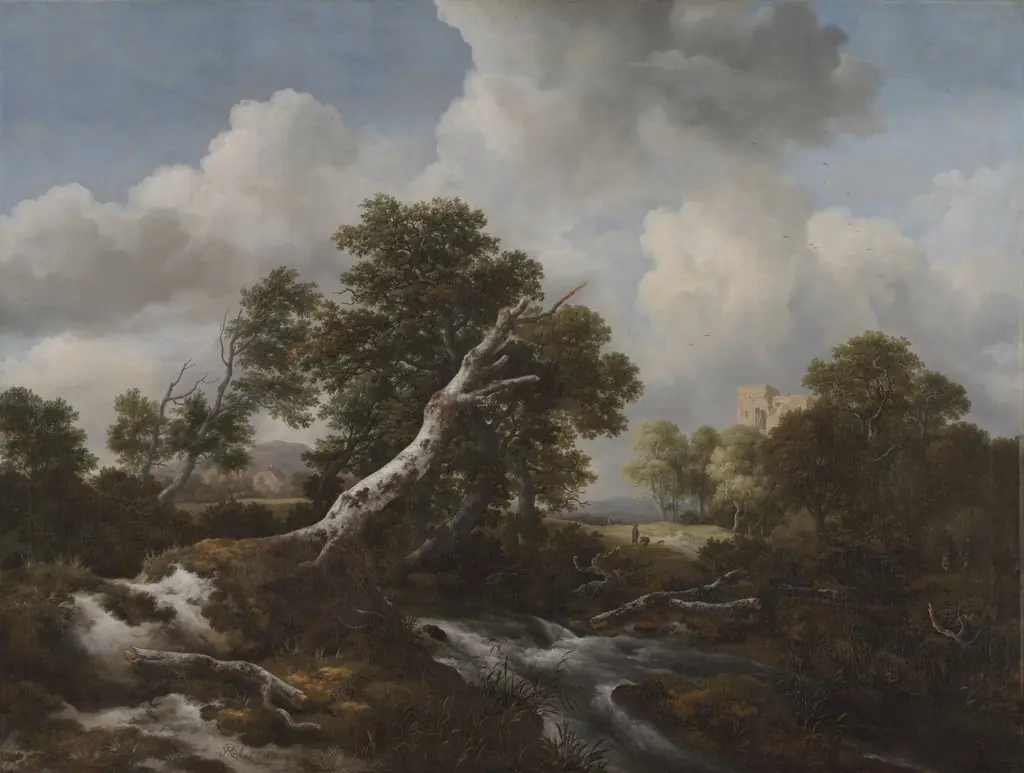
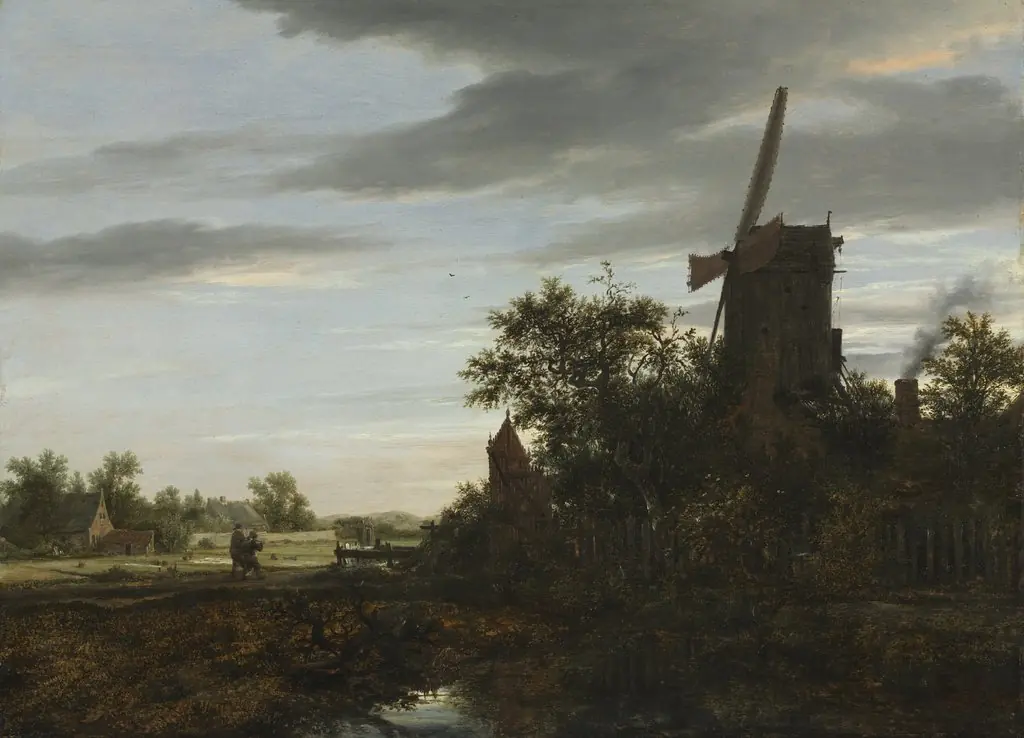
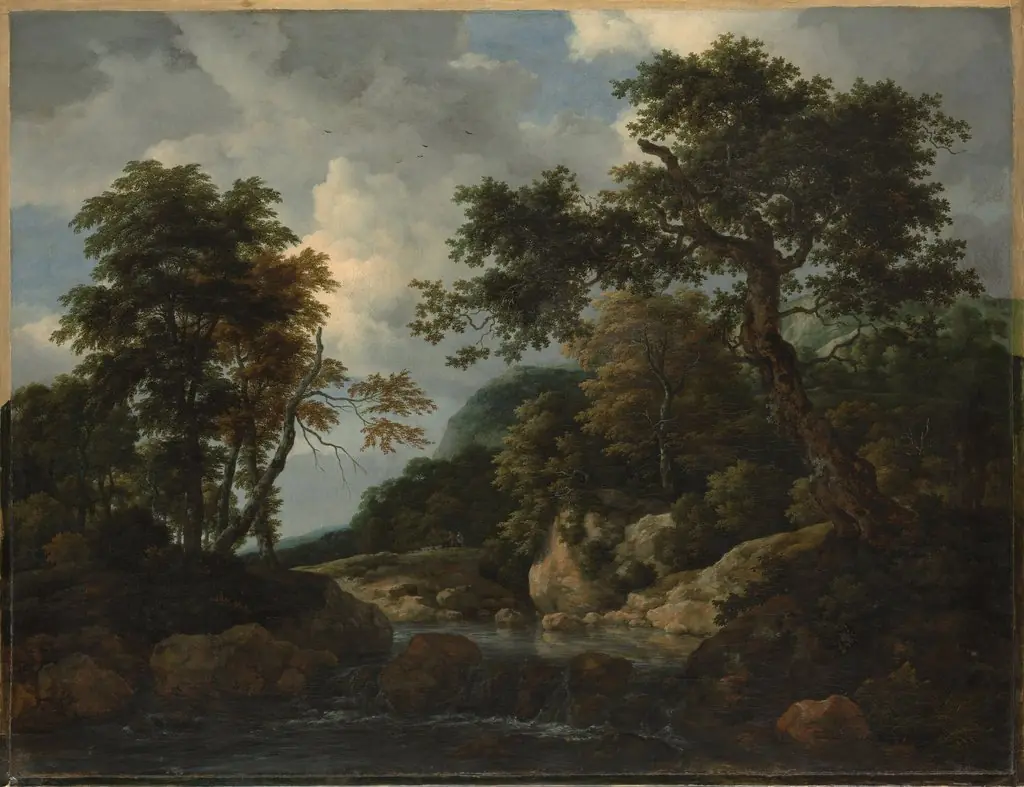
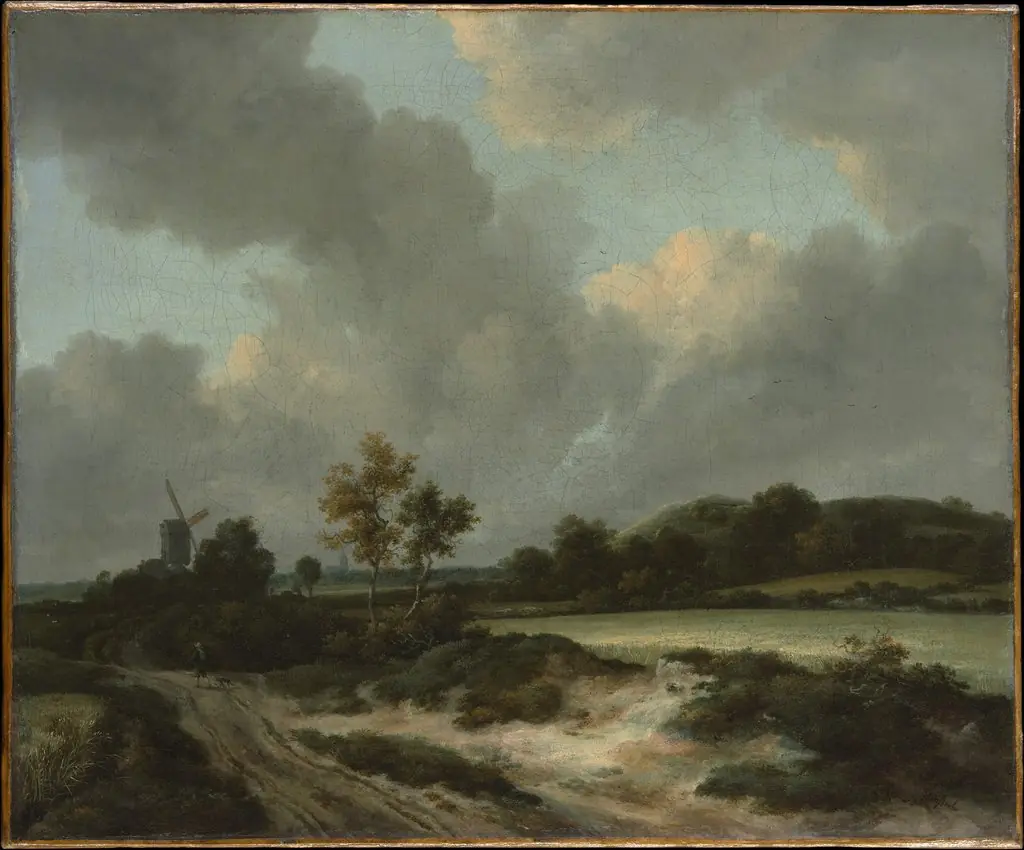
A Waterfall with village, footbridge and pine trees is an oil painting by the Dutch Golden Age artist Jacob van Ruisdael. It dates from 1660 and is held in the collection of the National Gallery of Canada.
About this work
Overview
Painted in 1660, this oil landscape by Jacob van Ruisdael presents a quiet Dutch countryside scene centered on a cascading waterfall.
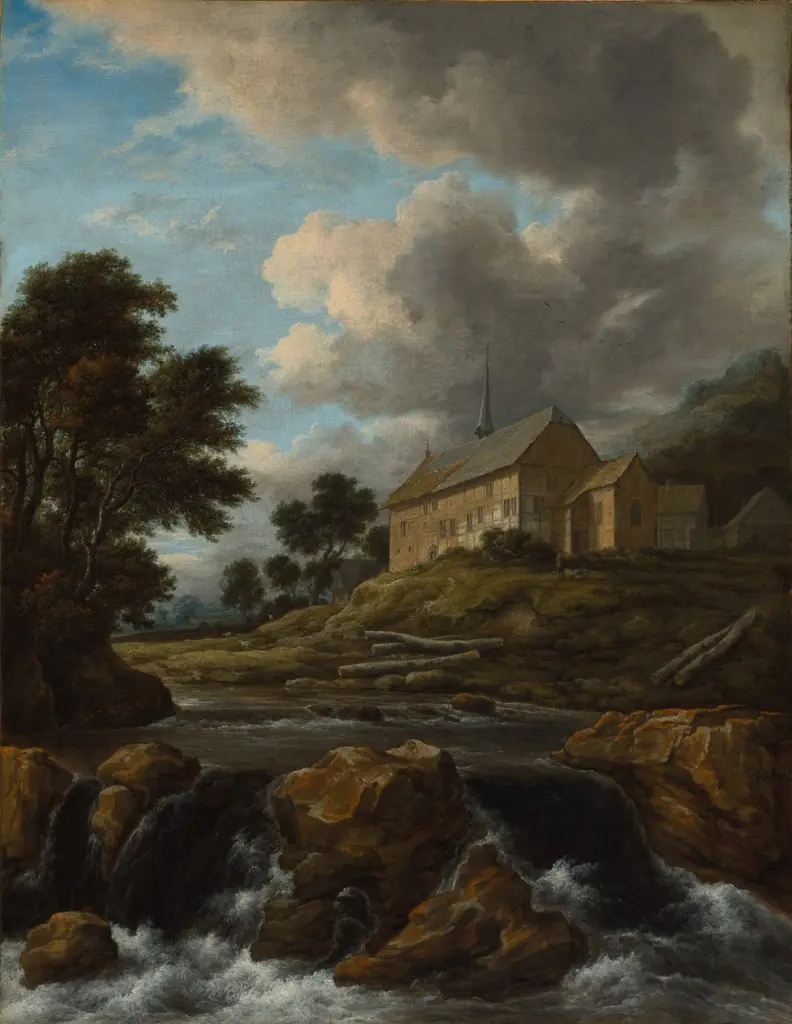
Painted in 1660, this oil landscape by Jacob van Ruisdael presents a quiet Dutch countryside scene centered on a cascading waterfall. The composition includes a wooden footbridge, clustered pine trees, and a distant village with a church steeple. Rendered in subdued tones of green, brown, and gray, the work reflects the artist’s interest in natural atmosphere and topographical detail, typical of 17th-century Dutch landscape painting.
Subject & Meaning
The scene merges natural forces with human habitation: the waterfall dominates the foreground, while the village and church suggest quiet rural life. The footbridge connects land and water, implying passage or transition. Pine trees, often symbolic of endurance, frame the view. No overt narrative is present; instead, the painting evokes contemplation of nature’s persistence and the modest scale of human presence within it.
Technique & Style
Ruisdael applied oil paint with varied brushwork—dense strokes for foliage, finer touches for mist and water. The waterfall’s spray is suggested through layered glazes and broken pigment, creating a sense of movement and moisture. The muted palette and soft atmospheric perspective draw the eye from the foreground rocks to the hazy village, emphasizing depth without artificial drama or idealization.
History & Provenance
The painting entered the collection of the National Gallery of Canada in the 20th century, though its earlier ownership remains undocumented. It was likely produced during Ruisdael’s mature period, when he focused on naturalistic landscapes with complex compositions. No records indicate it was commissioned, suggesting it was made for the open market, common among Dutch artists of the time.
Context
In mid-17th-century Holland, landscape painting flourished as a secular genre, reflecting national pride in the land and its management. Ruisdael’s works stood apart for their emotional gravity and attention to weather and terrain. Unlike Italianate idealized scenes, his paintings grounded beauty in observed reality, aligning with Dutch empiricism and the rising middle class’s taste for authentic depictions of their environment.
Legacy
Ruisdael’s approach influenced later landscape traditions, particularly in Germany and England, where his emphasis on mood and natural detail was admired. Though not widely known outside specialist circles today, his work remains a touchstone for understanding how Dutch artists transformed ordinary scenery into quiet, resonant visual poetry, prioritizing observation over ornament.
Artist & collection
Artist
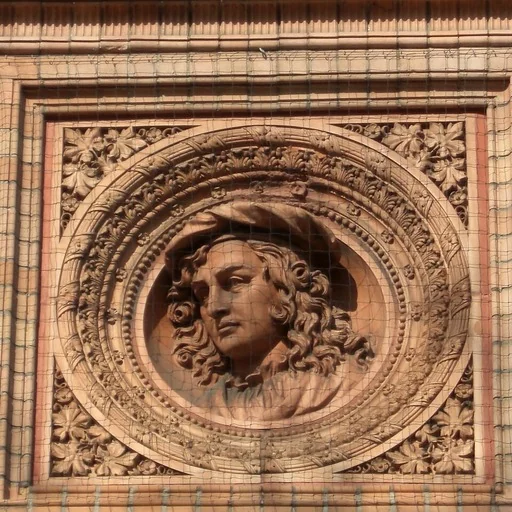
Jacob Isaackszoon van Ruisdael was a Dutch painter, draughtsman, and etcher. He is generally considered the pre-eminent landscape painter of the Dutch Golden Age, a period of great wealth and cultural achievement when…