Artwork
Edge of a Forest with a Grainfield
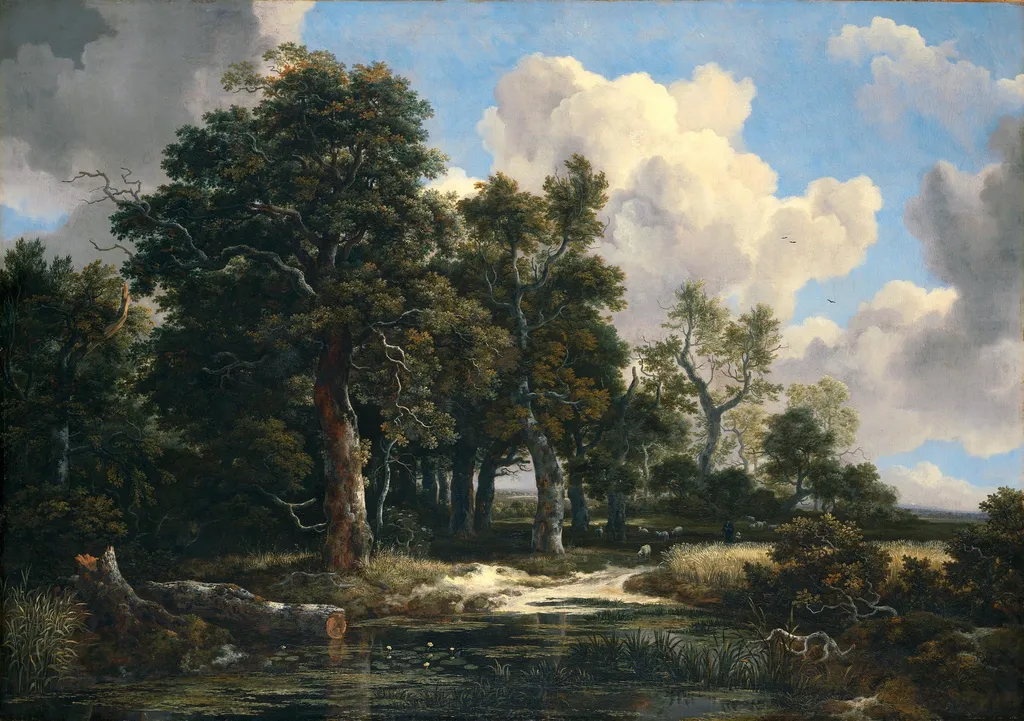
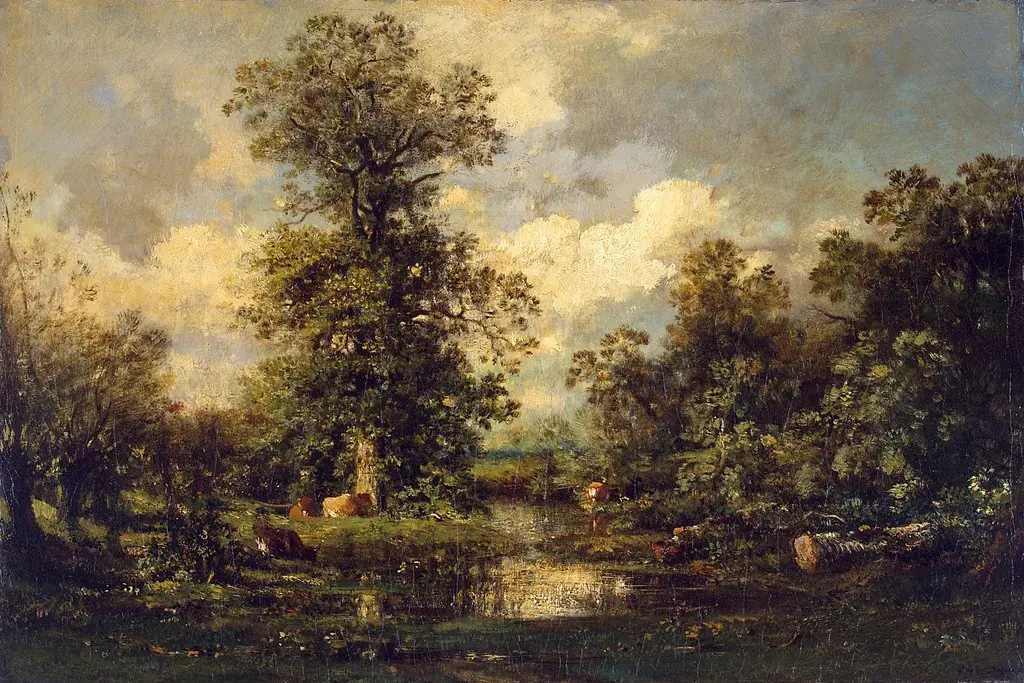
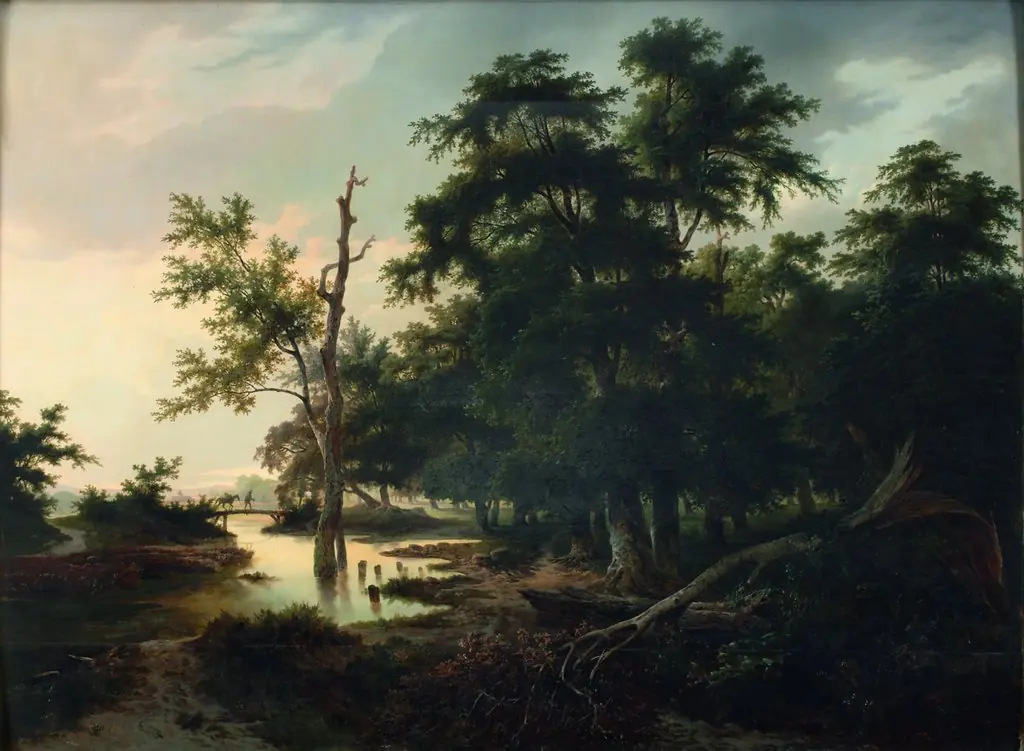
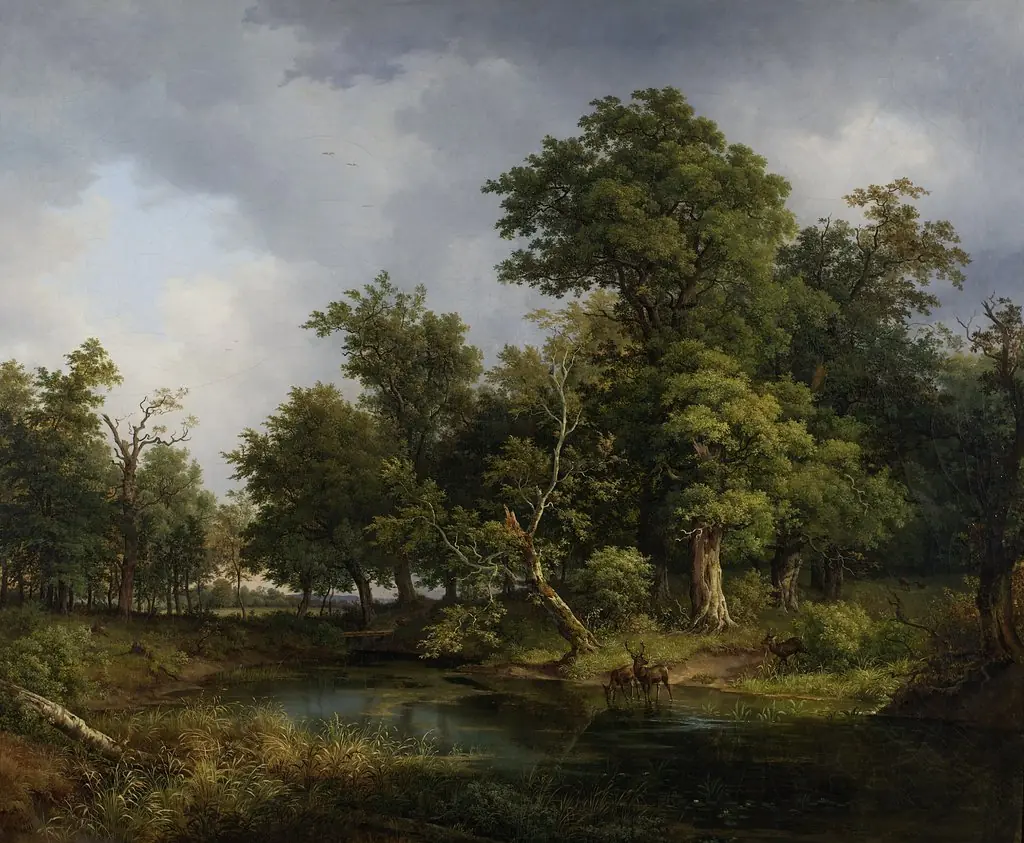
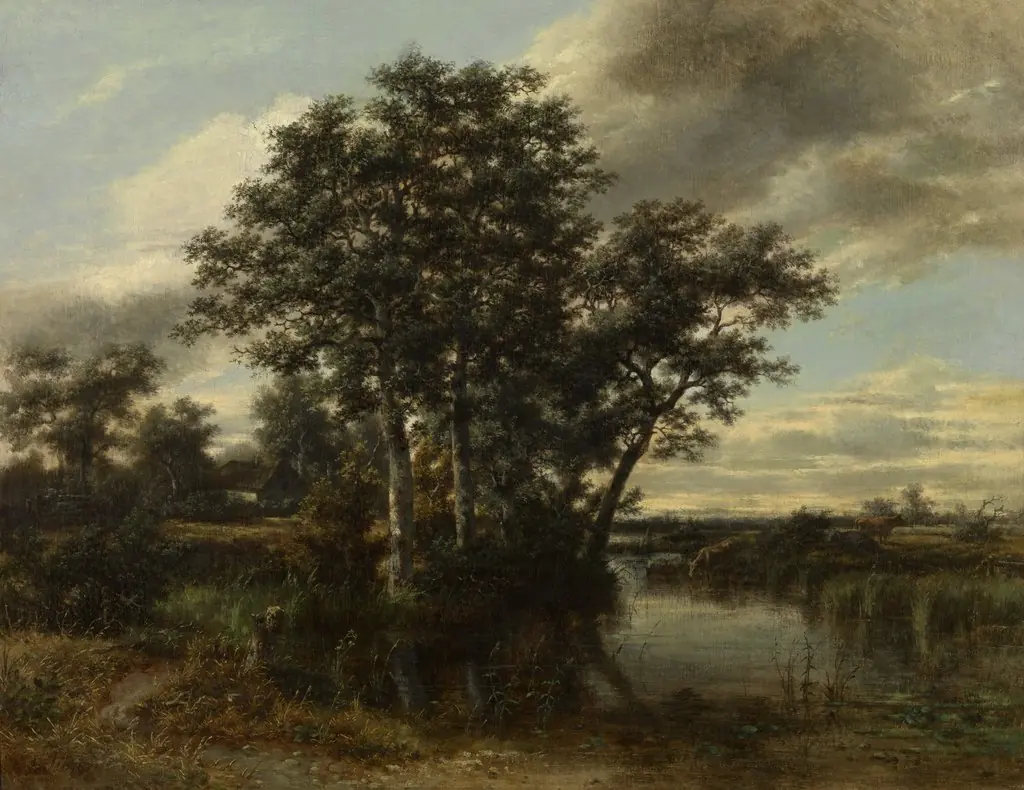
Edge of a Forest with a Grainfield is an oil painting by the Dutch Golden Age artist Jacob van Ruisdael. It dates from 1655 and is held in the collection of the Kimbell Art Museum.
About this work
Overview
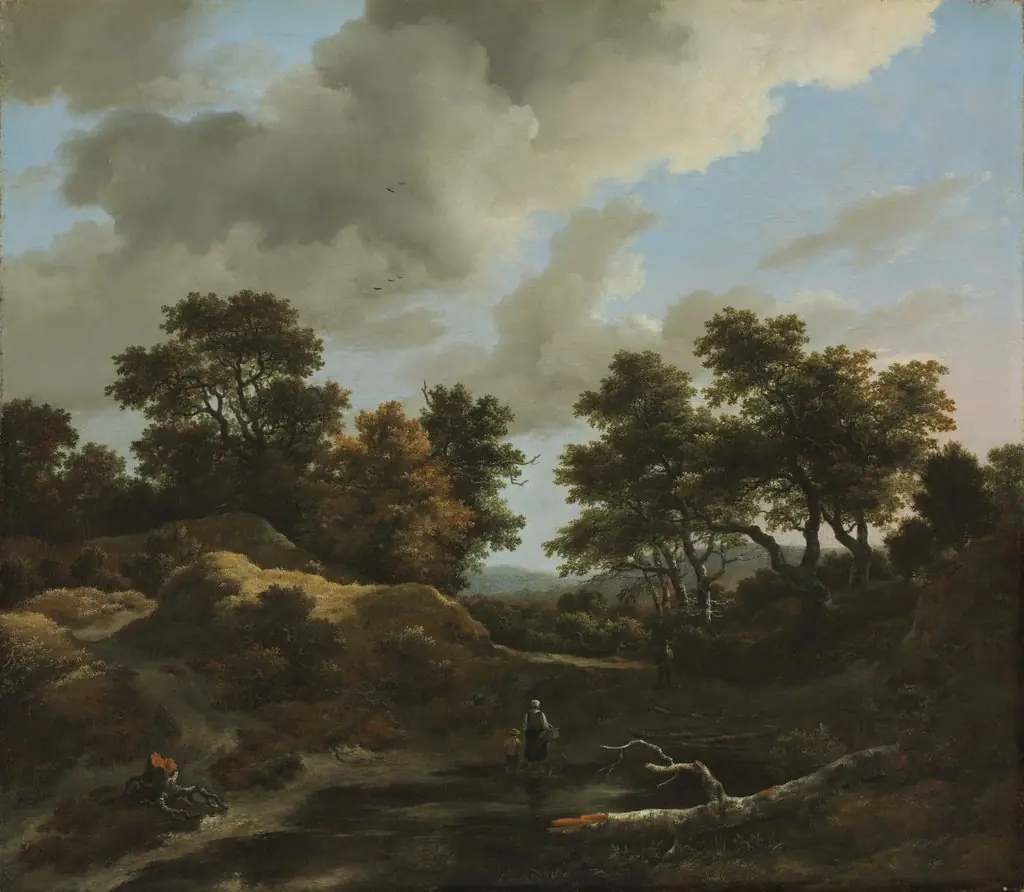
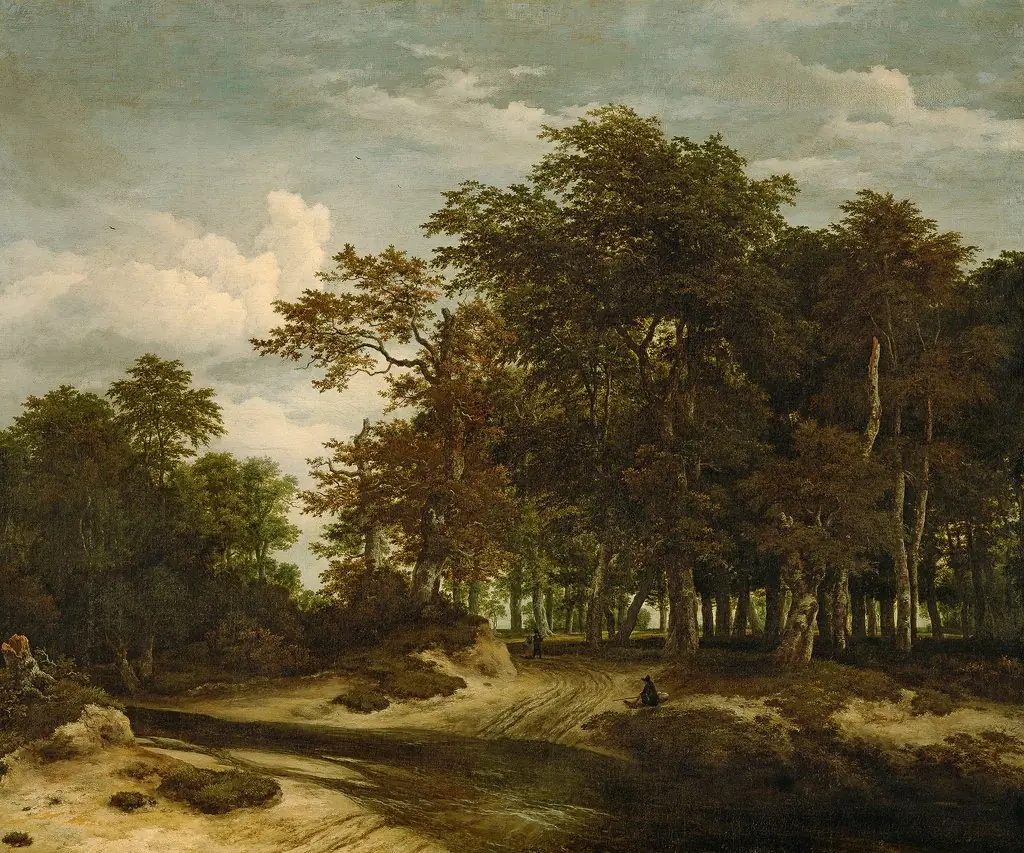
Painted in 1655, Edge of a Forest with a Grainfield is an oil landscape by Jacob van Ruisdael, currently in the Kimbell Art Museum’s collection.
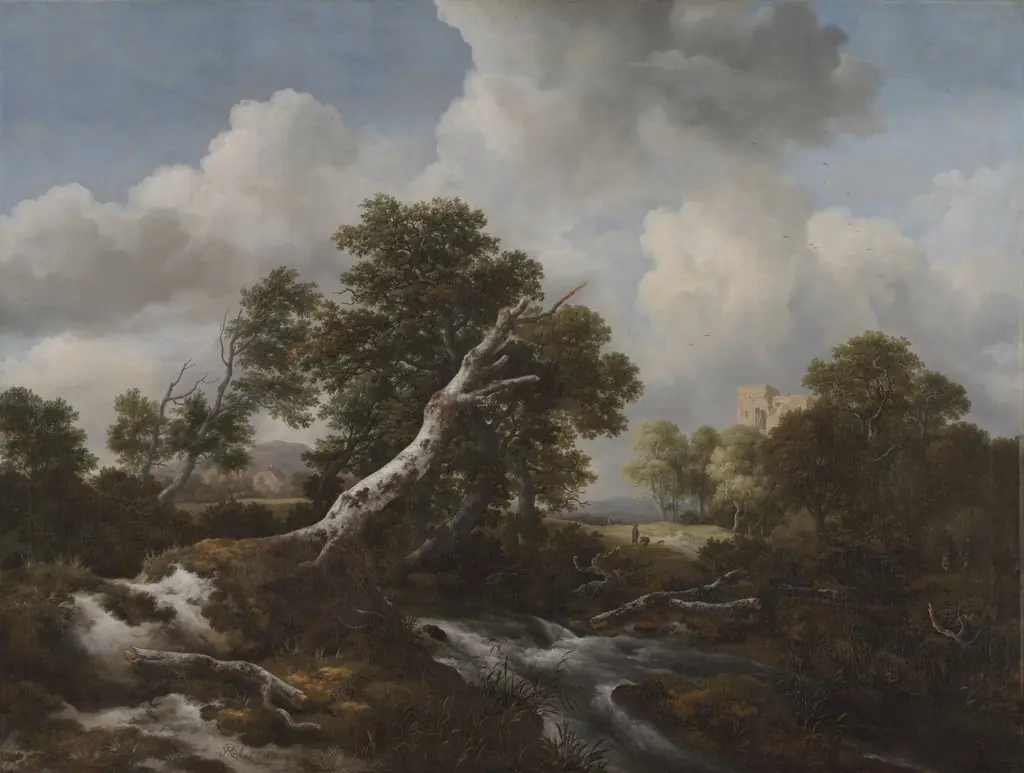
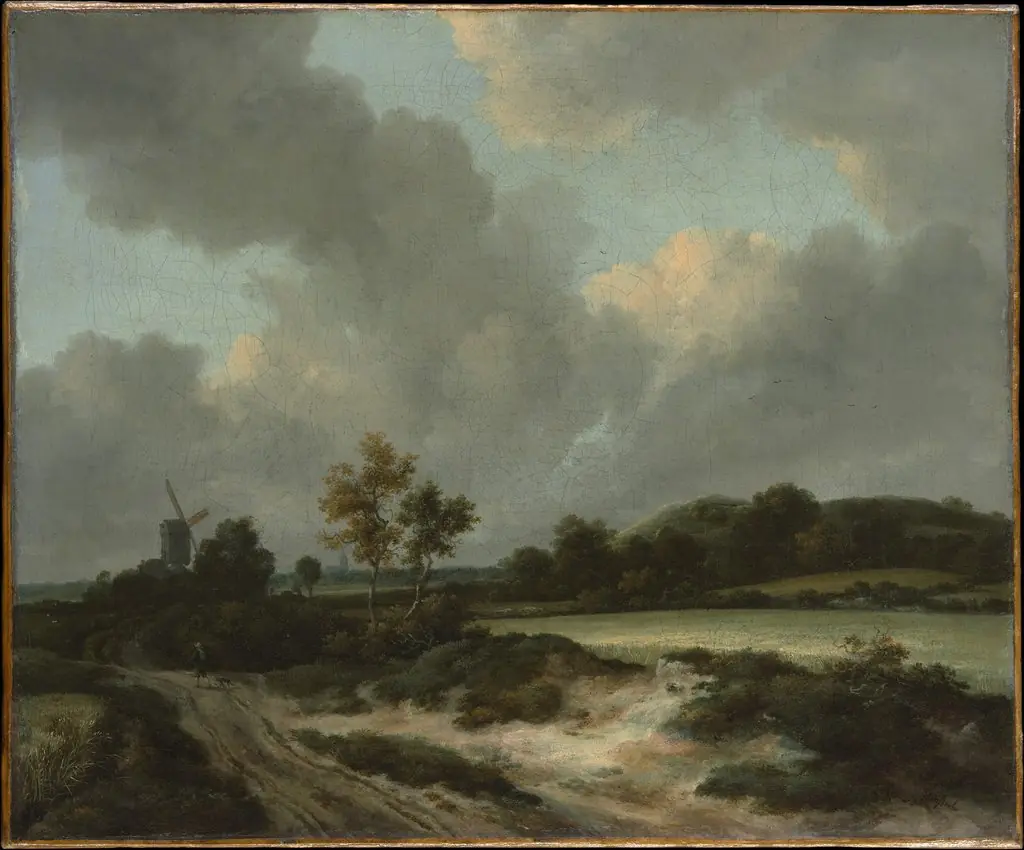
Painted in 1655, Edge of a Forest with a Grainfield is an oil landscape by Jacob van Ruisdael, currently in the Kimbell Art Museum’s collection. The work presents a quiet woodland boundary where natural growth meets cultivated land. Ruisdael captures a moment of stillness, balancing the dense foliage of trees with the open expanse of a harvested field. The composition invites quiet contemplation rather than dramatic spectacle.
Subject & Meaning
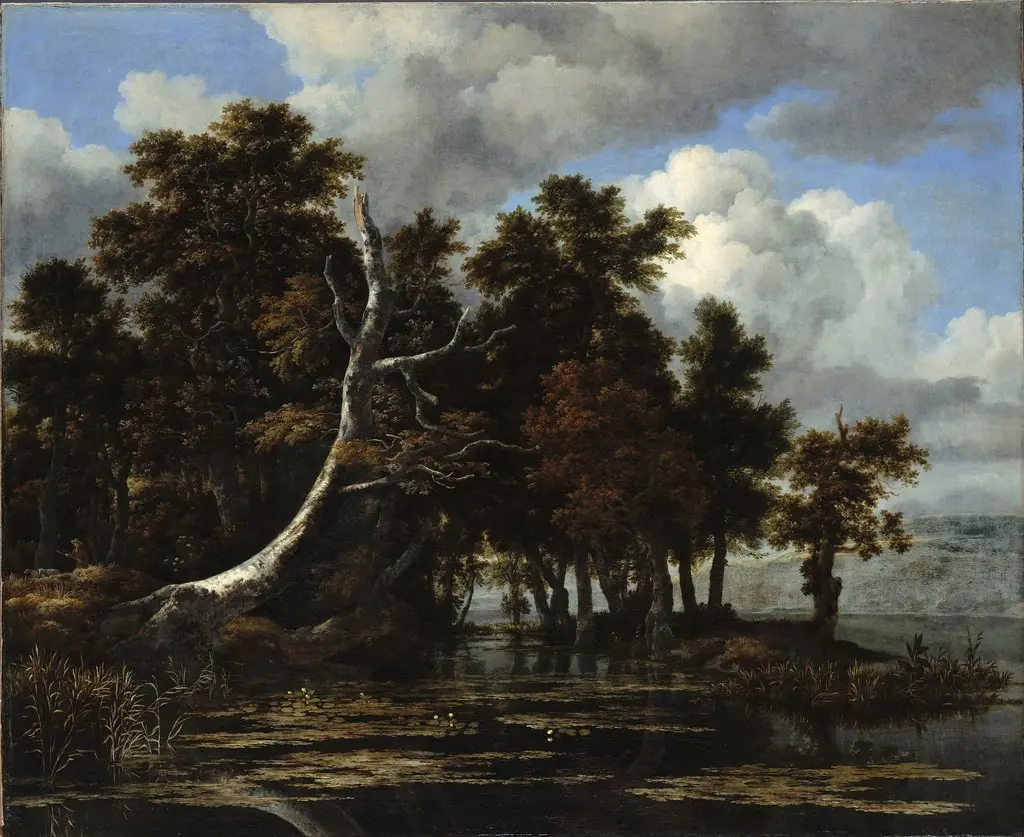
The painting juxtaposes the wild, untamed forest with the orderly grainfield, reflecting 17th-century Dutch attitudes toward land use and human labor. The forest, with its varied trunks and overlapping canopies, suggests natural abundance, while the field, though sparse, implies cultivation and sustenance. A narrow path winds through the trees, subtly guiding the viewer’s gaze without imposing narrative or human presence.
Technique & Style
Ruisdael employs layered oil glazes to model the trees with subtle shifts in light and shadow, giving them tangible volume. The brushwork varies: loose and textured for foliage, smoother for the field’s horizontal planes. Cool grays and greens dominate the forest, contrasted by warmer ochres in the grain. The spatial depth is achieved through atmospheric perspective, with distant trees softened and muted, enhancing the sense of receding space.
History & Provenance
The painting entered the Kimbell Art Museum’s collection in the 20th century, following a documented lineage of Dutch private collections. Its attribution to Ruisdael has remained consistent since its early cataloging, supported by stylistic analysis and archival records. No major alterations or restorations are recorded, preserving the original surface and tonal harmony as intended by the artist.
Context
Created during the Dutch Golden Age, this work aligns with a broader interest in landscape as a subject worthy of serious attention. Unlike Italianate idealized scenes, Ruisdael’s approach emphasizes observed reality and regional topography. His forests reflect the Dutch countryside’s ecological and economic character, where woodlands provided timber and the fields fed growing urban populations.
Legacy
Ruisdael’s treatment of natural environments influenced later landscape traditions, particularly in Germany and England. His ability to convey mood through subtle tonal variation and careful composition set a precedent for Romantic-era painters. Though not widely exhibited during his lifetime, his works gained recognition in the 18th and 19th centuries as exemplars of Northern European landscape painting.
Own this work as a print
Artist & collection
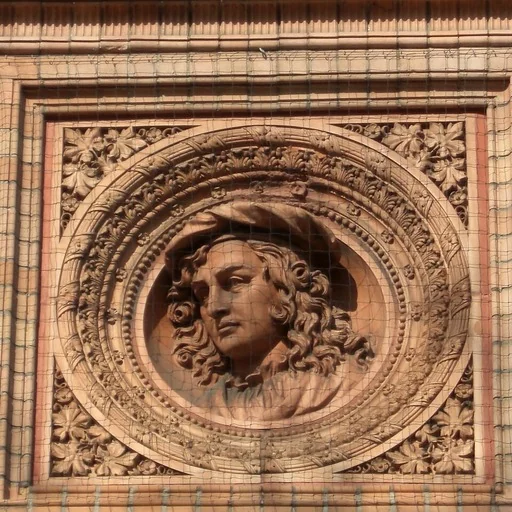
Artist
Jacob Isaackszoon van Ruisdael was a Dutch painter, draughtsman, and etcher. He is generally considered the pre-eminent landscape painter of the Dutch Golden Age, a period of great wealth and cultural achievement when…