Artwork
Landscape with some houses and a sand track
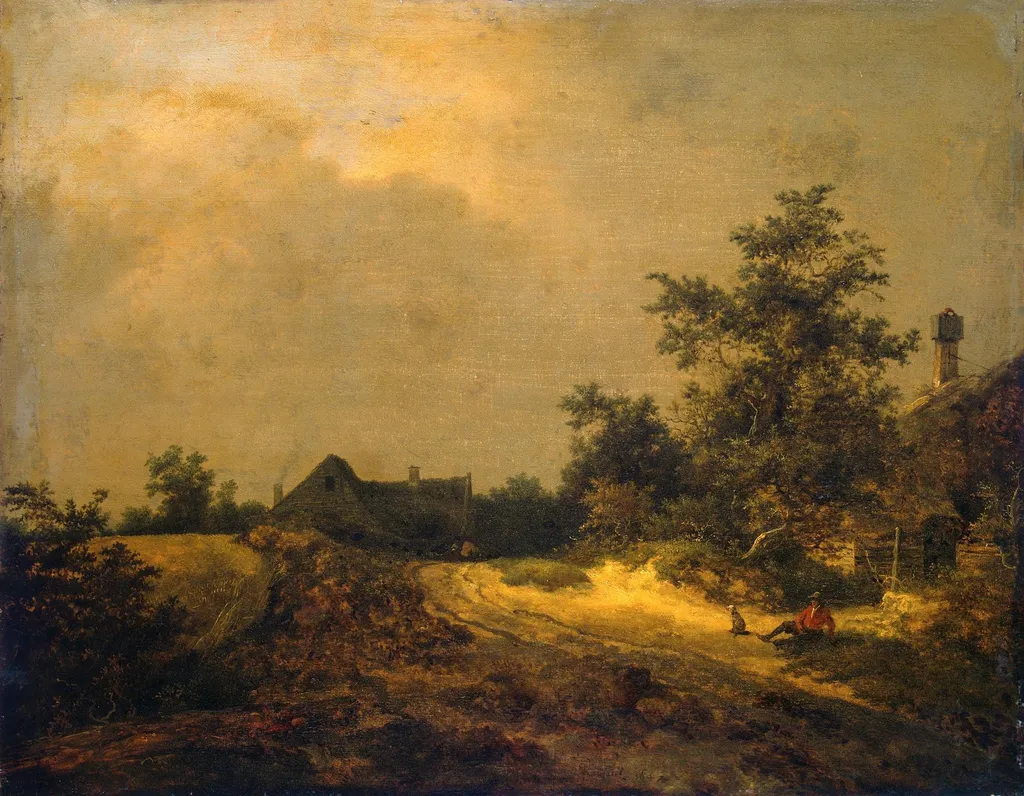
Landscape with some houses and a sand track is an oil painting by the Dutch Golden Age artist Jacob van Ruisdael. It dates from 1647 and is held in the collection of the Hermitage Museum.
About this work
Overview
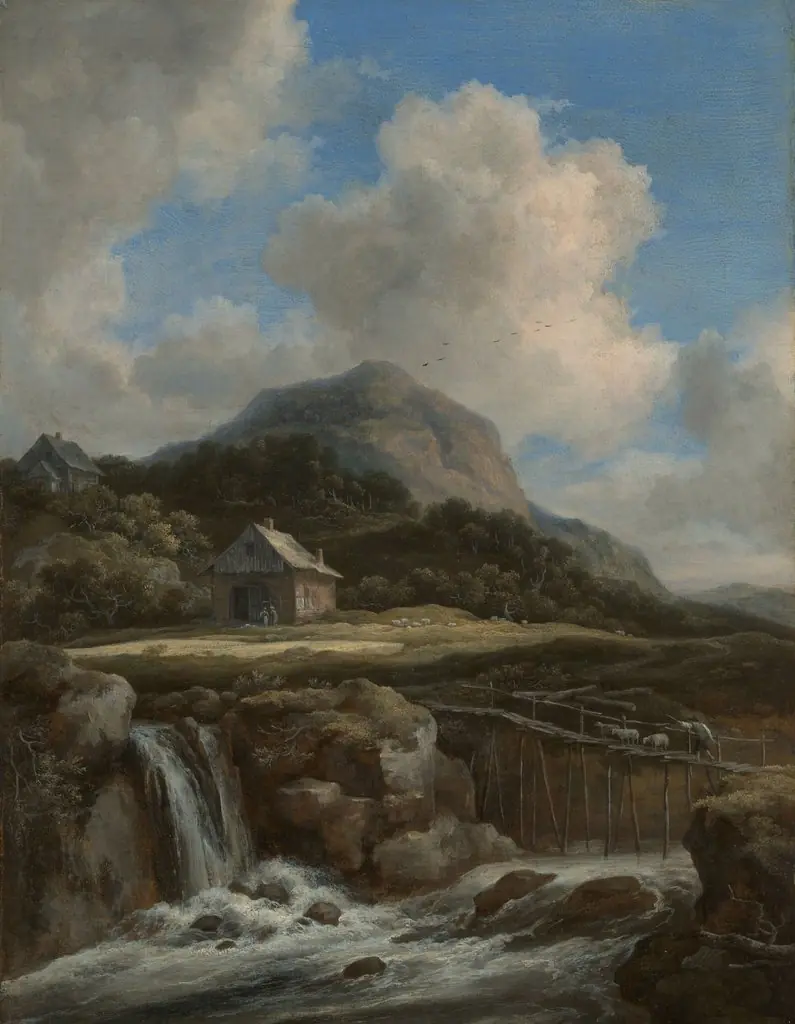
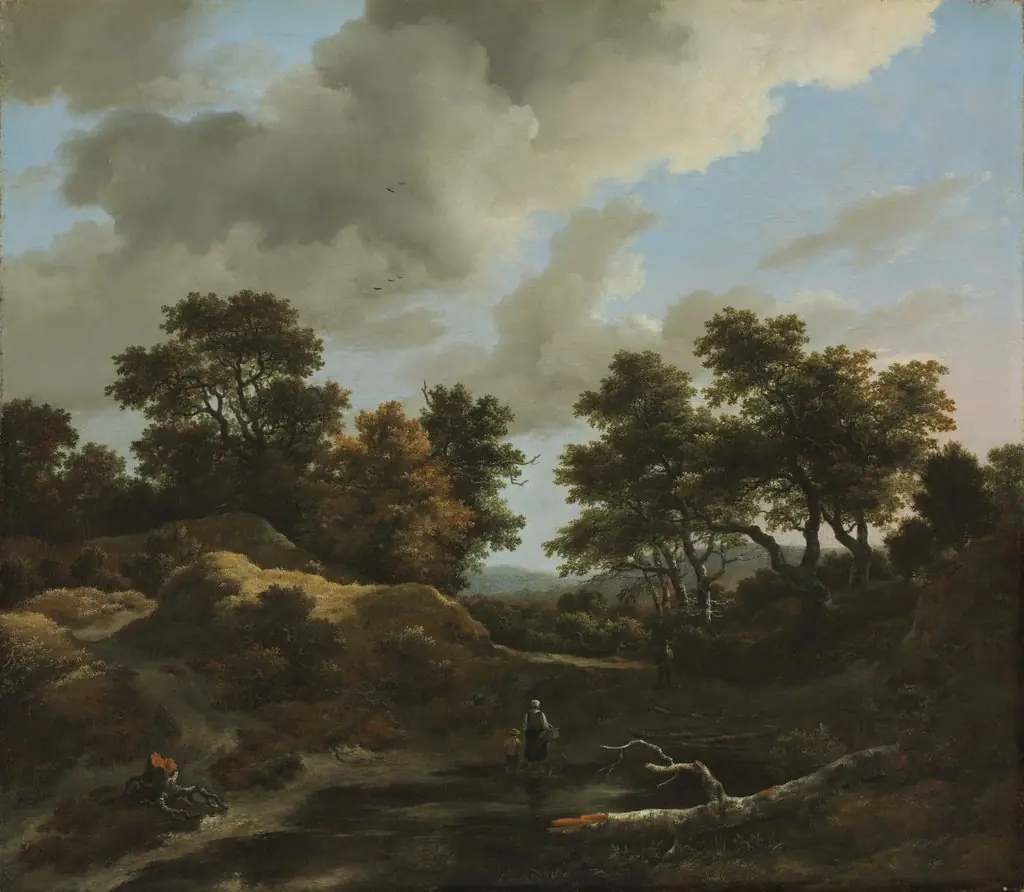
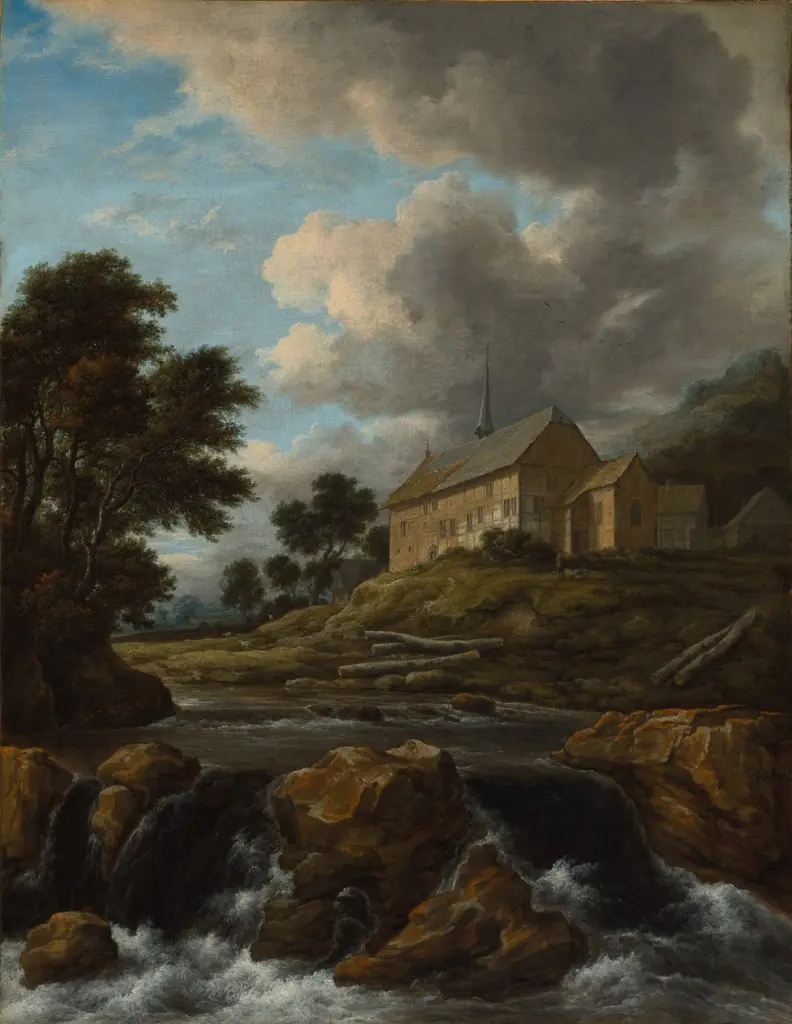
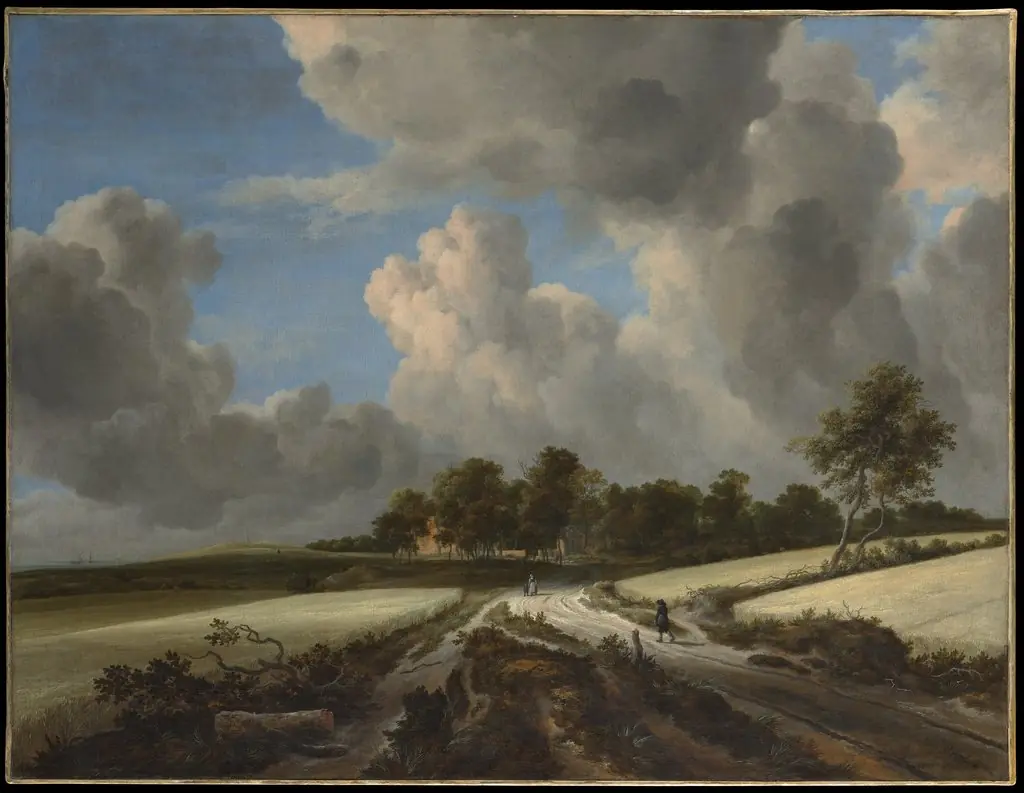
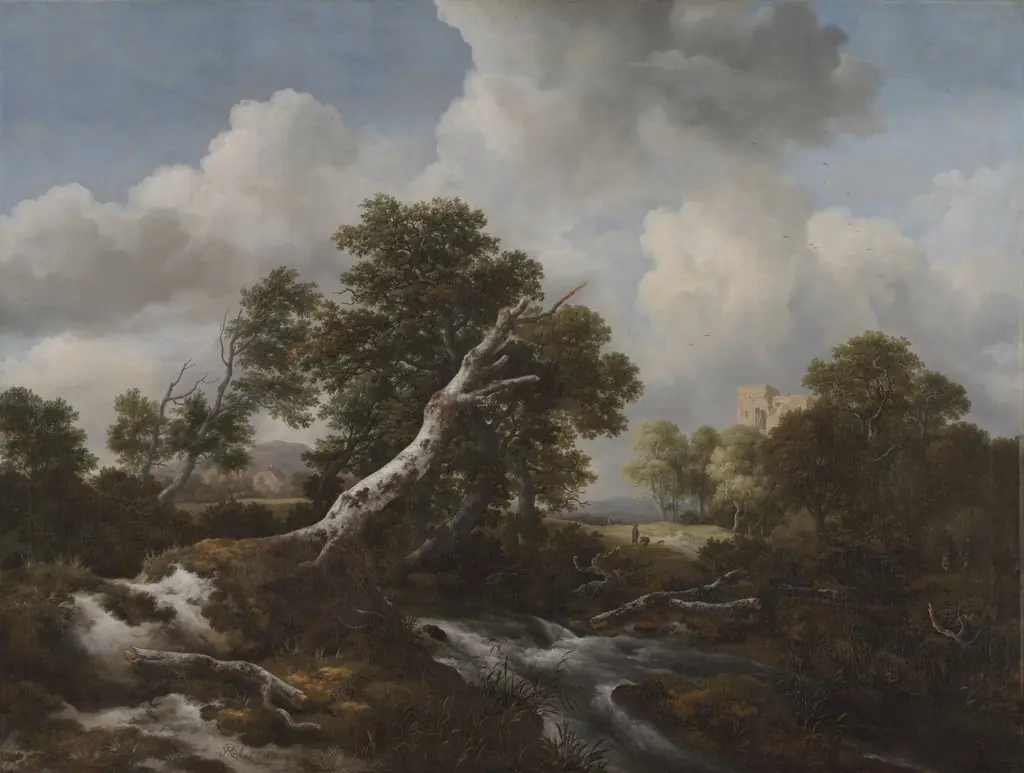
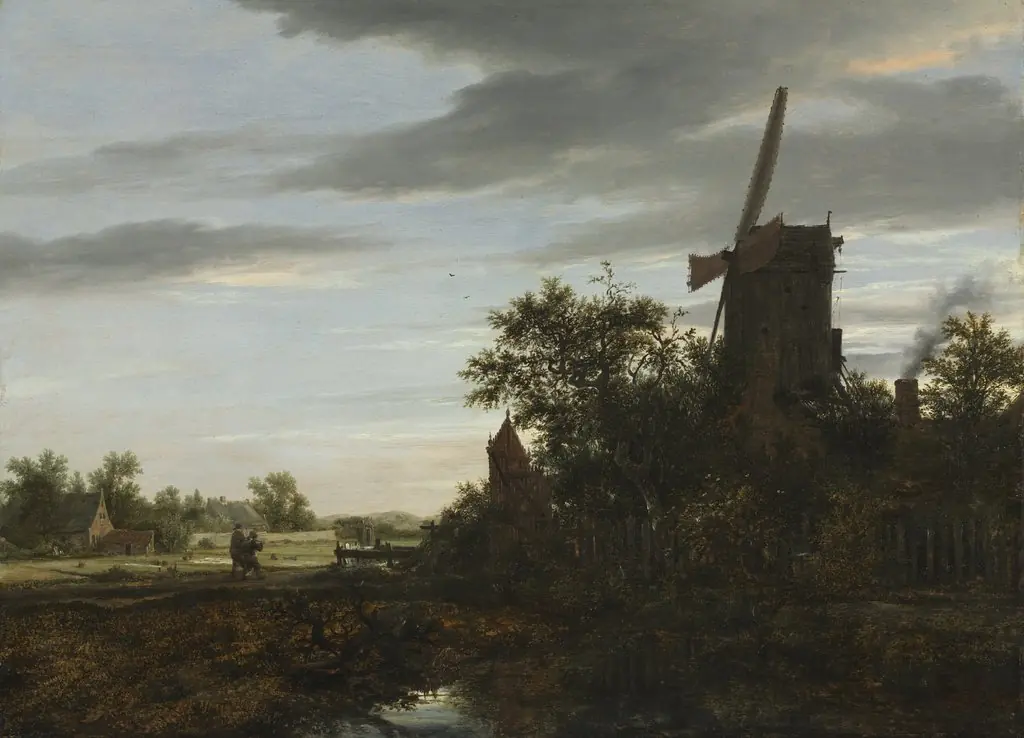
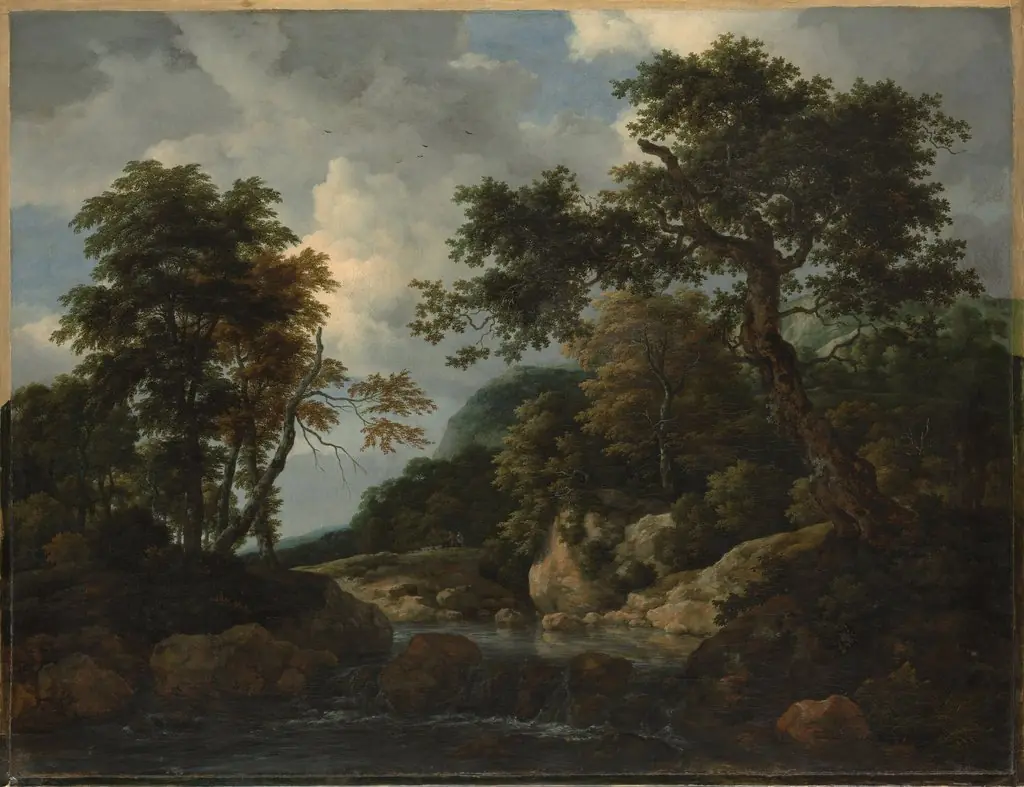
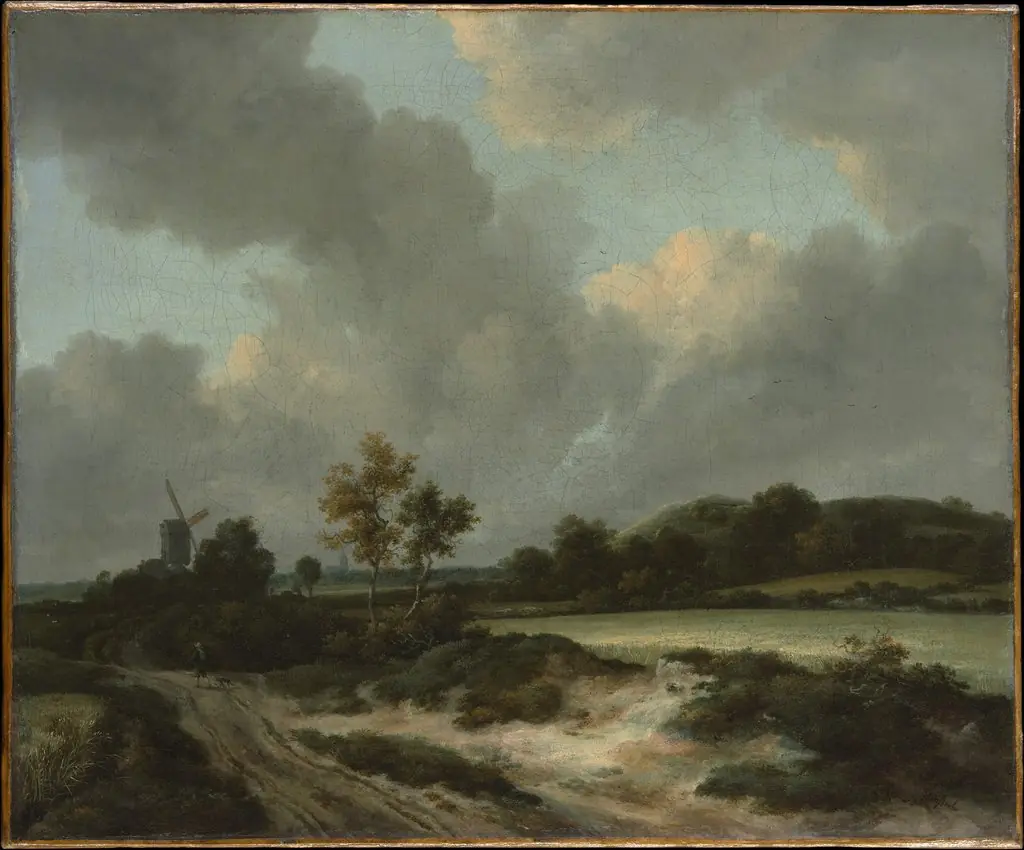
Painted in 1647, Landscape with some houses and a sand track is an early oil on canvas work by Jacob van Ruisdael, created when the artist was approximately nineteen years old. The composition depicts a tranquil Dutch countryside scene dominated by a winding sand track that cuts diagonally through the center, guiding the viewer's eye into the middle distance. On the left, a grassy verge borders a dense cluster of trees and bushes, while the right side features a few modest houses with thatched roofs nestled beneath a large, spreading tree. The sky occupies a significant portion of the canvas, rendered in pale, hazy tones that blend softly with the horizon, characteristic of the atmospheric perspective favored by Dutch landscape painters of the seventeenth century. This work reflects Ruisdael's early adherence to the traditions of his uncle, Salomon van Ruysdael, and his teacher, Jacob van Goyen, emphasizing naturalistic detail and a subdued palette. It marks a formative stage in the artist's career, preceding his later, more dramatic and monumental landscapes, yet already demonstrating his skill in capturing the quiet, everyday beauty of the Dutch rural environment.
Subject & Meaning
The work captures an everyday countryside setting, emphasizing the quiet coexistence of human habitation and nature. The modest houses with thatched roofs and the unpaved road suggest a timeless, agrarian lifestyle, while the surrounding vegetation and open sky convey a sense of calm permanence and the subtle rhythms of rural life.
Technique & Style
Ruisdael employs a restrained palette of muted greens, browns, and grays, allowing light to filter softly across the canvas. Delicate modeling of light and shadow gives the road a dry, textured appearance, and the foliage is rendered with fine, layered brushwork that creates depth without overt detail, characteristic of his early Dutch landscape approach.
History & Provenance
Created in the mid‑17th century, the painting entered the collection of the State Hermitage Museum in St. Petersburg, where it remains on display. Its acquisition reflects the museum’s long‑standing interest in Dutch Golden Age landscapes, and it stands as a representative example of Ruisdael’s early output.
Own this work as a print
Artist & collection
Artist
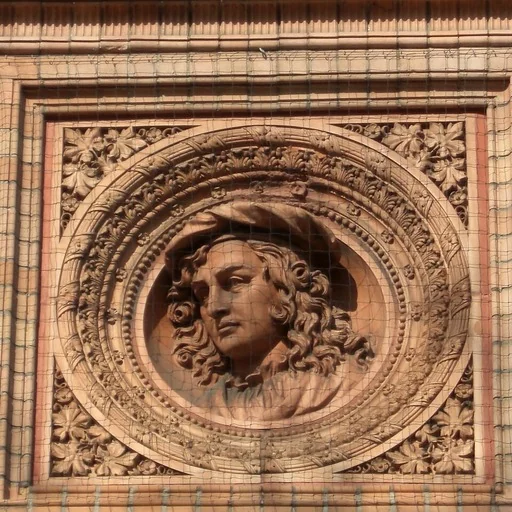
Jacob Isaackszoon van Ruisdael was a Dutch painter, draughtsman, and etcher. He is generally considered the pre-eminent landscape painter of the Dutch Golden Age, a period of great wealth and cultural achievement when…