Artwork
A Garland of Flowers Hanging from a Bough
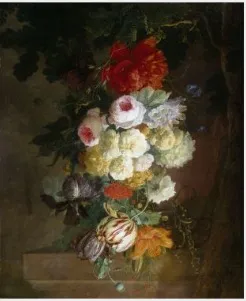
A Garland of Flowers Hanging from a Bough is an oil painting by the Rococo painting artist Jacob Xavery. It dates from 1760 and is held in the collection of the National Gallery of Ireland.
About this work
Overview
Painted in 1760 by Jacob Xavery, this oil-on-canvas still life depicts a naturalistic arrangement of flowers suspended from a slender branch.
Painted in 1760 by Jacob Xavery, this oil-on-canvas still life depicts a naturalistic arrangement of flowers suspended from a slender branch. Xavery, trained in The Hague and active across Dutch and French cities, specialized in floral compositions. The work exemplifies his refined handling of texture and light, aligning with the decorative sensibilities of the Rococo era while maintaining a restrained elegance uncommon in the genre.
Subject & Meaning
The painting presents a loose cascade of blooms—roses, carnations, and other seasonal varieties—interspersed with delicate leaves and stems. No symbolic narrative is overt; instead, the focus lies in the transient beauty of nature. The arrangement suggests a moment captured mid-fall, evoking quiet contemplation rather than allegory. Its organic flow contrasts with rigid floral displays, emphasizing impermanence through visual spontaneity.
Technique & Style
Xavery employed chiaroscuro to model each petal and leaf with subtle gradations of light and shadow, lending volume and realism. The palette is restrained, dominated by soft pinks, creams, pale yellows, and muted oranges, avoiding garishness. Brushwork varies—delicate strokes define petals, while broader touches suggest foliage and bark. The dark, neutral background isolates the bouquet, enhancing its luminous presence without distraction.
History & Provenance
Created during Xavery’s mature period, the painting reflects his exposure to both Dutch still-life traditions and French artistic circles, where he spent time in Paris. It remained in private collections before entering the National Gallery of Ireland’s holdings. While not widely documented in contemporary records, its technical precision and composition suggest it was valued by collectors of refined decorative art in the late 18th century.
Context
In mid-18th-century Europe, floral still lifes remained popular among bourgeois patrons seeking refined domestic decoration. Xavery’s work aligns with the Rococo taste for naturalism and delicacy, yet avoids the excesses of French courtly styles. His training under Jakob de Wit and possible emulation of Nicolaes Berchem place him within a lineage of Dutch flower painters who prioritized observational accuracy over symbolic overload.
Legacy
Though Xavery is not among the most renowned Dutch still-life painters, this work exemplifies the quiet mastery of his generation. It contributes to the understanding of how regional artists adapted established genres with personal restraint. The painting endures as a testament to the enduring appeal of botanical observation in art, valued for its calm precision rather than dramatic flair.
Artist & collection
Artist
Jacob Xavery (27 April 1736 – after 1771) was a Dutch painter. Xavery was born in The Hague. He was the son of sculptor Jan Baptist Xavery and pupil of Jakob de Wit. He practised in Amsterdam, Breda, and The Hague, and…

 Nature morte de fleurs
 Flowers in a glass vase, on a stone table
 Buchet de flori cu trandafir alb; pandant: Buchet de flori cu trandafiri roșii
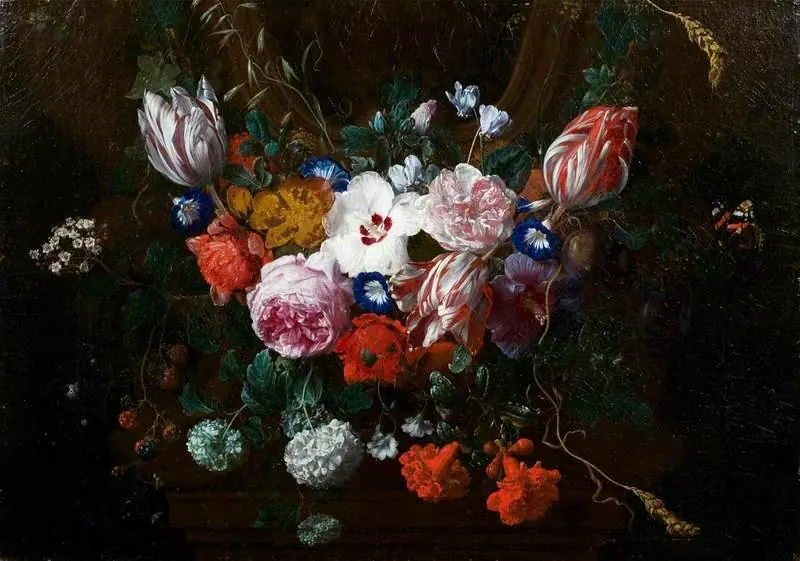 Flowers beneath a Cartouche
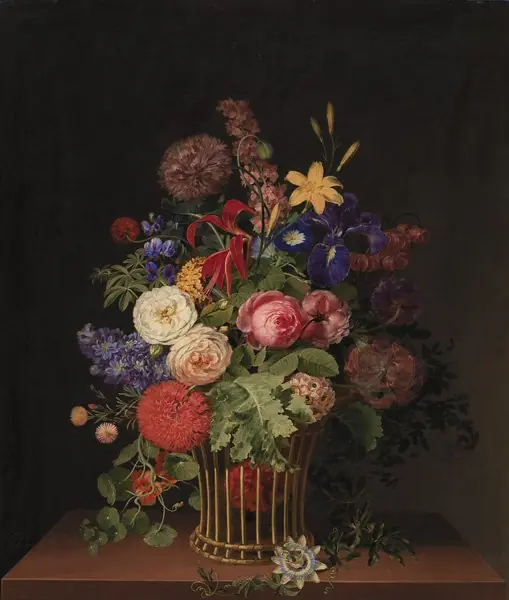 En let rørkurv med blomster
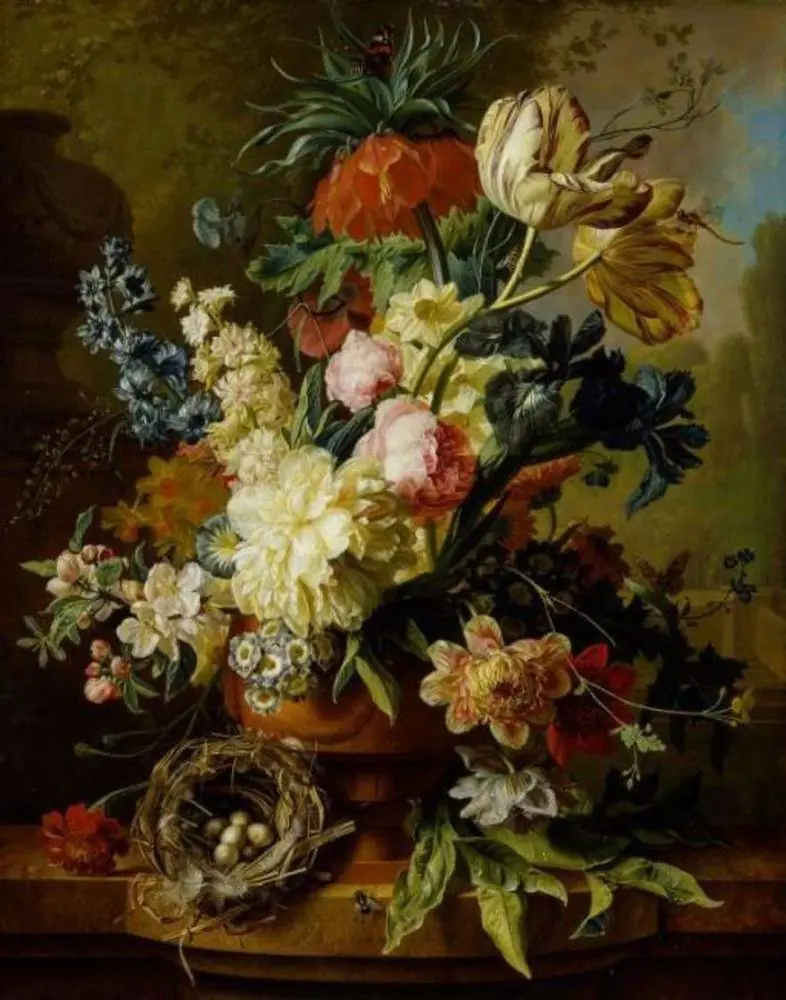 Vase of flowers
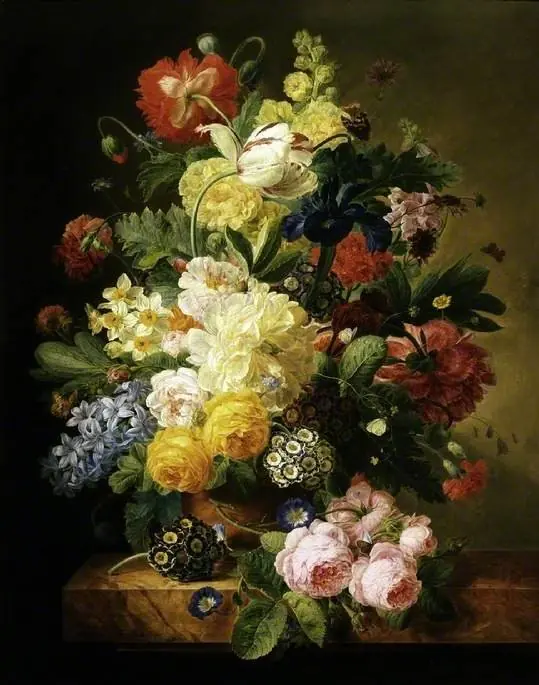 Vase of flowers
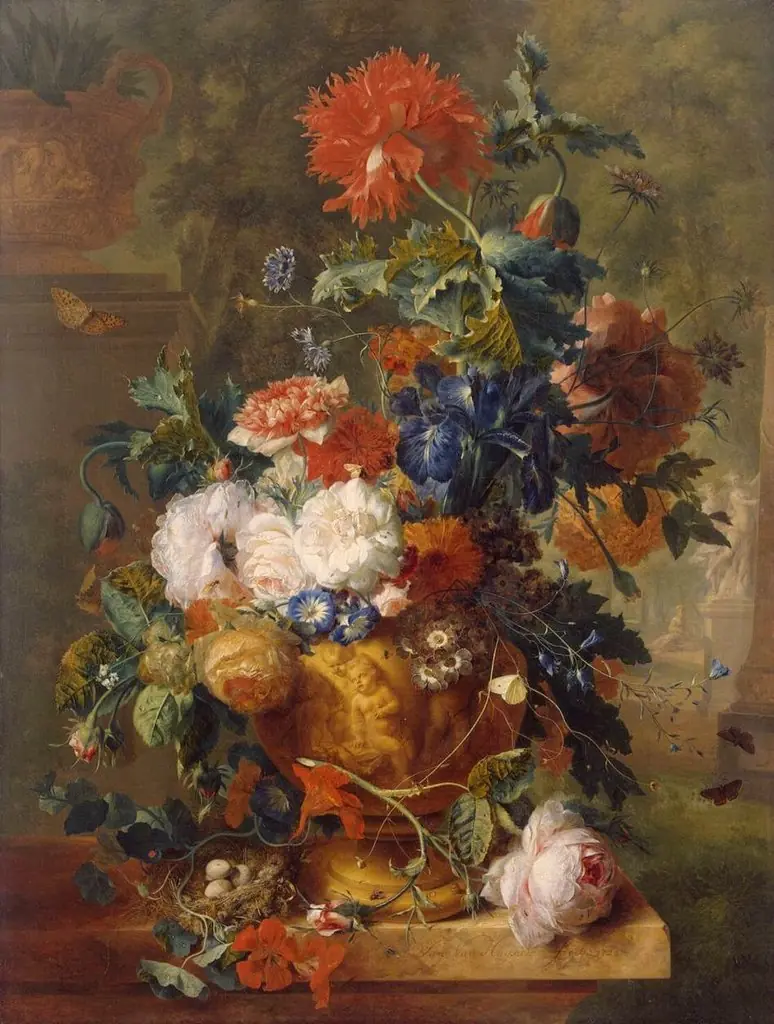 Flowers
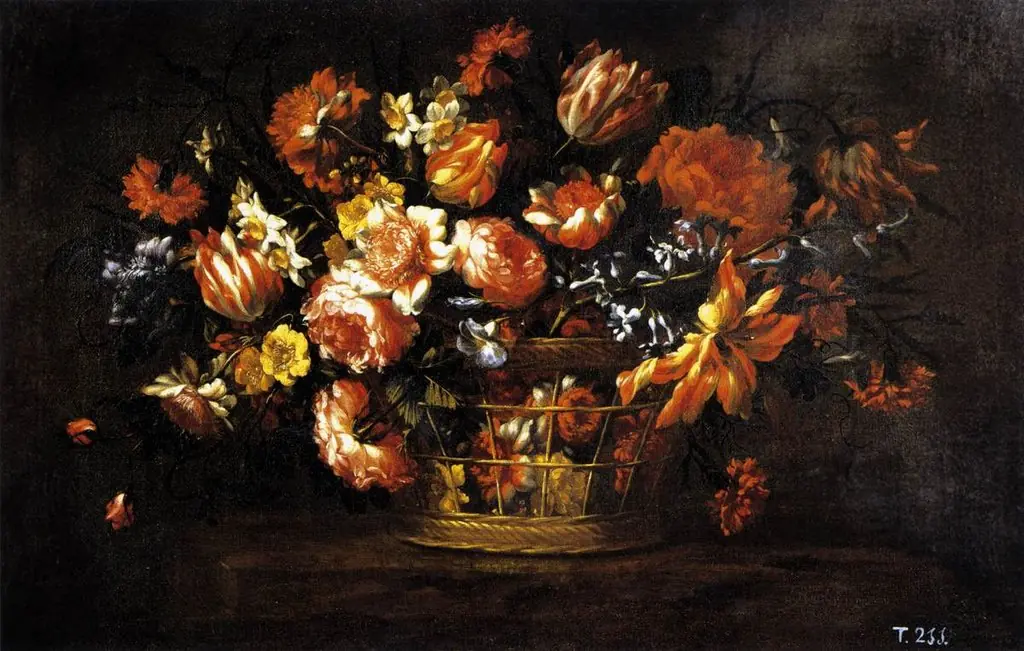 Basket of Flowers
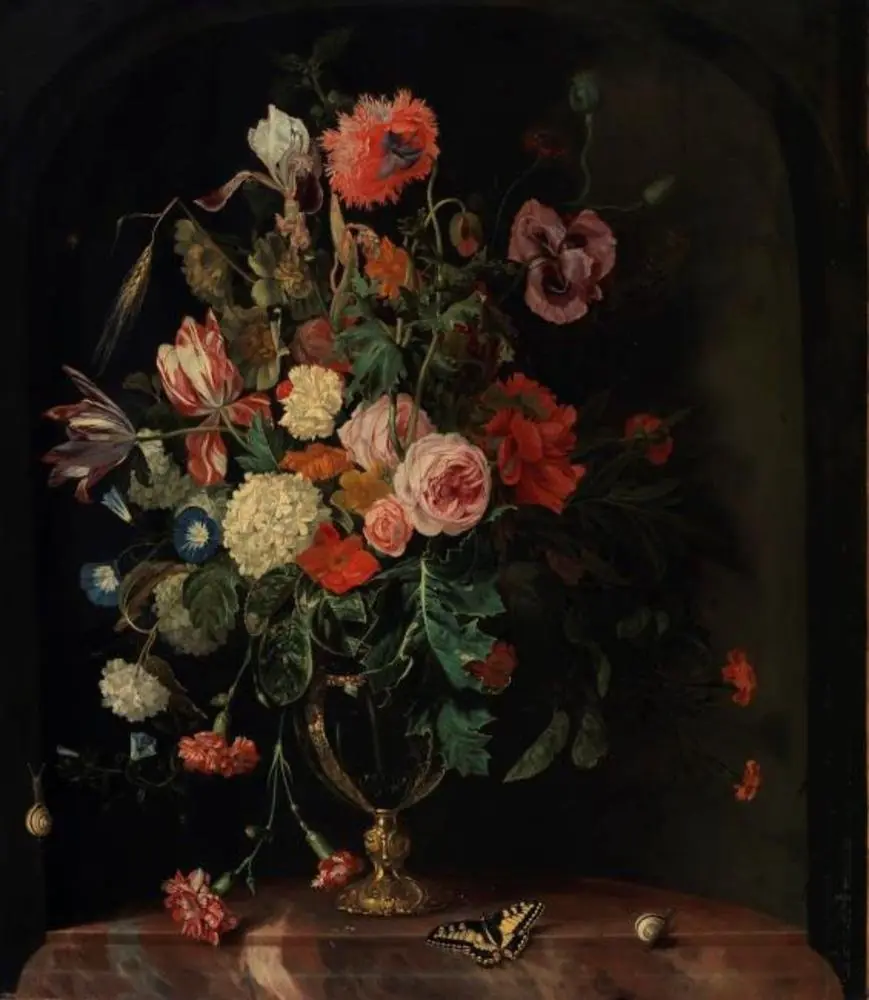 Vase of flowers
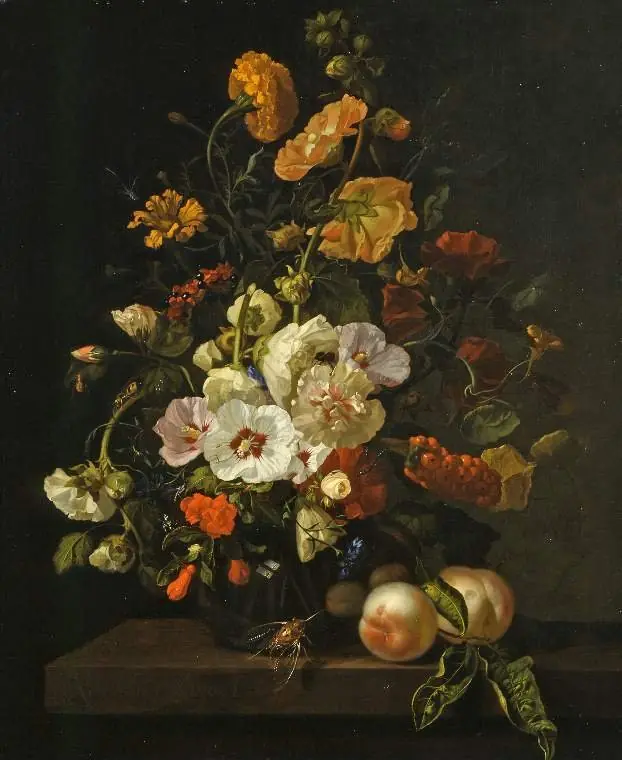 Flowers in a glass vase, with insects and peaches, on a marble tabletop
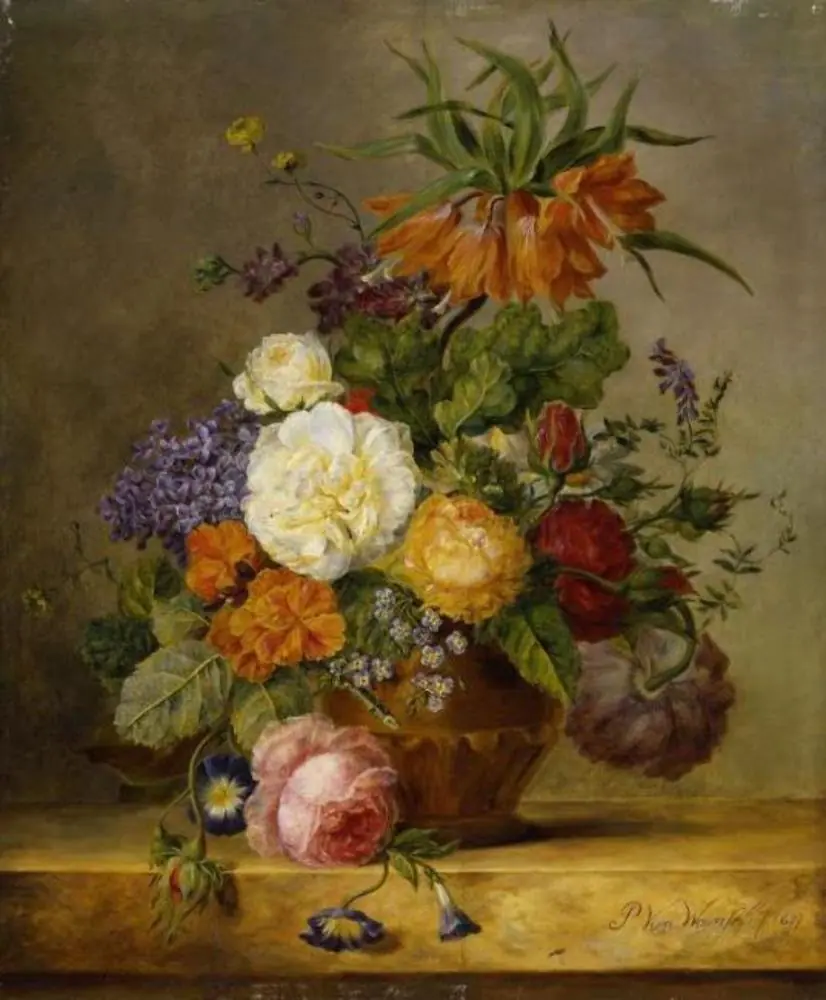 An urn of flowers