Artwork
Flowers beneath a Cartouche
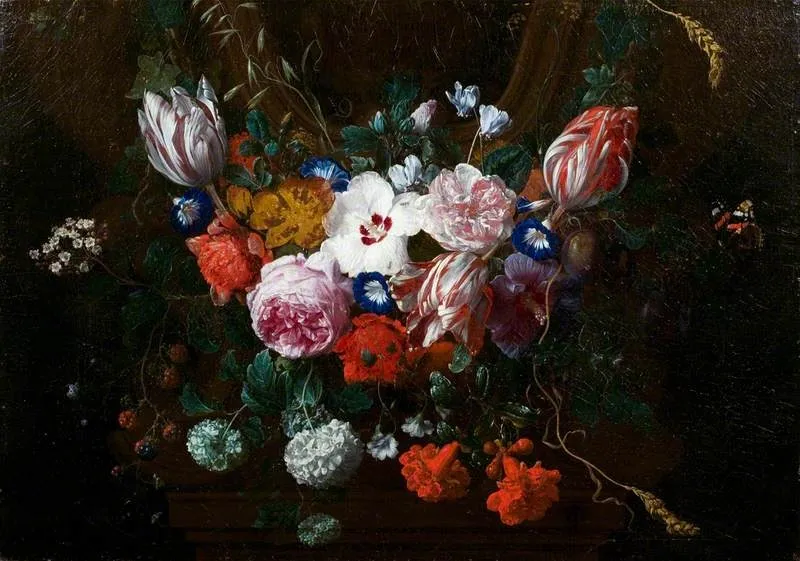
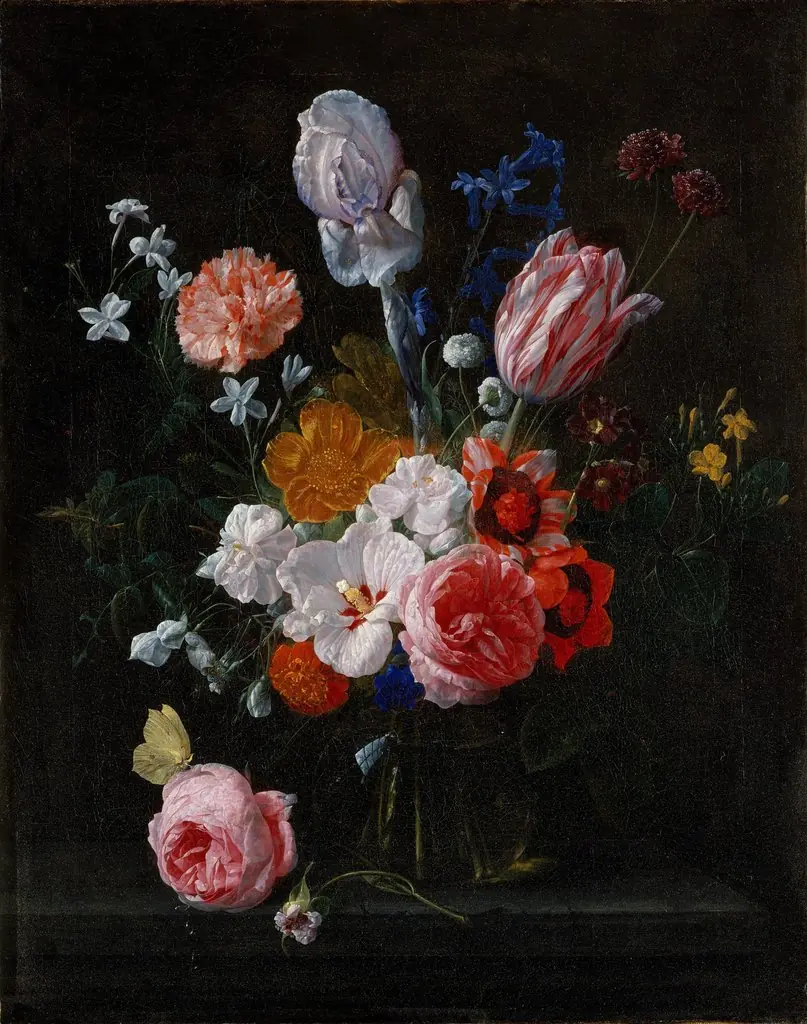
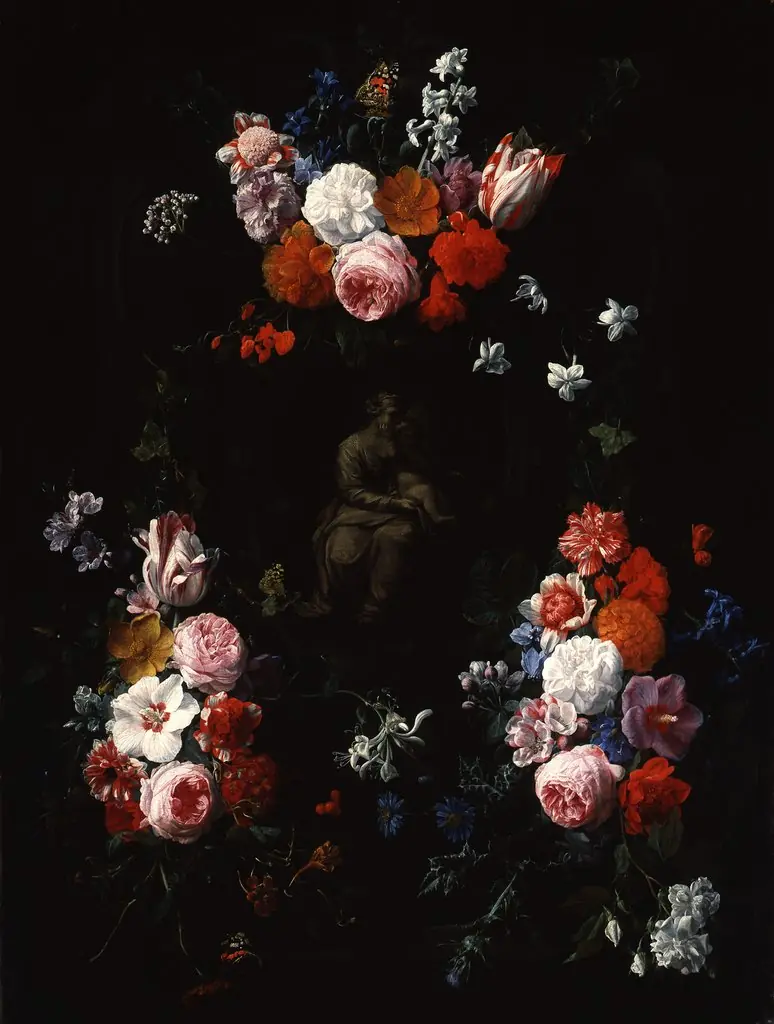
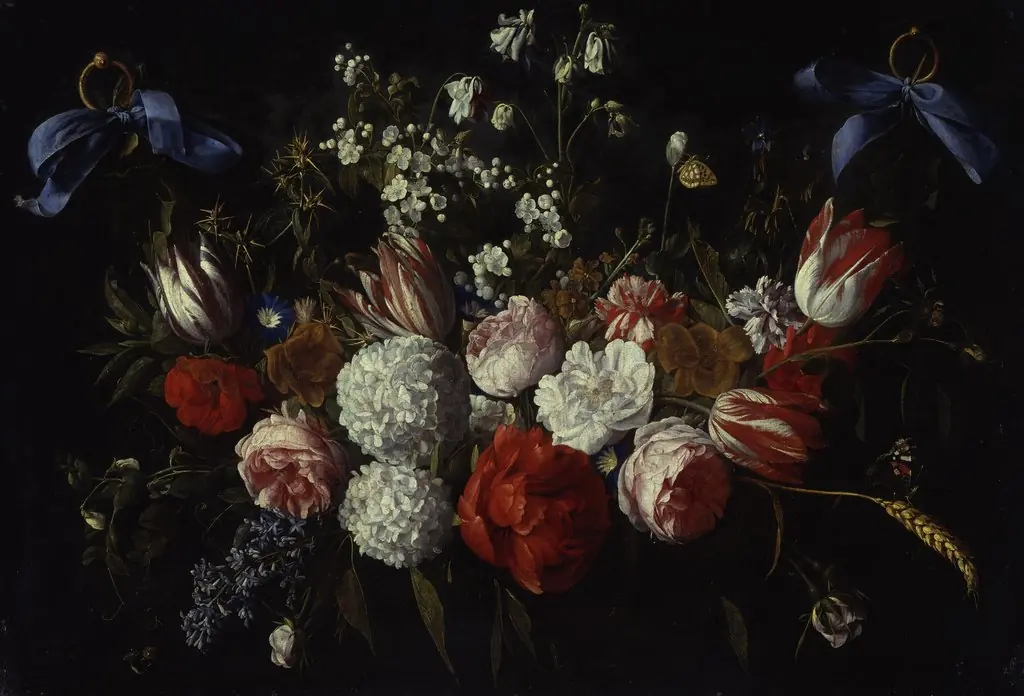
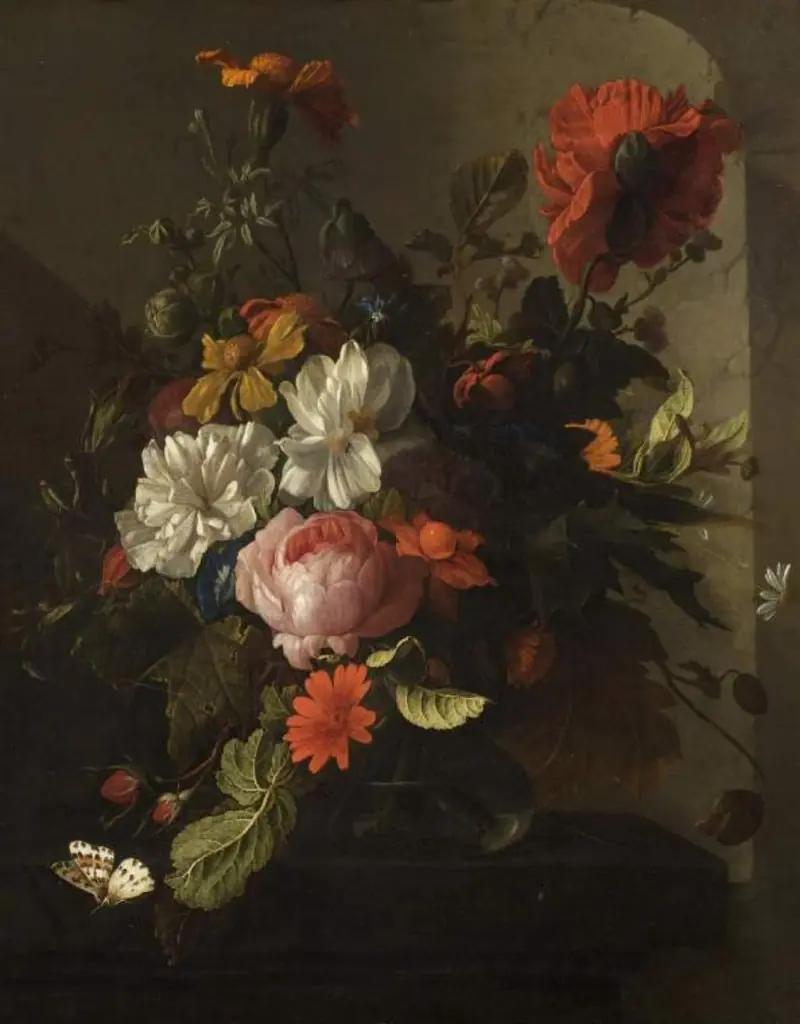
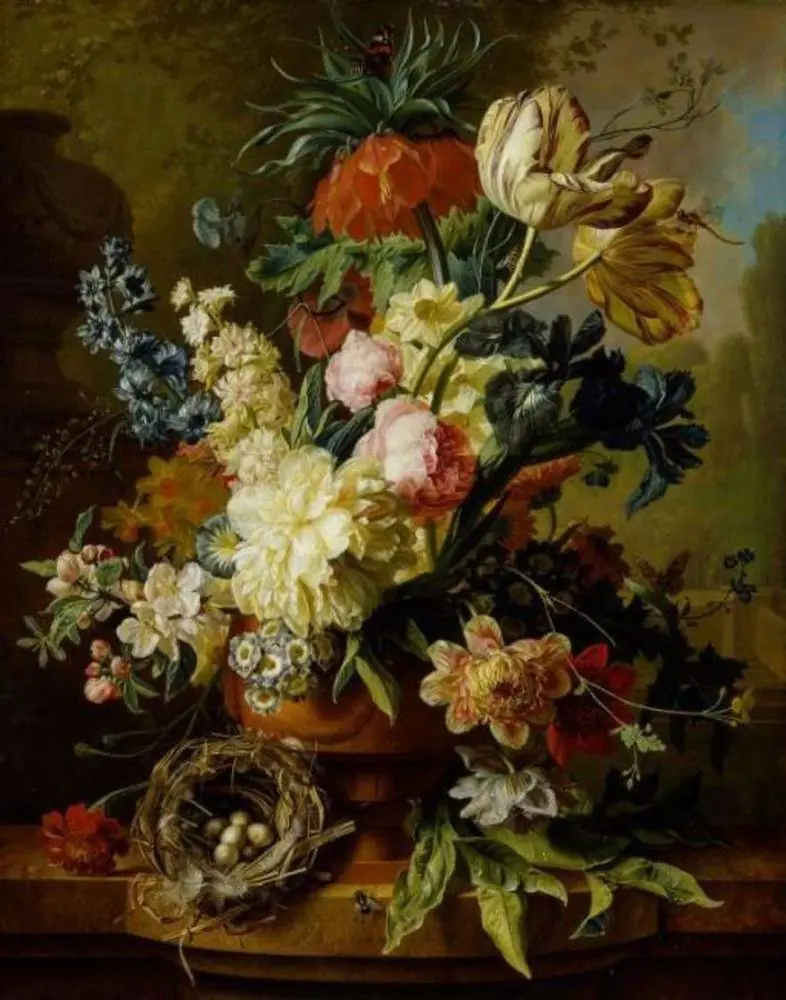
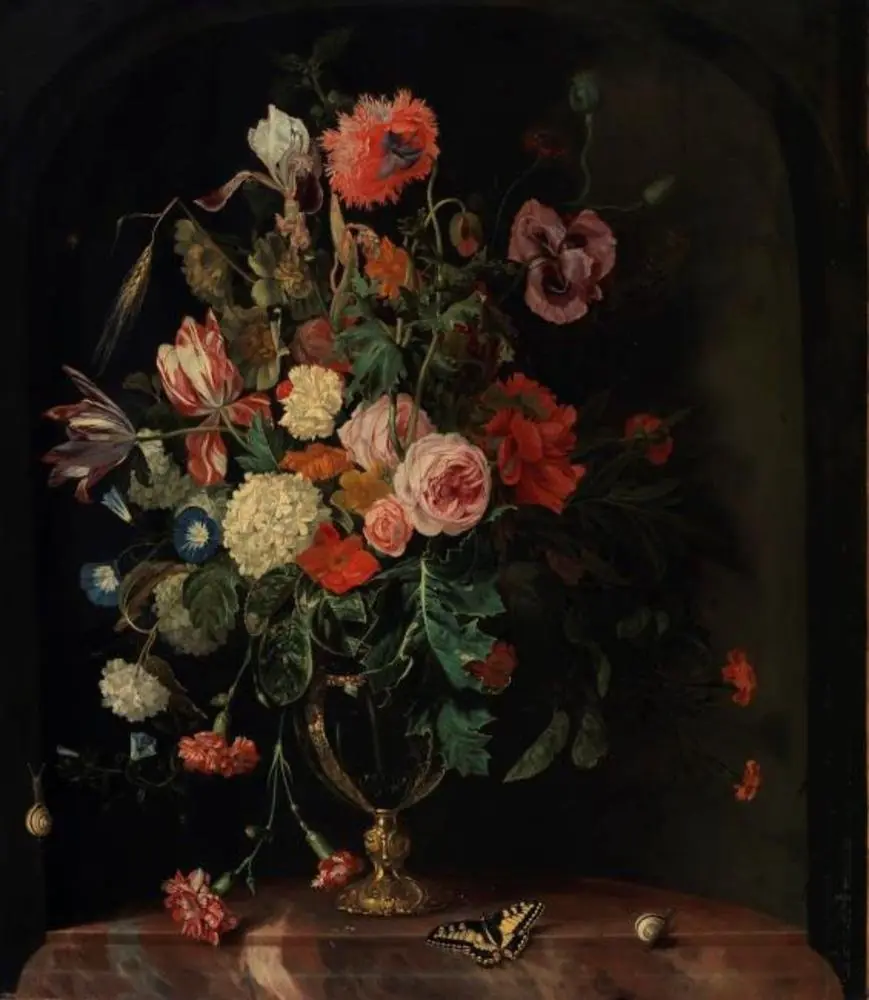
Flowers beneath a Cartouche is an oil painting by the Dutch Golden Age artist Nicolaes van Verendael. It dates from 1688 and is held in the collection of the Victoria and Albert Museum.
About this work
Overview
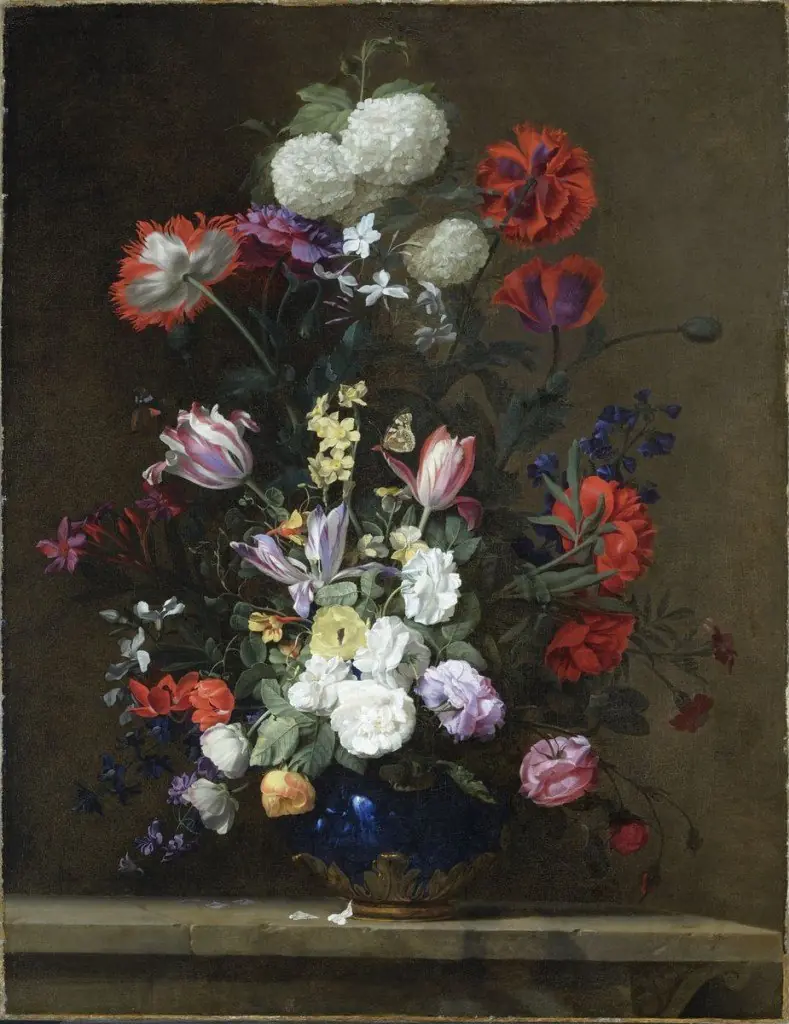
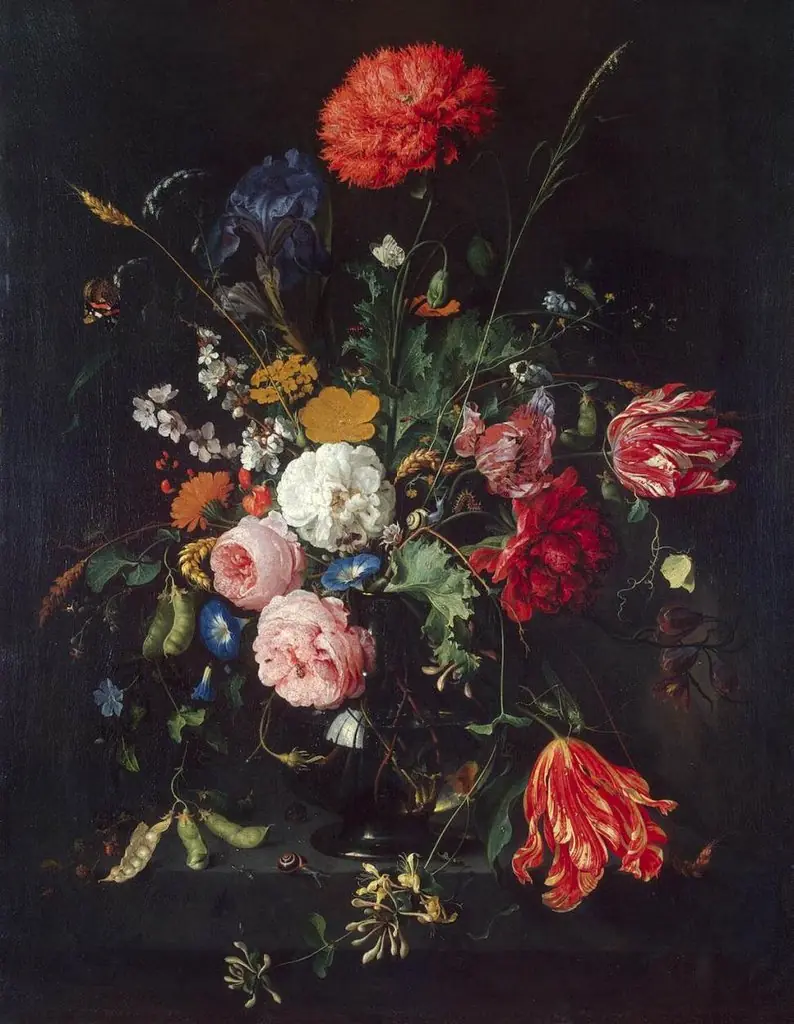
It features a loose arrangement of seasonal blooms positioned beneath a decorative cartouche, a framing device common in period compositions.
Painted in 1688 by Nicolaes van Verendael, this oil on panel work belongs to the Flemish still life tradition of the late 17th century. It features a loose arrangement of seasonal blooms positioned beneath a decorative cartouche, a framing device common in period compositions. The painting reflects Verendael’s specialization in floral subjects and his role within Antwerp’s artistic community, where artists often contributed specialized elements to collaborative works.
Subject & Meaning
The painting presents a diverse bouquet of flowers, chosen for their varied blooming seasons, suggesting the fleeting nature of life. The cartouche, typically used for inscriptions or heraldry, here serves as a visual anchor, contrasting the organic chaos of the blooms with rigid formality. Together, they evoke themes of transience and beauty, aligning with vanitas conventions without overt symbols of mortality.
Technique & Style
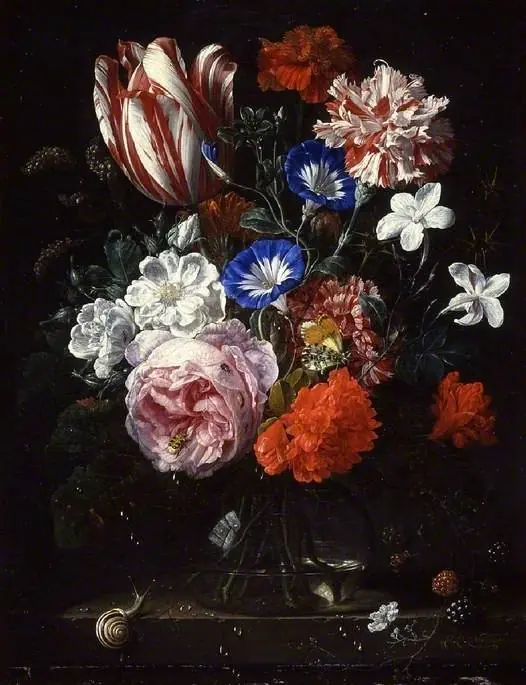
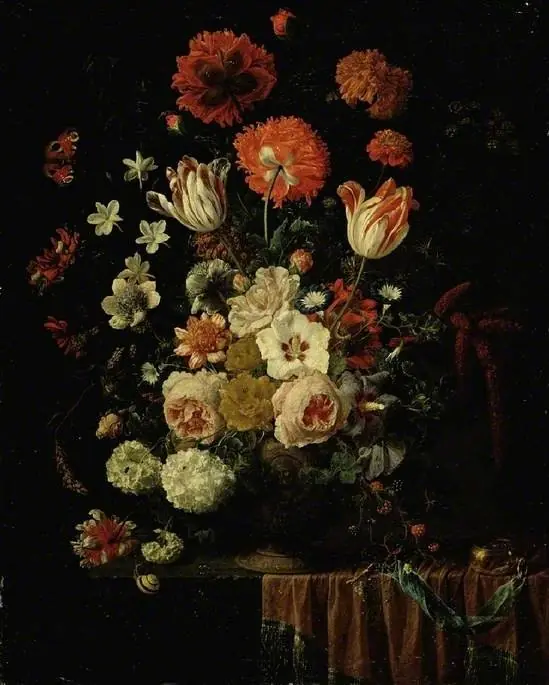
Verendael rendered each petal and leaf with meticulous attention to texture and color gradation, using fine brushwork to capture the translucency of petals and the sheen of dew. The dark, neutral background enhances the vibrancy of the flowers, while directional lighting models their forms with subtle chiaroscuro. The composition’s asymmetry and spilling blooms create a sense of natural spontaneity, avoiding rigid symmetry typical of earlier still lifes.
History & Provenance
Created in Antwerp during the final decade of Verendael’s career, the painting reflects the enduring demand for floral still lifes among private collectors in the Southern Netherlands. Though its early ownership is undocumented, its survival in good condition suggests it was valued within private collections. It remains a representative example of late Baroque Flemish still life practice, preserved in institutional collections today.
Context
Flower painting flourished in the Low Countries during the 17th century, fueled by horticultural interest and the rise of a wealthy merchant class. Verendael worked within a network of specialists who contributed still life elements to larger compositions. His work aligns with broader trends in Dutch and Flemish art that celebrated natural beauty while embedding quiet reflections on impermanence, distinct from overt religious or allegorical programs.
Legacy
Verendael’s floral works, including this one, contributed to the codification of the Flemish still life genre in the late Baroque period. His attention to botanical accuracy and atmospheric rendering influenced subsequent generations of flower painters. Though less widely known than contemporaries like Jan Brueghel, his oeuvre remains a significant reference for understanding the evolution of naturalistic painting in the Southern Netherlands.
Artist & collection
Artist
Nicolaes van Verendael or Nicolaes van Veerendael (1640 in Antwerp – 1691 in Antwerp) was a Flemish painter active in Antwerp who is mainly known for his flower paintings and vanitas still lifes.