Artwork
La Sagrada Familia
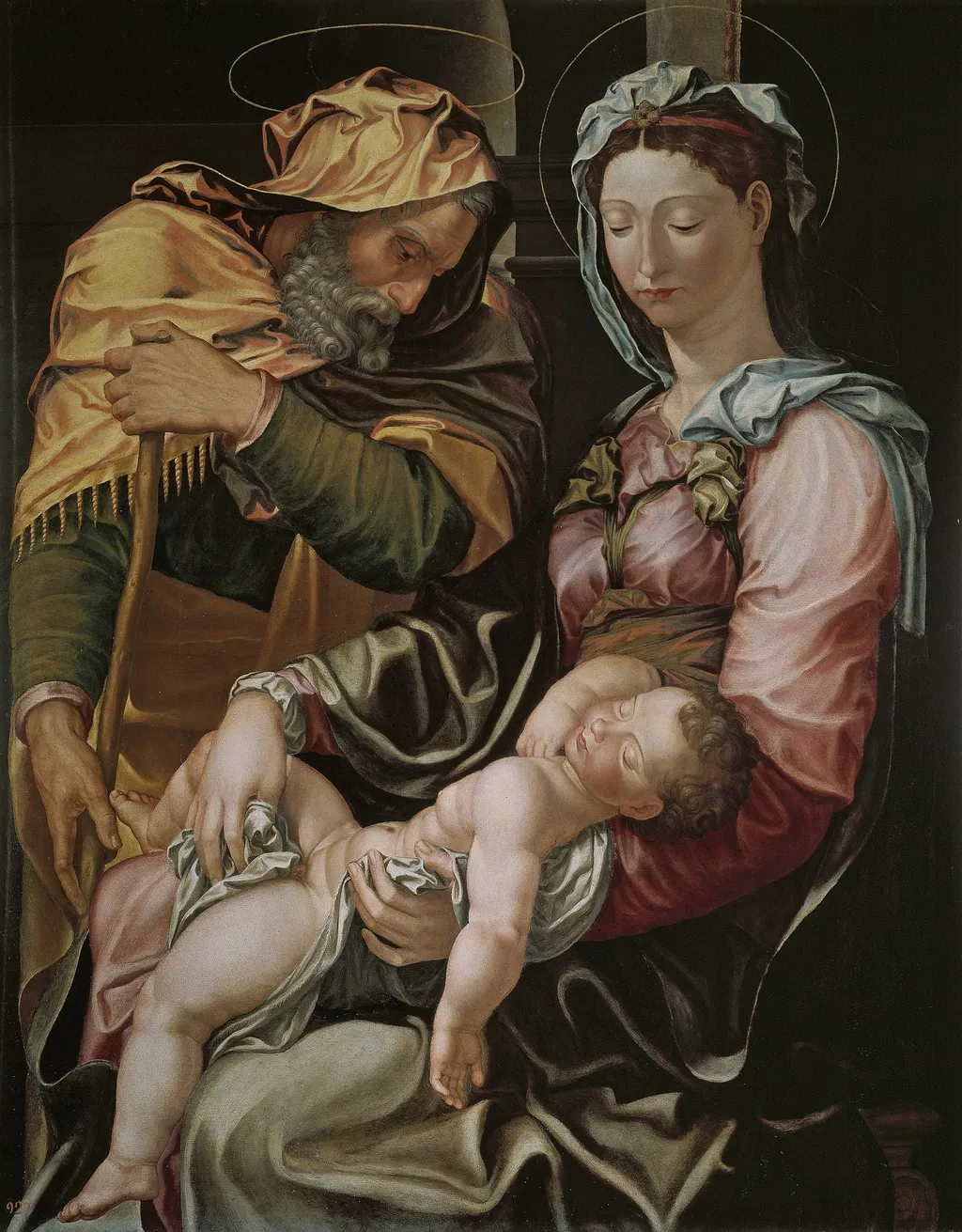
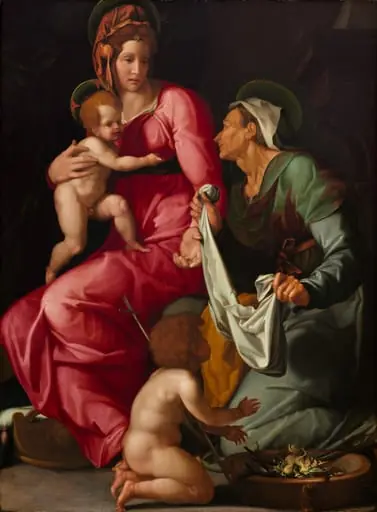
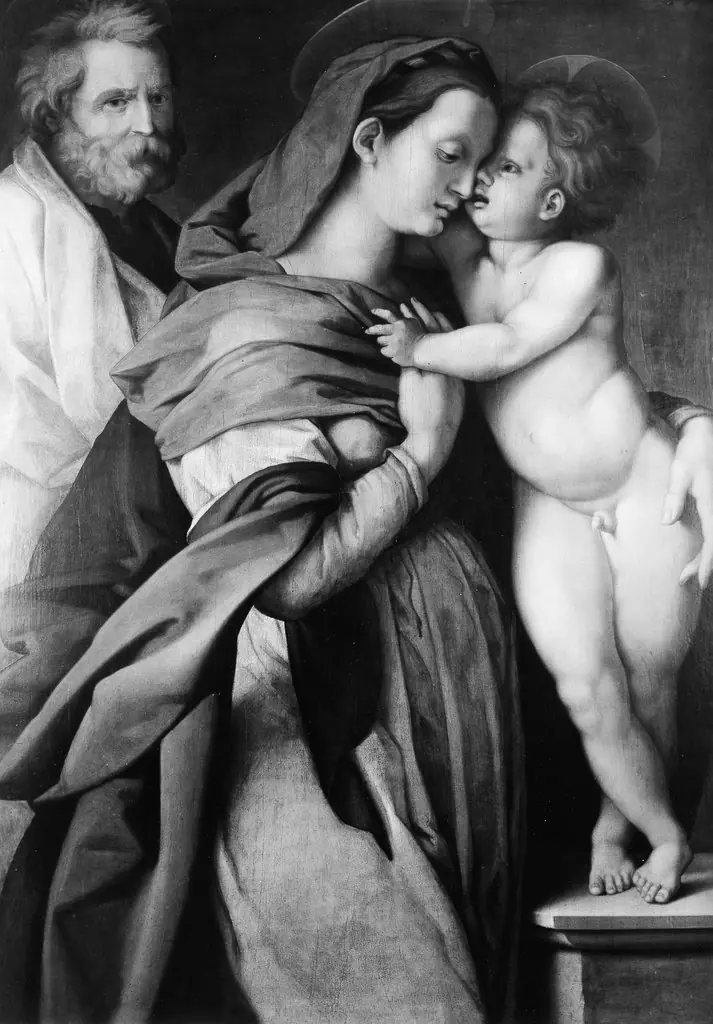
La Sagrada Familia is an oil painting by the Mannerist artist Jacopino del Conte. It dates from 1550 and is held in the collection of the Museo del Prado.
About this work
Overview
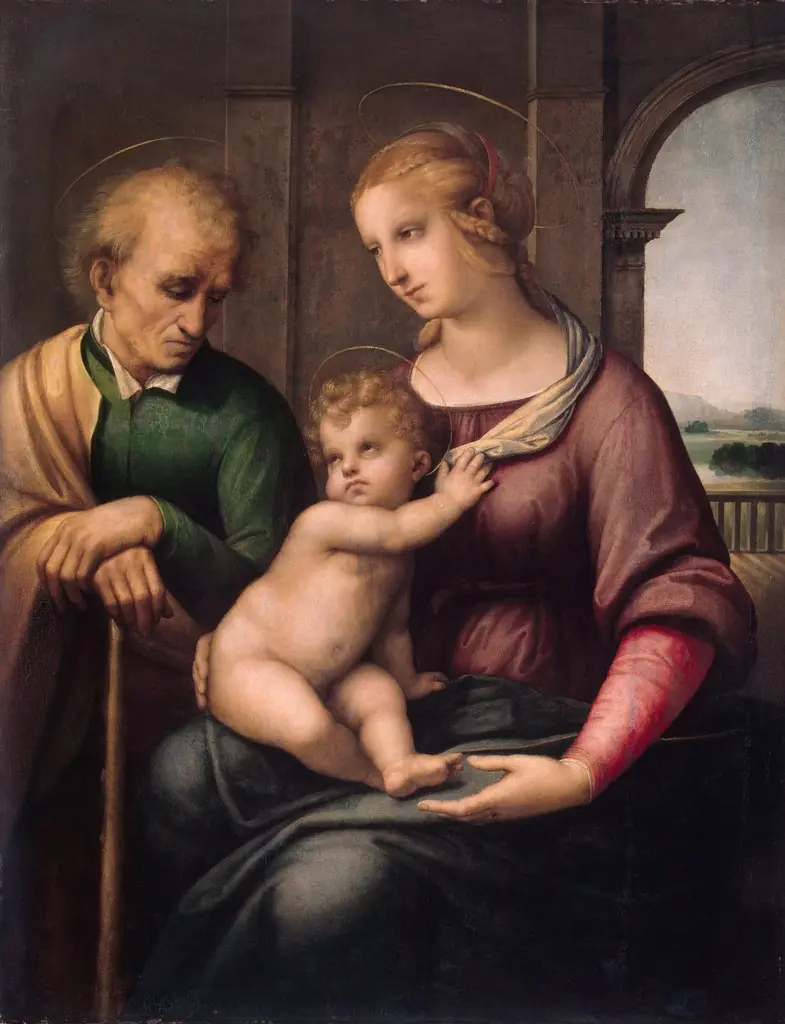
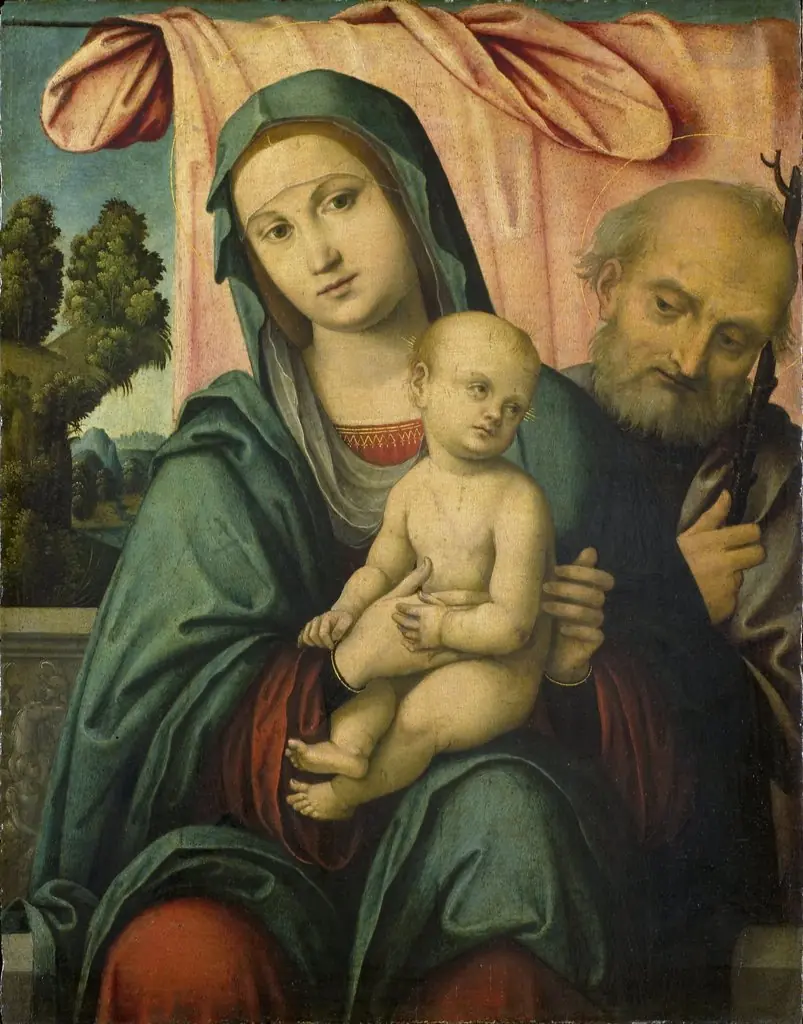
Created around 1550, this oil on canvas by Jacopino del Conte presents a quiet devotional scene now in the collection of the Museo del Prado. The work features three central figures—Mary, the infant Jesus, and an older male figure identified as Joseph—arranged within a modestly illuminated interior.
Subject & Meaning
The composition conveys a moment of familial intimacy: Mary cradles the sleeping Christ child, her expression calm yet weary, while the bearded man, likely Joseph, rests a hand on the infant’s arm. The halos above each head signal their sanctified status, reinforcing the painting’s religious purpose as a visual aid for contemplation.
Technique & Style
Del Conte employs a restrained chiaroscuro, allowing the limited light to model the figures against a dark backdrop and to emphasize the softness of flesh and fabric. The muted palette of blues, pinks, and earth tones, combined with delicate brushwork on the drapery, creates a sense of depth without elaborate detail.
History & Provenance
Attributed to the mid‑sixteenth‑century Italian painter Jacopino del Conte, the piece entered the Prado’s holdings through the museum’s acquisitions of Spanish and Italian religious works, though the exact path of ownership prior to its museum entry remains undocumented.
Context
The painting reflects the Counter‑Reformation’s emphasis on intimate, accessible depictions of holy figures, aligning with contemporary devotional practices that favored personal piety over grandiose public altar pieces. Its modest scale and focus on domestic tenderness exemplify the period’s shift toward private religious contemplation.
Own this work as a print
Artist & collection