Artwork
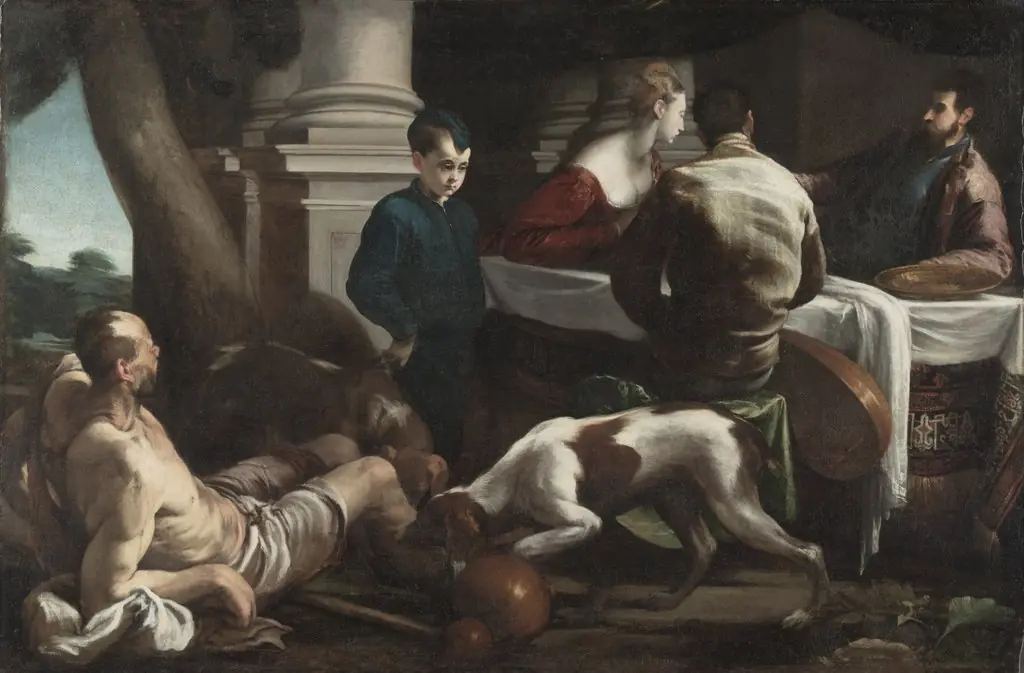
Lazarus and the Rich Man
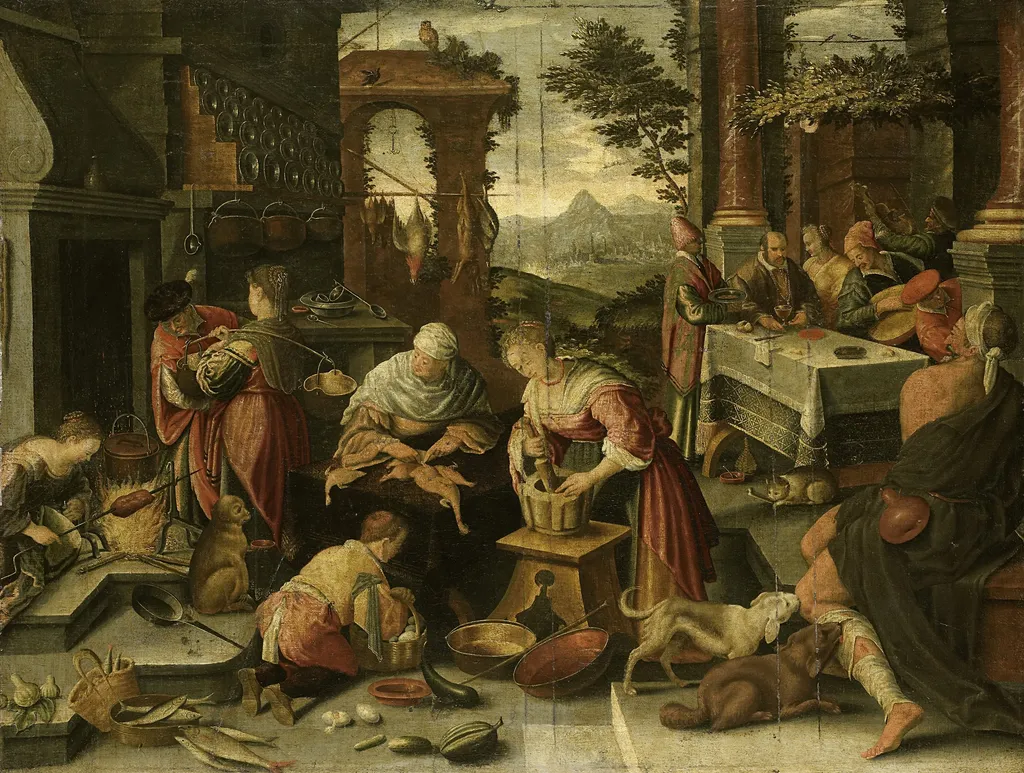
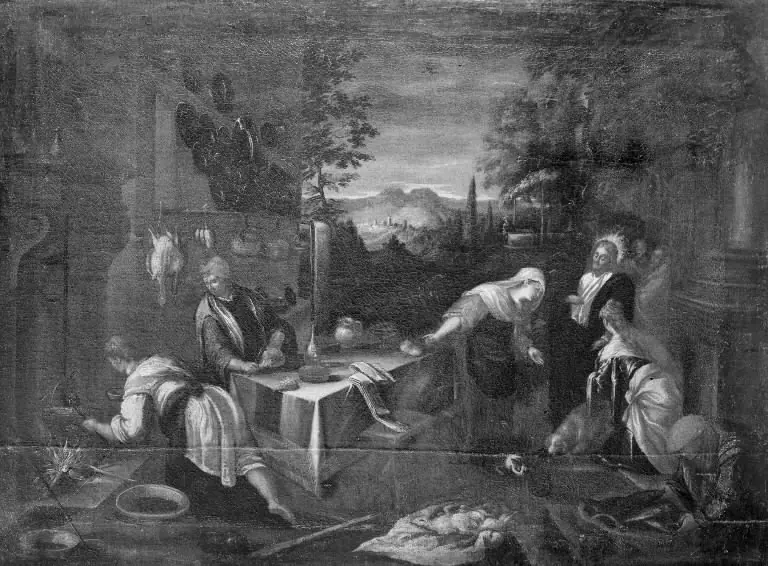
Lazarus and the Rich Man is an oil painting by the Mannerist artist Jacopo Bassano. It dates from 1550 and is held in the collection of the Rijksmuseum.
About this work
Overview
Jacopo Bassano’s oil on canvas, dated around 1550, interprets the biblical parable of Lazarus and the Rich Man. The work is part of the Rijksmuseum’s collection and presents the narrative within a domestic interior rather than a conventional heavenly setting.
Subject & Meaning
The painting juxtaposes the destitute Lazarus with a well‑fed wealthy figure, echoing the moral contrast of the Gospel story. By placing the two characters amid everyday activity, Bassano underscores the timeless relevance of compassion and social disparity.
Technique & Style
Bassano employs a strong chiaroscuro, letting illuminated faces emerge from surrounding shadow. The composition is dense with kitchen implements—pots, pans, and foodstuffs—creating a tactile sense of abundance that heightens the visual tension between light and dark.
History & Provenance
Created in the mid‑16th century, the canvas eventually entered the Rijksmuseum’s holdings, where it remains on display. Its provenance before acquisition by the museum is not extensively documented, reflecting typical gaps in the record for works of this period.
Context
During the Venetian Renaissance, Bassano was known for integrating genre scenes with religious themes. This work reflects that practice, merging a biblical episode with a bustling domestic environment, a hallmark of his approach to narrative painting.
Own this work as a print
Artist & collection
Artist
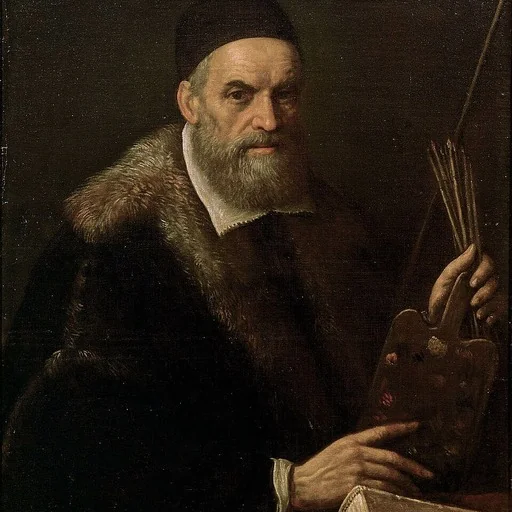
Jacopo Bassano was an Italian Renaissance painter of the Venetian school. He was born and died in Bassano del Grappa, and took the village as his surname. Having trained in the workshop of his father, Francesco the…