Artwork
Nativity
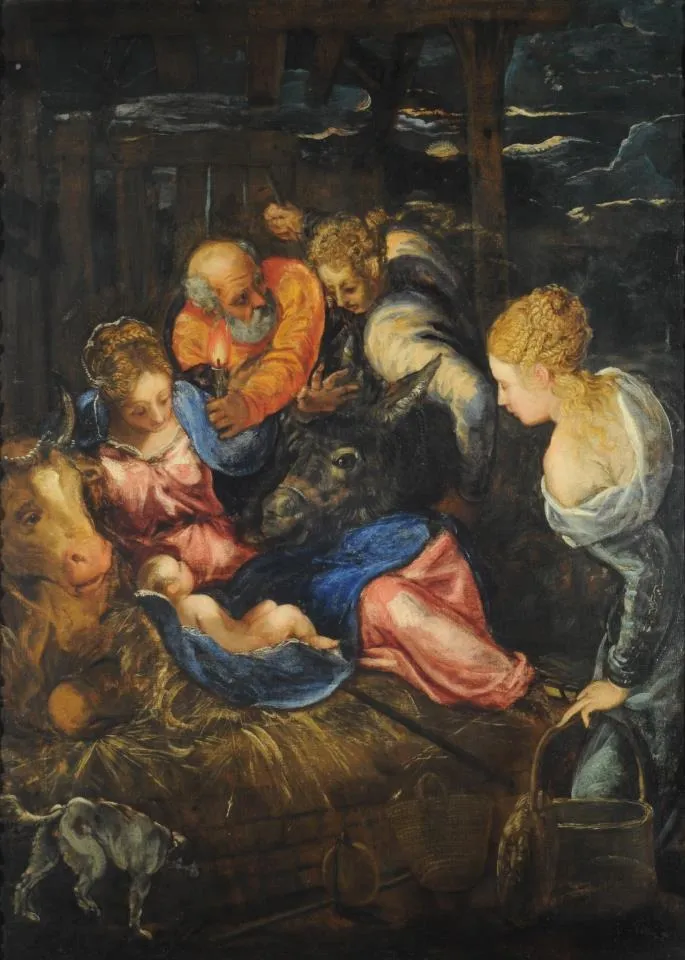
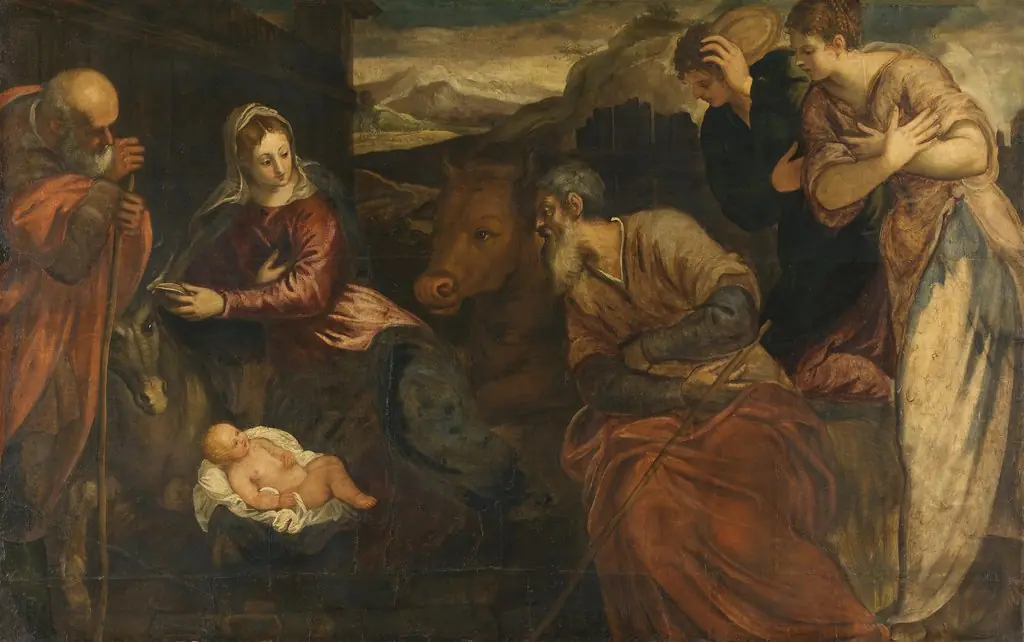
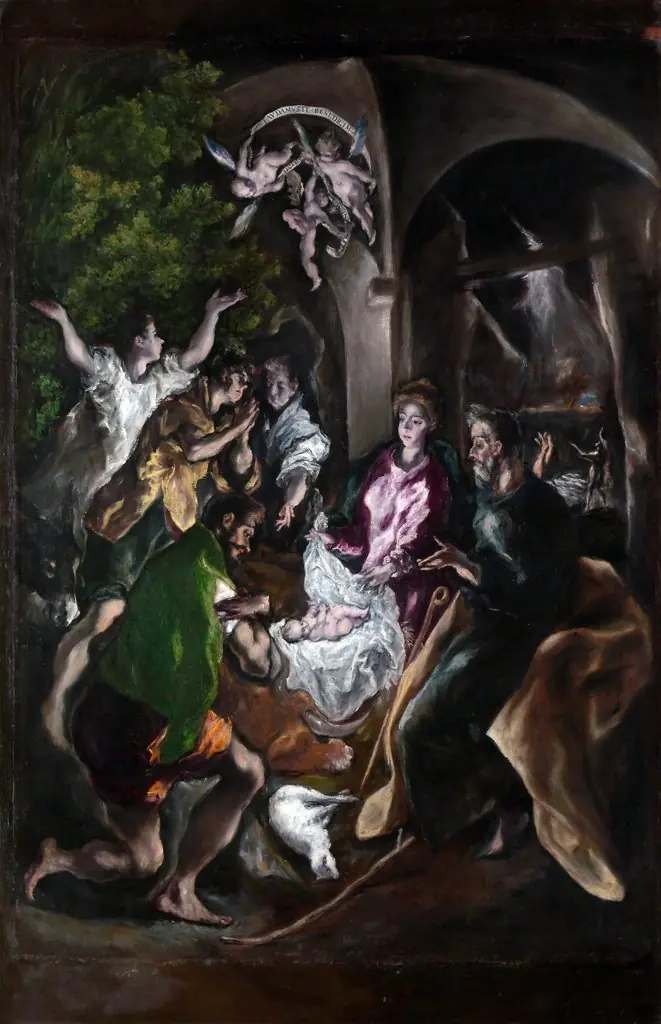
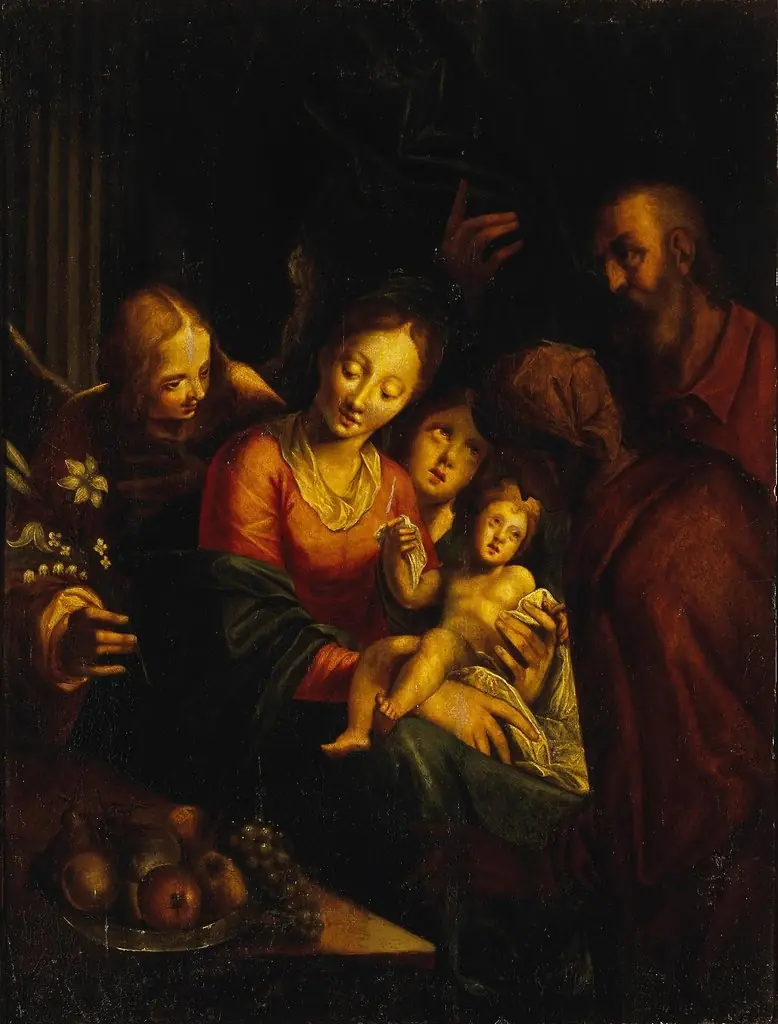
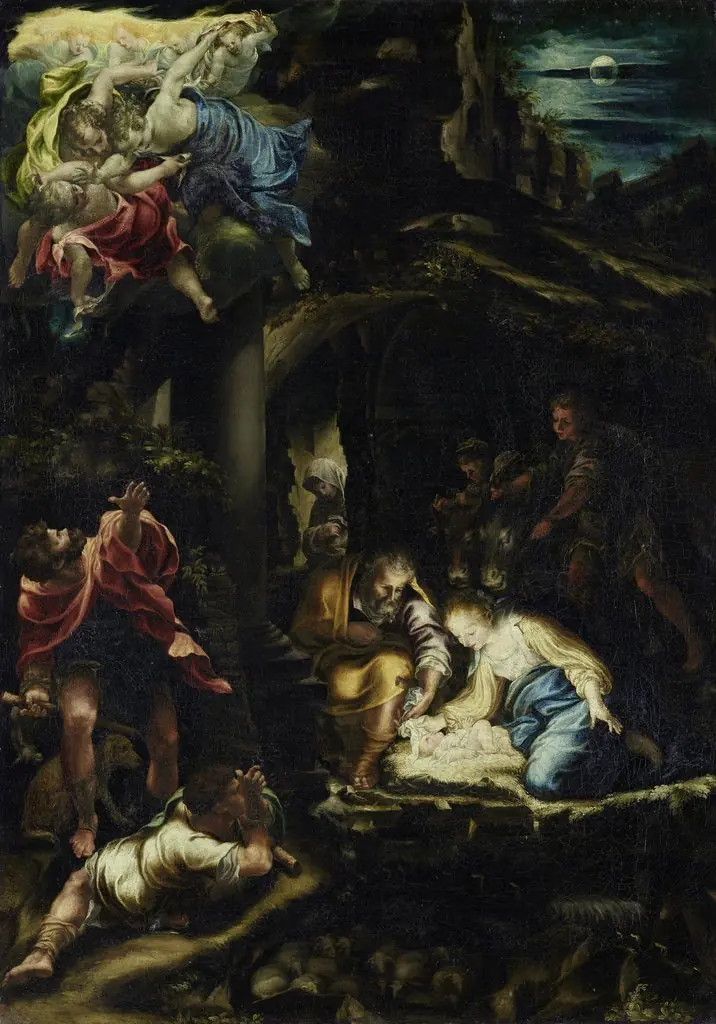
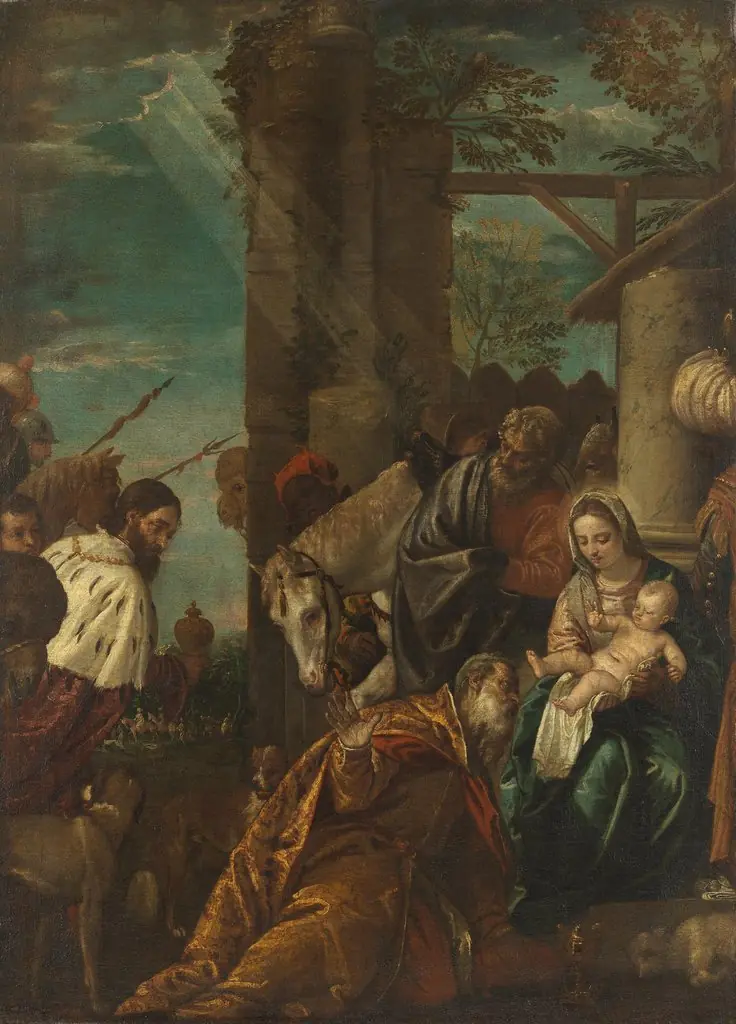
Nativity is an oil painting by the Mannerist artist Jacopo Tintoretto. It is held in the collection of the National Museum of Fine Arts, Argentina.
About this work
Overview
Executed late in the artist’s career, it reflects his enduring interest in spiritual atmosphere and dynamic composition.
Painted in 1596 by Jacopo Tintoretto, this oil-on-canvas work presents a quiet yet intense depiction of the Nativity. Executed late in the artist’s career, it reflects his enduring interest in spiritual atmosphere and dynamic composition. The painting is part of the permanent collection at the National Museum of Fine Arts in Buenos Aires, where it remains a significant example of late Mannerist religious art from Venice.
Subject & Meaning
The scene centers on the infant Christ, gently cradled and surrounded by figures in reverent stillness. A woman in pink and a man in orange robe observe the child with solemn focus, their gestures suggesting awe rather than celebration. The presence of the ox and donkey anchors the moment in earthly humility, reinforcing the theological emphasis on divine incarnation within ordinary surroundings. The composition avoids grandeur, favoring intimate devotion.
Technique & Style
Tintoretto employs chiaroscuro to model forms with subtle gradations of light and shadow, drawing attention to the Christ Child as the source of illumination. His brushwork is loose yet deliberate, conveying texture in fabric and animal hide without overt detail. The figures are elongated and arranged in a shallow, enclosed space, typical of Mannerist tendencies, while the dark background enhances the warmth of the central glow.
History & Provenance
Commissioned during Tintoretto’s final years, the painting likely originated in a Venetian religious context before entering private collections. Its journey to Buenos Aires remains undocumented in public records, but its arrival at the National Museum of Fine Arts by the early 20th century reflects broader patterns of European art dispersal in the Americas. The work has remained largely unstudied outside Latin American scholarly circles.
Context
Created near the end of the 16th century, the painting emerges amid the waning influence of High Renaissance ideals and the rise of Counter-Reformation piety. While Venetian artists like Titian emphasized color and harmony, Tintoretto pursued emotional intensity and theatrical lighting. This Nativity aligns with contemporaneous devotional imagery meant to inspire personal reflection, distinct from the more ceremonial scenes of Rome or Florence.
Legacy
Though less celebrated than Tintoretto’s larger altarpieces, this small-scale Nativity exemplifies his ability to convey sacred emotion through restrained means. Its quiet luminosity and psychological depth influenced later Baroque painters interested in intimate religious narratives. In Buenos Aires, it stands as a rare testament to Venetian Mannerism in Latin American collections, offering insight into transatlantic artistic exchange.
Artist & collection
Artist
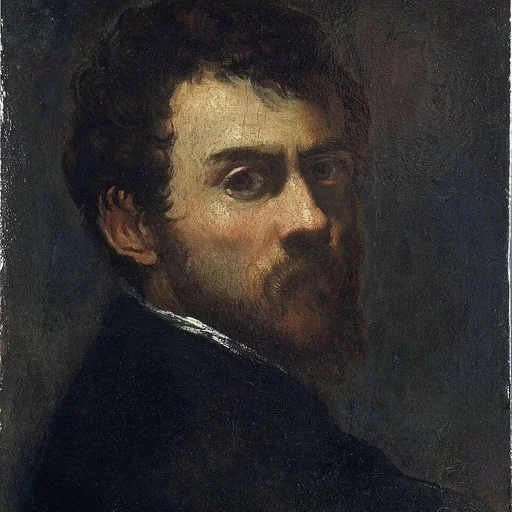
Jacopo Robusti (late September or early October 1518 – 31 May 1594), best known as Tintoretto ( TIN-tə-RET-oh; Italian: ; Venetian: ), was an Italian Renaissance painter of the Venetian school.

Museum
National Museum of Fine Arts, Argentina
Continue through works from the same source collection.