Artwork
The Capture of Parma by Federico II
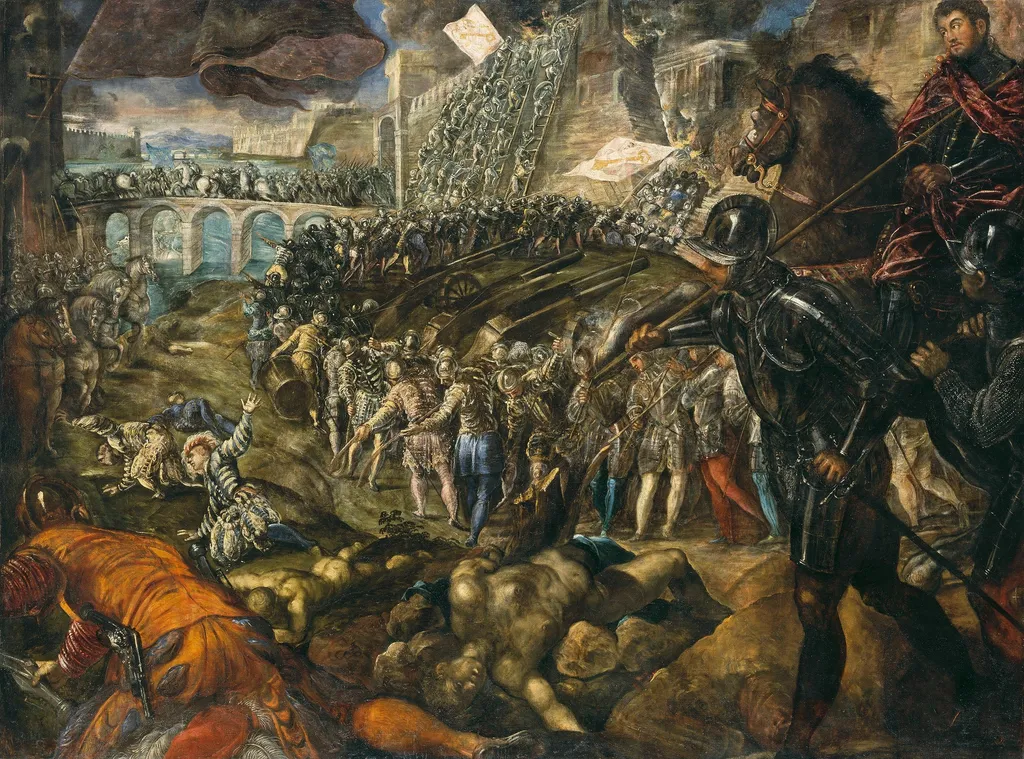
The Capture of Parma by Federico II is an oil painting by the Mannerist artist Jacopo Tintoretto. It dates from 1590 and is held in the collection of the Bavarian State Painting Collections. Painted in 1590, this oil-on-canvas work depicts the military seizure of Parma under Federico II Gonzaga.
About this work
Overview
Painted in 1590, this oil-on-canvas work depicts the military seizure of Parma under Federico II Gonzaga. Attributed to Jacopo Tintoretto, it reflects the late Renaissance interest in dynamic historical narratives. The painting is part of the Alte Pinakothek’s collection in Munich, where it has been held since the 19th century.
Subject & Meaning
The scene portrays the violent storming of Parma’s defenses, with soldiers clashing on foot and horseback near a stone bridge.
The scene portrays the violent storming of Parma’s defenses, with soldiers clashing on foot and horseback near a stone bridge. A central figure in a red cloak, likely Federico II, observes the chaos from horseback. The composition emphasizes disorder and momentum, underscoring the brutality of conquest rather than glorifying leadership. Crowds on the bridge suggest civilian presence, adding tension to the military action.
Technique & Style
Tintoretto applied rapid, expressive brushwork typical of Mannerism, elongating figures and twisting bodies to heighten movement. Chiaroscuro intensifies the drama, isolating key figures in pools of light against deep shadows. The steep perspective of the bridge draws the eye toward the center of conflict, while layered spatial depth creates a sense of crowded urgency without clear spatial resolution.
History & Provenance
Commissioned as part of a series on Gonzaga military campaigns, the painting entered the Bavarian royal collection in the early 1800s. It was transferred to the Alte Pinakothek upon its founding in 1836. No significant alterations or restorations are documented, and its condition remains consistent with 16th-century Venetian oil techniques.
Context
Created during a period when Venetian painters increasingly favored emotional intensity over classical balance, the work aligns with Tintoretto’s broader shift toward theatrical storytelling. While historical accuracy was secondary, the scene resonated with contemporary audiences familiar with Italian wars of succession and the Gonzaga family’s political ambitions in northern Italy.
Legacy
Though less celebrated than Tintoretto’s religious works, this painting exemplifies his ability to translate historical events into visceral, kinetic compositions. It influenced later Baroque battle scenes through its emphasis on movement and emotional gravity. Scholars note its role in demonstrating how Venetian art adapted narrative urgency beyond ecclesiastical themes.
Own this work as a print
Artist & collection
Artist
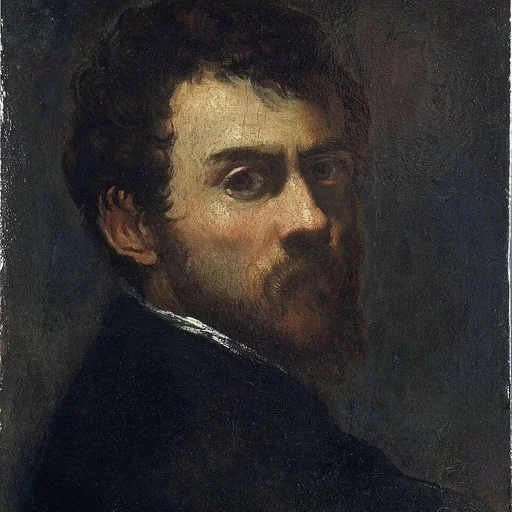
Jacopo Robusti (late September or early October 1518 – 31 May 1594), best known as Tintoretto ( TIN-tə-RET-oh; Italian: ; Venetian: ), was an Italian Renaissance painter of the Venetian school.

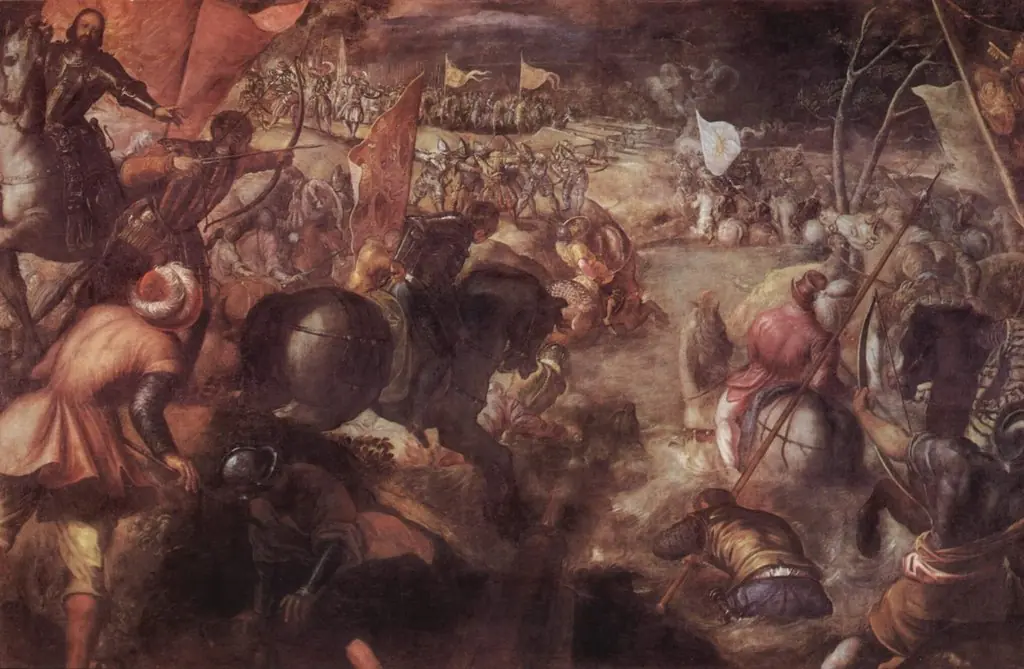 The battle of Taro
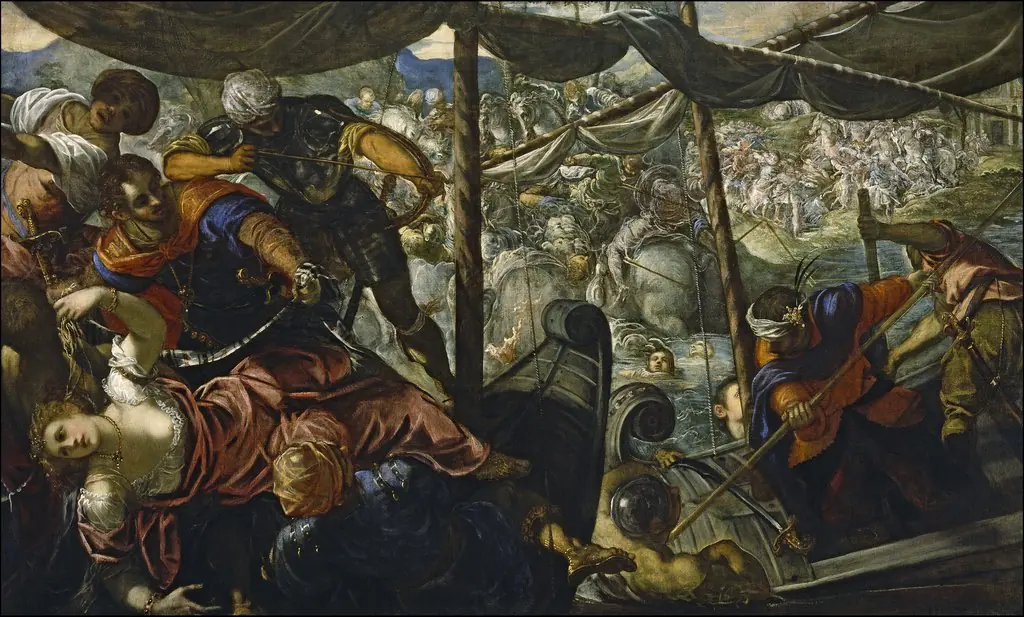 The Rape of Helen
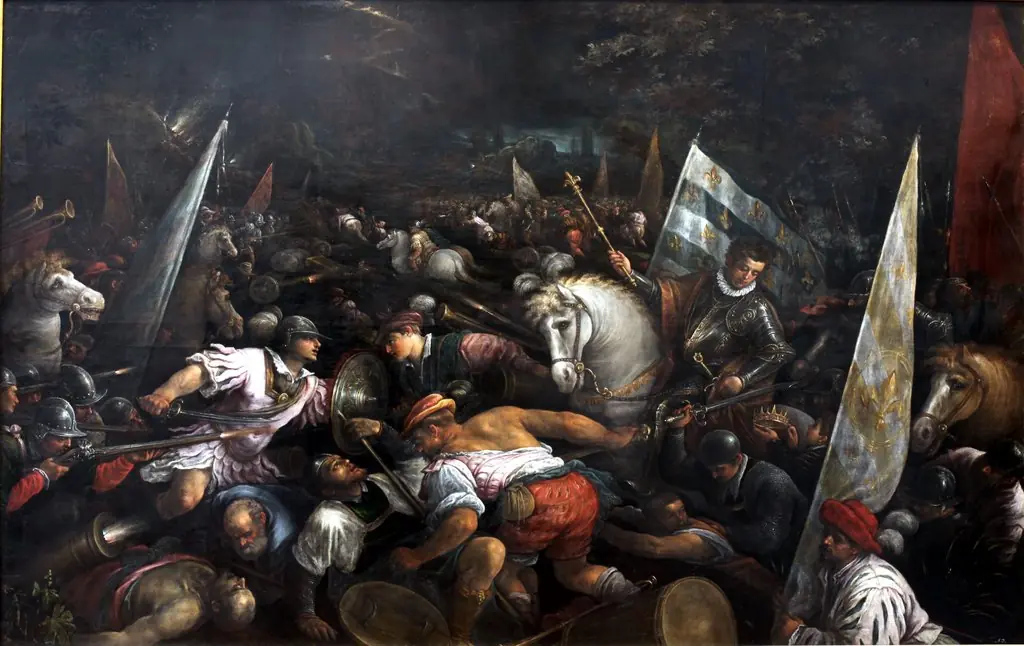 Charles VIII recevant la couronne de Naples
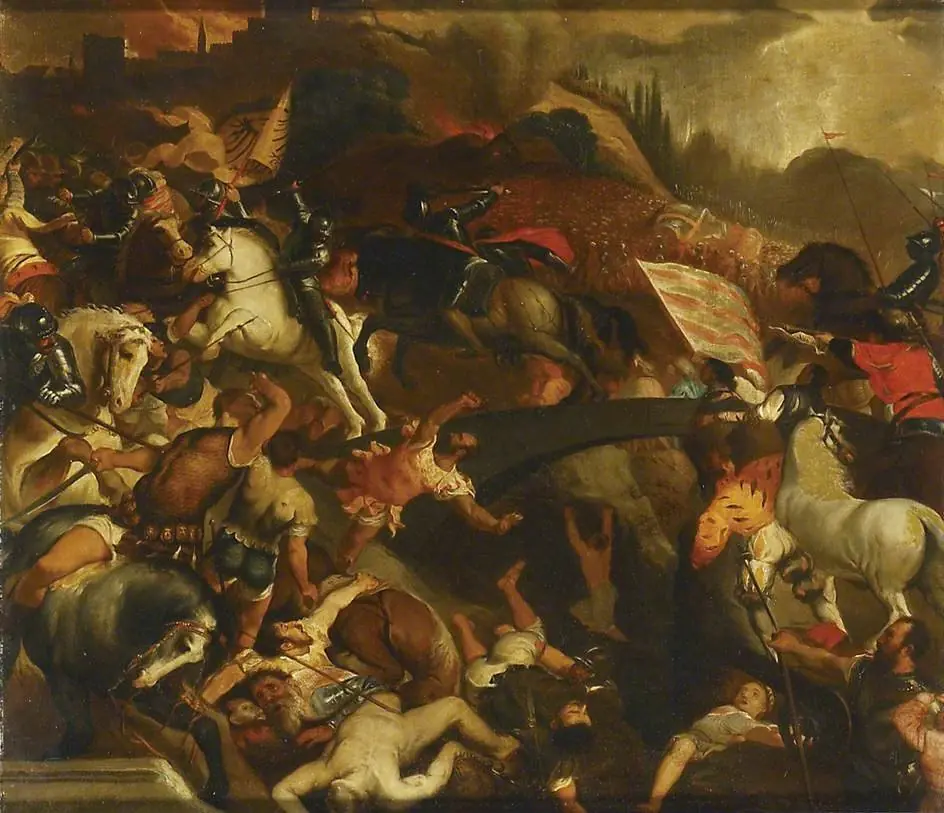 The Battle of Cadore
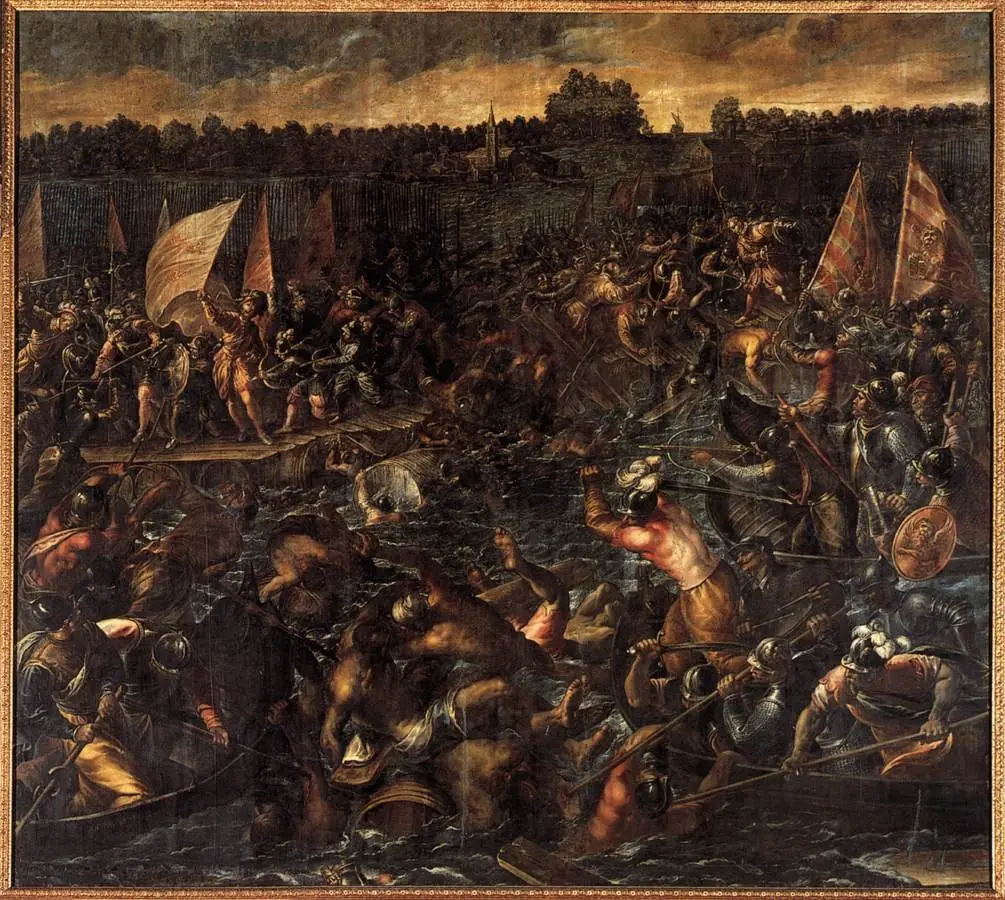 King Pippin's Army Trying to Reach Venice
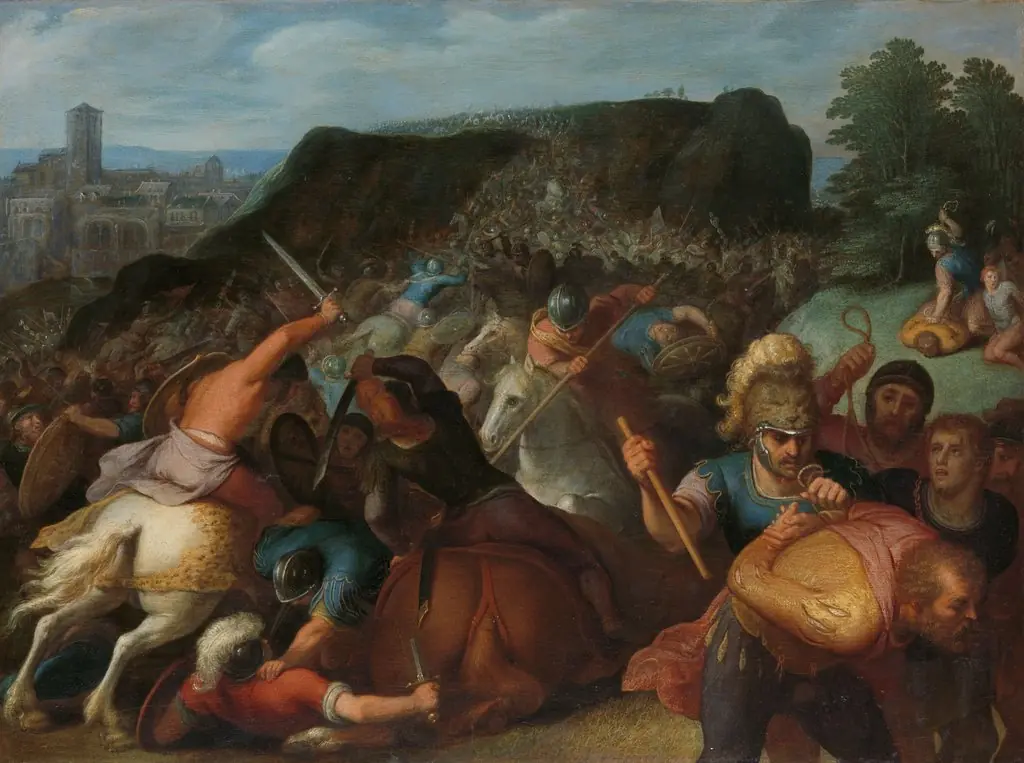 Valentinus Is Taken Prisoner
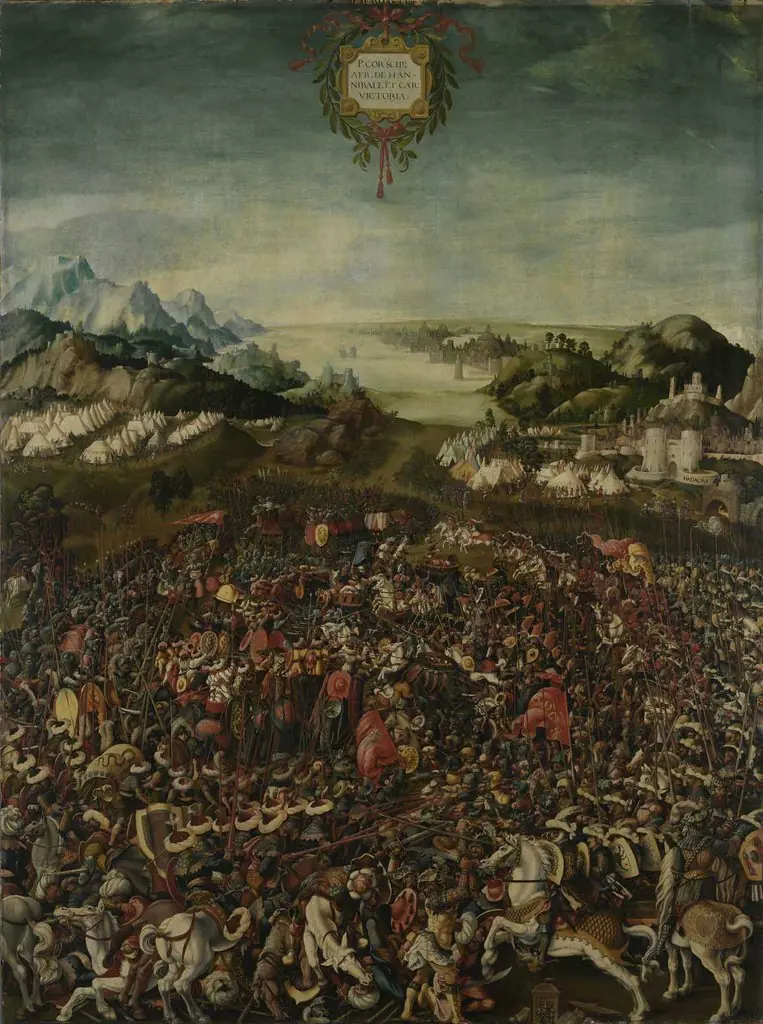 Historienzyklus: Der Sieg des P. Cornelius Scipio über Hannibal in der Schlacht bei Zama
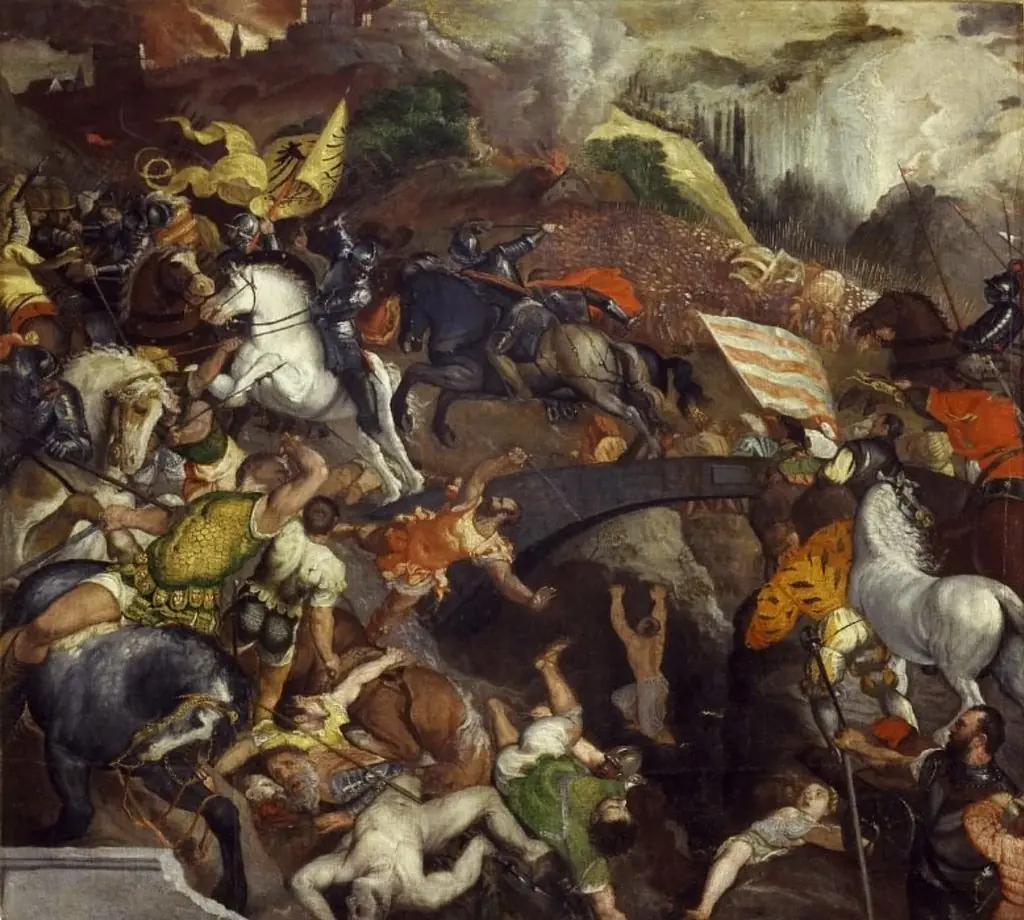 Battle of Cadore
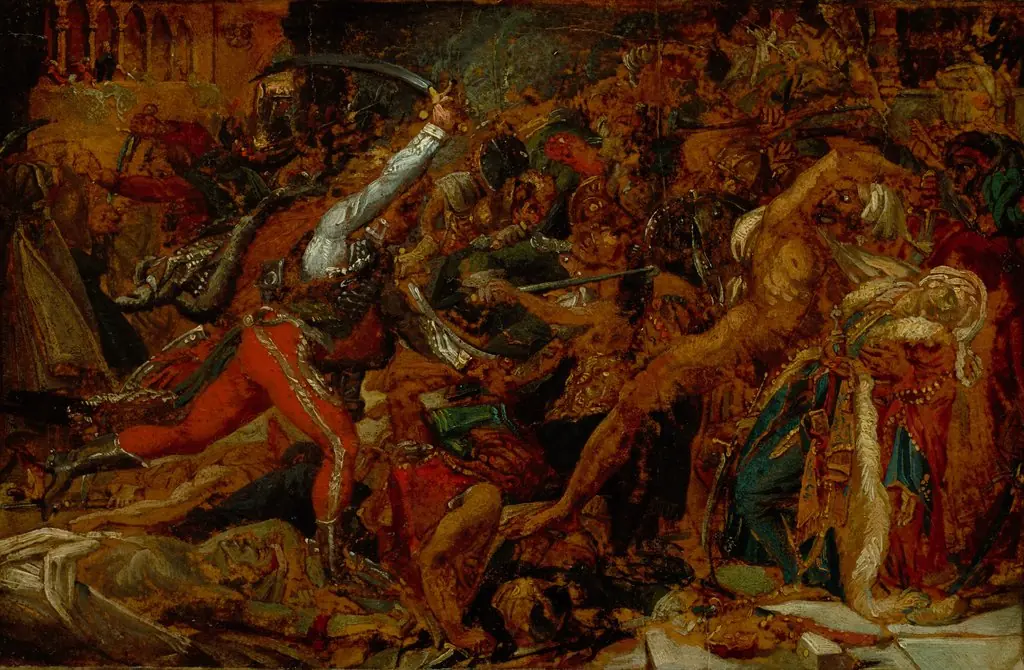 Sketch for "The Revolt at Cairo"
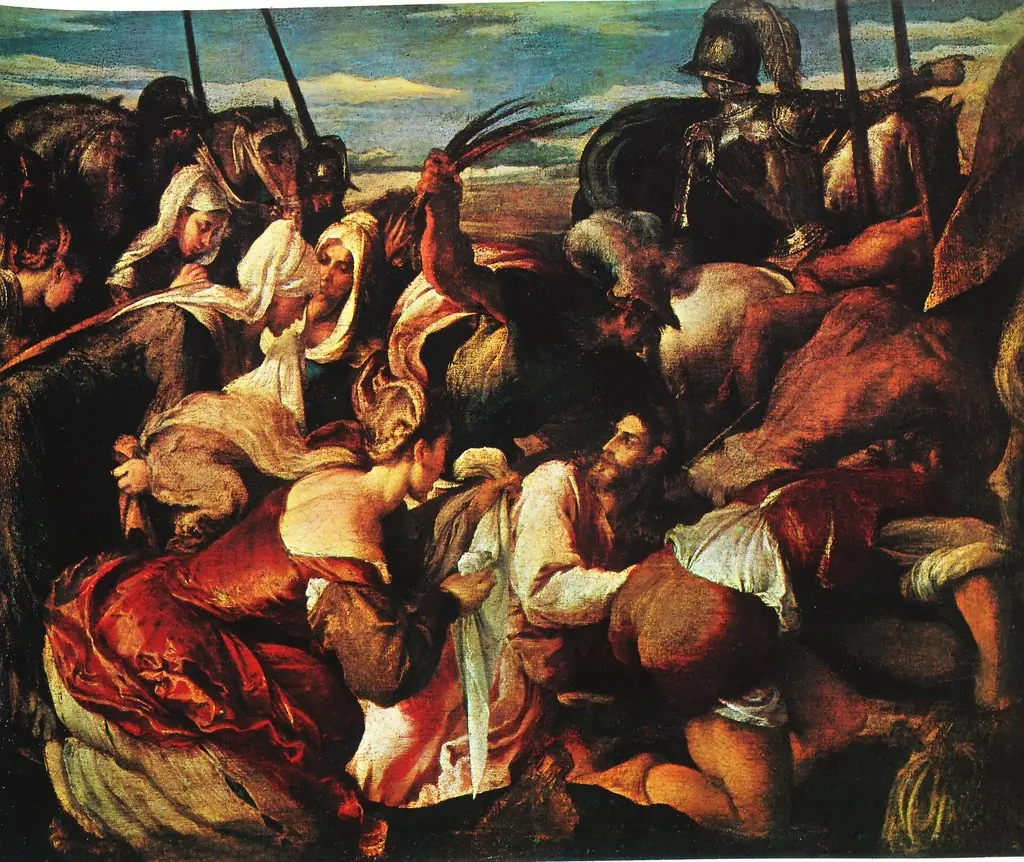 The Way to Calvary
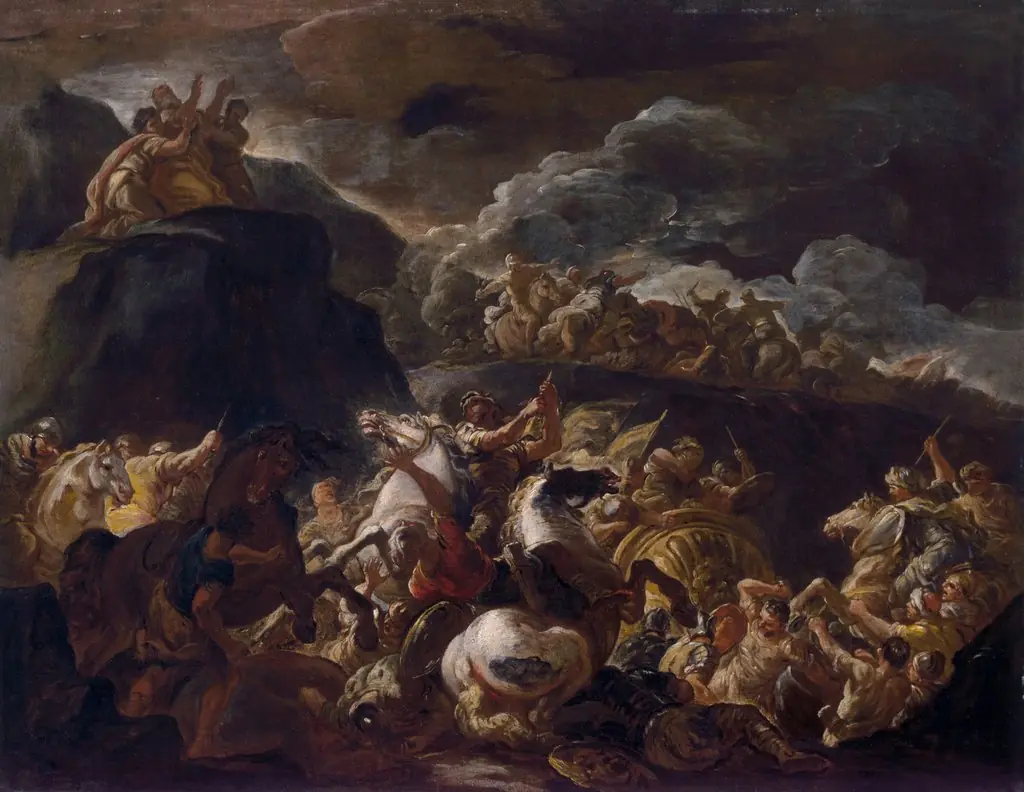 The Battle of Israel and Amalek
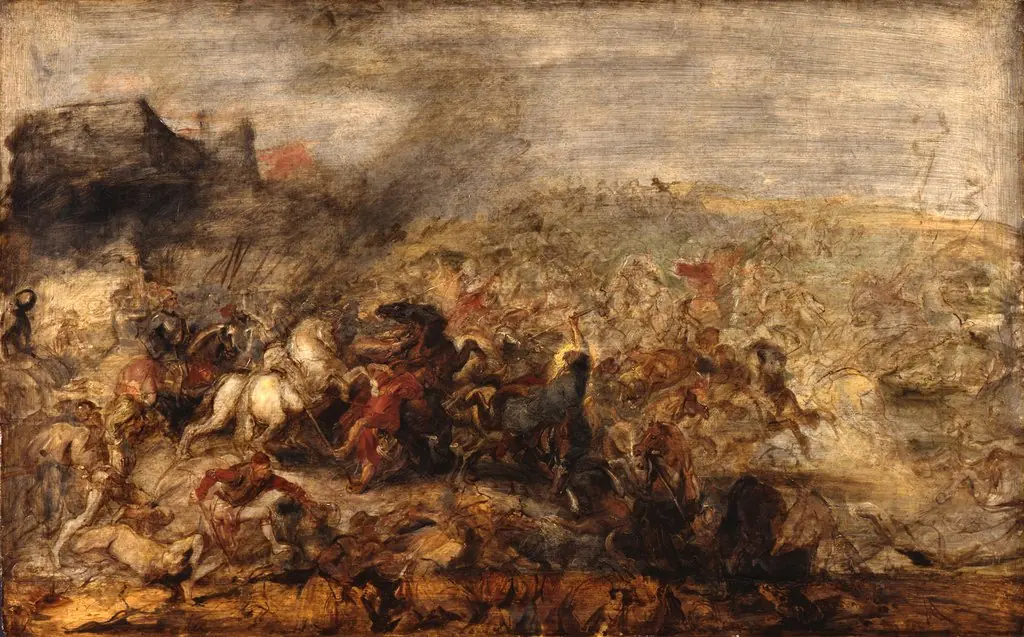 The Conquest of Tunis by Charles V (1535)