Artwork
Historienzyklus: Der Sieg des P. Cornelius Scipio über Hannibal in der Schlacht bei Zama
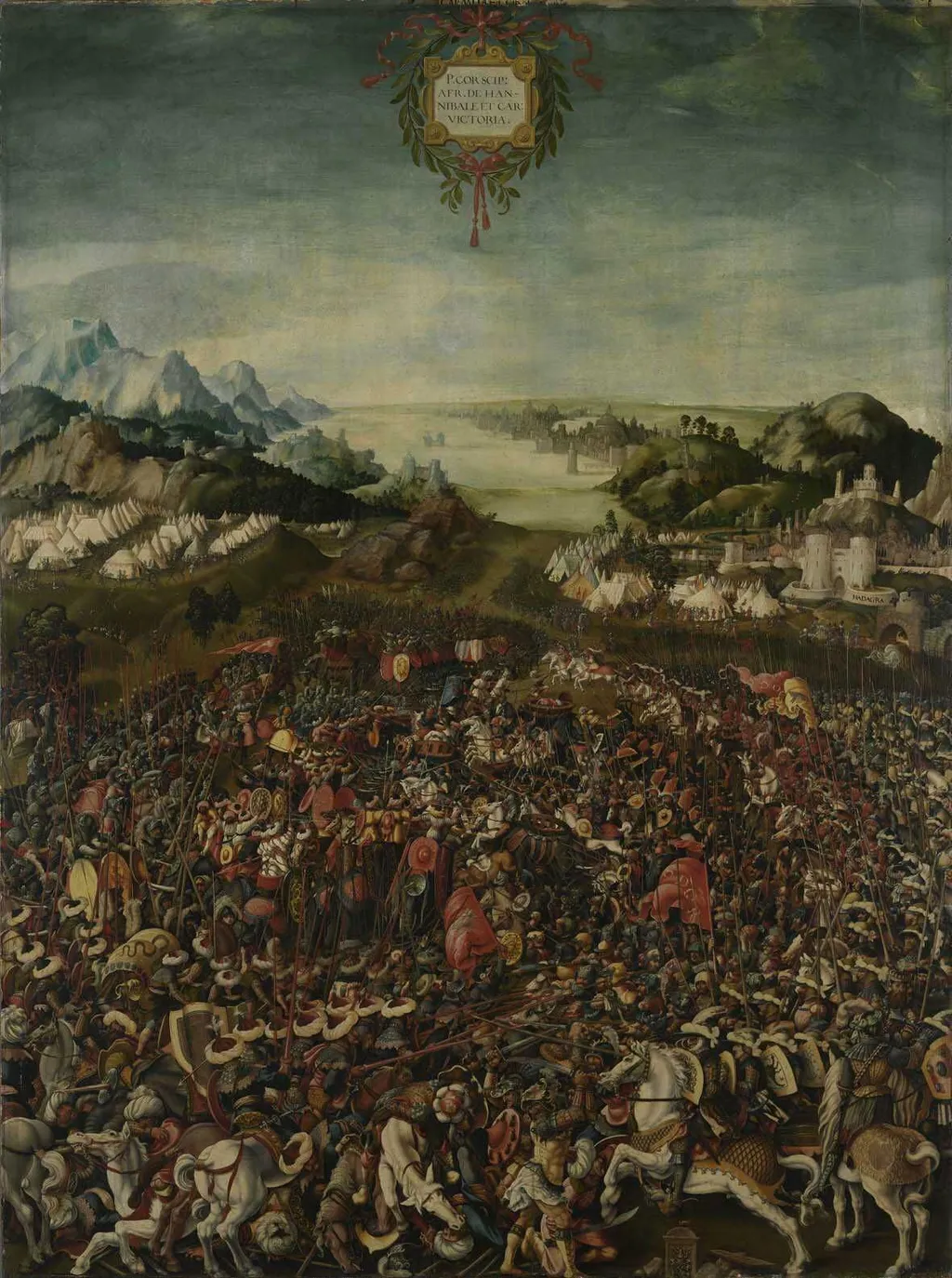
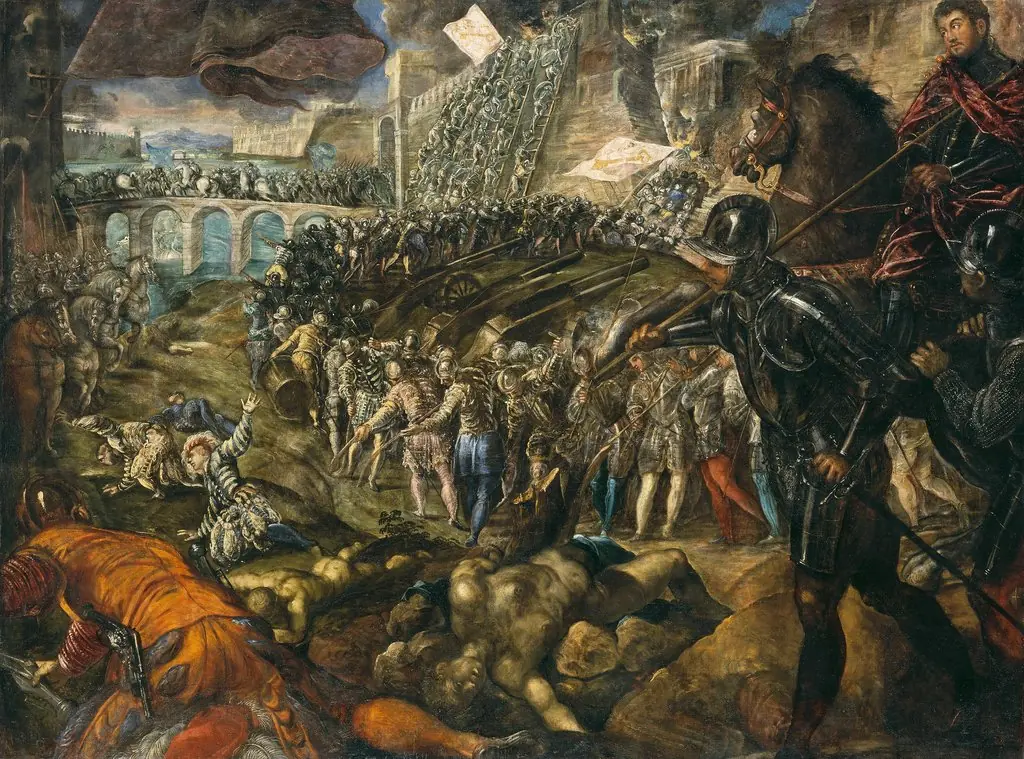
Historienzyklus: Der Sieg des P. Cornelius Scipio über Hannibal in der Schlacht bei Zama is an unspecified painting by the Mannerist artist Jörg Breu the Elder. It dates from 1530 and is held in the collection of the Bavarian State Painting Collections.
About this work
Overview
Jörg Breu the Elder, a German painter of the Danube school, completed the large‑scale work Historienzyklus: Der Sieg des P. Cornelius Scipio über Hannibal in der Schlacht bei Zama in 1530. The canvas, now part of the Alte Pinakothek’s holdings, portrays the decisive Roman victory over Hannibal at Zama with a densely populated battlefield.
Subject & Meaning
The composition illustrates the climactic clash between the forces of Scipio Africanus and Hannibal’s Carthaginian army. By foregrounding a tangled mass of infantry, cavalry, and encampments, the artist emphasizes the chaos of combat while foregrounding the triumph of the Roman commander as a moral and historical exemplar.
Technique & Style
Breu employs a pronounced chiaroscuro, using strong contrasts of light and shadow to model the multitude of figures and to convey depth across the tumultuous scene. The crowded arrangement of armored men, horses, and tents, set against a mountainous horizon and overcast sky, reflects the mannerist tendency toward complex, dynamic compositions.
History & Provenance
Born in Augsburg around 1475, Breu trained locally before traveling to Austria, where he produced multi‑panel altarpieces.
Born in Augsburg around 1475, Breu trained locally before traveling to Austria, where he produced multi‑panel altarpieces. Two documented trips to Italy exposed him to contemporary Italian styles, an influence evident in this later work. After his return to Augsburg in 1502, he continued to develop a hybrid visual language that merged northern detail with Italianate drama, culminating in the Zama painting, which entered the Alte Pinakothek collection in the 19th century.
Context
The painting belongs to a broader tradition of historical cycles that visualized classical victories for a Renaissance audience. By depicting a Roman triumph, Breu aligned his work with humanist interests in antiquity, while the chaotic, almost theatrical presentation reflects the period’s fascination with the spectacle of war.
Artist & collection
Artist
Jörg Breu the Elder (c. 1475–1537), of Augsburg, was a painter of the German Danube school. He was the son of a weaver. He journeyed to Austria and created several multi-panel altarpieces there in 1500–02, such as the…

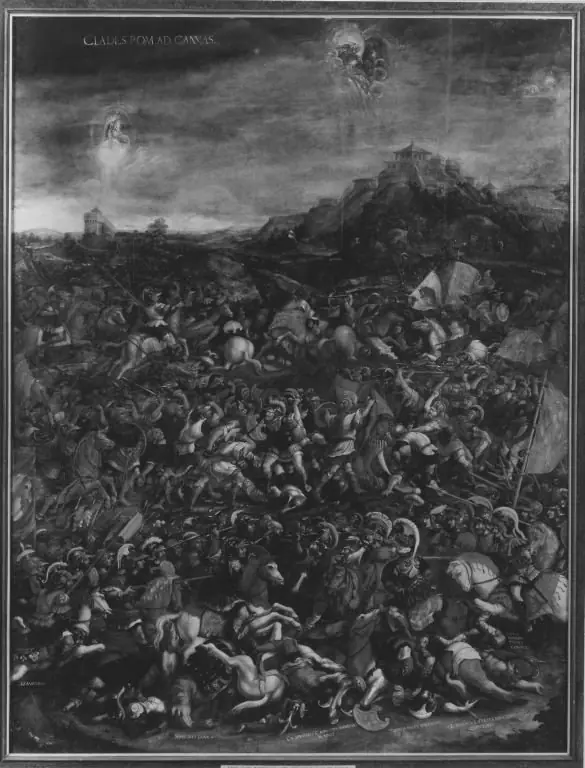 Historienzyklus: Die Niederlage der Römer durch die Karthager in der Schlacht bei Cannae
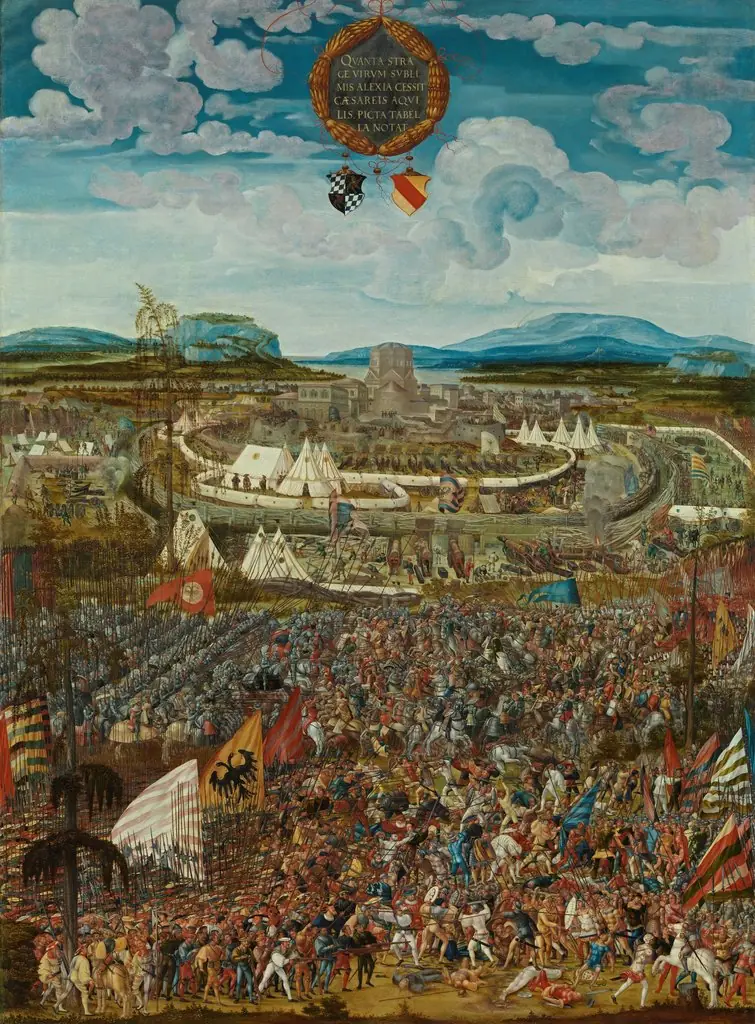 The anachronistic Siege for Battle of Alesia
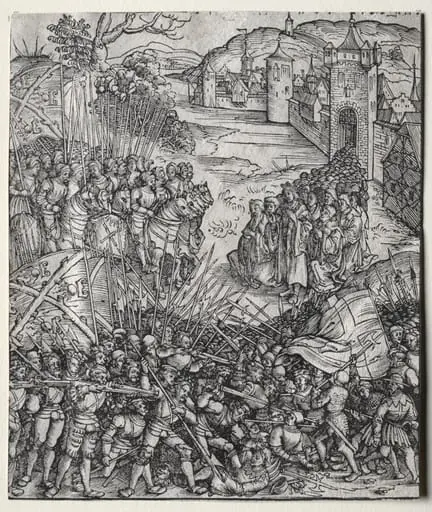 First Flemish Rebellion
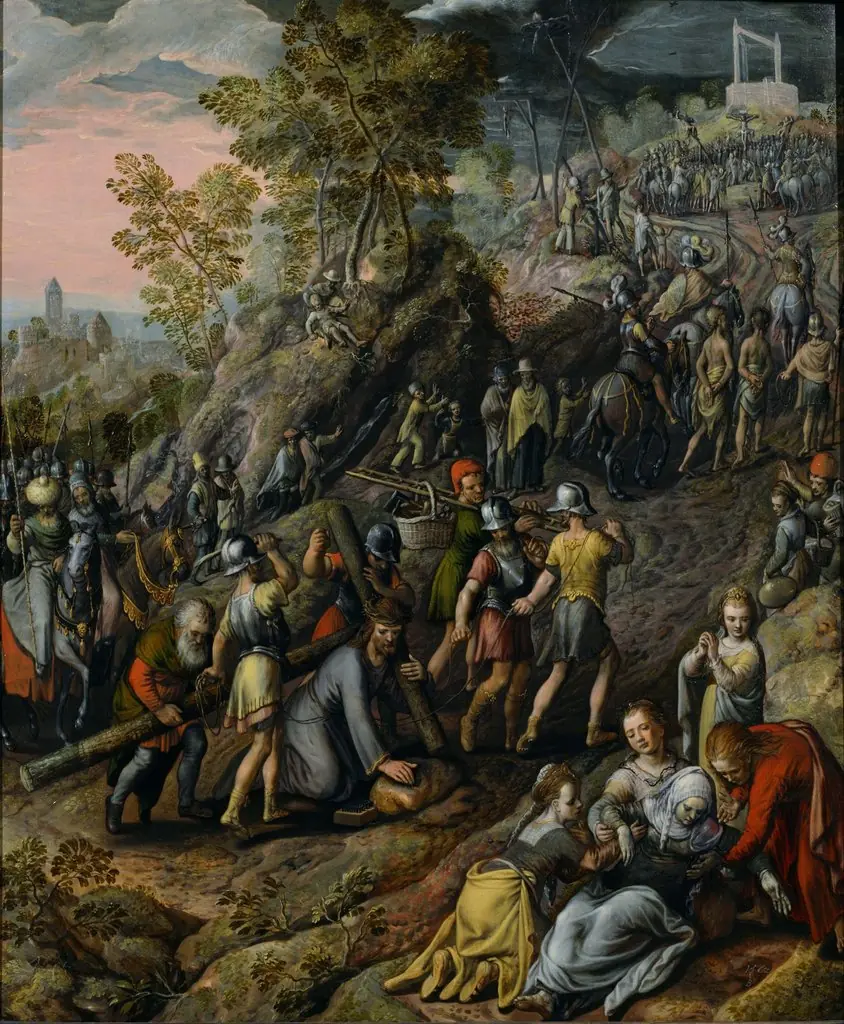 Christ carrying the Cross
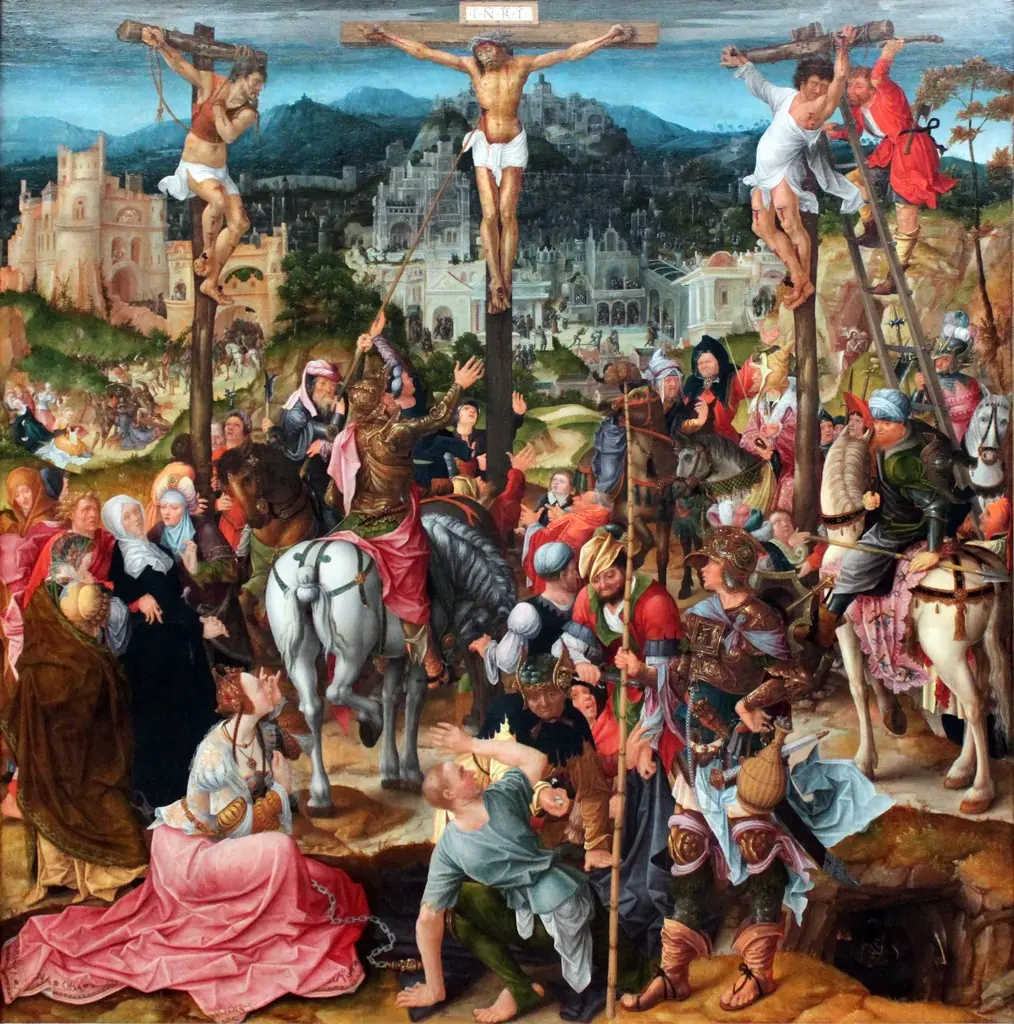 The Crucifixion
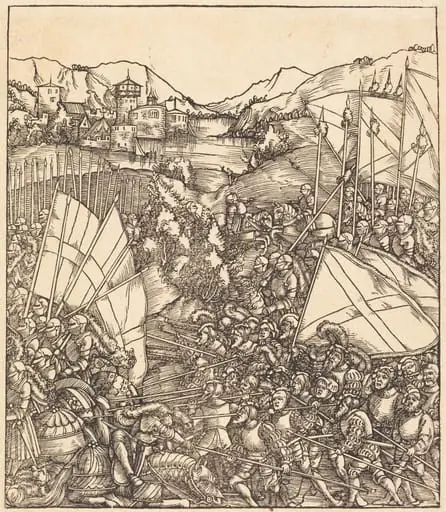 The War at Hainault
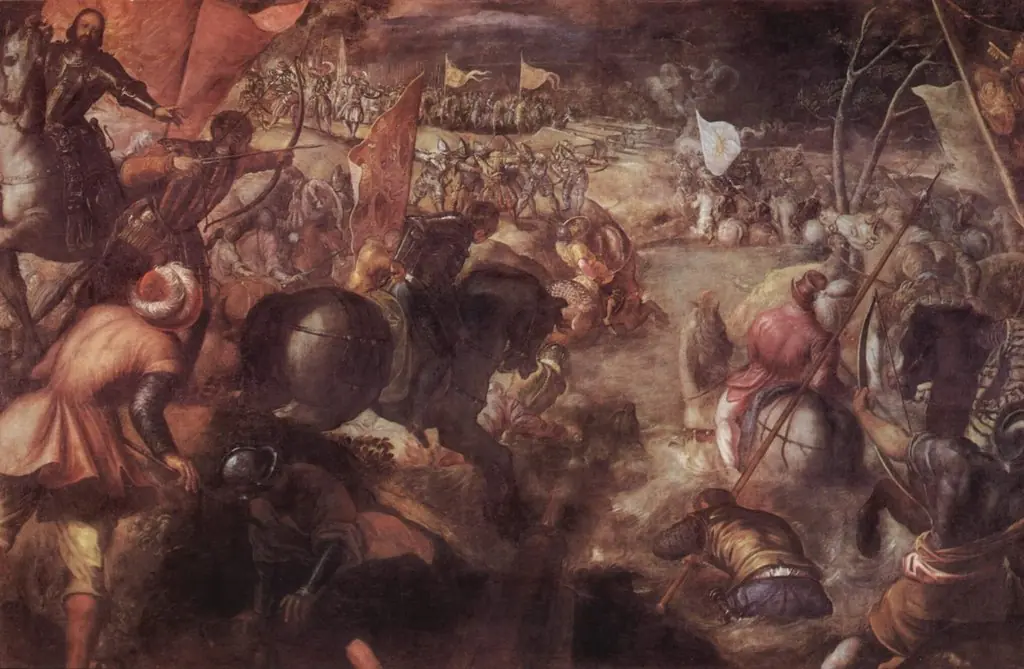 The battle of Taro
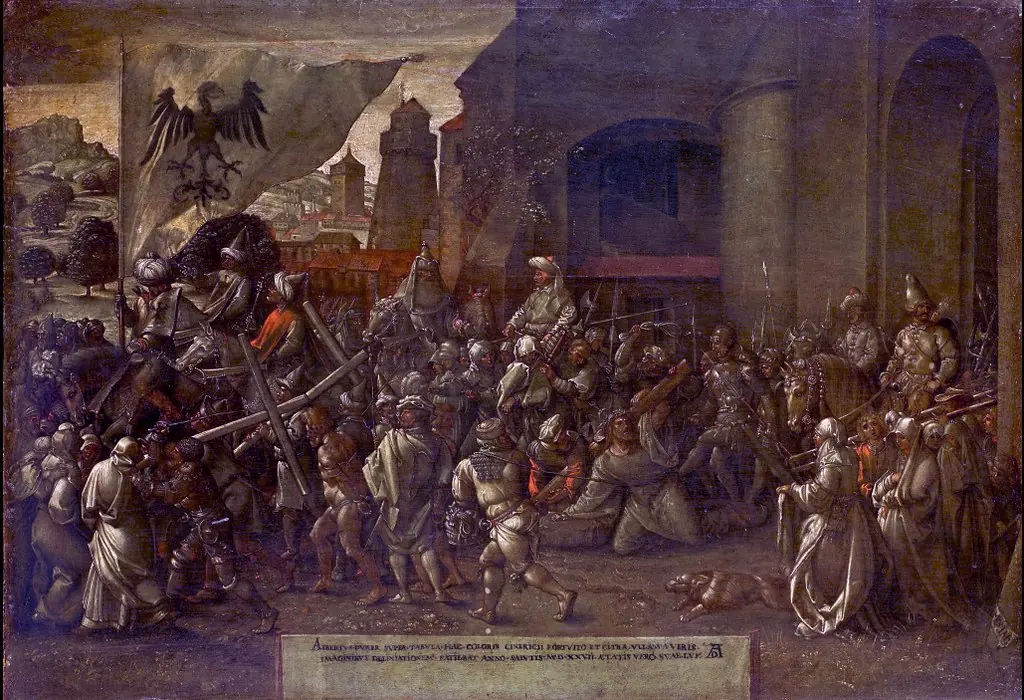 Way to Calvary
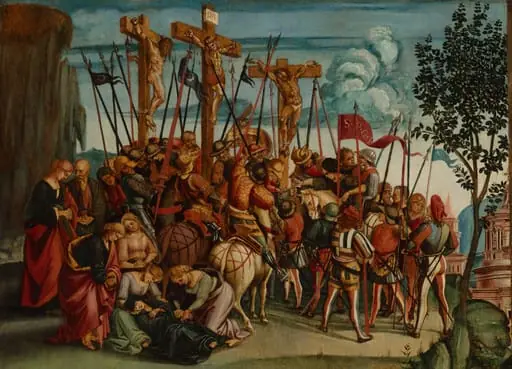 The Crucifixion
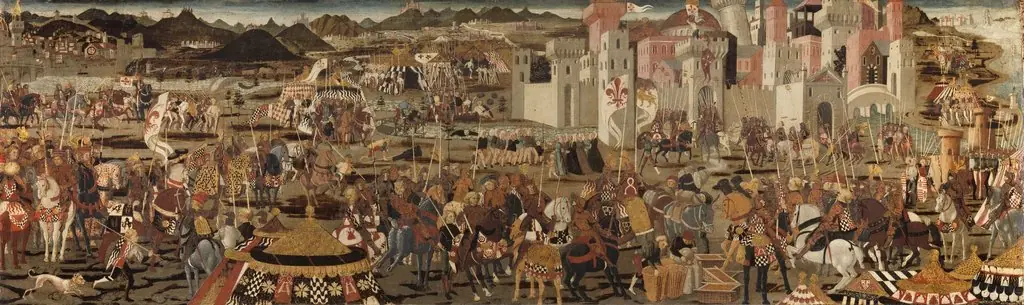 The Taking of Pisa
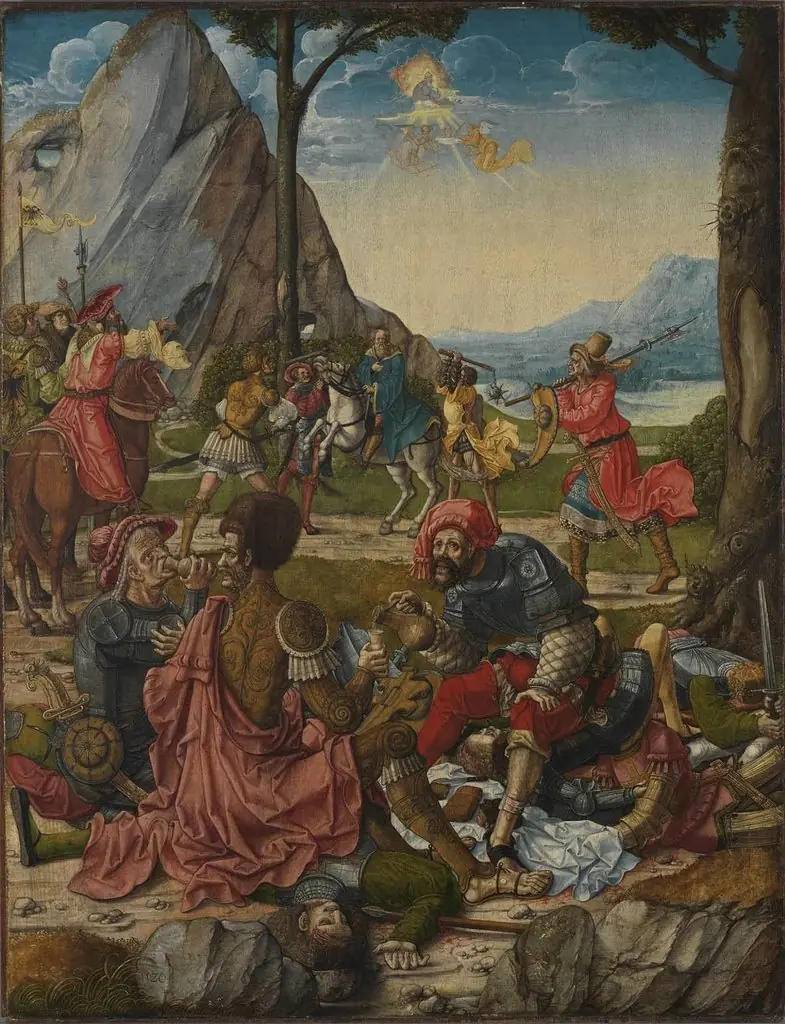 Martyrdom of the Theban Legion
 The Capture of Parma by Federico II