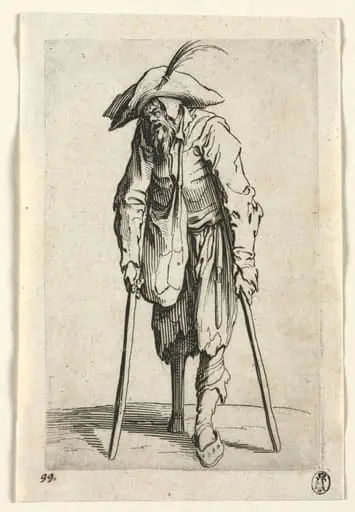
Artwork
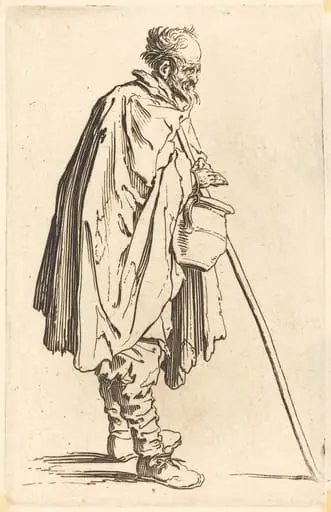
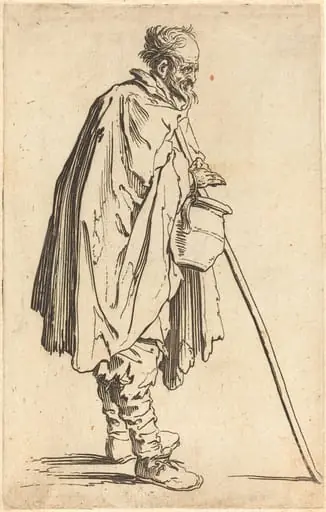
The Beggars: Beggar with Pot
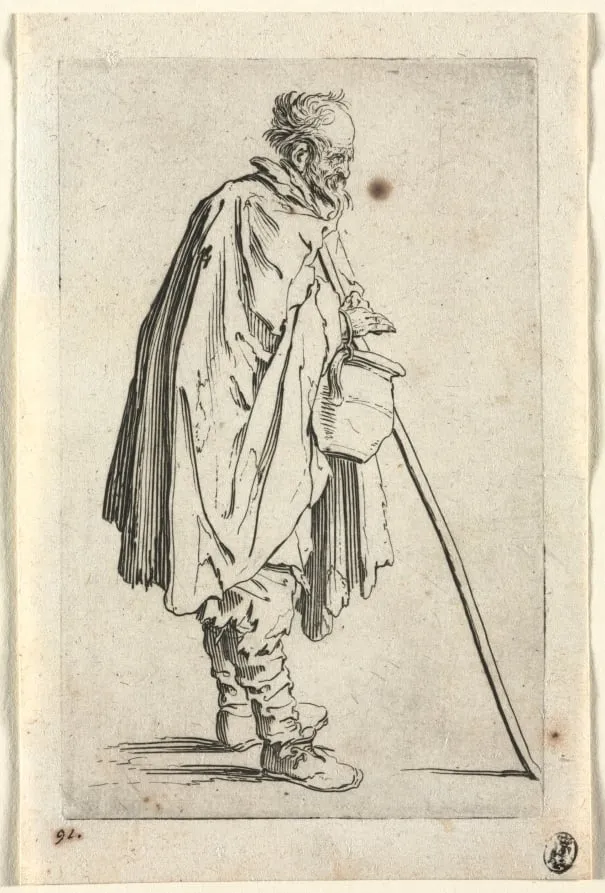
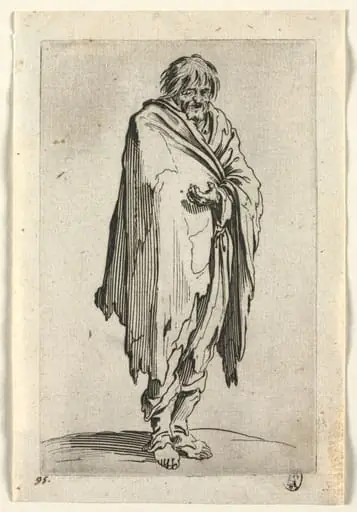
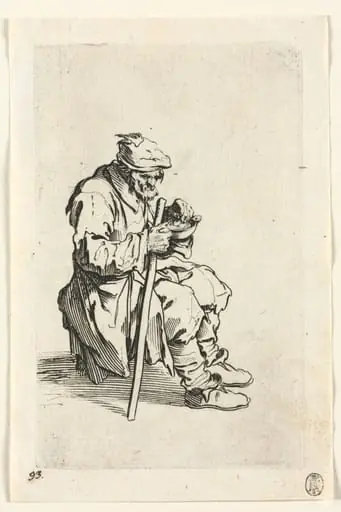
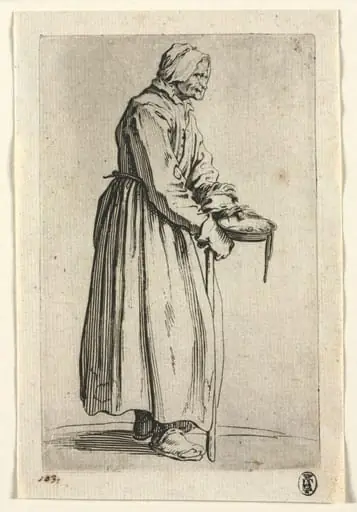
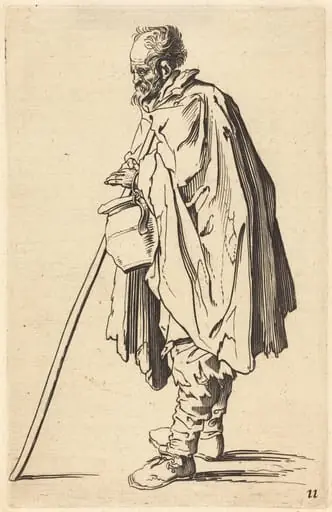
The Beggars: Beggar with Pot is a print by the Baroque artist Jacques Callot. It dates from 1623 and is held in the collection of the Cleveland Museum of Art.
About this work
Overview
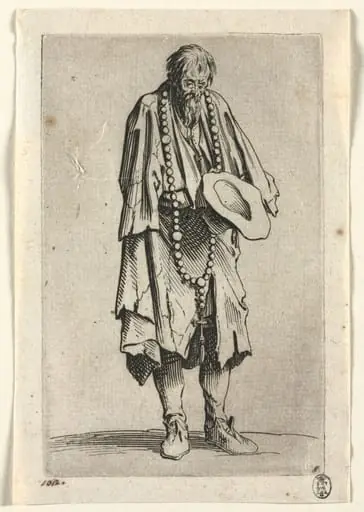
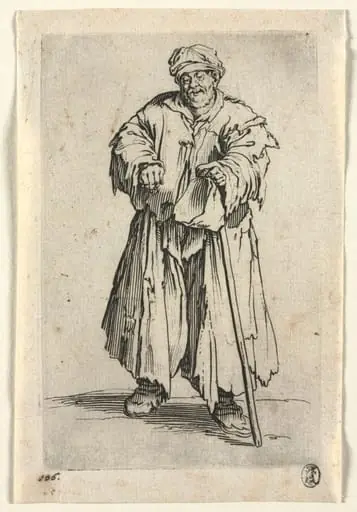
Created around 1623 by Jacques Callot, this etching is one of a series depicting itinerant laborers and the impoverished. It is part of a larger body of work focused on the marginalized figures of early 17th-century Europe. The print is held in the collection of The Cleveland Museum of Art, where it is studied for its social realism and technical precision in line work.
Subject & Meaning
The figure is an elderly man, bearded and cloaked in worn fabric, standing with a staff and a pot—symbols of dependence and transient survival. His posture suggests fatigue and resilience, not theatrical despair. The image avoids sentimentality, presenting poverty as a quiet, daily reality rather than a moral lesson. The pot, likely used for collecting alms, anchors the figure’s social role.
Technique & Style
Callot employed fine, controlled etching lines to render texture in fabric, weathered skin, and the rough grain of wood. His use of cross-hatching builds depth without heavy shading, emphasizing form through line alone. The composition is tightly framed, focusing attention on the figure’s posture and objects, reflecting the artist’s interest in observational detail over dramatic flair.
History & Provenance
The print was made during Callot’s time in Florence, where he was influenced by Italian genre scenes and the growing interest in depicting common life. It entered The Cleveland Museum of Art’s collection in the 20th century, likely through a broader acquisition of Northern European prints. Its preservation reflects its status as a key example of Baroque printmaking.
Context
In the early 1600s, war and economic instability across Europe increased the visibility of beggars and displaced persons. Callot’s series responded to this reality, documenting figures often ignored in elite art. His work aligns with contemporaries like Rembrandt and Bruegel in elevating the mundane, yet avoids caricature, offering a restrained, human presence.
Legacy
Callot’s Beggars series influenced later generations of printmakers and social realists by demonstrating how etching could convey psychological nuance without embellishment. The work remains a reference point for studies of early modern poverty, class, and the artist’s role as a witness to everyday hardship.
Artist & collection
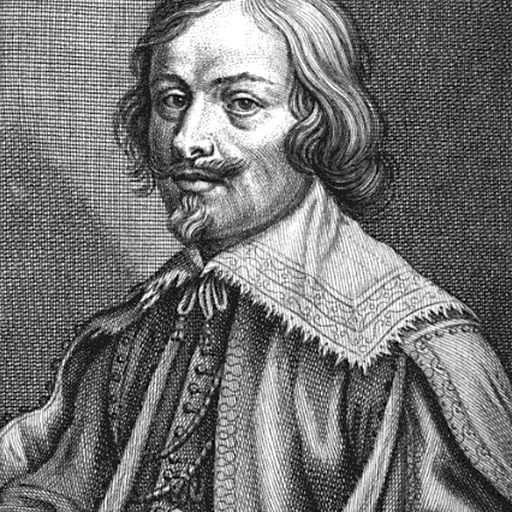
Artist
Jacques Callot was a baroque printmaker and draftsman from the Duchy of Lorraine.

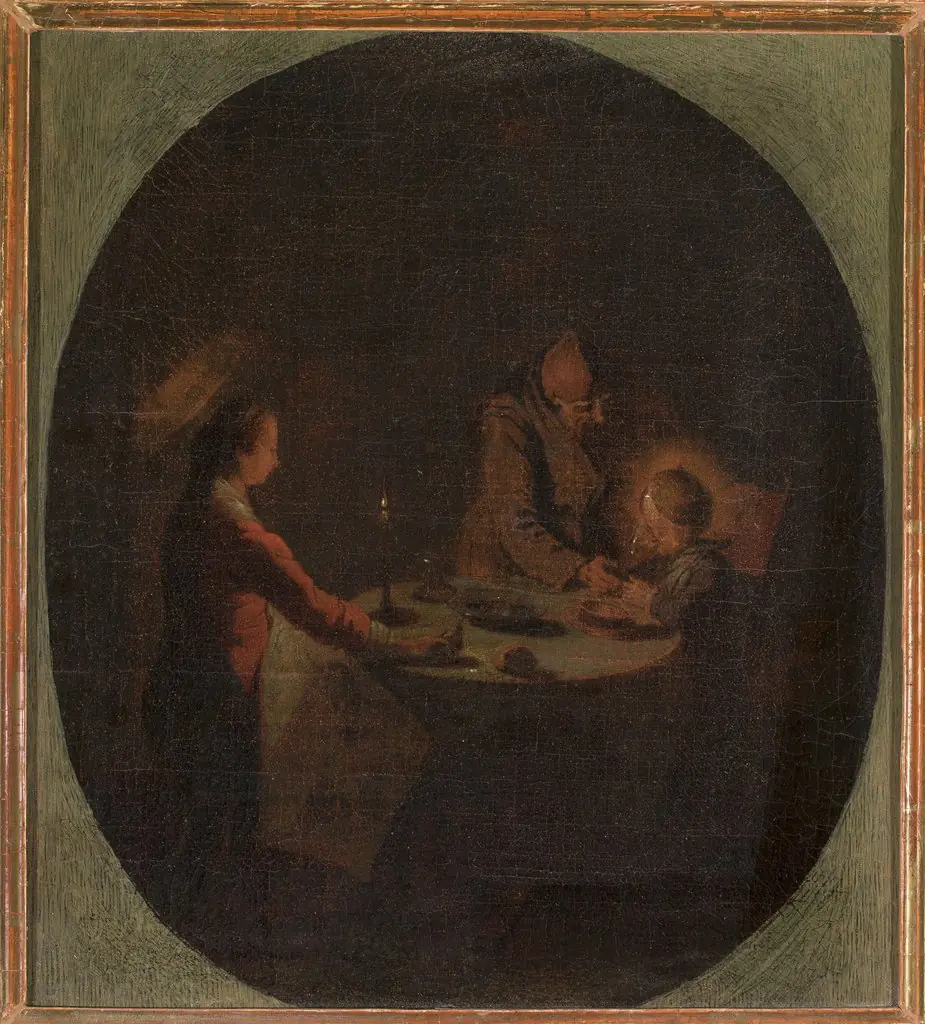 Holy Family at supper
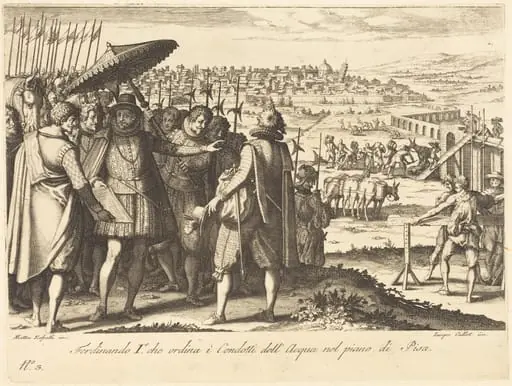 Restoration of the Aqueduct at Pisa
 Restoration of the Aqueduct at Pisa
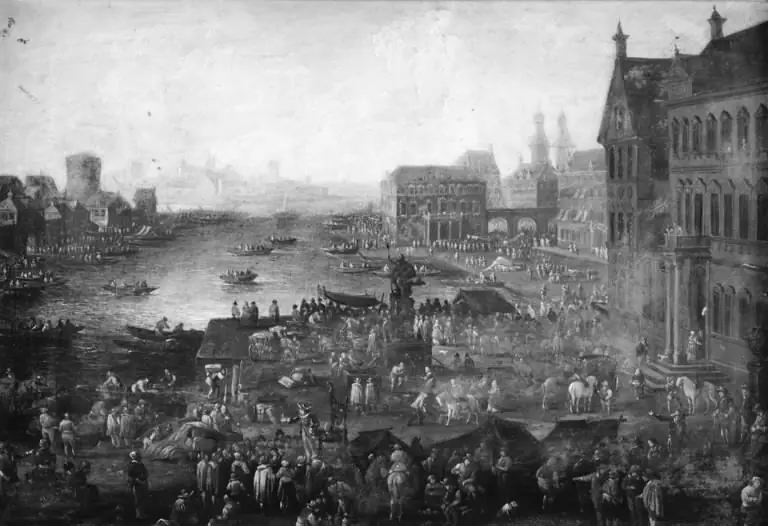 Square in Paris with Many Figures
 Square in Paris with Many Figures
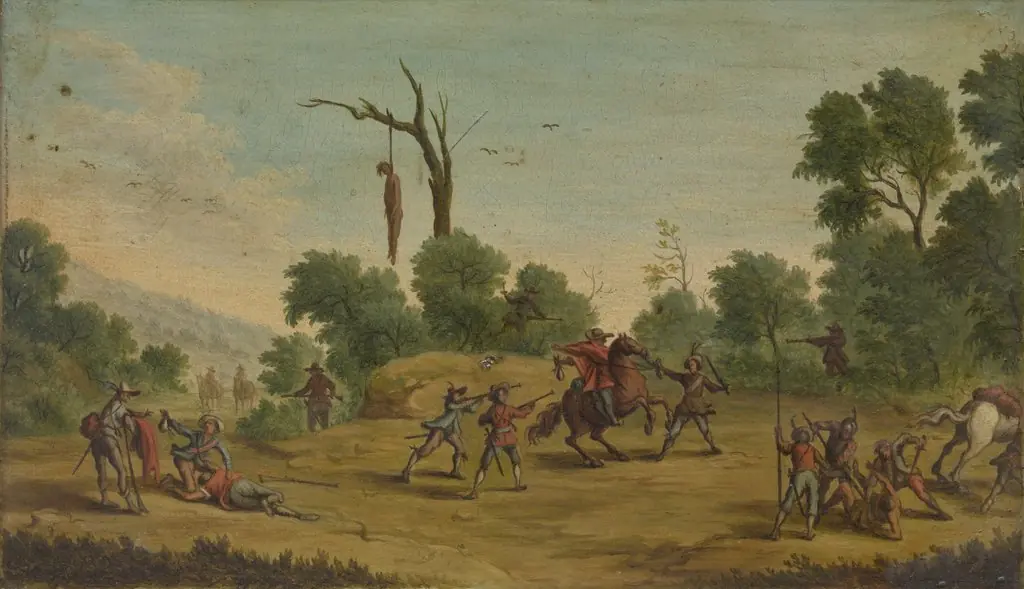 Horsemen Attacked by Robbers
 HOW WILL A COVERED PART BE CORRECTED?HOW WIKA A COVERED HEART DEED CORRECTED?
![Christ Walking on the Water [second plate], by Jacques Callot](https://artifactworldgallery.com/img/jacques-callot--christ-walking-on-the-water-second-plate--2069f3bfe4cb2126-w320.webp) Christ Walking on the Water [second plate]
Christ Walking on the Water [second plate]