Artwork
The Beggars: Beggar Woman with Her Alms Bowl
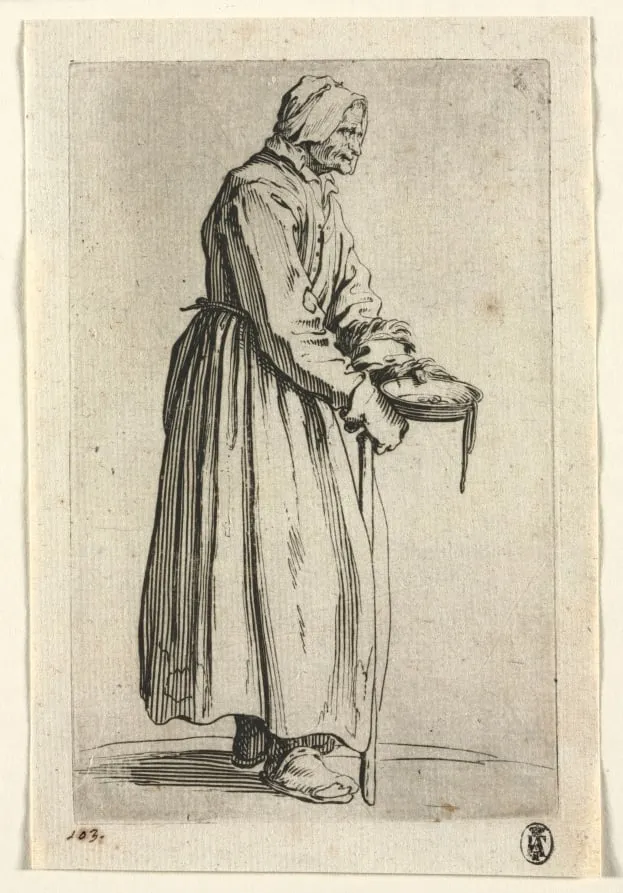
The Beggars: Beggar Woman with Her Alms Bowl is a print by the Baroque artist Jacques Callot. It dates from 1623 and is held in the collection of the Cleveland Museum of Art.
About this work
Overview
Created around 1623 by Jacques Callot, this etching depicts a destitute woman collecting alms. The work is part of a series portraying marginalized figures in early 17th-century society. It resides in the collection of The Cleveland Museum of Art, where it is valued for its unidealized portrayal of poverty and its technical precision in printmaking.
Subject & Meaning
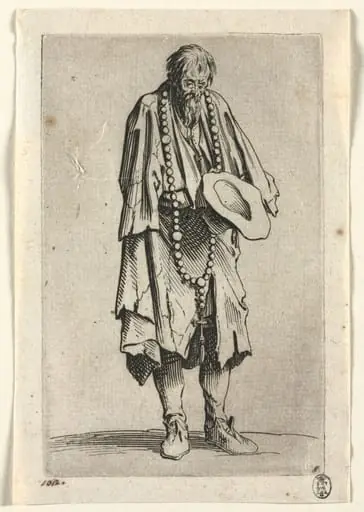
The figure is an elderly woman, dressed in worn, loose garments and a headscarf, her bare feet visible beneath her robe. She holds a small bowl in one hand and leans on a cane with the other, suggesting physical frailty and dependence on charity. The image conveys quiet endurance rather than pathos, reflecting the social realities of beggary in Baroque Europe.
Technique & Style
Callot employed fine, controlled etching lines to define form and texture with minimal detail. Shadows are rendered through sparse hatching, emphasizing volume without embellishment. The stark contrast between the woman’s worn clothing and the empty background focuses attention on her posture and expression, characteristic of Callot’s documentary approach to printmaking.
History & Provenance
The print was produced during Callot’s mature period in Nancy, where he documented urban and rural life with observational clarity. It entered the Cleveland Museum of Art’s collection through established acquisition channels in the 20th century, likely as part of a broader effort to preserve Northern European graphic arts from the early Baroque era.
Context
In early 17th-century Europe, widespread poverty and displacement following religious wars led to visible populations of beggars in cities and towns. Artists like Callot turned to such figures not for moralizing tales but as subjects of social observation, aligning with a growing interest in realism over idealized narratives in print culture.
Legacy
Callot’s series of beggar figures influenced later generations of printmakers and social commentators, establishing a precedent for depicting the poor with dignity and detail. His technique and subject matter contributed to the evolution of genre scenes in print, bridging the gap between documentary observation and artistic expression in the Baroque period.
Artist & collection
Artist
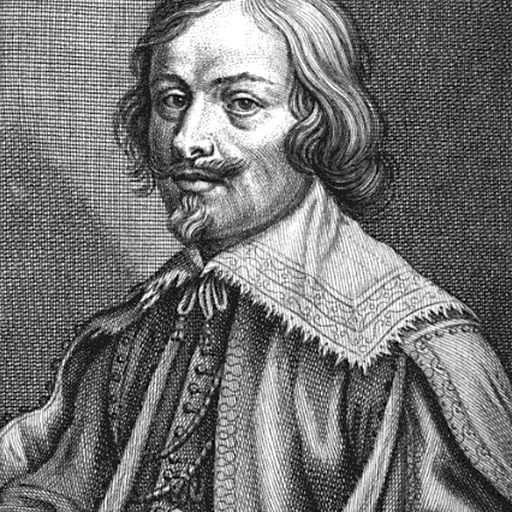
Jacques Callot was a baroque printmaker and draftsman from the Duchy of Lorraine.

 Holy Family at supper
 Restoration of the Aqueduct at Pisa
 Restoration of the Aqueduct at Pisa
 Square in Paris with Many Figures
 Square in Paris with Many Figures
 Horsemen Attacked by Robbers
 HOW WILL A COVERED PART BE CORRECTED?HOW WIKA A COVERED HEART DEED CORRECTED?
![Christ Walking on the Water [second plate], by Jacques Callot](https://artifactworldgallery.com/img/jacques-callot--christ-walking-on-the-water-second-plate--2069f3bfe4cb2126-w320.webp) Christ Walking on the Water [second plate]
Christ Walking on the Water [second plate]
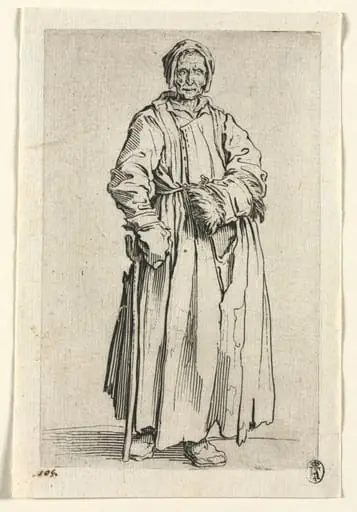 The Beggars: One-Eyed Woman
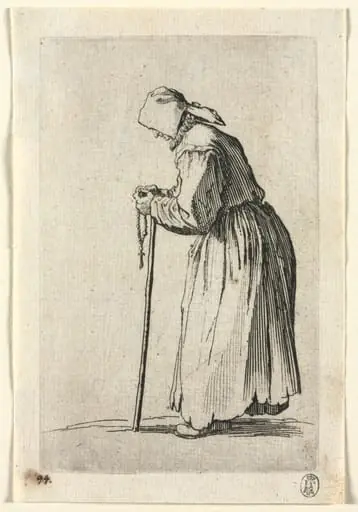 The Beggars: Beggar at Her Rosary
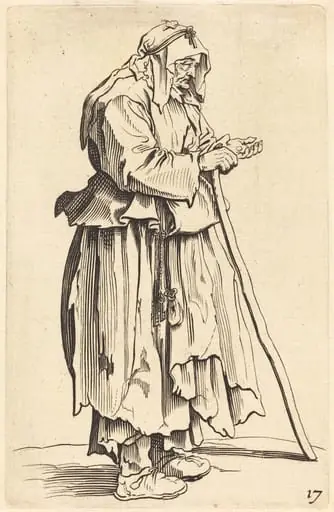 Beggar Woman Receiving Charity
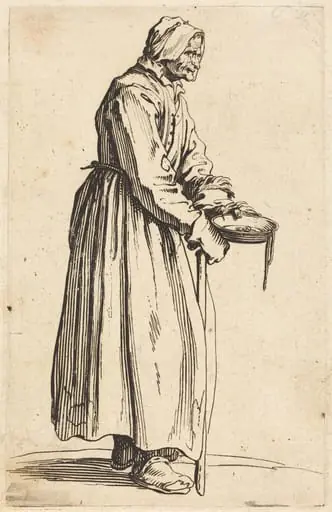 Beggar Woman with Pan
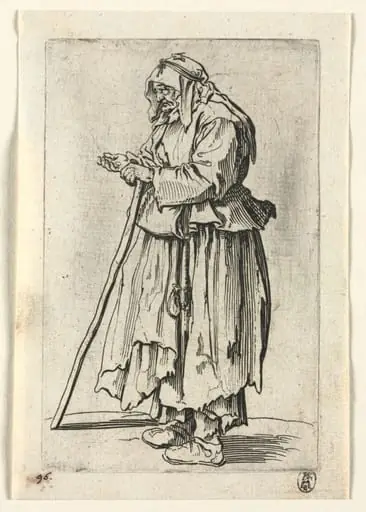 The Beggars: Beggar Woman Coming to Receive Alms
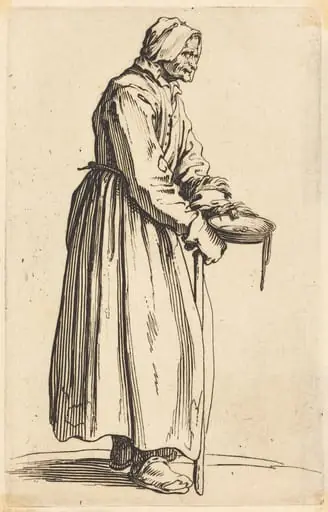 Beggar Woman with Pan
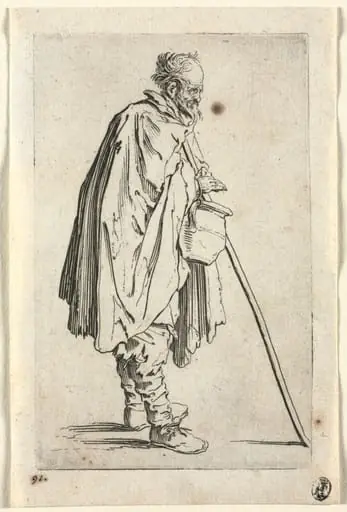 The Beggars: Beggar with Pot
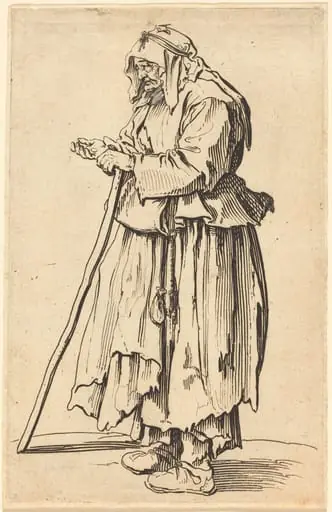 Beggar Woman Receiving Charity
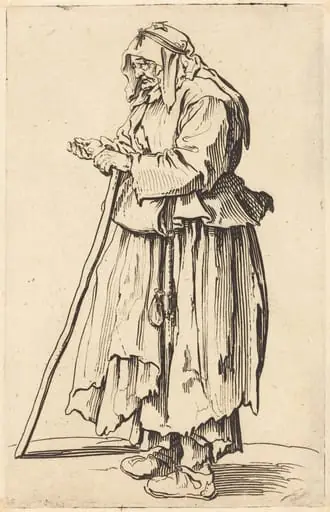 Beggar Woman Receiving Charity
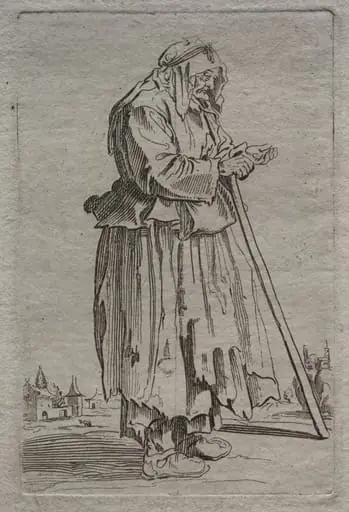 Old Beggar Woman
 The Beggars: Beggar with Rosary