Artwork
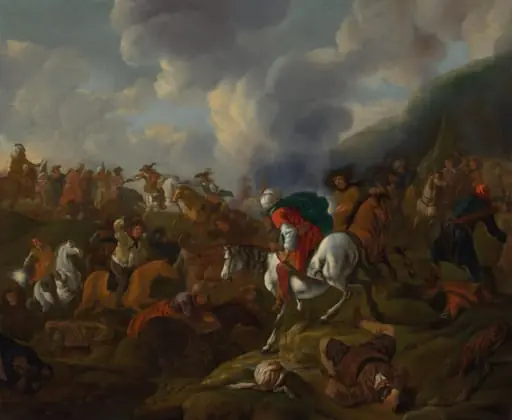
A Cavalry Encounter between Turkish Troops and the Troops of the Austrian Emperor
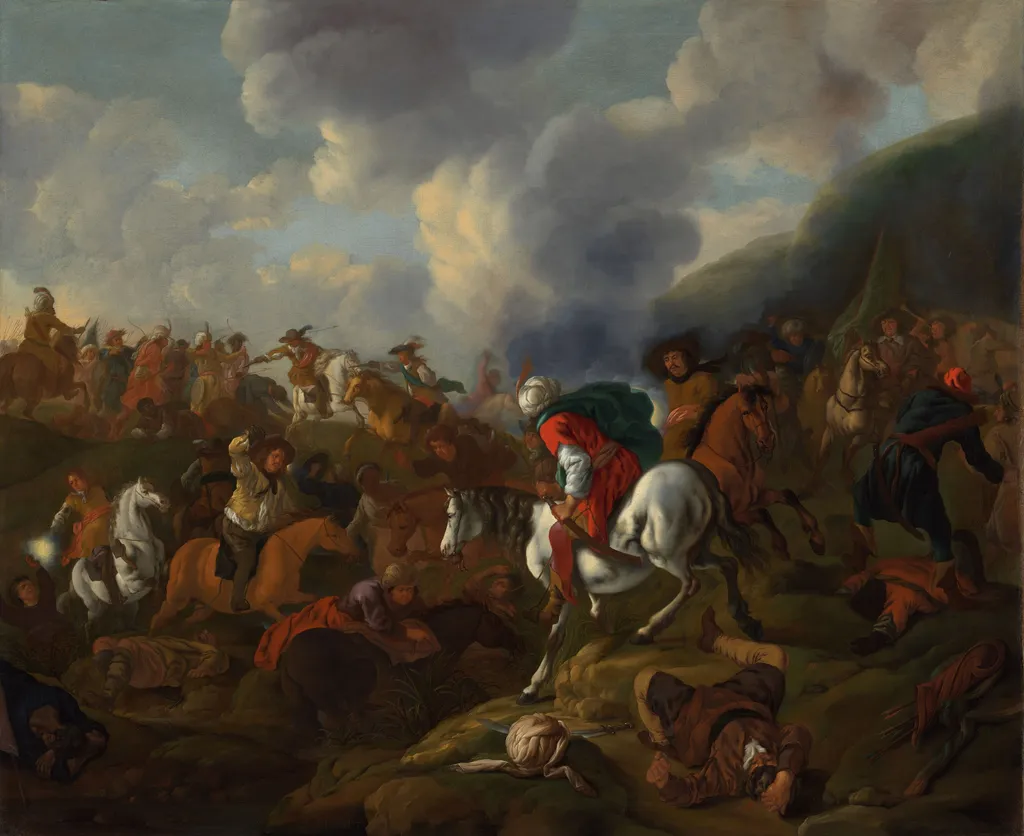
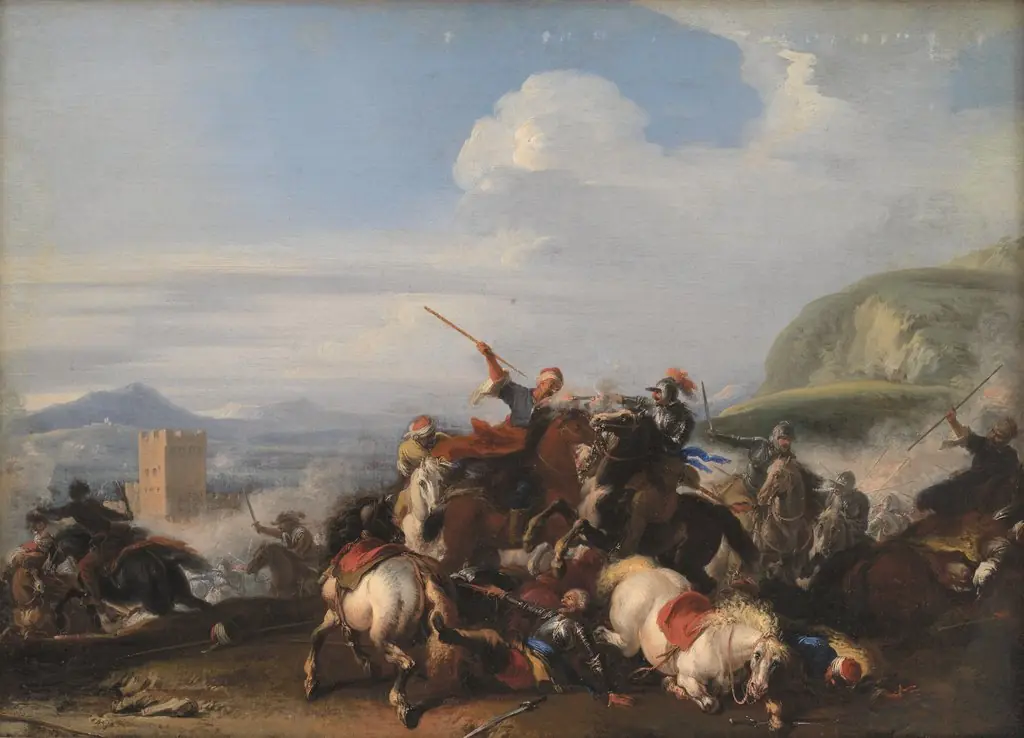
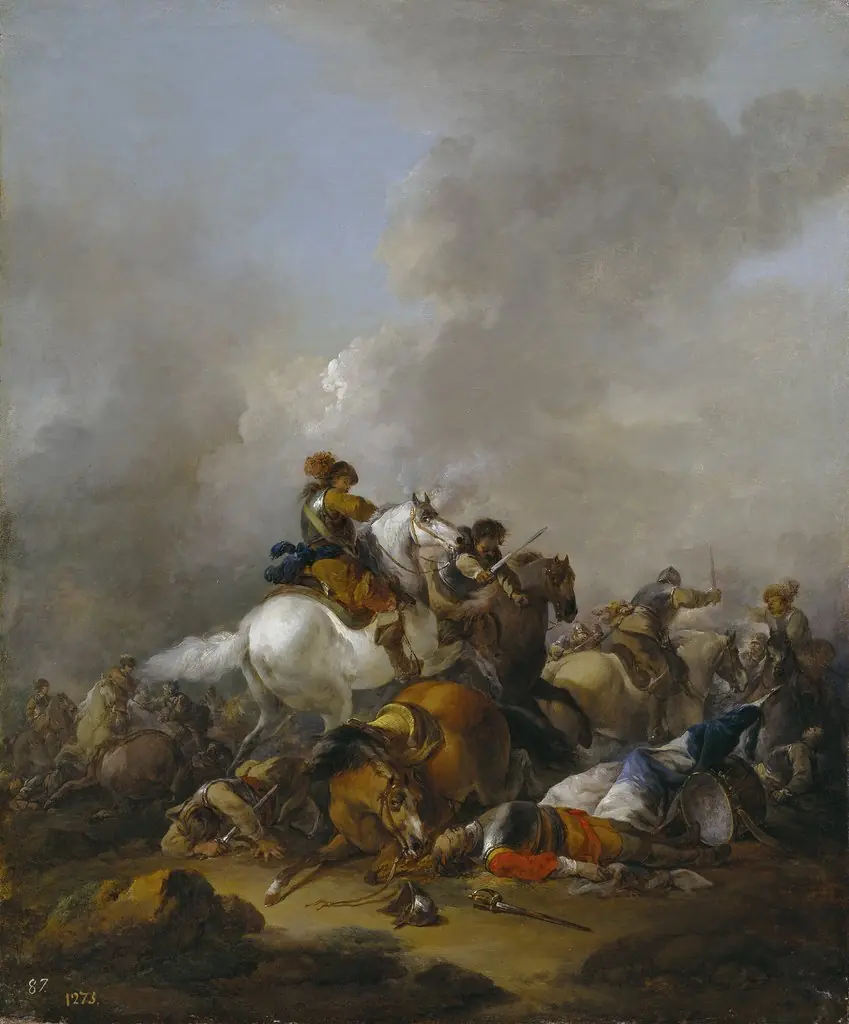
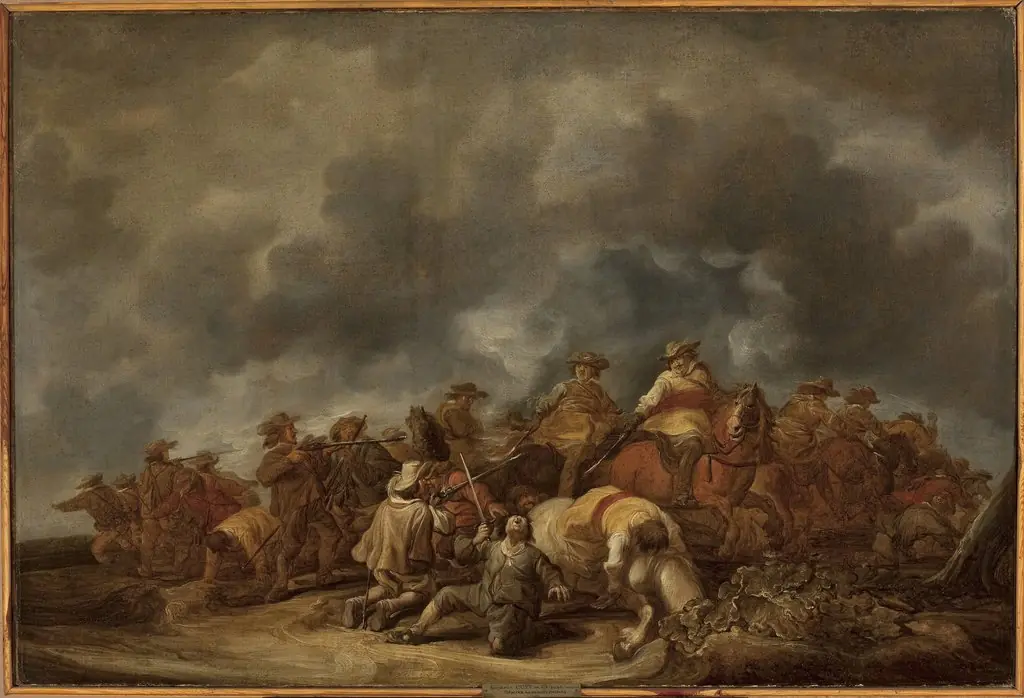
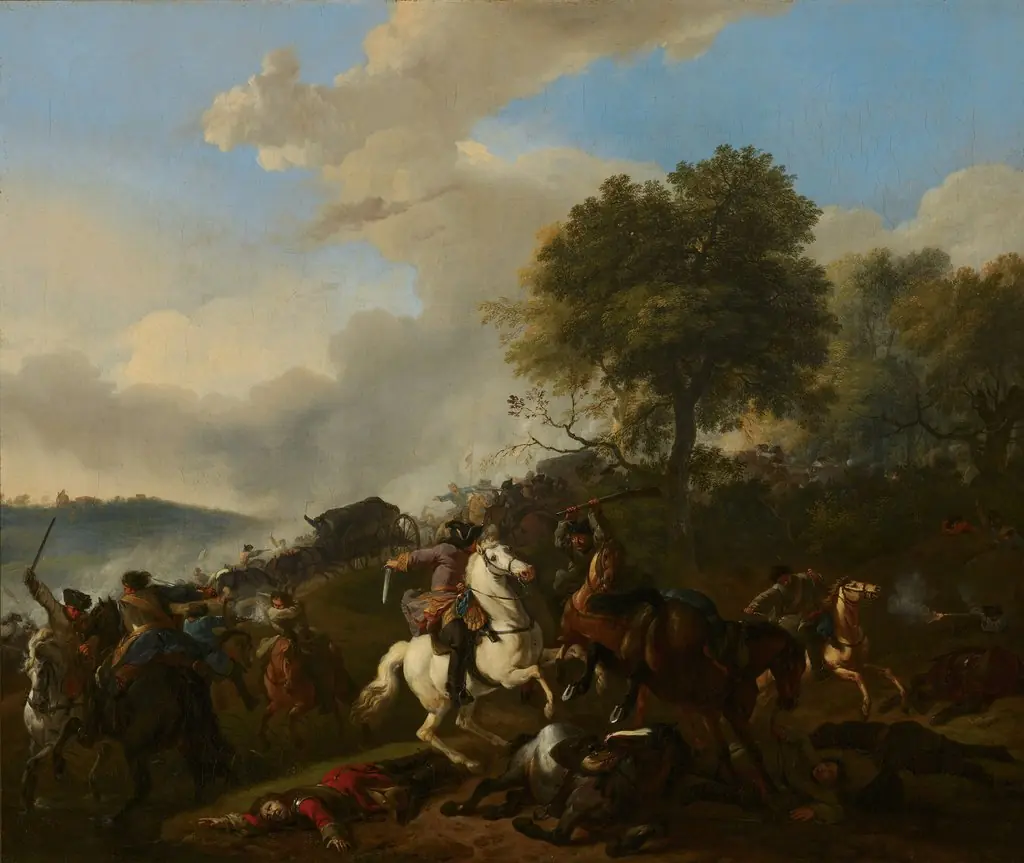
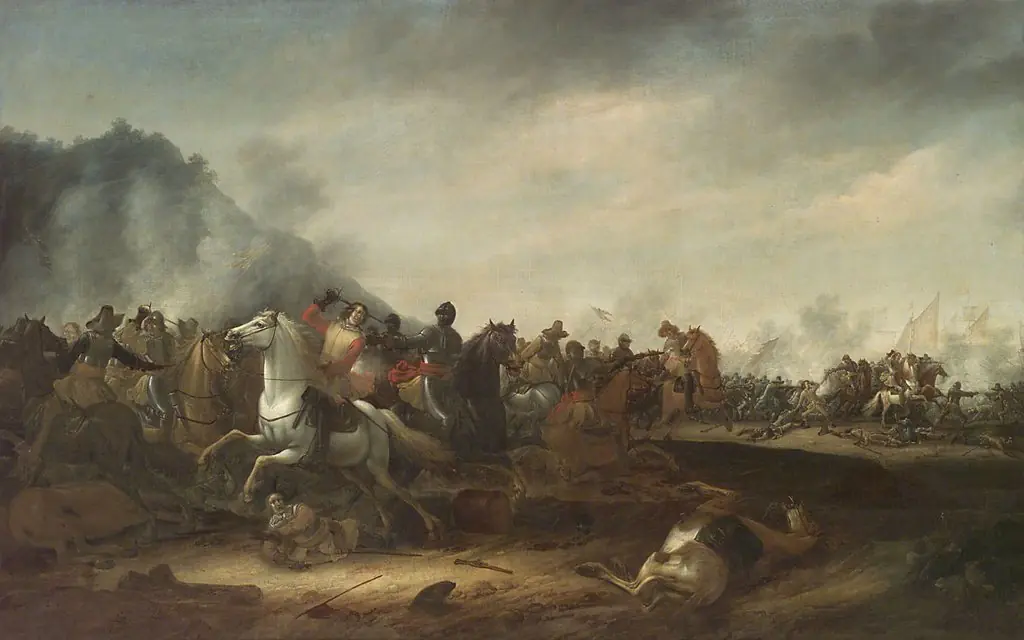
A Cavalry Encounter between Turkish Troops and the Troops of the Austrian Emperor is an oil painting by the Flemish Baroque painting artist Jacques Muller. It dates from 1650 and is held in the collection of the Rijksmuseum.
About this work
Overview
Its dynamic composition captures the confusion and brutality of mounted combat in a landscape marked by rugged terrain and turbulent skies.
Painted around 1650 by Jacques Muller, this oil on canvas depicts a violent clash between Ottoman and Habsburg cavalry forces. The work is part of the Rijksmuseum’s collection and reflects the ongoing military tensions between the Ottoman Empire and the Holy Roman Empire during the mid-seventeenth century. Its dynamic composition captures the confusion and brutality of mounted combat in a landscape marked by rugged terrain and turbulent skies.
Subject & Meaning
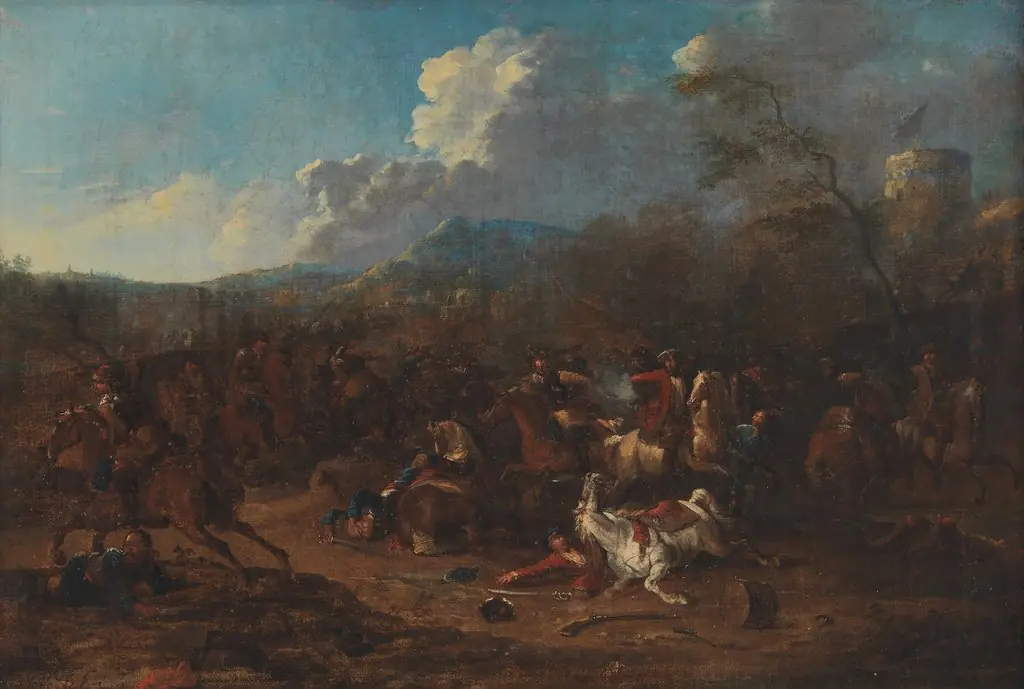
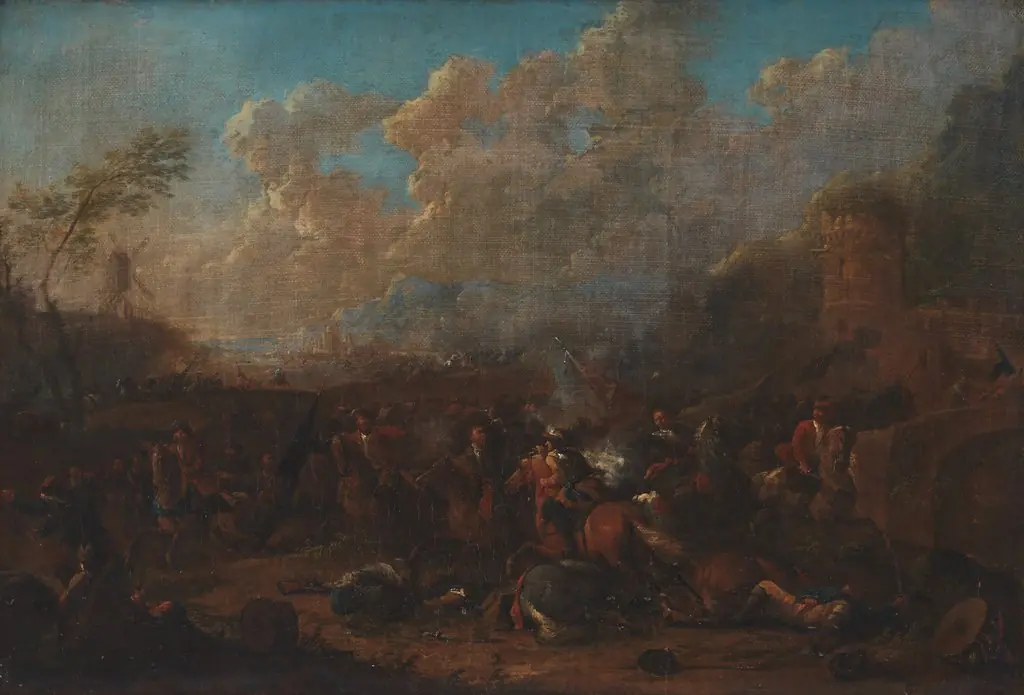
The scene portrays a moment of intense confrontation between two opposing forces: one identifiable by red and green uniforms, the other by darker, earth-toned attire. Fallen soldiers and rearing horses dominate the center, emphasizing the chaos of battle. No clear victor is indicated, suggesting the artist’s intent to convey the universal disorder of war rather than glorify a particular side.
Technique & Style
Muller employs bold, expressive brushwork to convey motion and violence, with rough textures in the foreground contrasting with smoother areas in the sky. Strong chiaroscuro isolates figures against the darkening atmosphere, heightening the drama. Light breaks sharply from the right, illuminating key riders and horses, while the rest of the scene recedes into shadow, reinforcing the sense of confusion and urgency.
History & Provenance
The painting entered the Rijksmuseum’s collection in the nineteenth century, though its earlier ownership remains undocumented. It likely originated in the Low Countries, where artists frequently depicted contemporary and historical military conflicts for patrons interested in European geopolitics. Its survival suggests it was valued as a record of military engagement, even if not commissioned for a specific event.
Context
Created during a period of intermittent warfare between the Habsburgs and Ottomans, the painting reflects European anxieties about Ottoman expansion into Central Europe. While not a documentary record of a specific battle, it draws on widely circulated imagery of cavalry skirmishes, blending observed detail with dramatic convention to satisfy public interest in frontier conflicts.
Legacy
The work stands as an example of how Northern European painters interpreted distant military campaigns through a lens of theatrical realism. Though not widely known today, it contributes to a broader tradition of battle painting that prioritized emotional impact over historical precision, influencing later depictions of war in European art.
Own this work as a print
Artist & collection