Artwork
Bartsch, Karl Friedrich Eduard
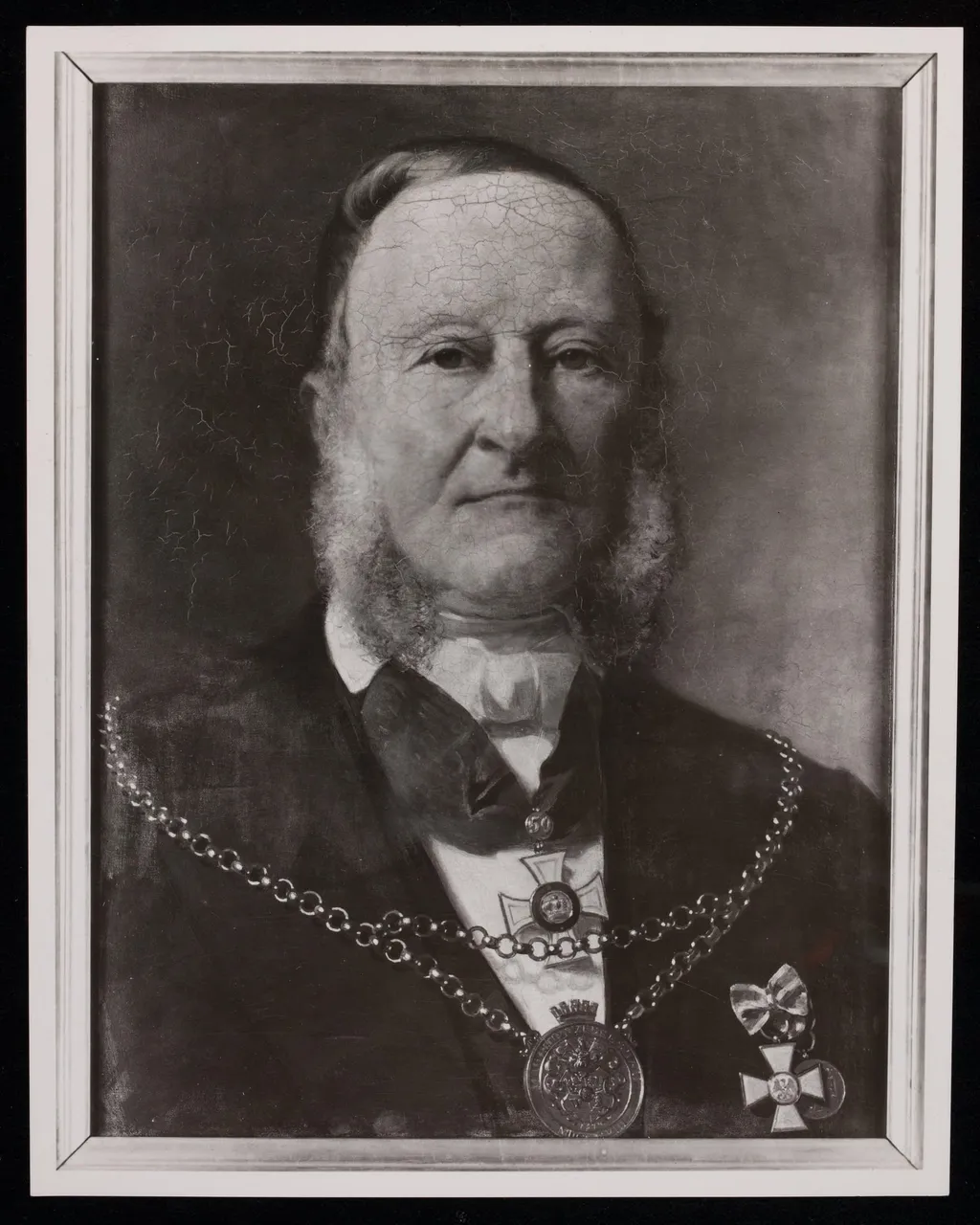
Bartsch, Karl Friedrich Eduard is an unspecified painting by Rudolf (czynny we Wrocławiu 1933-1947), fot. Jagusch. It dates from 1945 and is held in the collection of the Library of the Wroclaw University.
About this work
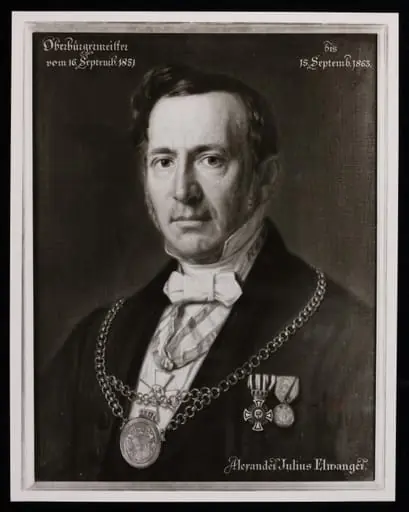
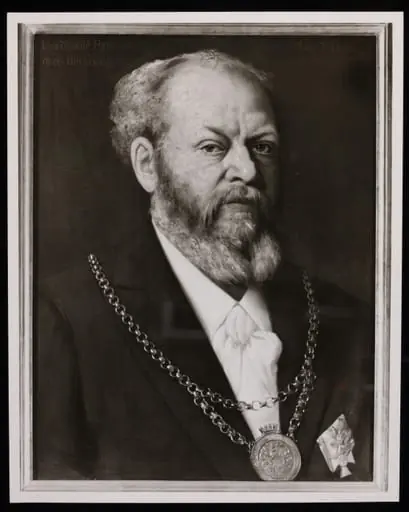
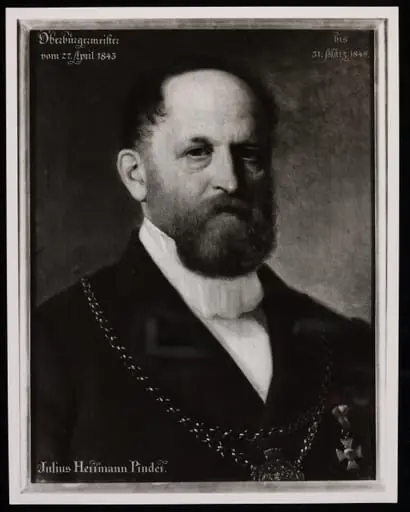
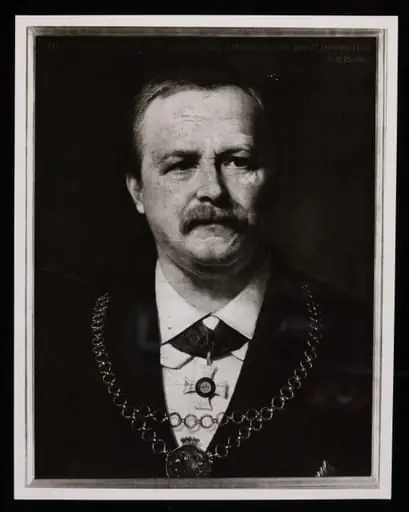
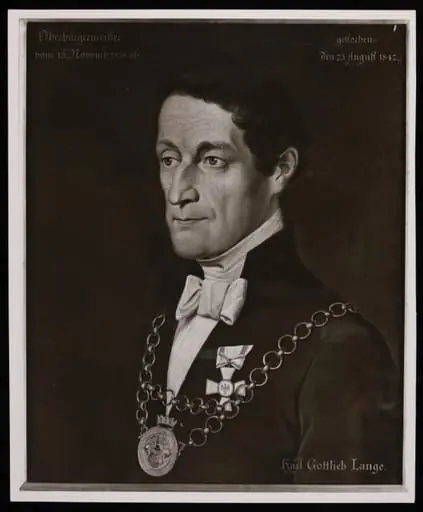
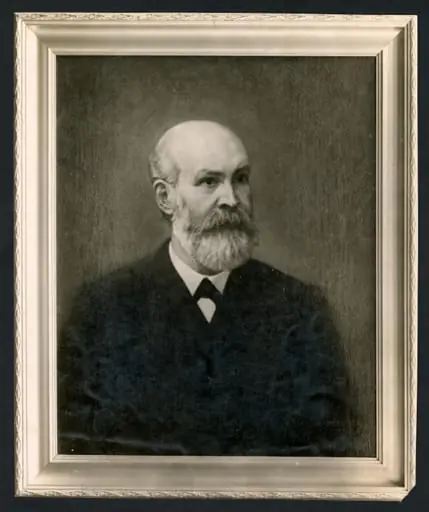
The man in the painting is Karl Friedrich Eduard Bartsch, a lawyer and mayor of Wrocław, and the chain and medals suggest his importance in the city.
This painting shows a man with a chain of office around his neck.
He's dressed formally and has some medals on his chest.
The man in the painting is Karl Friedrich Eduard Bartsch, a lawyer and mayor of Wrocław, and the chain and medals suggest his importance in the city.
The painting gives us a glimpse into Bartsch's life and career.
It shows his role as a mayor and his achievements, which are symbolized by the medals.
You can learn more about the artist who reproduced this image by looking up the work of artist: Jagusch, Rudolf (czynny we Wrocławiu 1933-1947), fot.
Overview
This photographic reproduction captures a painted portrait of Karl Friedrich Eduard Bartsch, a 19th-century legal figure and long-serving mayor of Wrocław. The image, printed on paper, derives from a glass negative held in the National Museum in Wrocław’s archival collection. It was produced by Rudolf Jagusch, a Breslau-based photographer active in the early 20th century, and retains the formal composition of the original oil painting.
Subject & Meaning
Bartsch is depicted wearing the ceremonial chain of office, signifying his tenure as mayor from 1838 to 1878. Decorations on his chest, including the Order of the Red Eagle, reflect state honors conferred for public service. The portrait functions as a visual record of civic authority, emphasizing institutional legitimacy and personal achievement within the administrative elite of the time.
Technique & Style
The original oil painting was rendered in a traditional, restrained academic style, typical of official portraiture in mid-19th-century Germany. The photographic reproduction preserves this formalism, with even lighting and sharp detail on the chain and medals. The small scale (19.8 x 15.9 cm) and straight frame suggest it was intended for archival or institutional use rather than public display.
History & Provenance
The portrait originated as an oil painting, later reproduced photographically by Rudolf Jagusch in Breslau. The glass negative, cataloged alongside inventory 7346, is preserved in the National Museum in Wrocław’s Department of Documents. The print bears Jagusch’s studio seal, confirming its origin and linking it to a broader photographic archive of regional figures.
Context
As mayor for four decades, Bartsch operated during a period of urban expansion and administrative modernization in Wrocław, then part of Prussia. His portrait reflects the era’s emphasis on documenting civic leaders through formal imagery, reinforcing state authority and bureaucratic continuity. Such portraits were often displayed in municipal buildings or used in official publications.
Legacy
The photograph endures as a material trace of Bartsch’s public role and the photographic practices of late 19th- to early 20th-century Breslau. It contributes to the historical record of local governance and the transition from painted portraiture to photographic documentation in institutional archives.
Artist & collection
Artist
Rudolf (czynny we Wrocławiu 1933-1947), fot. Jagusch
Rudolf Jagusch worked in Wrocław between 1933 and 1947. He made photographs of city scenes and portraits during those years. His surviving prints show shopfronts, street corners, and local figures in black-and-white.…