Artwork
Crebel, Petrus
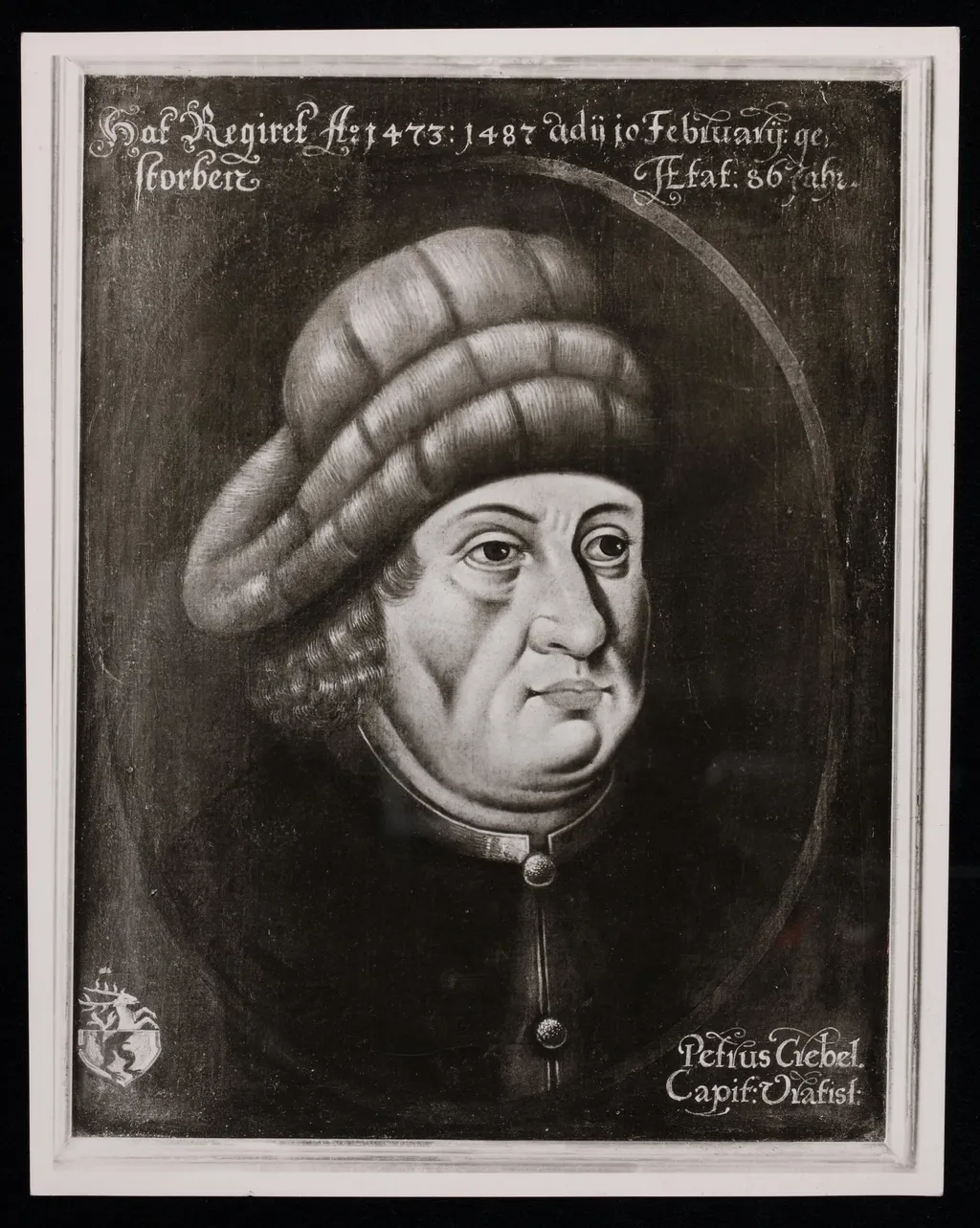
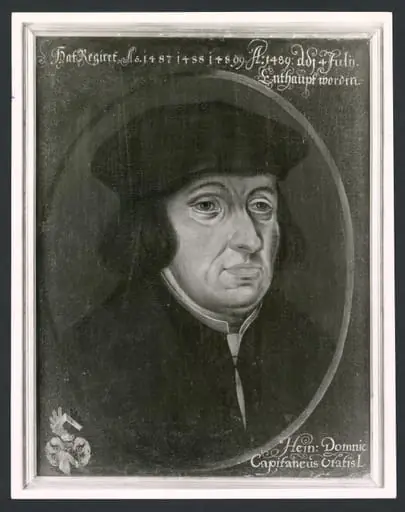
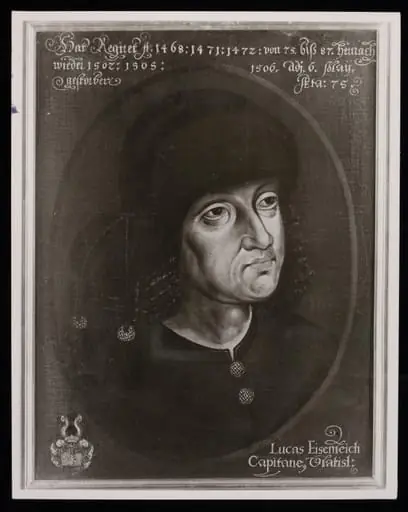
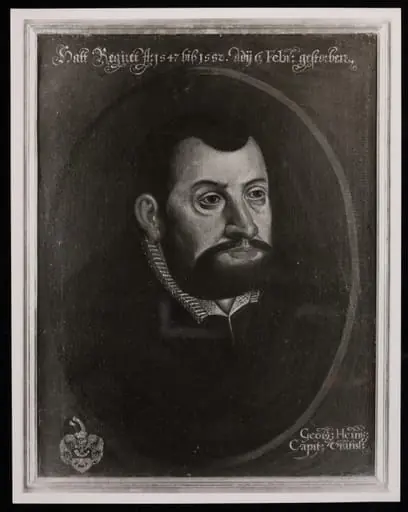
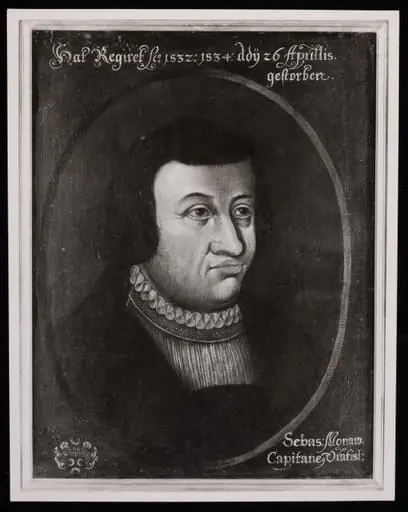
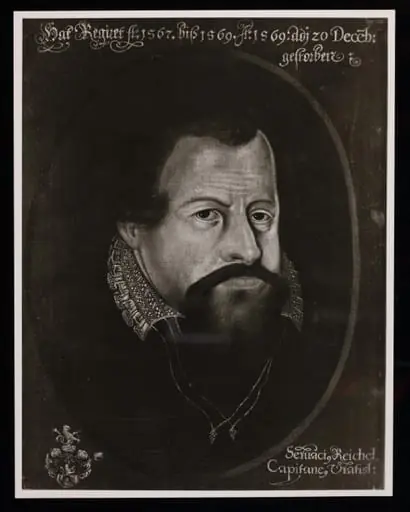
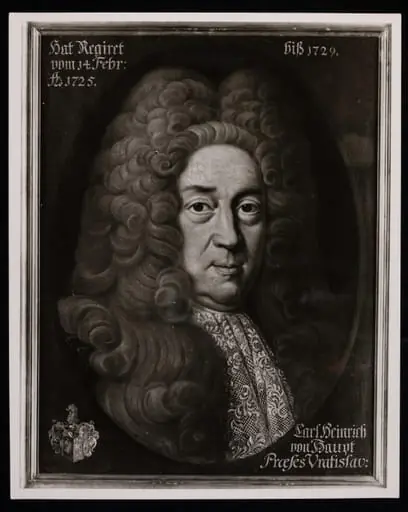
Crebel, Petrus is an unspecified painting by Rudolf (czynny we Wrocławiu 1933-1947), fot. Jagusch. It dates from 1945 and is held in the collection of the Library of the Wroclaw University. This print is a 17th-century reproductive image of a lost oil portrait of Petrus Crebel, starost of Wrocław.
About this work
To learn more about the photographic process used to reproduce this painting, look up the technique: sfumato.
This painting shows a bust of Petrus Crebel in a hat, inside a vertical oval frame.
He's wearing a coat with a coat of arms in the corner.
The painting has inscriptions at the top and bottom.
The interesting thing about this work is that it's a reproduction of an oil painting from the 17th century.
It was made using iron and silver print on paper.
To learn more about the photographic process used to reproduce this painting, look up the technique: sfumato.
Overview
This print is a 17th-century reproductive image of a lost oil portrait of Petrus Crebel, starost of Wrocław. Executed in iron and silver on paper, it measures 21.0 by 16.7 cm and preserves the composition of the original painting. A vertical oval frame surrounds the bust, with heraldic and textual elements framing the figure. The print carries a later photographic seal, indicating its use in archival documentation.
Subject & Meaning
Petrus Crebel, a civic official in Wrocław during the late 15th century, is depicted in formal attire, wearing a hat and a coat bearing a family or municipal coat of arms. The inscription at the top references his term of office in 1473, affirming his public role. The image functions as a record of civic authority, emphasizing status through regulated dress and heraldic symbolism rather than individual expression.
Technique & Style
The image was produced using an early metal-based print process, likely a form of etching or engraving with iron and silver toning, common in 17th-century reproductive prints. The composition is tightly framed in an oval, a format often used for portraiture to focus attention on the face and upper body. The style is restrained, lacking the chiaroscuro or texture of the original oil, reflecting its function as a documentary reproduction.
History & Provenance
The original oil portrait, now lost, dates to the late 15th century and depicted Crebel during his tenure as starost. This print, made in the early 1600s, served to preserve his likeness for administrative or familial use. The reverse bears a 19th- or early 20th-century photographic seal from Breslau, indicating its later inclusion in a regional archive or photographic collection, possibly linked to other documented images of local figures.
Context
In late medieval Silesia, civic leaders like Crebel commissioned portraits to assert legitimacy and continuity of authority. Reproductive prints of such images circulated among municipal offices and noble households, functioning as visual records before photography. The use of heraldry and dated inscriptions aligns with broader Central European practices of documenting officeholders through standardized iconography.
Legacy
This print survives as a material trace of a lost original, illustrating how civic portraiture was preserved through mechanical reproduction in the early modern period. Its inclusion in photographic archives reflects 19th-century efforts to catalog regional heritage. While not artistically innovative, it remains a key artifact for understanding the transmission of authority imagery in Silesian urban culture.
Artist & collection
Artist
Rudolf (czynny we Wrocławiu 1933-1947), fot. Jagusch
Rudolf Jagusch worked in Wrocław between 1933 and 1947. He made photographs of city scenes and portraits during those years. His surviving prints show shopfronts, street corners, and local figures in black-and-white.…