Artwork
Götz, Magnus Anton von
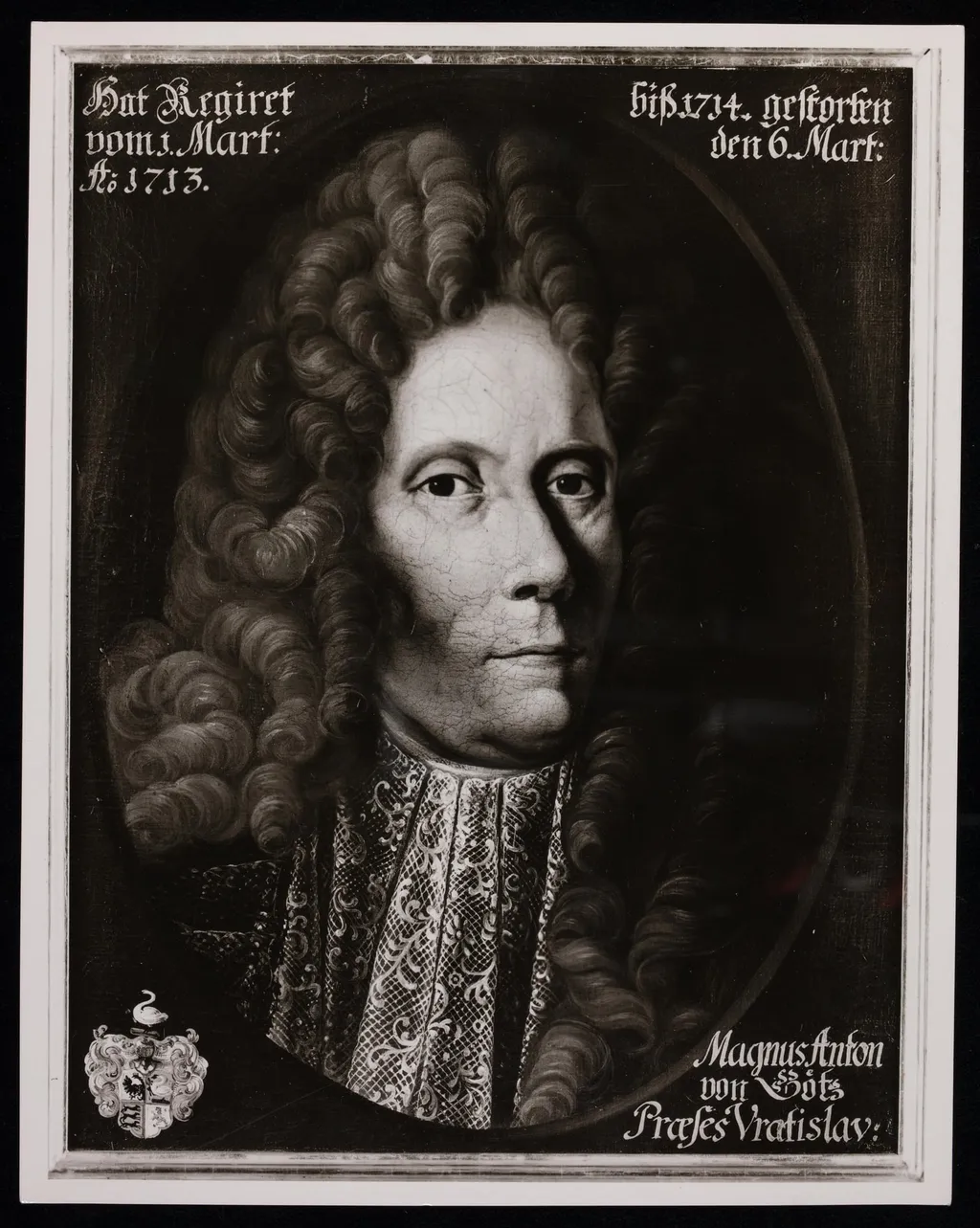
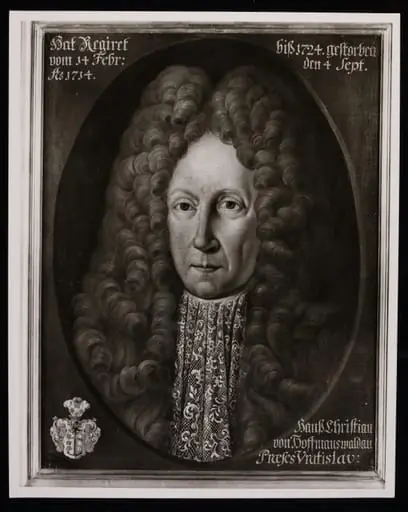
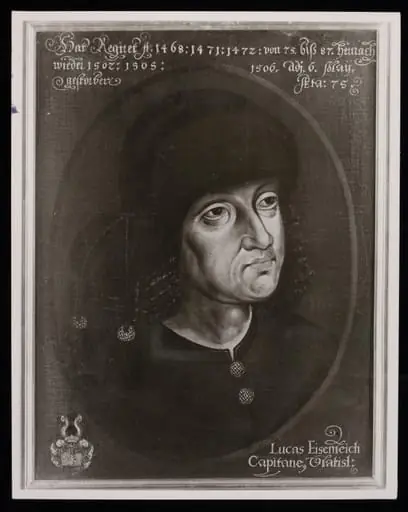
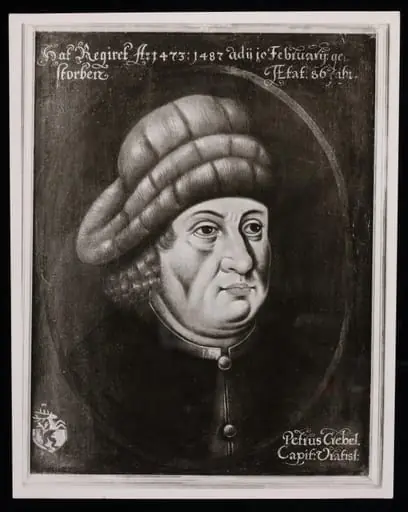
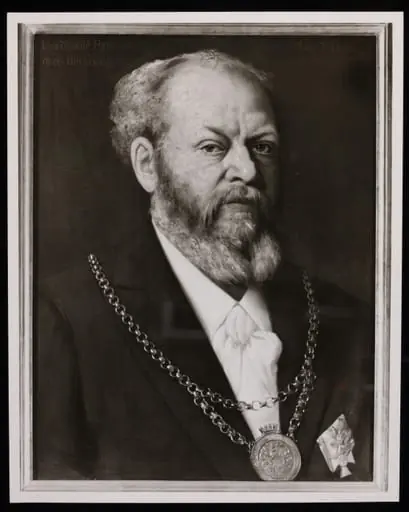
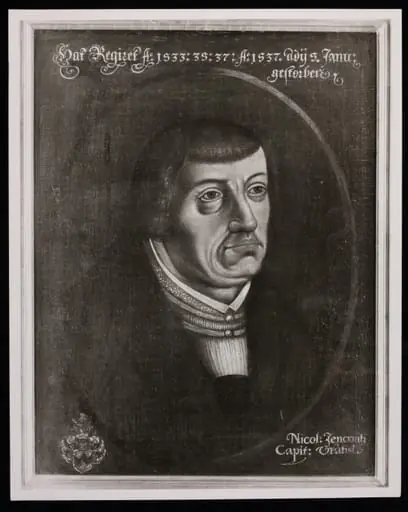
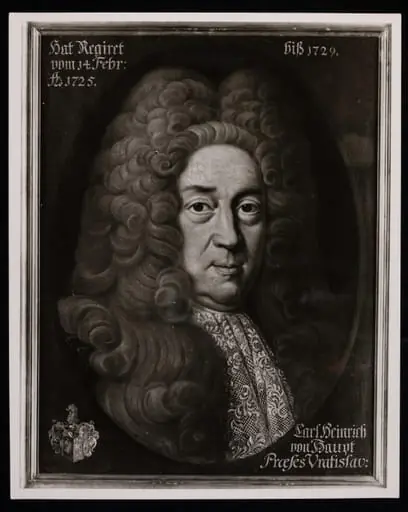
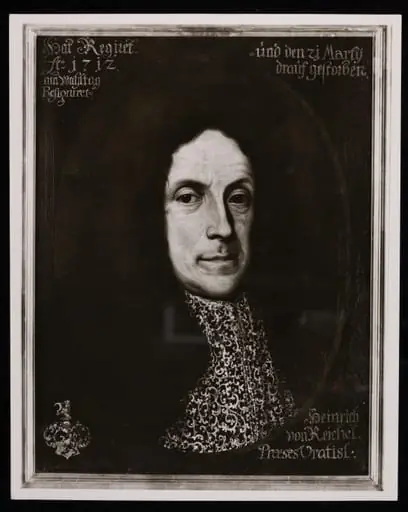
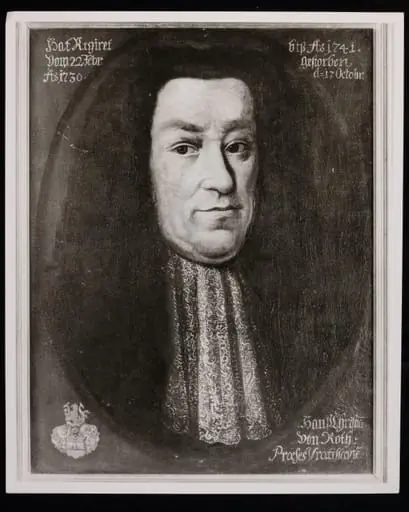
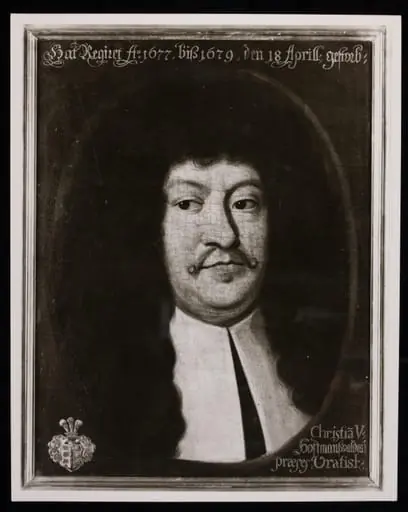
Götz, Magnus Anton von is an unspecified painting by Rudolf (czynny we Wrocławiu 1933-1947), fot. Jagusch. It dates from 1945 and is held in the collection of the Library of the Wroclaw University. This printed image reproduces an eighteenth-century oil portrait of Magnus Anton von Götz, a civic leader in Wrocław.
About this work
You can learn more about this style by looking into the technique of sfumato.
This painting shows a man in a vertical oval frame with a coat of arms.
He's wearing old-fashioned clothes and has a serious expression. The details on his coat and the frame are very precise.
The inscription at the top says he was in charge from 1713 to 1714. This was a big deal back then. The man's name, Magnus Anton von Götz, is also written on the painting.
You can learn more about this style by looking into the technique of sfumato.
Overview
This printed image reproduces an eighteenth-century oil portrait of Magnus Anton von Götz, a civic leader in Wrocław. The composition is contained within a vertical oval, emphasizing formal portraiture conventions of the period. The print measures 21.2 by 16.8 centimeters and bears a photographic stamp from R. Jagusch in Breslau. It is held in the National Museum in Wrocław’s Department of Documents, cataloged alongside related archival materials.
Subject & Meaning
Magnus Anton von Götz served as President of the Wrocław City Council during the final year of his life, from March 1, 1713, until his death on March 6, 1714. The portrait commemorates his brief but significant tenure, with inscriptions explicitly marking his term and demise. The inclusion of his family coat of arms in the lower left reinforces his social standing and civic identity, typical of elite portraiture in early eighteenth-century Silesia.
Technique & Style
The original painting, now known only through this print, employs precise rendering of fabric textures and facial features, reflecting the detailed realism common in regional portraiture. The oval format and restrained palette align with Baroque conventions, prioritizing dignity over theatricality. While not using sfumato, the work relies on sharp contours and subtle tonal gradations to convey formality and authority, characteristic of civic portraiture in German-speaking territories.
History & Provenance
The image originates from a glass negative in the National Museum in Wrocław’s archival collection, cataloged as Inw. photo 7320. The print was produced by Foto R. Jagusch, a Breslau-based photographic studio active in the early twentieth century. This reproduction preserves the appearance of the lost original oil painting, which likely once hung in municipal buildings or the Götz family residence, serving as a public record of civic leadership.
Context
In early eighteenth-century Wrocław, civic leaders like Götz held considerable influence amid shifting political control between Habsburg and Prussian authorities. Portraits of magistrates were not merely personal memorials but instruments of institutional legitimacy. The inclusion of precise dates and heraldic symbols in such images reinforced continuity and order during a period of territorial uncertainty in Silesia.
Legacy
This print preserves the visual identity of a minor but documented figure in Wrocław’s administrative history. As a reproduction of a now-lost painting, it serves as a material link to the city’s early modern governance. Its archival status underscores the role of photography in conserving cultural memory, particularly for individuals whose influence was local yet emblematic of civic tradition.
Artist & collection
Artist
Rudolf (czynny we Wrocławiu 1933-1947), fot. Jagusch
Rudolf Jagusch worked in Wrocław between 1933 and 1947. He made photographs of city scenes and portraits during those years. His surviving prints show shopfronts, street corners, and local figures in black-and-white.…