Artwork
Heaven Weeping upon the Rubble
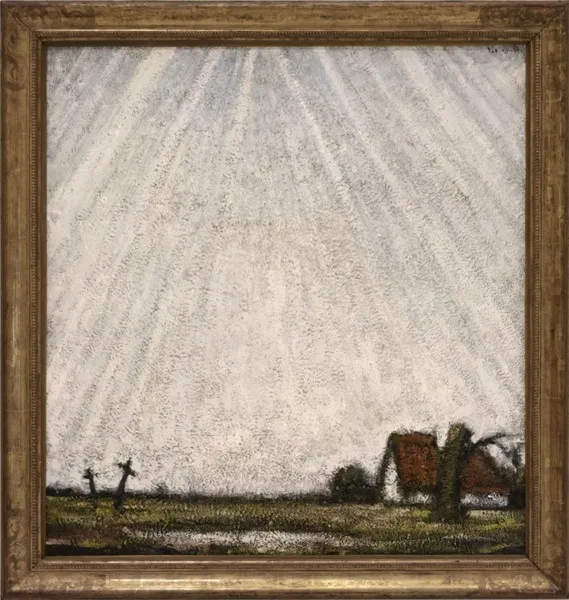
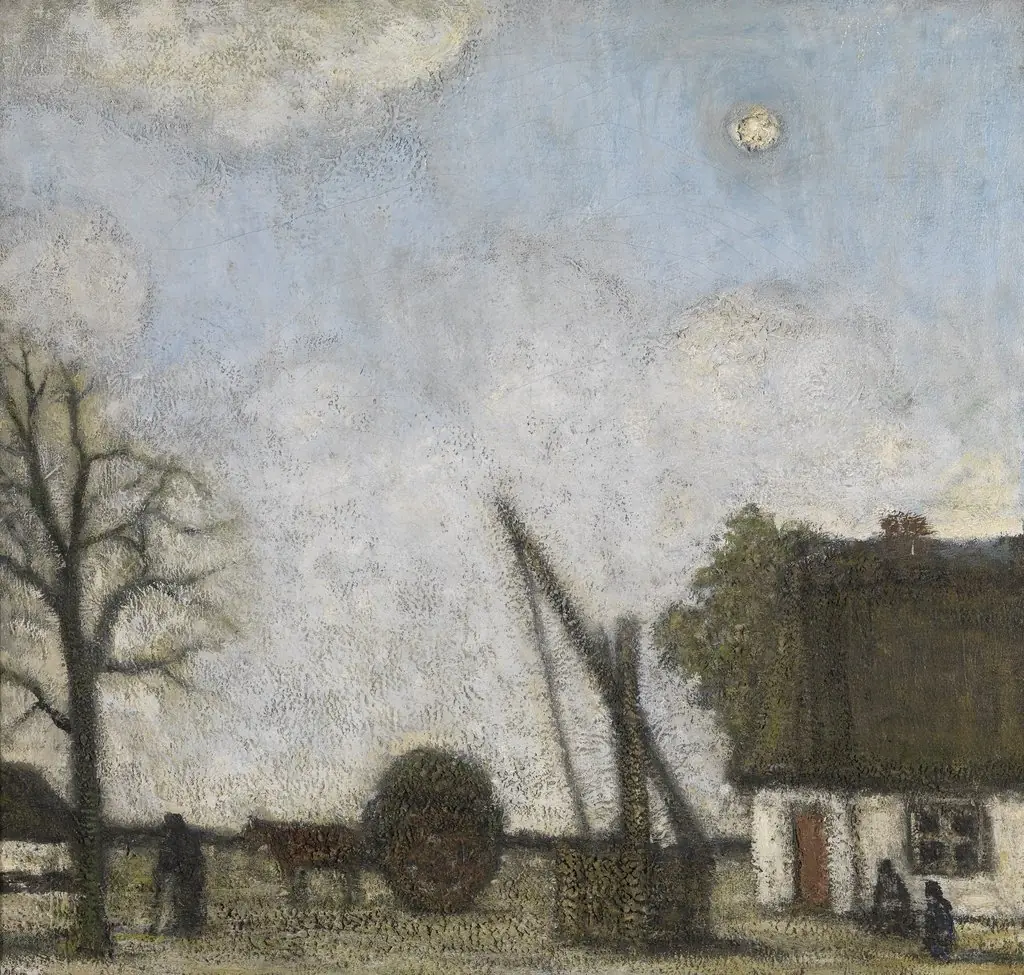
Heaven Weeping upon the Rubble is an oil painting by Jakob Smits. It dates from 1901 and is held in the collection of the Royal Museum of Fine Arts Antwerp.
About this work
Overview
The work presents a quiet rural scene under a brooding sky, balancing natural elements with subtle emotional undertones.
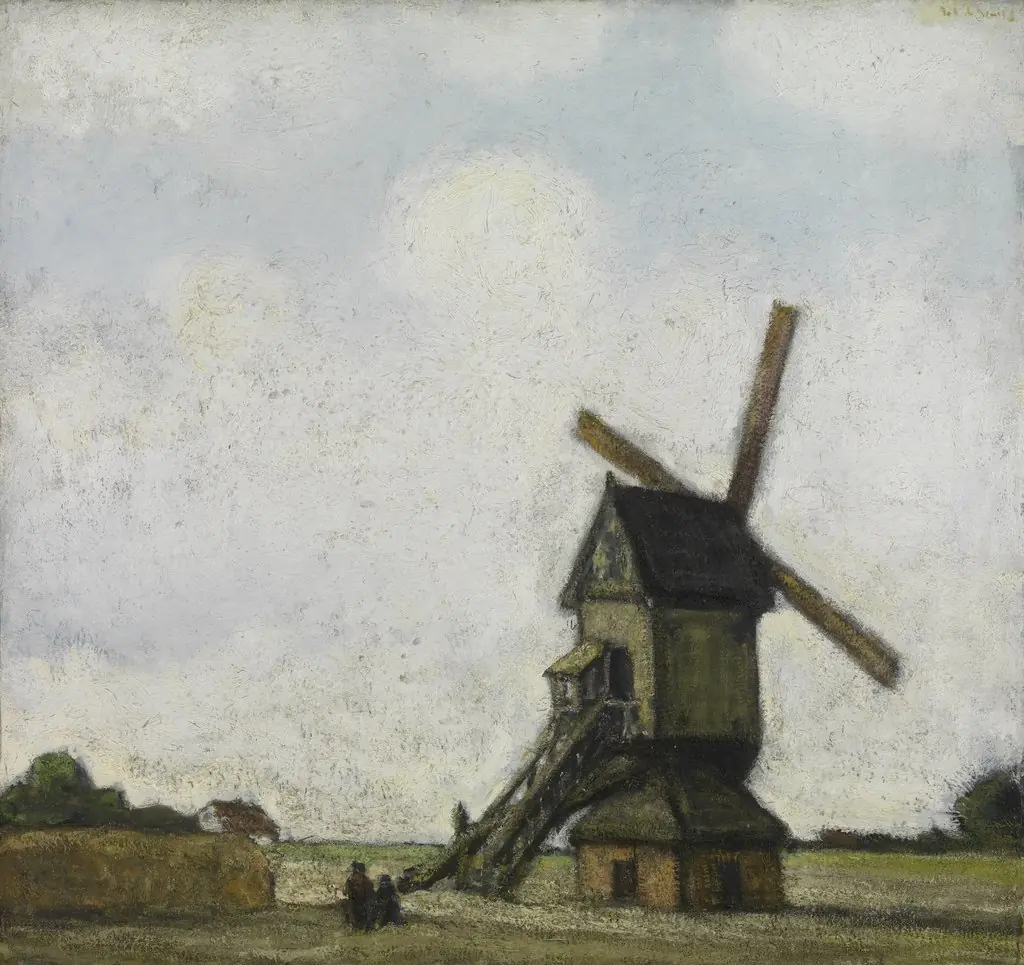
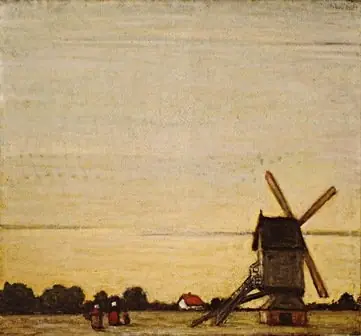
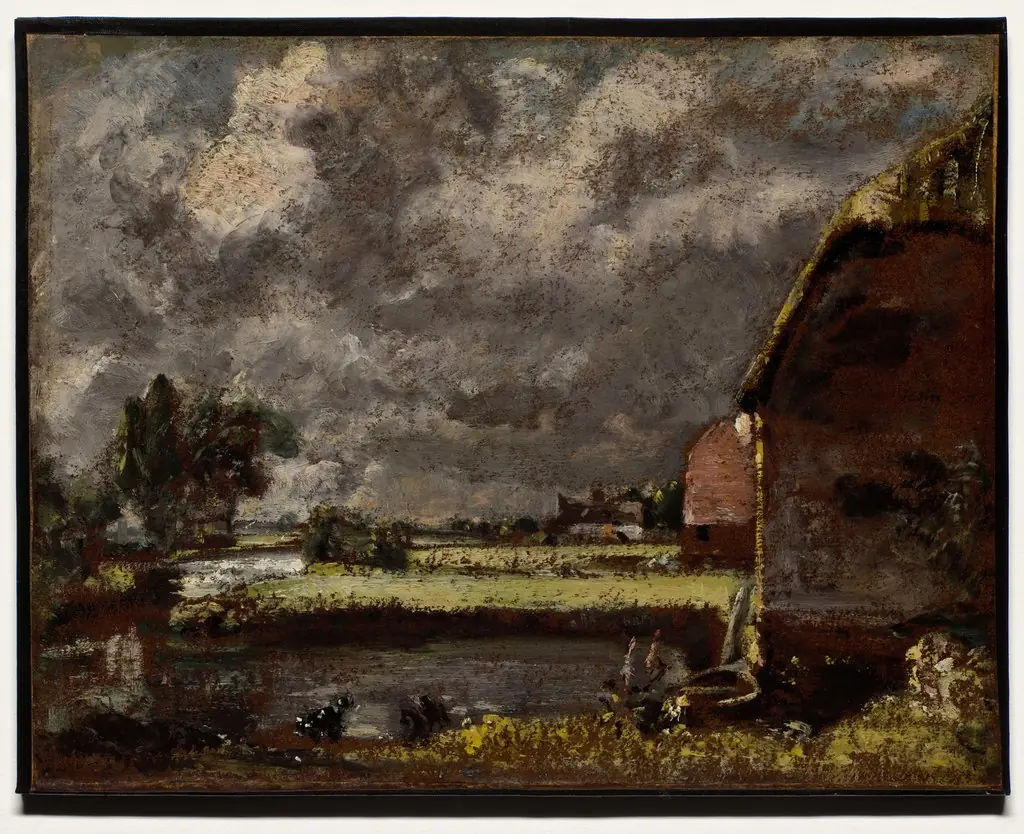
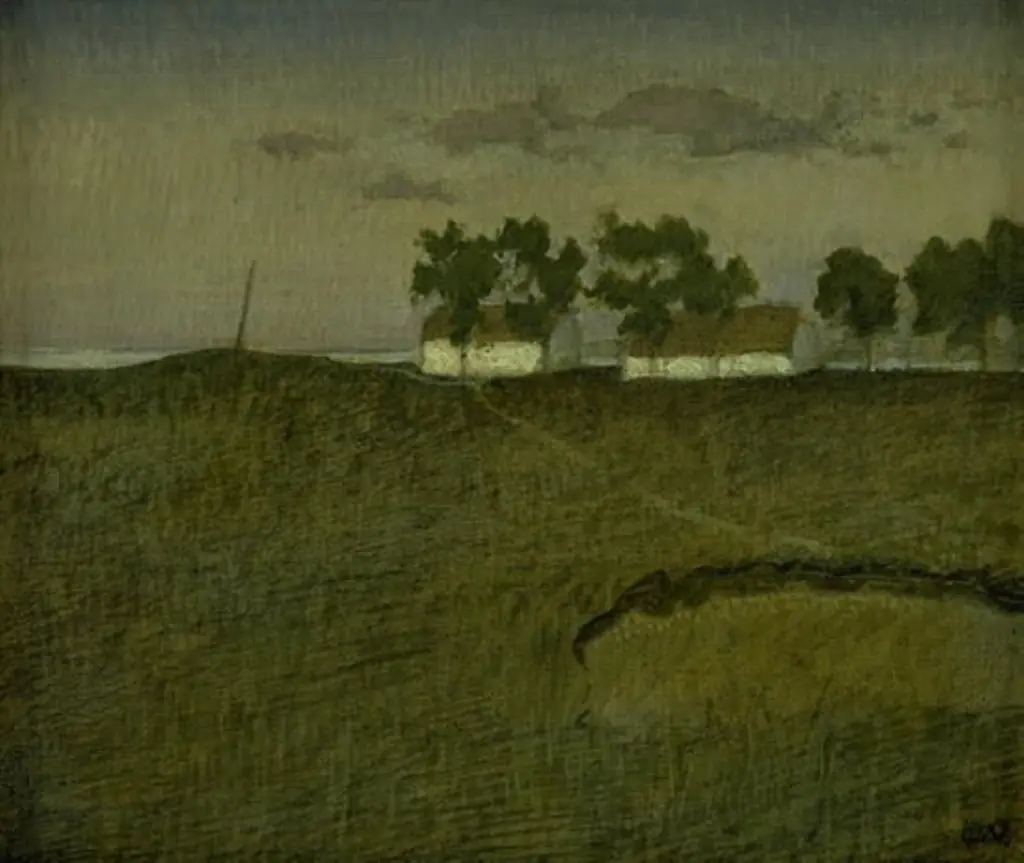
Painted around 1901, Heaven Weeping upon the Rubble is an oil-on-canvas landscape by Belgian artist Jakob Smits. It resides in the collection of the Royal Museum of Fine Arts Antwerp. The work presents a quiet rural scene under a brooding sky, balancing natural elements with subtle emotional undertones. Its composition centers on a modest dwelling and a slender windmill, framed by fields and scattered trees, all rendered in muted tones that suggest quiet contemplation.
Subject & Meaning
The painting evokes a sense of melancholy stillness rather than overt narrative. The title suggests a spiritual or emotional response to ruin, though no literal destruction is depicted. Instead, the weathered house and windmill stand as quiet witnesses to time’s passage. The diffused light filtering through overcast skies reinforces a mood of gentle sorrow, as if nature itself mourns the quiet decay of human presence in the landscape.
Technique & Style
Smits employs a restrained palette of earth tones and soft grays, with careful modulation of light to model forms. Chiaroscuro is used subtly, not for dramatic effect but to ground the scene in tangible depth. Brushwork is deliberate yet unobtrusive, allowing texture in grass, wood, and cloud to emerge without flourish. The composition is balanced and horizontal, drawing the eye across the land toward the distant horizon, reinforcing the painting’s meditative tone.
History & Provenance
Created in the early 20th century, the painting entered the Royal Museum of Fine Arts Antwerp’s collection shortly after its completion. It was not widely exhibited during Smits’s lifetime, and its reception remained largely regional. The work’s survival in institutional hands reflects its quiet significance within Belgian artistic circles, though it never achieved broad public recognition beyond its immediate cultural context.
Context
Smits worked during a period when Belgian artists were redefining rural realism, moving away from romanticized pastoralism toward more introspective depictions of everyday life. His approach aligned with contemporaries who favored emotional resonance over spectacle. In this context, Heaven Weeping upon the Rubble reflects a broader shift in visual culture—toward landscapes that convey inner states through atmosphere rather than narrative.
Legacy
Though not widely reproduced or studied outside Belgium, the painting remains a representative example of Smits’s mature style. It contributes to understanding the quieter currents in early 20th-century Belgian painting, where emotional nuance and natural observation took precedence over grandeur. Its continued presence in the Antwerp museum underscores its role as a modest but enduring artifact of regional artistic sensibility.
Artist & collection