Artwork
The Hudson River Steamboat "Rip van Winkle"
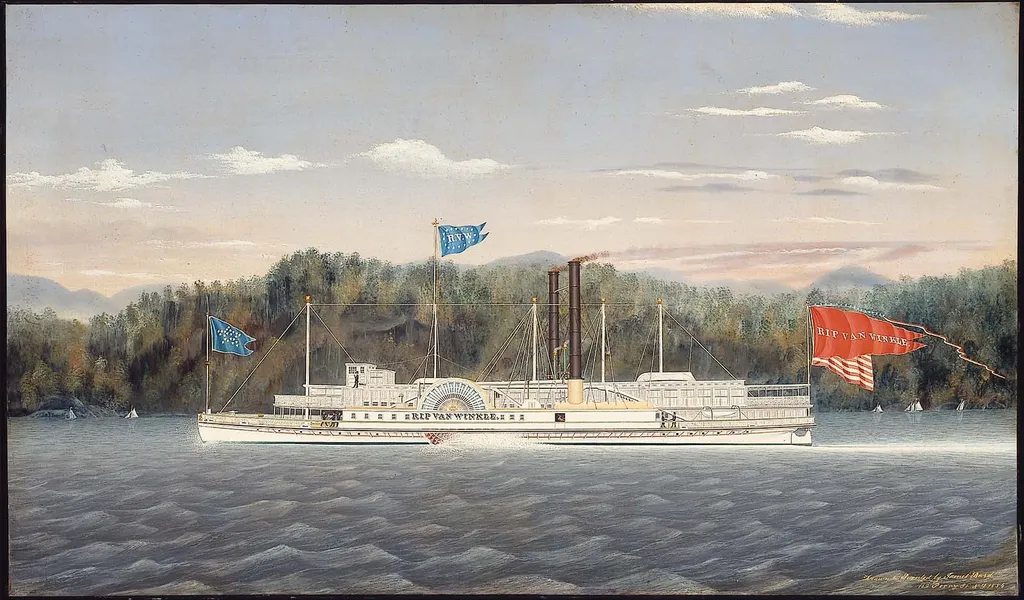
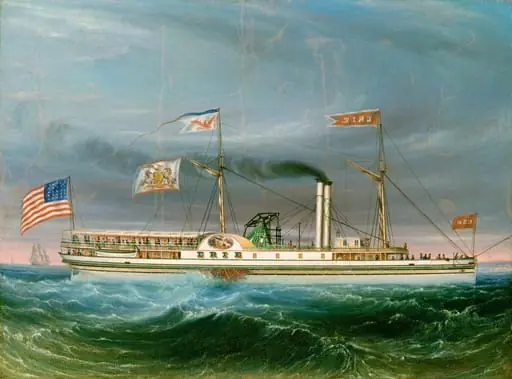
The Hudson River Steamboat "Rip van Winkle" is an oil painting by the Hudson River School artist James Bard. It dates from 1854 and is held in the collection of the Museum of Fine Arts Boston.
About this work
Overview
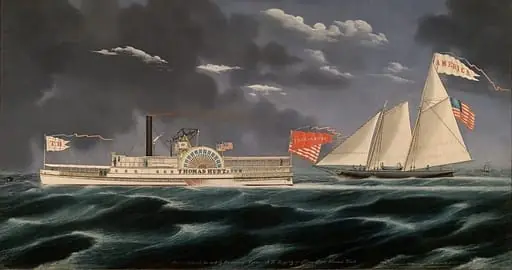
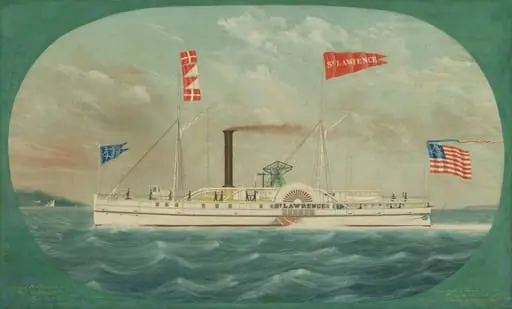
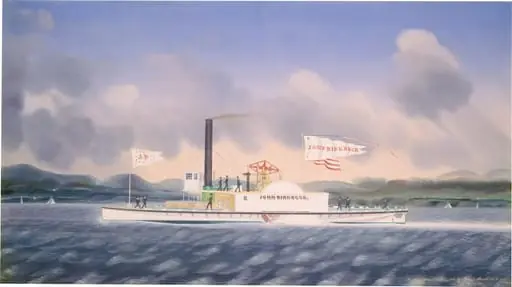
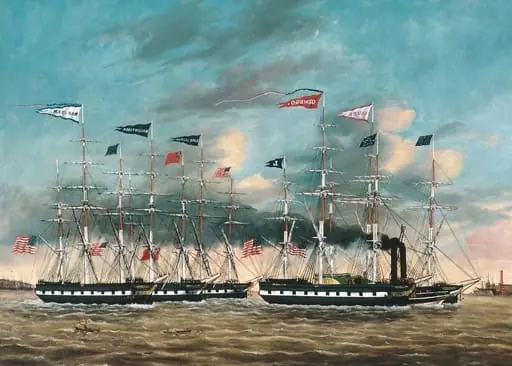
The Hudson River Steamboat 'Rip van Winkle' is an 1854 oil painting by James Bard, a marine artist associated with the Hudson River School. The work depicts a steamboat in motion on a river, characterized by its detailed and colorful representation.
Subject & Meaning
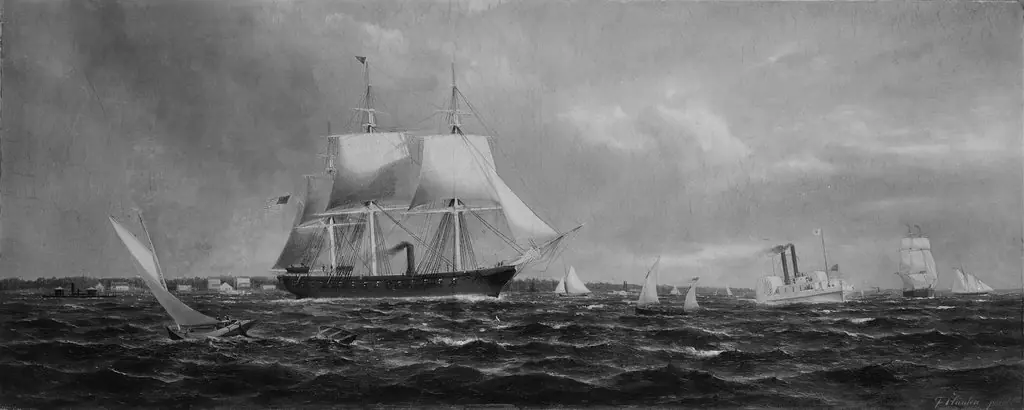
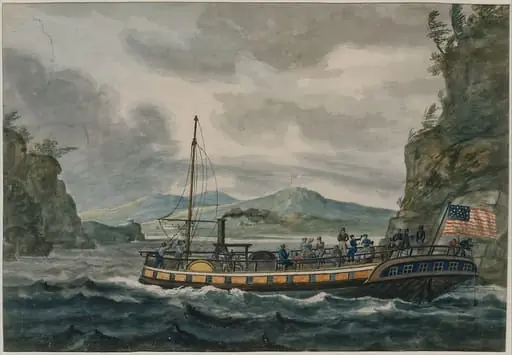
The painting's subject is the steamboat 'Rip van Winkle', showcased with a steamboat in action amidst choppy water, smaller sailboats, and a landscaped riverbank. The scene highlights mid-19th-century maritime activity, reflecting Bard's focus on documenting his era's nautical life.
Technique & Style
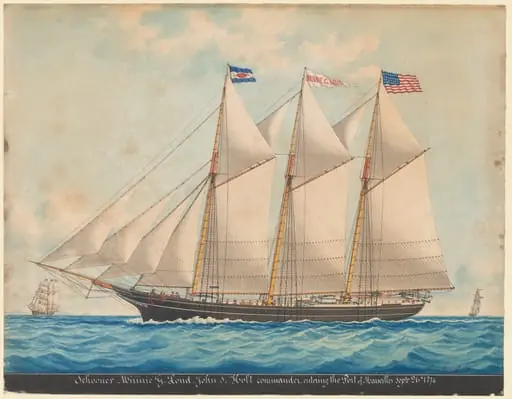
Bard employed a straightforward, documentary-like approach, sometimes likened to naïve art, to capture the steamboat's details. The composition features a predominantly light blue sky, contrasting with the white and black of the boat, and vibrant flags.
History & Provenance
Created in 1854, the painting is now part of the Museum of Fine Arts Boston's collection. Earlier in his career, Bard often collaborated with his twin brother, John Bard.
Context
As a Hudson River School artist, Bard's work reflects the movement's emphasis on American landscapes and, in this case, the burgeoning maritime industry of the time.
Legacy
While specific legacy details of 'The Hudson River Steamboat Rip van Winkle' are not highlighted, James Bard's overall body of work contributes to the historical record of 19th-century American maritime life through detailed, observant paintings.
Artist & collection

Artist
James Bard (1815–1897) was a marine artist of the 19th century. He is known for his paintings of watercraft, particularly of steamboats. His works are sometimes characterized as naïve art. Although Bard died poor and…