Artwork
The Seven Deadly Sins: Anger
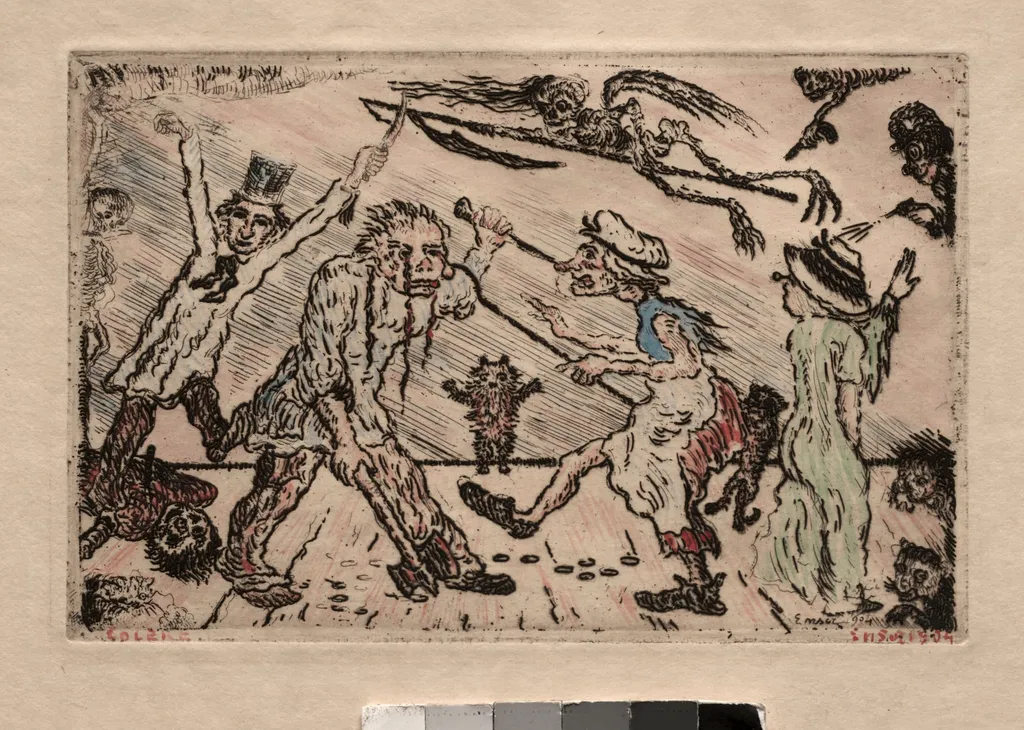
The Seven Deadly Sins: Anger is a print by James Ensor. It dates from 1904 and is held in the collection of the Cleveland Museum of Art.
About this work
Overview
Created in 1904, *The Seven Deadly Sins: Anger* is a print by Belgian artist James Ensor. It forms part of a larger series in which the painter examined moral concepts through grotesque, theatrical imagery. The work is presently in the collection of the Cleveland Museum of Art.
Subject & Meaning
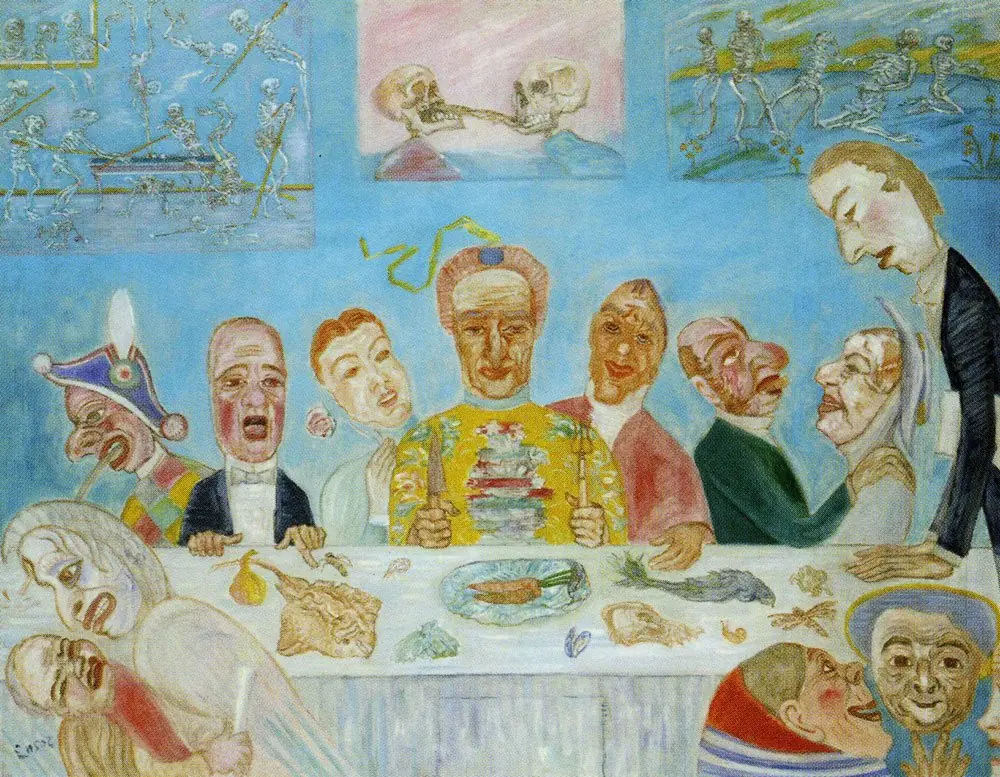
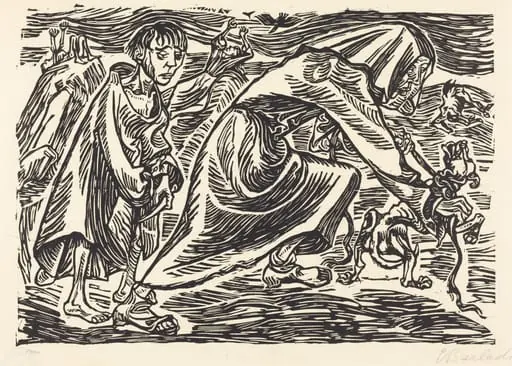
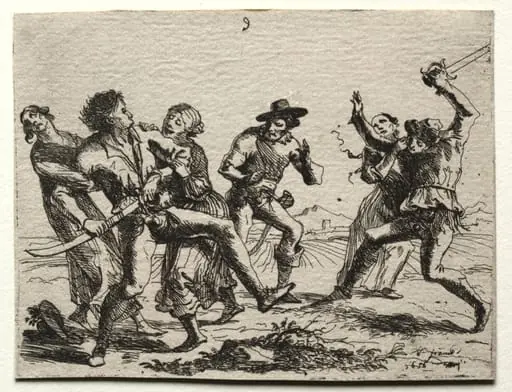
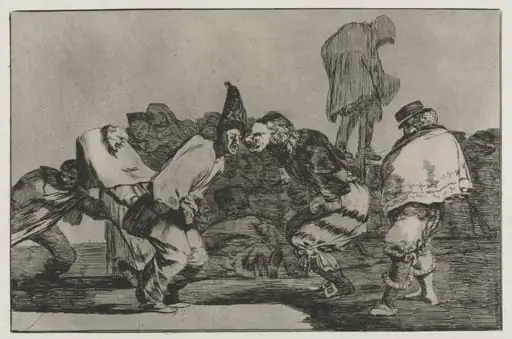
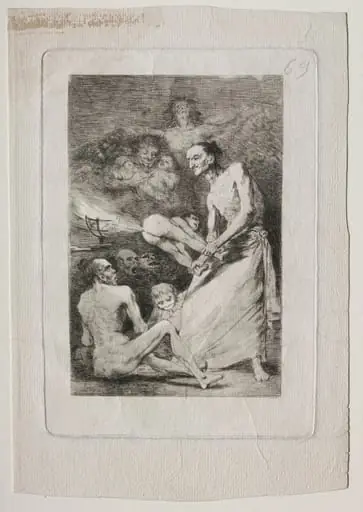
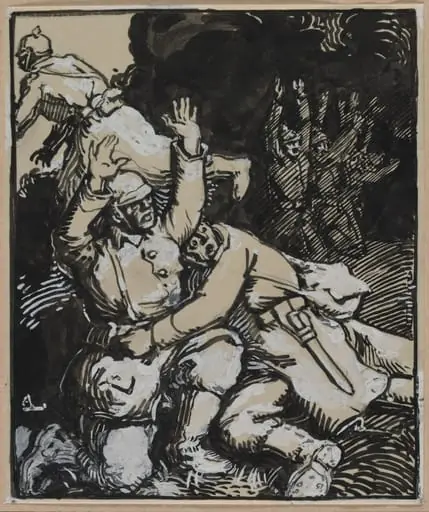
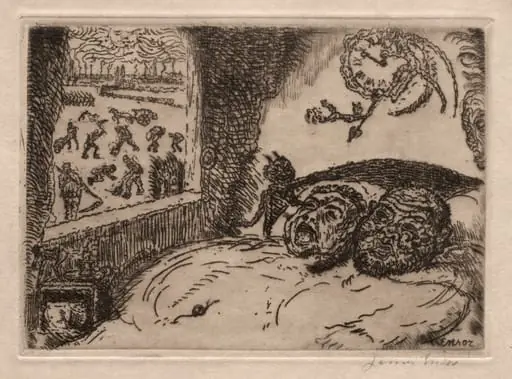
The image visualises the sin of anger through a tumultuous tableau of seven figures caught in a storm‑like maelstrom. The characters are contorted, some bearing animalistic masks, and they act in discordant directions—one brandishes a flag, another clutches an infant—conveying the chaotic, uncontrolled nature of wrath.
Technique & Style
Ensor employs bold, dark outlines and vigorous, rough shading to heighten the sense of disorder. The print’s palette is dominated by vivid, saturated hues that contrast with the heavy line work, while exaggerated, grotesque physiognomies anticipate the expressive distortions later embraced by expressionist and surrealist artists.
History & Provenance
The piece was produced during a prolific period when Ensor was active in Ostend and affiliated with the avant‑garde group Les XX. After changing hands several times, it entered the Cleveland Museum of Art’s collection, where it remains accessible to the public.
Context
Ensor’s fascination with moral allegory and his penchant for satirical, carnival‑like scenes placed him at the forefront of early twentieth‑century modernism. By dramatizing anger with theatrical excess, the work reflects broader cultural anxieties about emotional excess and foreshadows the psychological intensity that would characterize later expressionist and surrealist movements.
Artist & collection
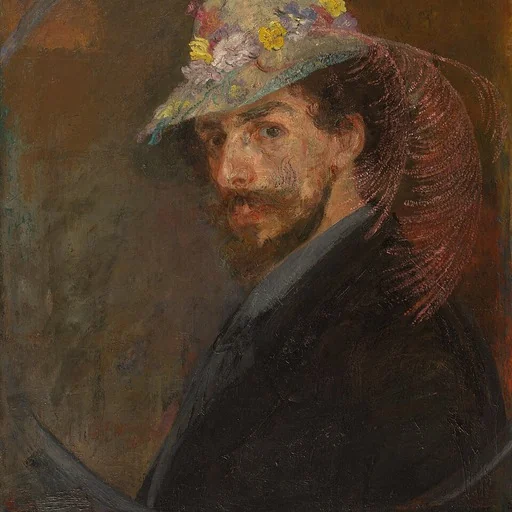
Artist
James Sidney Edouard, Baron Ensor (13 April 1860 – 19 November 1949) was a Belgian painter and printmaker, an important influence on expressionism and surrealism who lived in Ostend for most of his life.