Artwork
The Seven Deadly Sins: Sloth
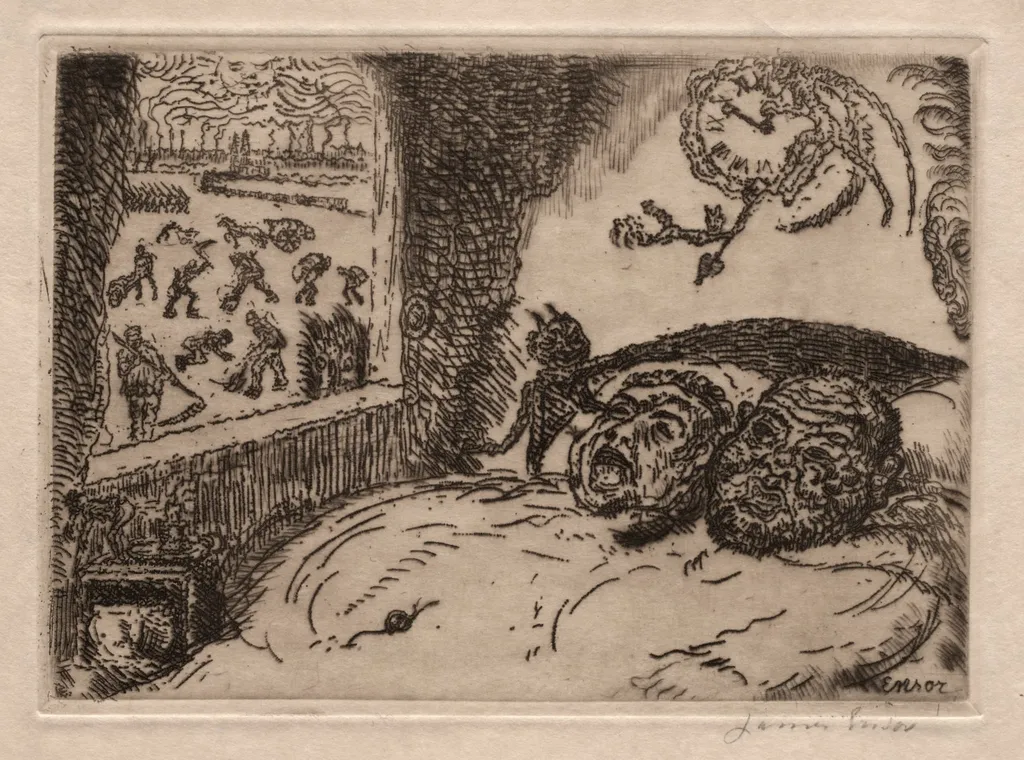
The Seven Deadly Sins: Sloth is a print by James Ensor. It dates from 1902 and is held in the collection of the Cleveland Museum of Art.
About this work
Overview
Ensor, a key figure in the avant-garde group Les XX, used printmaking to explore psychological and societal decay, often blending satire with symbolic horror.
Created in 1902 by Belgian artist James Ensor, *The Seven Deadly Sins: Sloth* is a print from a series examining moral failings. Executed in a dense, ink-driven technique, the work presents a claustrophobic scene dominated by distorted figures and looming masks. Ensor, a key figure in the avant-garde group Les XX, used printmaking to explore psychological and societal decay, often blending satire with symbolic horror. The piece resides in the Cleveland Museum of Art’s collection.
Subject & Meaning
The print depicts a prone figure surrounded by writhing, shadowy forms, suggesting mental paralysis or moral inertia. Two grotesque masks, their hair wild and eyes vacant, hover above like oppressive forces. These masks, recurring in Ensor’s work, may symbolize the internalization of societal apathy or the self-imposed isolation of sloth. The chaotic background implies a world collapsing under neglect, reinforcing the sin’s corrosive, contagious nature.
Technique & Style
Ensor employed rapid, incised lines and heavy ink washes to create a turbulent, almost feverish texture. The composition is densely packed, with no clear spatial hierarchy—figures crowd the foreground and background alike. The stormy sky, rendered with jagged lightning strokes, adds to the sense of unease. His rough, expressive mark-making anticipates Expressionist and Surrealist approaches, prioritizing emotional resonance over naturalistic detail.
History & Provenance
Produced in 1902, this print was part of Ensor’s broader investigation into human vice during a period of intense personal and artistic experimentation. It entered the Cleveland Museum of Art’s collection in the 20th century, likely through a donation or acquisition focused on European modernist prints. Its preservation reflects institutional recognition of Ensor’s role in expanding the expressive potential of graphic art.
Context
Ensor created this work amid growing disillusionment with bourgeois norms and religious dogma in late 19th-century Belgium. His engagement with the avant-garde group Les XX exposed him to Symbolist and Decadent ideas, which informed his use of allegory and grotesquerie. *Sloth* reflects broader fin-de-siècle anxieties about moral decay, industrial alienation, and the erosion of spiritual vitality.
Legacy
The print’s visceral imagery and psychological intensity influenced later Expressionist and Surrealist artists, who adopted Ensor’s use of distortion and symbolic masks to convey inner turmoil. While not widely exhibited during his lifetime, his graphic works gained retrospective acclaim for their prescient critique of modern alienation. *Sloth* remains a touchstone for understanding the transition from Symbolism to 20th-century psychological art.
Artist & collection
Artist
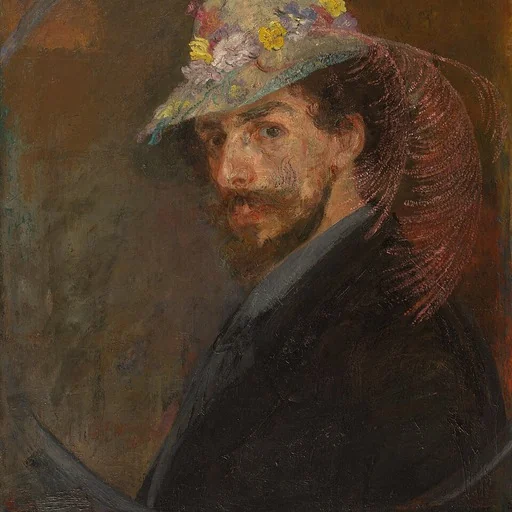
James Sidney Edouard, Baron Ensor (13 April 1860 – 19 November 1949) was a Belgian painter and printmaker, an important influence on expressionism and surrealism who lived in Ostend for most of his life.