Artwork
Das Gastmahl des Trimalchio: pl. V (The Banquet of Trimalchio: pl. V)
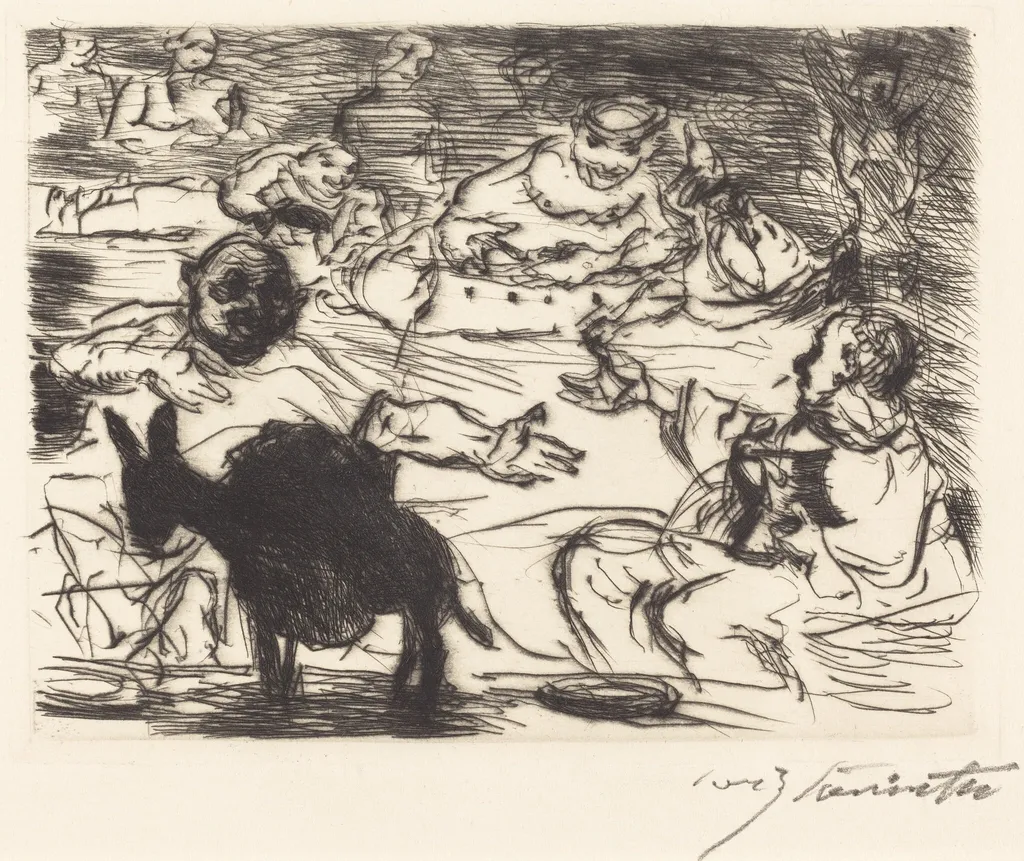
Das Gastmahl des Trimalchio: pl. V (The Banquet of Trimalchio: pl. V) is an ink print by Lovis Corinth. It dates from 1919 and is held in the collection of the National Gallery of Art. Created in 1919, *Das Gastmahl des Trimalchina: pl.
About this work
Overview
The image presents a bustling banquet scene drawn in dense, irregular black lines that convey a sense of movement and disorder.
Created in 1919, *Das Gastmahl des Trimalchina: pl. V* is a drypoint print executed on Zanders wove paper. The image presents a bustling banquet scene drawn in dense, irregular black lines that convey a sense of movement and disorder. The composition is populated by numerous figures, a dog, and a prominently clothed man at the foreground, all rendered with the characteristic roughness of the drypoint technique.
Subject & Meaning
The work illustrates a moment from the Roman novel *Satyricon*, specifically a lavish feast hosted by the wealthy freedman Trimalchio. By emphasizing the crowded, chaotic atmosphere, the print reflects the excess and social satire inherent in the literary source, inviting viewers to consider the decadence of the banquet and its participants.
Technique & Style
Corinth employed drypoint, incising lines directly into a metal plate; the resulting burr yields a soft, velvety quality that appears as uneven, scratchy strokes on the paper. The black-and-white palette, combined with a loose, expressive handling of form, aligns the piece with the artist’s later shift toward expressionistic vigor after his 1911 stroke.
History & Provenance
Lovis Corinth, a German painter and printmaker who studied in Paris and Munich and later directed the Berlin Secession, produced this print as part of a series on scenes from the *Satyricon*. The series was completed in the post‑World War I period, reflecting Corinth’s renewed interest in literary subjects and his exploration of print media.
Context
The print belongs to a broader trend in early‑20th‑century German art that revisited classical antiquity through modern lenses. Corinth’s transition from naturalism to a hybrid of impressionism and expressionism is evident in the work’s dynamic line work and the emotional intensity conveyed by the crowded composition.
Artist & collection

Artist
Lovis Corinth was a German artist and writer whose mature work as a painter and printmaker realized a synthesis of impressionism and expressionism.

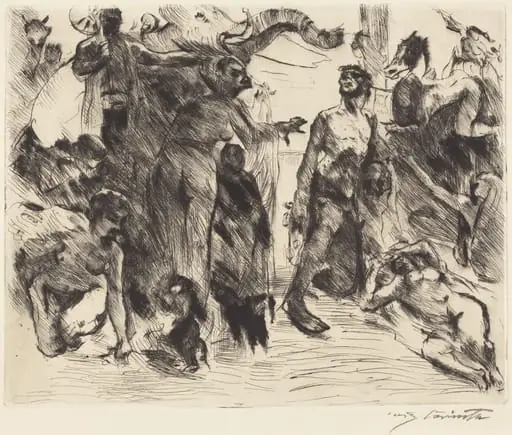 Die Versuchung des heiligen Antonius (The Temptation of Saint Anthony)
 Disparate desordenado (Disorderly Folly)
 Porgy
Porgy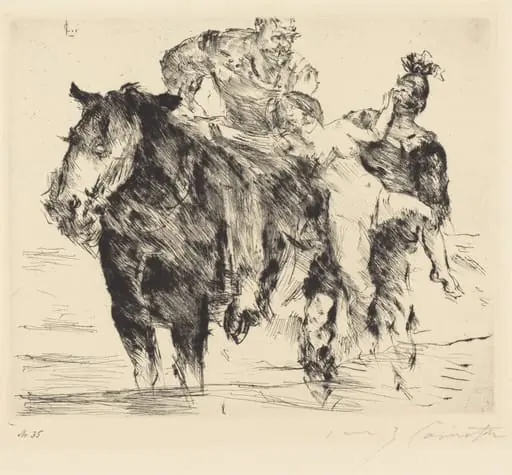 Frauenräuber (Rape)
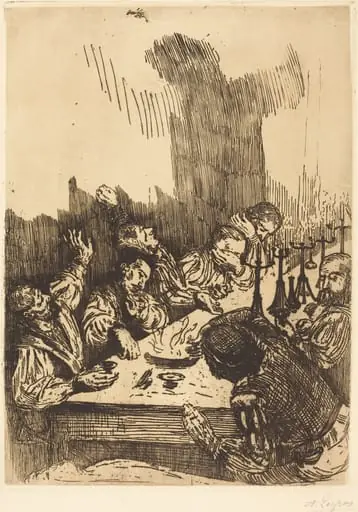 Shadow (Ombre)
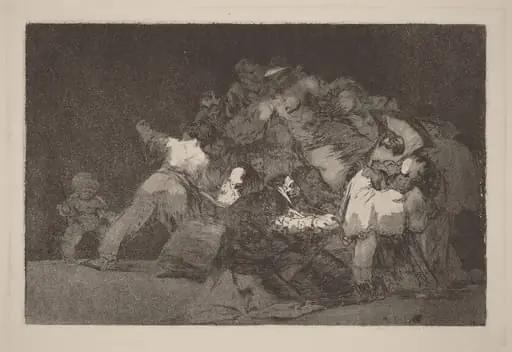 Disparate general (General Folly)
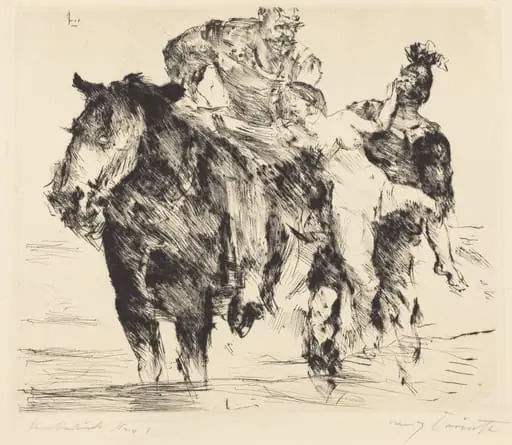 Frauenräuber (Rape)
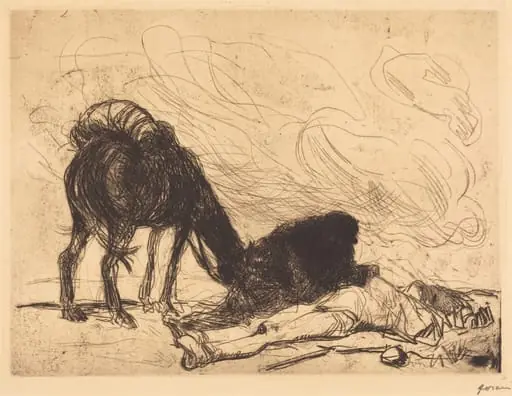 Le bon samaritain (The Good Samaritan)
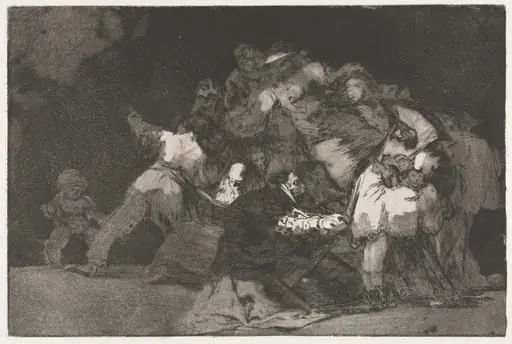 The Proverbs: General Folly
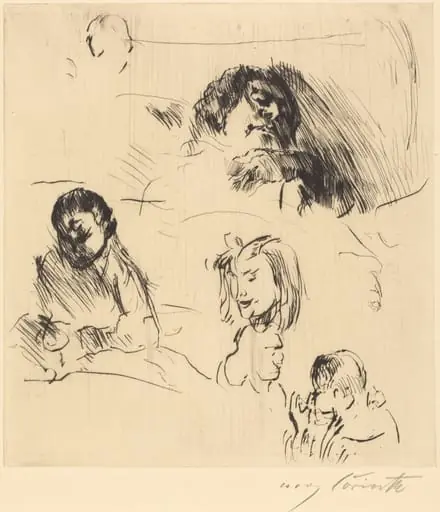 Verschiedene Bilnisstudien (Portrait Sketches)