Artwork
Still life with a cabbage
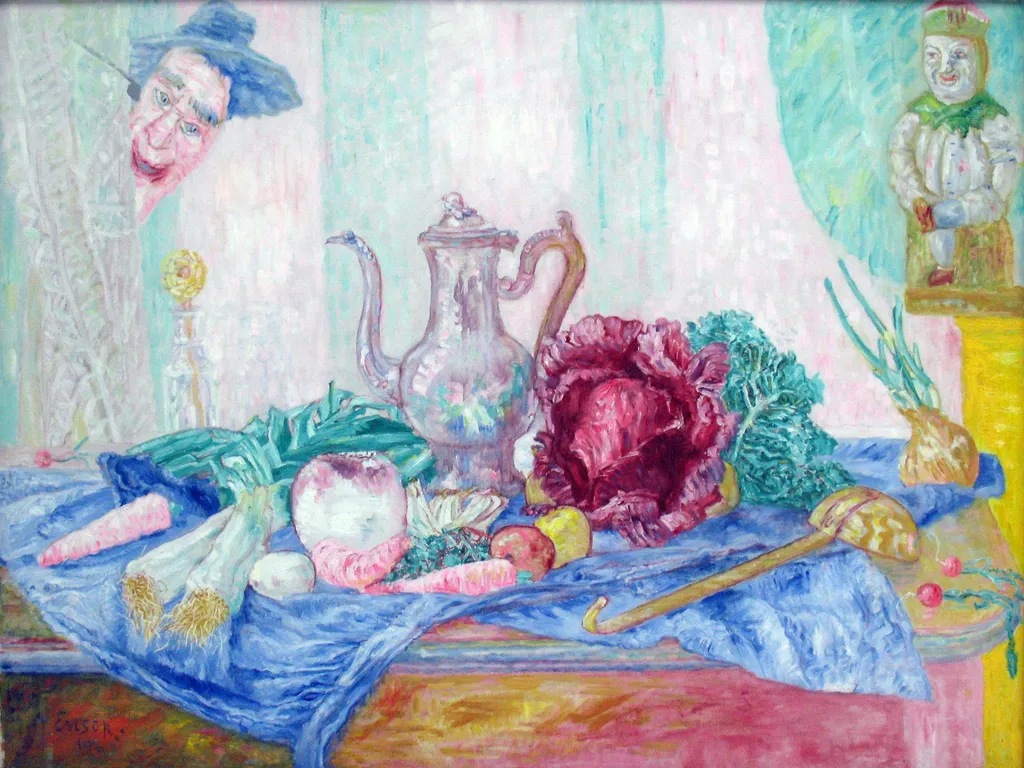
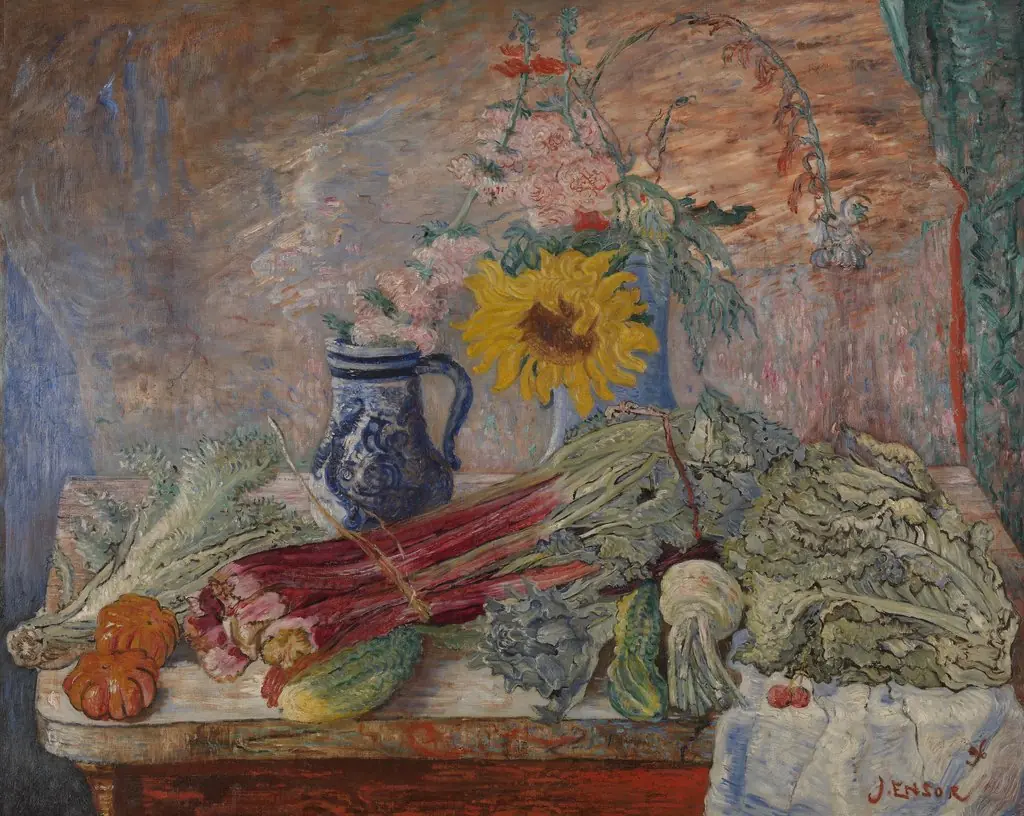
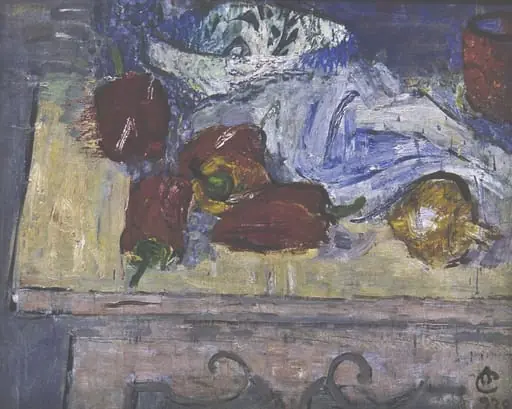
Still life with a cabbage is an unspecified painting by James Ensor. It dates from 1921 and is held in the collection of the Kröller-Müller Museum.
About this work
Overview
Still life with a cabbage, created by James Ensor in 1921, is a painting that combines everyday domesticity with subtle, unconventional elements. Characteristic of Ensor's style, it blends the mundane with hints of the unusual.
Subject & Meaning
The central subject is a red cabbage on a blue cloth, accompanied by other vegetables and objects in a simple, indoor arrangement. Two faces discreetly appear at the top left, introducing a layer of intrigue beyond the still life's apparent simplicity.
Technique & Style
Ensor employs a contrasting color palette, with the vibrant red cabbage standing out against a light background and muted tones of surrounding elements. This visual dynamic is typical of his work, which often juxtaposes bright and subdued hues.
History & Provenance
Part of the avant-garde movement through his association with Les XX, Ensor produced this work during his long residency in Ostend, Belgium. The painting is now part of the Kröller-Müller Museum's collection.
Context
Created in 1921, the piece reflects Ensor's ongoing exploration of blending the ordinary with surreal or satirical undertones, a hallmark that would influence later art movements like expressionism and surrealism.
Legacy
As with much of Ensor's work, *Still life with a cabbage* contributes to his legacy as a bridge between late 19th-century avant-garde and the early 20th-century's more radical artistic movements.
Own this work as a print
Artist & collection
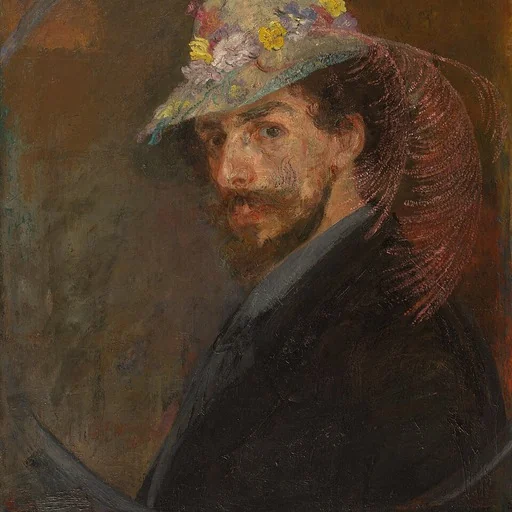
Artist
James Sidney Edouard, Baron Ensor (13 April 1860 – 19 November 1949) was a Belgian painter and printmaker, an important influence on expressionism and surrealism who lived in Ostend for most of his life.