Artwork
Untitled
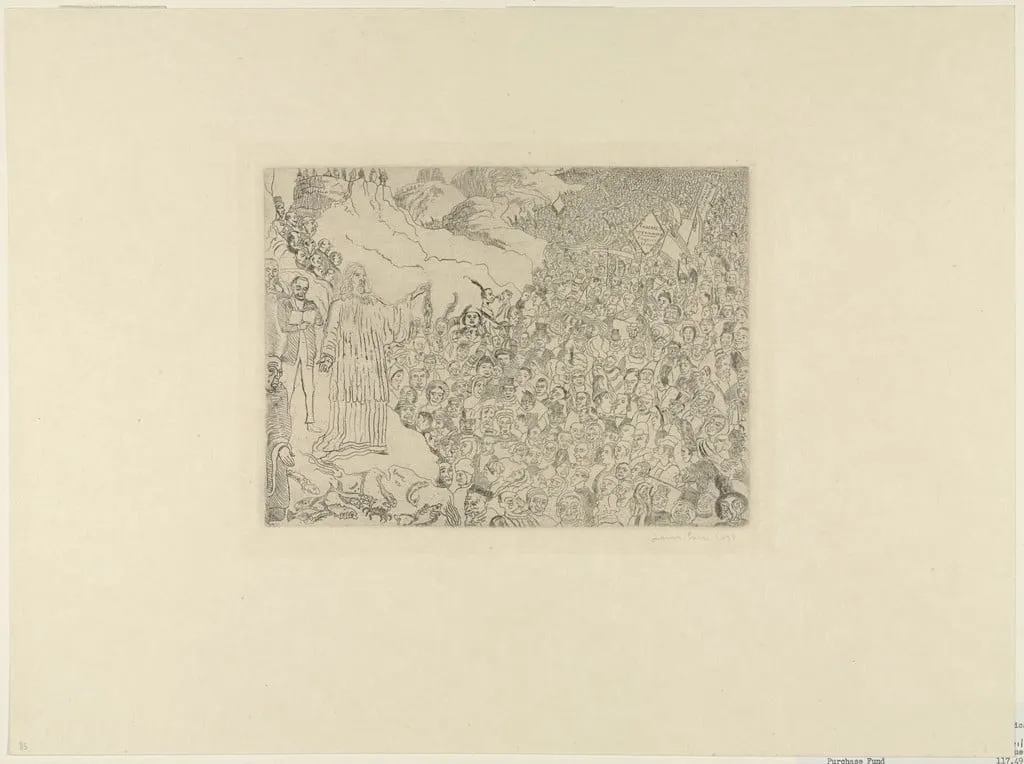
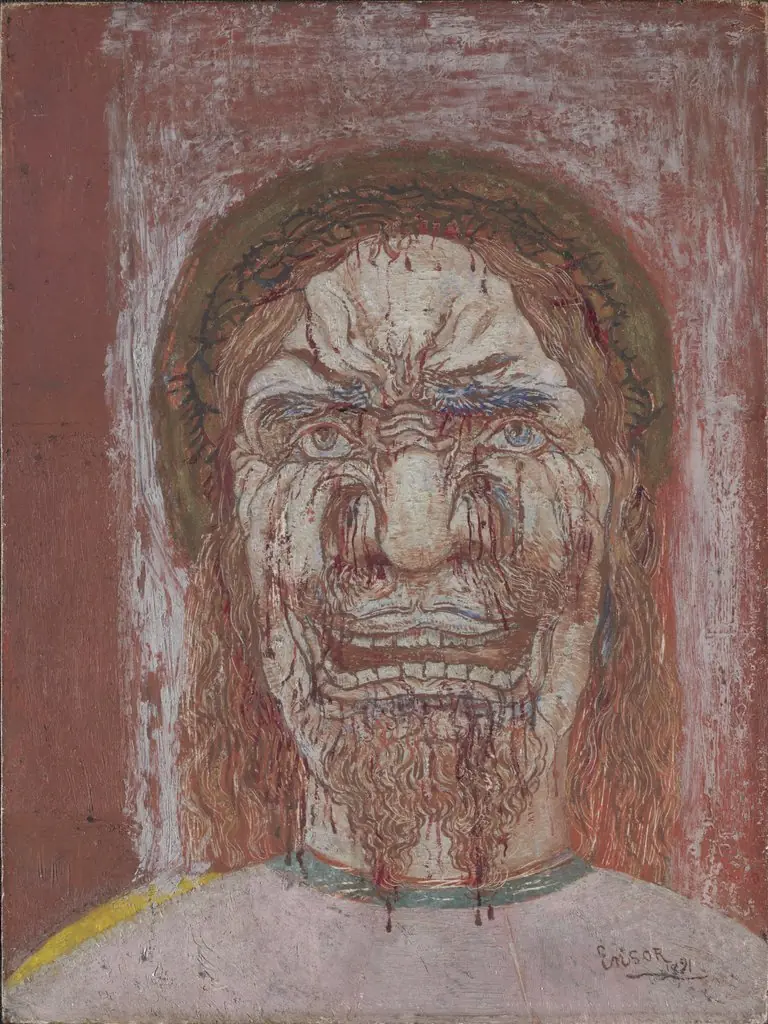
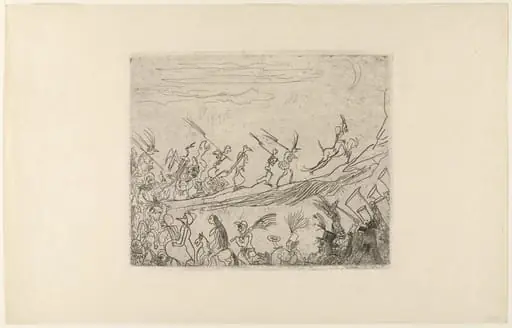
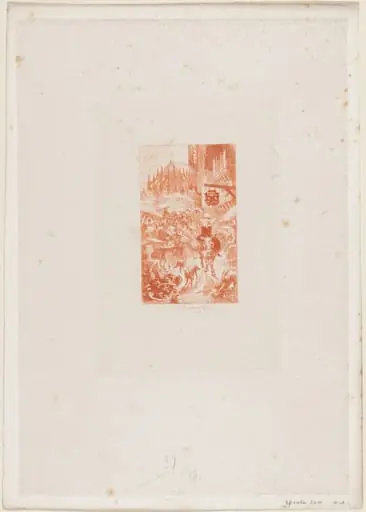
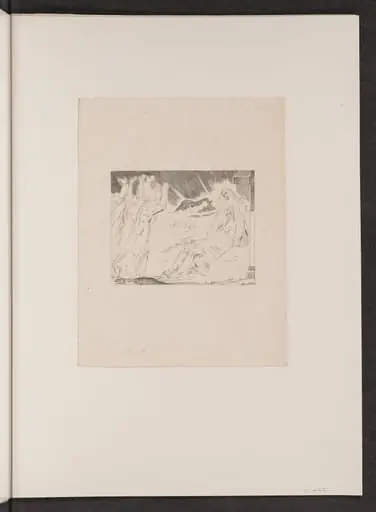
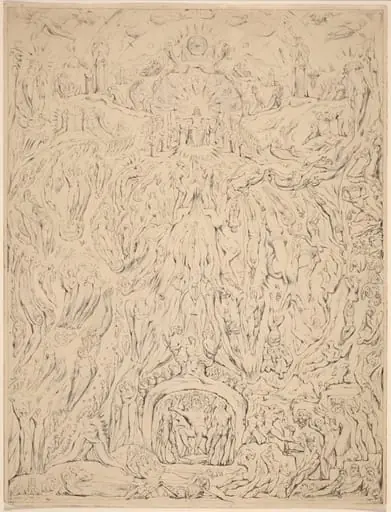
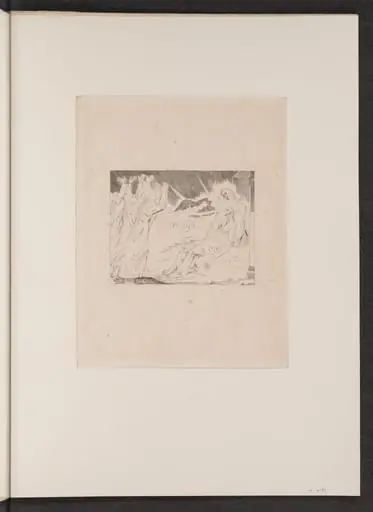
Untitled is an ink print by the Impressionist artist James Ensor. It dates from 1891 and is held in the collection of the Museum of Modern Art.
About this work
Overview
The piece resides in the collection of The Museum of Modern Art, where it is recognized for its intricate draftsmanship and psychological intensity.
James Ensor produced this etching in 1891 as part of his extensive printmaking practice. Though untitled, the work reflects his enduring interest in social and spiritual symbolism. A key figure in Belgian modernism, Ensor was closely linked to the avant-garde group Les XX and contributed significantly to the development of expressionist aesthetics. The piece resides in the collection of The Museum of Modern Art, where it is recognized for its intricate draftsmanship and psychological intensity.
Subject & Meaning
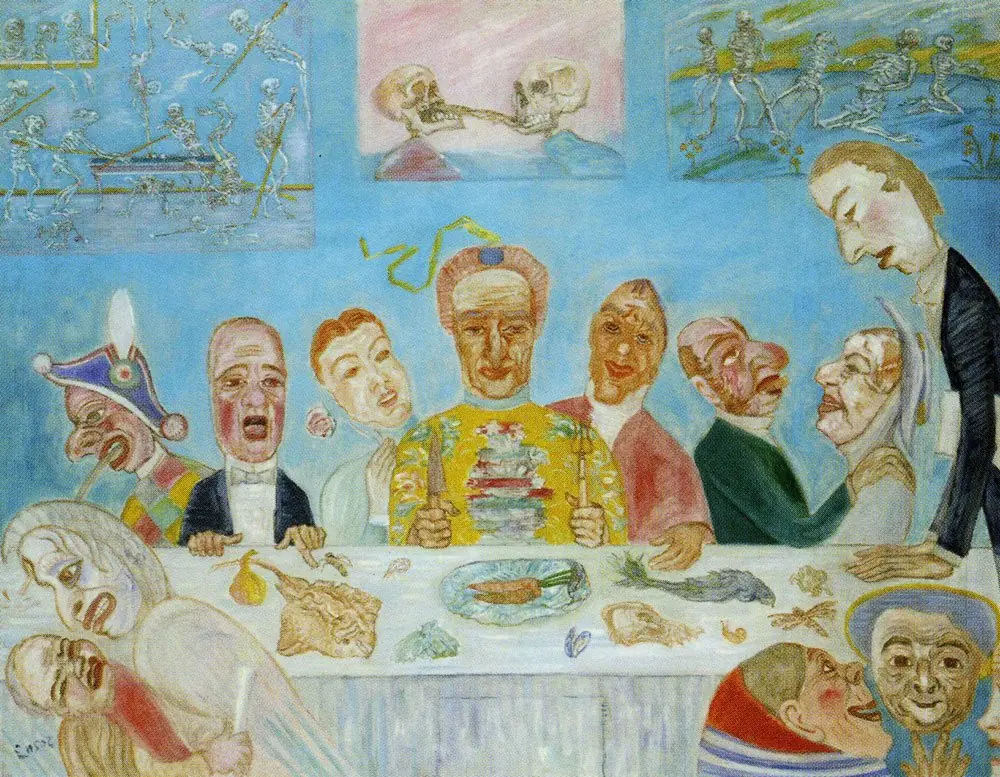
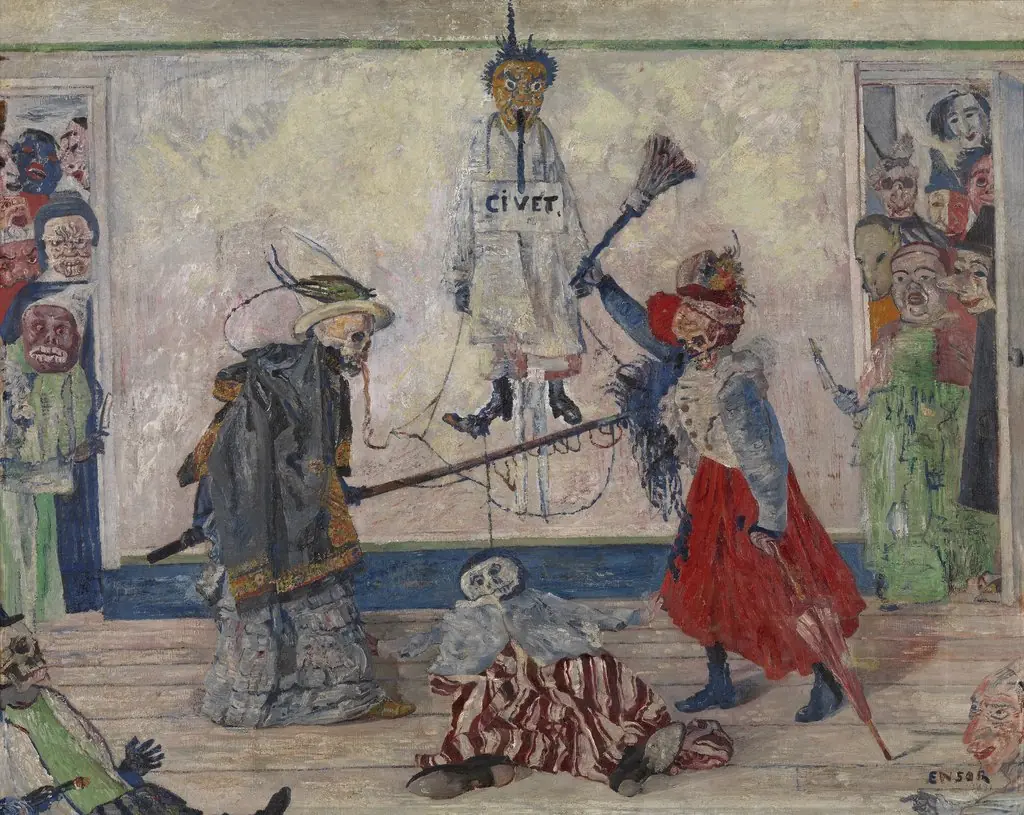
The composition centers on a robed figure bearing a halo and staff, suggesting a sacred or prophetic role. Surrounding him, a dense assembly of faces exhibits varied reactions—awe, skepticism, curiosity—evoking the tension between reverence and ridicule. Ensor often used such scenes to critique religious dogma and societal conformity. The figure’s ambiguous identity invites interpretation as a false prophet, a martyr, or a satirical stand-in for institutional authority.
Technique & Style
Executed in fine-line etching, the work demonstrates Ensor’s mastery of linear detail and tonal gradation. Each figure is individually rendered with precise, almost obsessive attention to facial expression and costume. The dense composition creates a sense of claustrophobic intimacy, while the high contrast between light and shadow enhances the dramatic atmosphere. Unlike Impressionist approaches, this style prioritizes psychological depth over atmospheric effect.
History & Provenance
Created during Ensor’s most prolific printmaking period, the etching emerged from his Ostend studio, where he lived and worked for most of his life. It was likely produced for private circulation or inclusion in limited-edition portfolios. The work entered The Museum of Modern Art’s collection in the 20th century, reflecting growing international recognition of Ensor’s contributions to modern graphic art beyond his better-known paintings.
Context
In late 19th-century Belgium, Ensor’s work stood apart from prevailing academic traditions. His engagement with grotesque and fantastical imagery aligned with broader European critiques of bourgeois morality and religious hypocrisy. While contemporaries pursued naturalism or impressionism, Ensor turned to satire and allegory, drawing from Flemish folk traditions and medieval iconography to challenge contemporary norms.
Legacy
This etching exemplifies Ensor’s influence on early 20th-century expressionists and surrealists, who admired his unflinching portrayal of human absurdity. His ability to merge technical precision with unsettling subject matter paved the way for artists exploring psychological and social dissonance. Though less widely exhibited than his paintings, his prints remain vital to understanding the evolution of modern graphic art in Europe.
Artist & collection
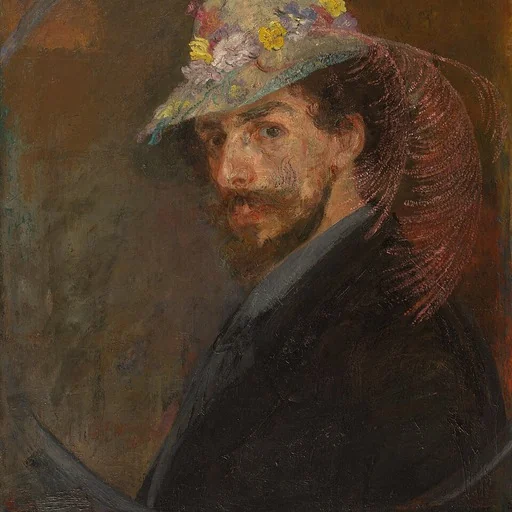
Artist
James Sidney Edouard, Baron Ensor (13 April 1860 – 19 November 1949) was a Belgian painter and printmaker, an important influence on expressionism and surrealism who lived in Ostend for most of his life.