Artwork
A Marble Quarry
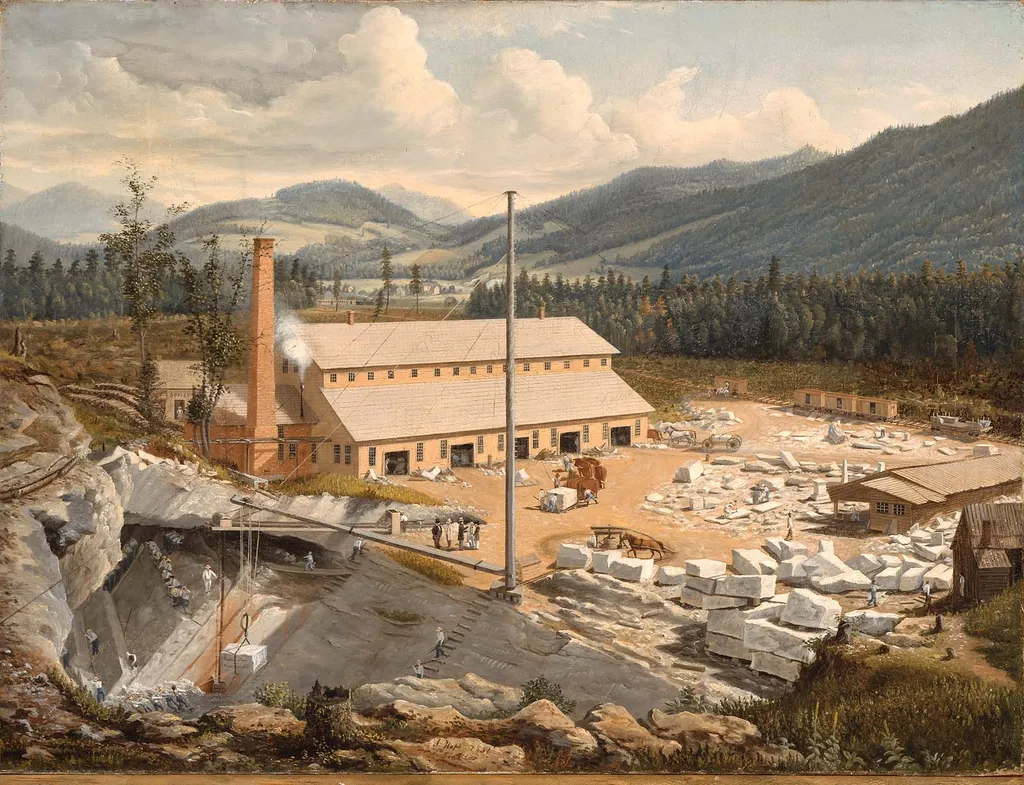
A Marble Quarry is an oil painting by James Hope. It dates from 1851 and is held in the collection of the Museum of Fine Arts Boston.
About this work
Overview
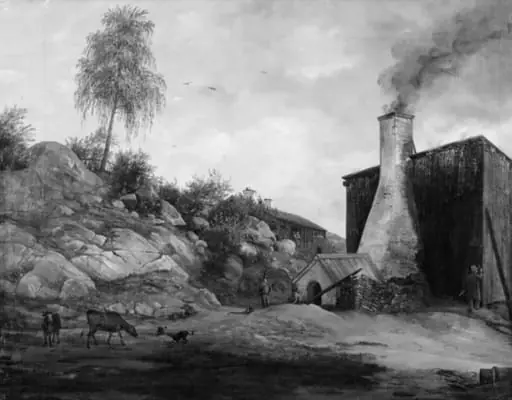
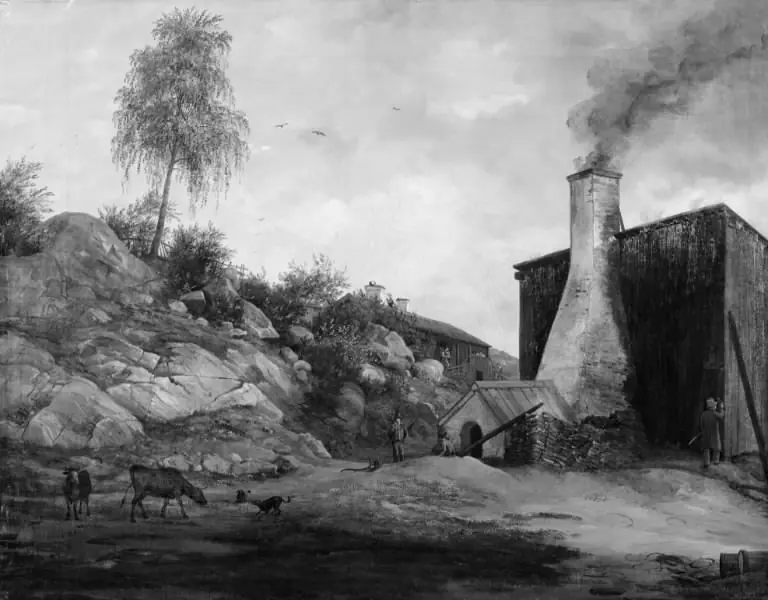
Painted in 1851 by James Hope, A Marble Quarry is an oil-on-canvas work depicting an active stone extraction site in a rugged, elevated landscape.
Painted in 1851 by James Hope, A Marble Quarry is an oil-on-canvas work depicting an active stone extraction site in a rugged, elevated landscape. The scene centers on a substantial stone structure with a sloped roof and numerous windows, accompanied by a tall chimney. Surrounding the building, workers and draft animals manage large blocks of quarried stone, suggesting industrial labor within a natural setting.
Subject & Meaning
The painting captures the physical and human effort behind marble extraction, presenting quarrying not as a romanticized landscape but as a working environment. The abundance of raw stone, carts, and laborers underscores the economic and material foundations of architecture and sculpture. Hope’s focus on process rather than idealized nature reflects a 19th-century interest in industry’s role in shaping the environment.
Technique & Style
Hope employed oil paint to render fine details in the texture of stone, fabric, and terrain. The composition emphasizes clarity and spatial depth, with careful attention to light falling across the white marble and the shadows cast by figures and structures. Brushwork is precise but not overly polished, supporting a documentary tone that values observation over dramatic effect.
History & Provenance
The painting entered the collection of the Museum of Fine Arts, Boston, where it remains today. While little is documented about its early ownership, its inclusion in the museum’s holdings suggests it was acquired during a period of growing interest in American and British industrial scenes. Hope’s other works are rare, making this one of the few surviving examples of his output.
Context
Created during the height of the Industrial Revolution, the painting aligns with a broader trend of artists documenting labor and production. In Britain and America, such subjects gained traction as urbanization and infrastructure expanded. Hope’s depiction of quarrying reflects a shift from pastoral ideals toward an acknowledgment of manual labor as integral to national progress.
Legacy
A Marble Quarry stands as a quiet record of 19th-century industrial practice, offering insight into the conditions of stone extraction before mechanization. Though Hope is not widely known, this work contributes to the visual archive of labor history. Its preservation in a major museum ensures continued access for study and reflection on the relationship between work, material, and landscape.
Own this work as a print
Artist & collection
Artist
James Hope painted detailed landscapes and military scenes in mid-19th-century oils.