Artwork
The Army of the Potomac
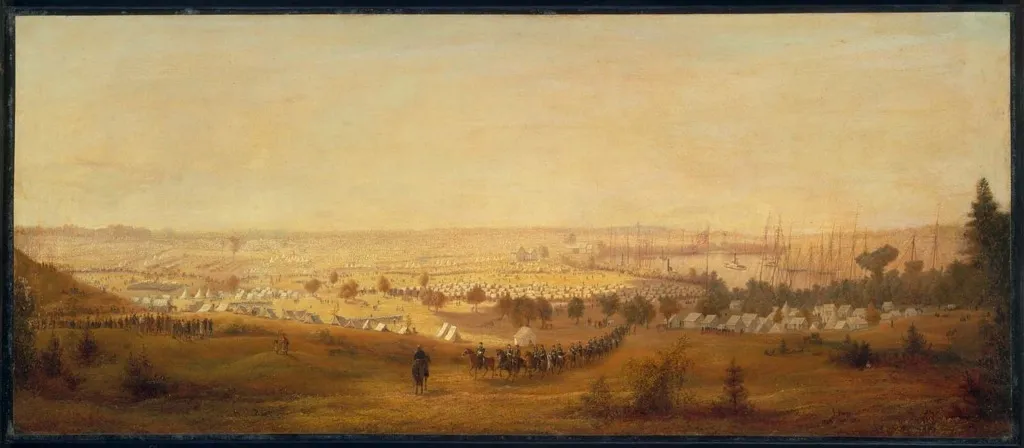
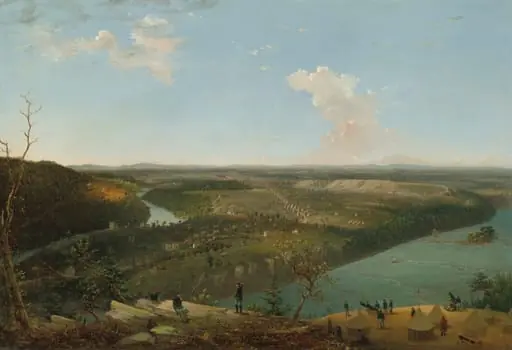
The Army of the Potomac is an oil painting by the American Folk Art artist James Hope. It dates from 1865 and is held in the collection of the Museum of Fine Arts Boston.
About this work
Overview
The painting resides in the Museum of Fine Arts, Boston, where it serves as a record of military life during Reconstruction.
Painted in 1865 by James Hope, this oil-on-canvas work depicts a Union encampment following the Civil War. The scene captures the Army of the Potomac in a moment of transition, set against a broad, hazy landscape. Warm earth tones dominate the palette, emphasizing the quiet aftermath of conflict rather than battle itself. The painting resides in the Museum of Fine Arts, Boston, where it serves as a record of military life during Reconstruction.
Subject & Meaning
The painting portrays a sprawling army camp with hundreds of tents and figures moving through the grounds, suggesting the scale and routine of post-war encampment. In the distance, a city and bridge hint at nearby urban centers, possibly Washington, D.C. A group of mounted soldiers approaching from the foreground signals movement and reorganization. The absence of combat emphasizes endurance and the slow return to civilian order after years of war.
Technique & Style
Hope employed traditional oil painting methods to render the vastness of the encampment with careful attention to atmospheric perspective. The hazy sky and soft edges of distant structures create depth, while the foreground figures are rendered with modest detail, avoiding individual portraiture. Warm browns and ochres unify the composition, reflecting the natural tones of the landscape and the worn uniforms of the soldiers.
History & Provenance
Completed shortly after the end of the Civil War, the painting was likely commissioned or acquired as a documentary record of Union forces. It entered the collection of the Museum of Fine Arts, Boston, in the late 19th century. Little is known about its early exhibitions or ownership, but its preservation suggests it was valued as a historical document rather than a commercial work.
Context
Created in the immediate aftermath of the Civil War, the painting reflects a national desire to document and process the scale of military mobilization. Unlike heroic battle scenes, it focuses on the mundane reality of camp life, aligning with a growing trend toward realism in postwar American art. The inclusion of a distant city underscores the connection between the army and the civilian society it protected.
Legacy
Though not widely exhibited today, the painting remains a quiet testament to the logistical and human dimensions of the Union army. It contributes to a broader visual archive of Civil War-era military life, offering insight into how contemporaries perceived the war’s conclusion. Its preservation in a major institution ensures its continued role in historical study, even as its artistic profile remains modest.
Artist & collection
Artist
James Hope painted detailed landscapes and military scenes in mid-19th-century oils.

 The Army Camp at Rijen
 Going Into Camp at Night
 Vânători și zuavi în fața Sevastopolului
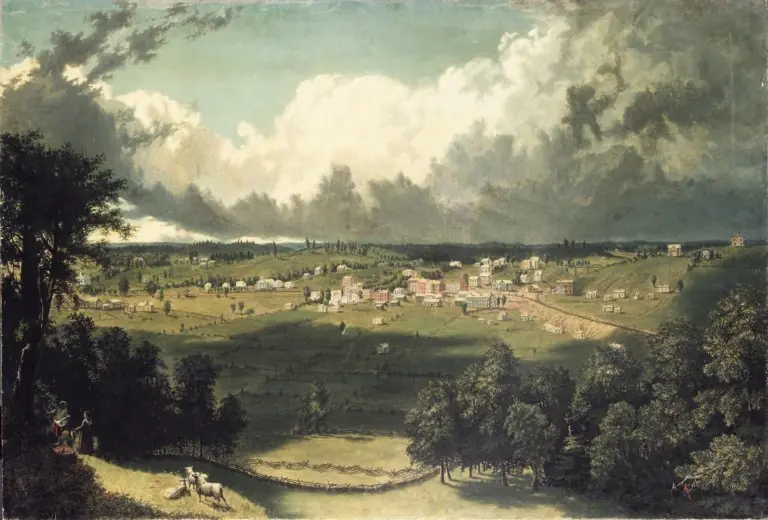 Panoramic Landscape with a View of a Small Town
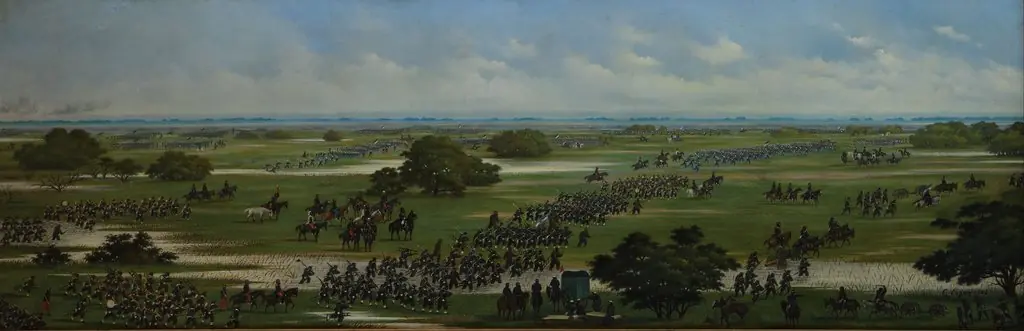 Marcha del Ejército Argentino a tomar posiciones para el ataque a Curupaytí el 22/09/1866
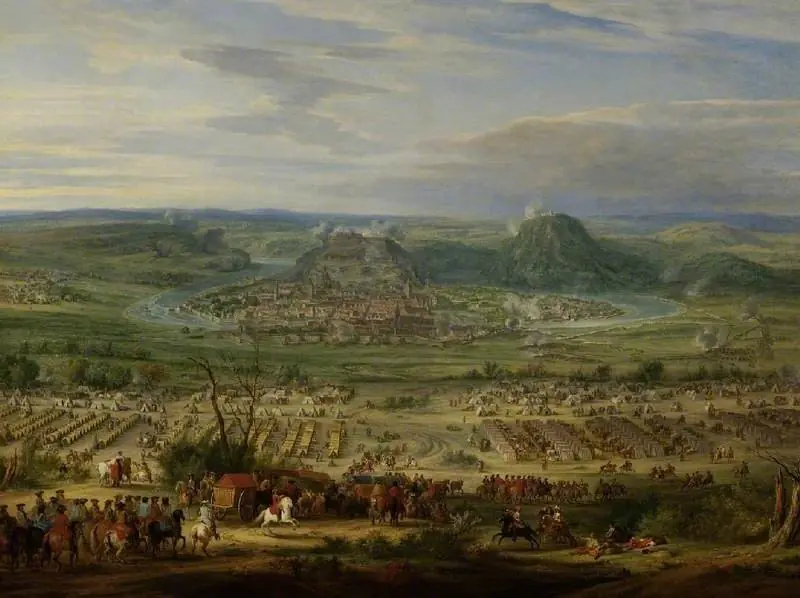 Siege of Besançon by Condé in 1674
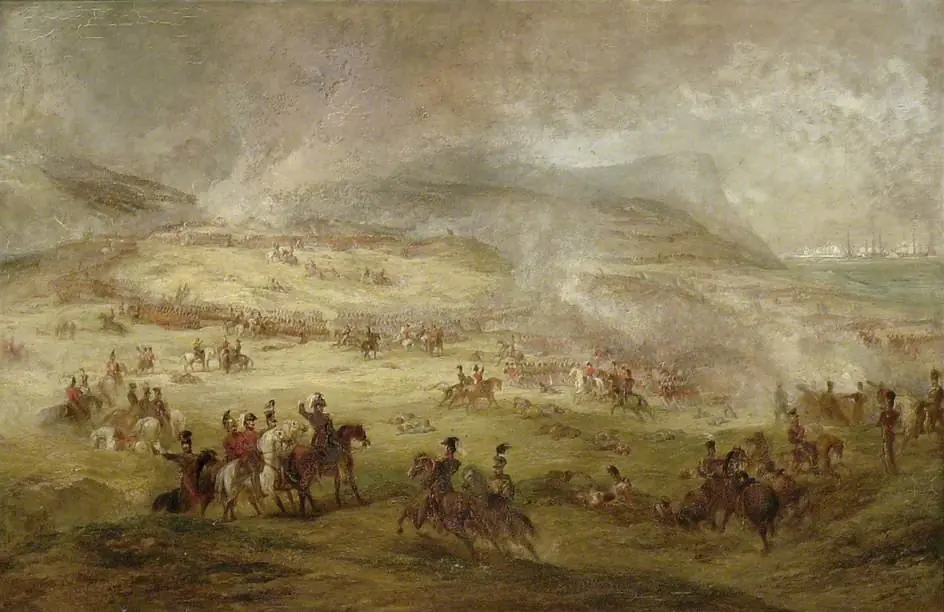 The Battle of the Alma
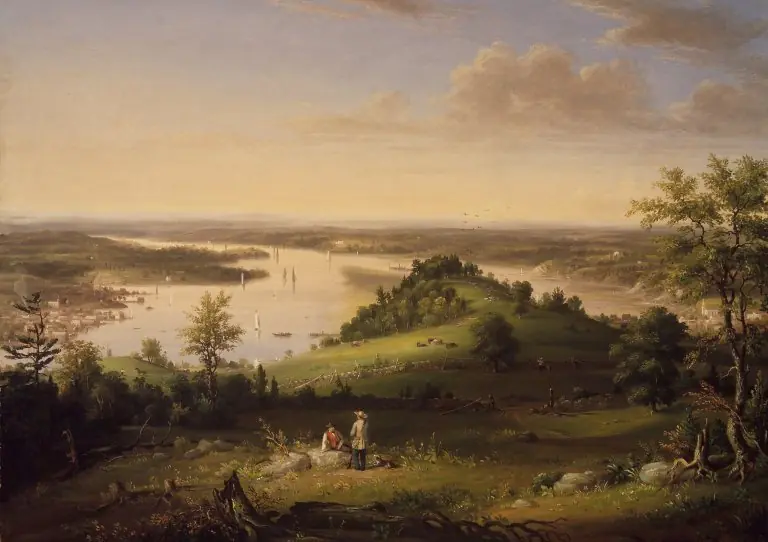 View from Mount Merino near Hudson
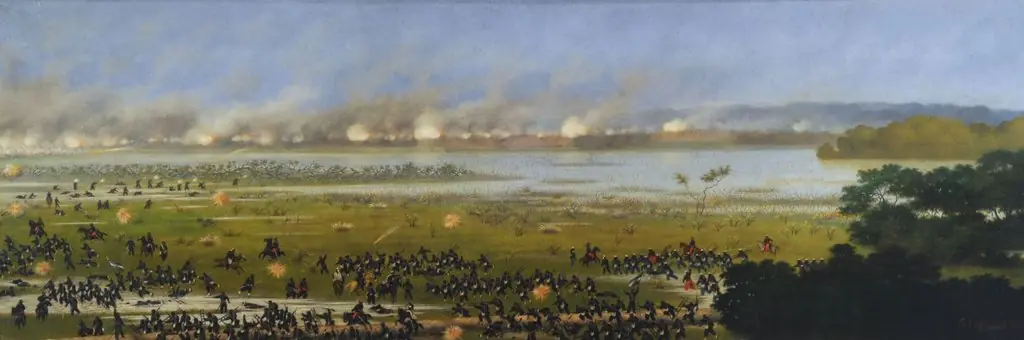 Assault on the 4th column Argentina at the Battle of Curupaity
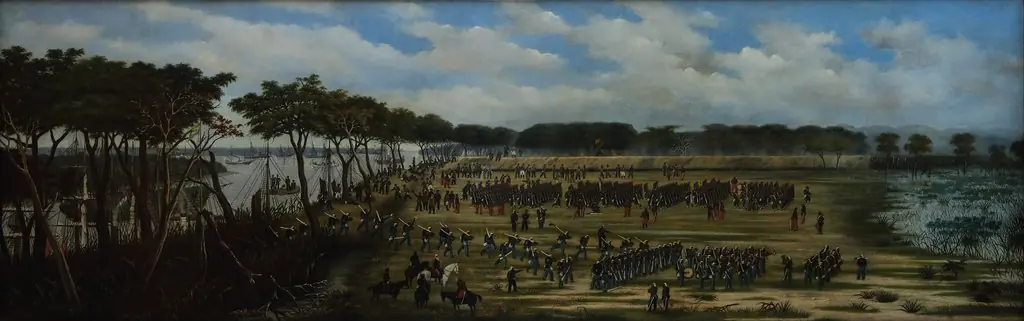 Desembarco del Ejército Argentino frente a las trincheras de Curuzú
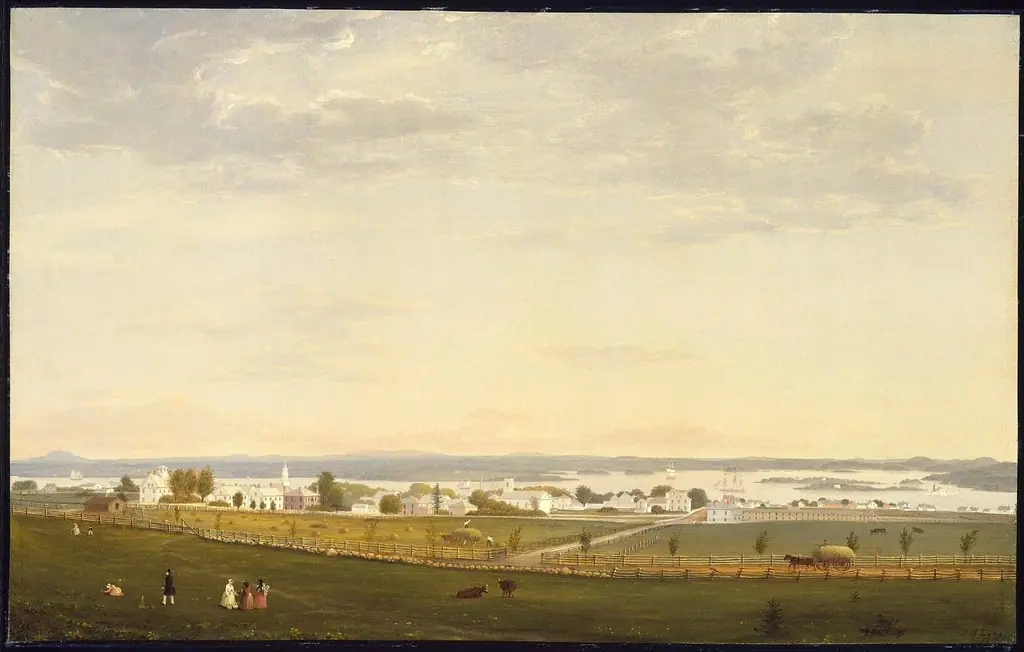 Castine, Maine
 Maryland Heights: Siege of Harpers Ferry