Artwork
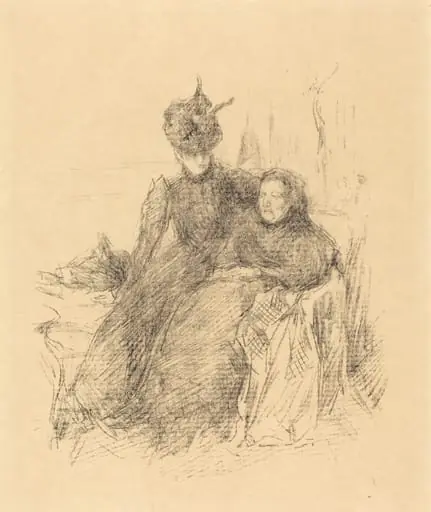
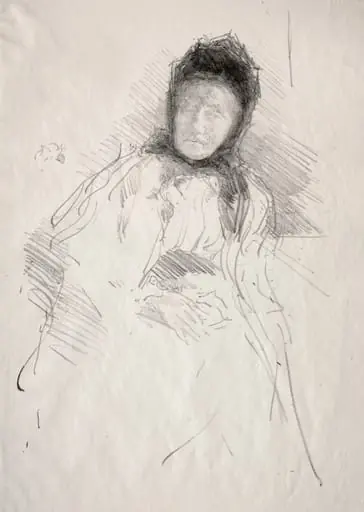
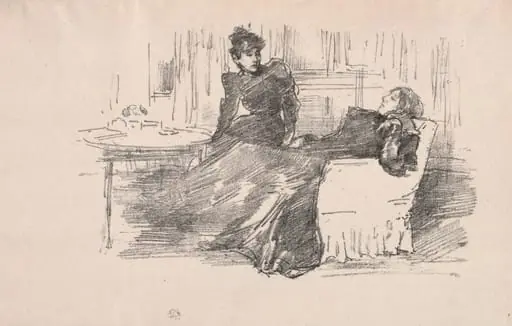
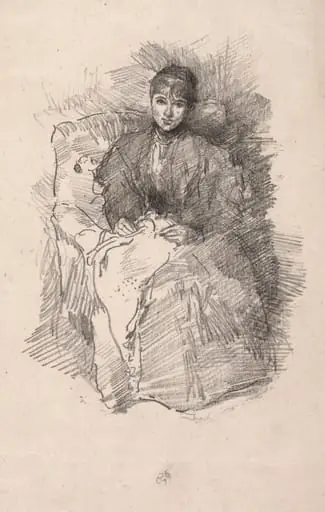
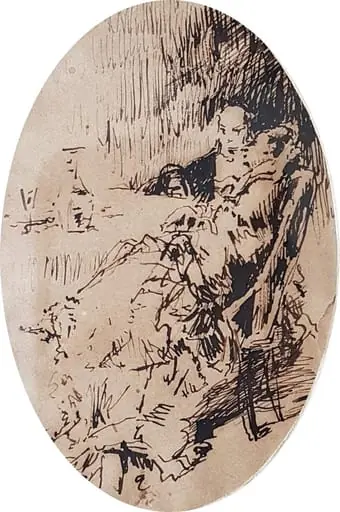
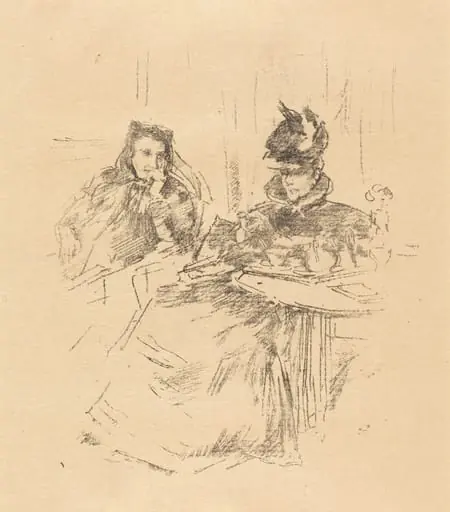
Afternoon Tea, Mrs. Phillips and Mrs. Charles Whibley
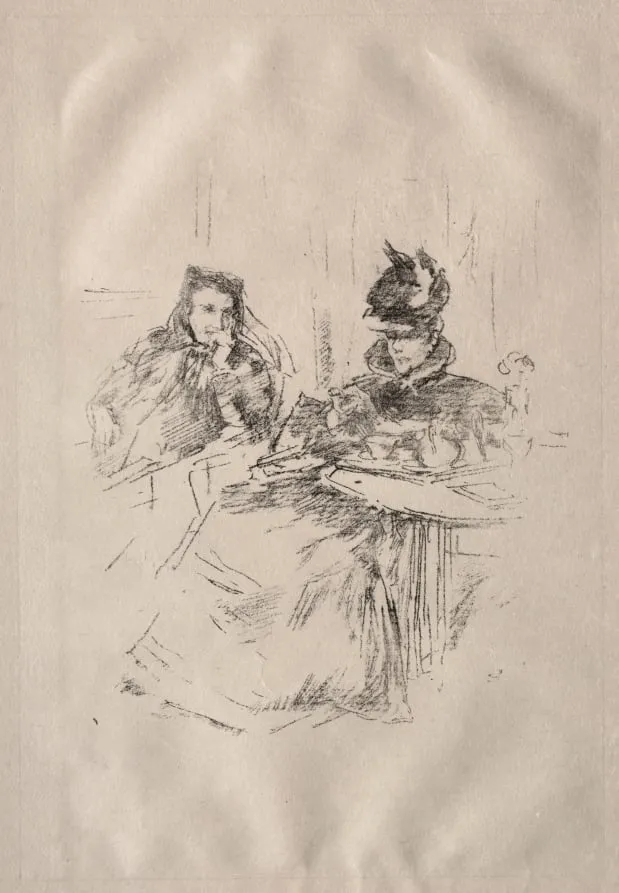
Afternoon Tea, Mrs. Phillips and Mrs. Charles Whibley is a print by the Impressionist artist James McNeill Whistler. It dates from 1897 and is held in the collection of the Cleveland Museum of Art.
About this work
Overview
Created in 1897 by James McNeill Whistler, this print captures a quiet domestic moment between two women. It is part of the collection at The Cleveland Museum of Art. Unlike Whistler’s more famous nocturnes, this work focuses on interior life, rendered with subtle tonal gradations and restrained detail. The medium is a drypoint etching, emphasizing line and texture over color.
Subject & Meaning
The setting implies privacy and routine, offering a glimpse into the domestic rhythms of late Victorian society without overt narrative.
The scene portrays Mrs. Phillips and Mrs. Charles Whibley during an afternoon tea, a social ritual of the time. Their postures and proximity suggest familiarity, yet their expressions remain reserved, reflecting the quiet formality of upper-middle-class female interaction. The setting implies privacy and routine, offering a glimpse into the domestic rhythms of late Victorian society without overt narrative.
Technique & Style
Whistler employed drypoint etching to achieve soft, atmospheric effects. Delicate lines define the figures and furnishings, while the play of light across fabric and surfaces suggests natural illumination from a nearby window. The composition avoids sharp detail, favoring tonal harmony and spatial ambiguity. This approach aligns with his broader interest in tonal balance over literal representation.
History & Provenance
The print was made during Whistler’s later years, when he increasingly focused on intimate portraits and domestic scenes. It was likely produced for a private circle rather than public exhibition. The Cleveland Museum of Art acquired it in the 20th century as part of its growing collection of Whistler’s graphic works, preserving its status as a refined example of his printmaking.
Context
In the 1890s, Whistler was distancing himself from the theatricality of earlier movements, turning toward quieter, more introspective subjects. This work reflects the influence of Japanese prints in its flattened perspective and emphasis on surface pattern, while retaining Western realism in its attention to individual presence. It stands alongside other late works that value mood over spectacle.
Legacy
Though less widely known than his paintings, this print exemplifies Whistler’s mastery of etching and his ability to convey psychological nuance through minimal means. It influenced later printmakers interested in domestic realism and tonal subtlety. Its preservation in a major museum underscores its role in understanding the evolution of modern graphic art in the late 19th century.
Artist & collection
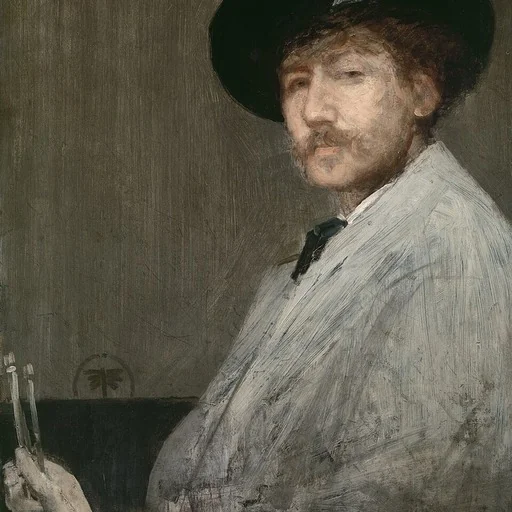
Artist
James Abbott McNeill Whistler was an American painter in oils and watercolor, and printmaker, active during the American Gilded Age and based primarily in the United Kingdom.

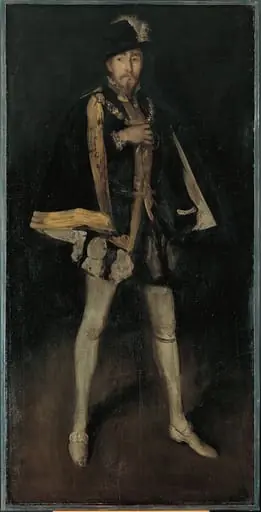 Arrangement in Black, No. 3: Sir Henry Irving as Philip II of Spain
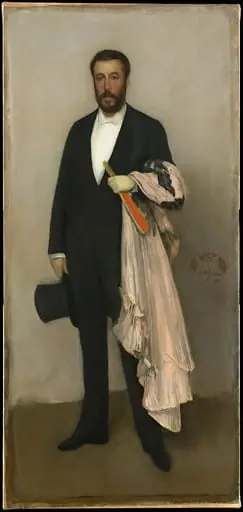 Arrangement in Flesh Colour and Black: Portrait of Theodore Duret
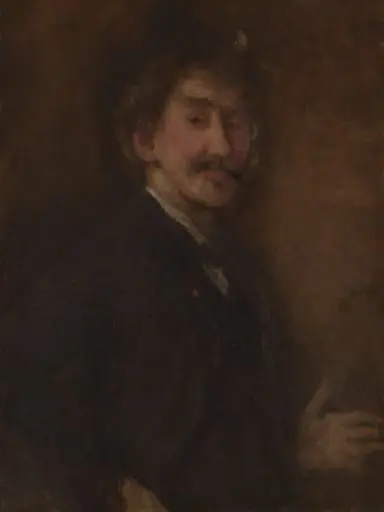 Gold and Brown: Self-Portrait
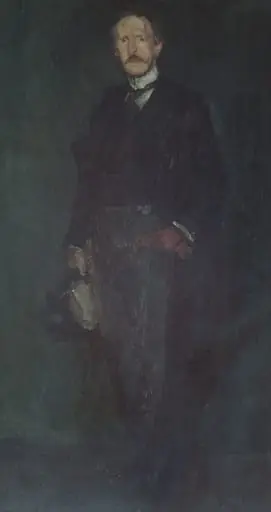 Edward Guthrie Kennedy
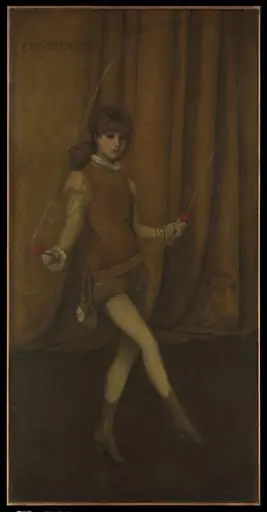 Harmony in Yellow and Gold: The Gold Girl—Connie Gilchrist
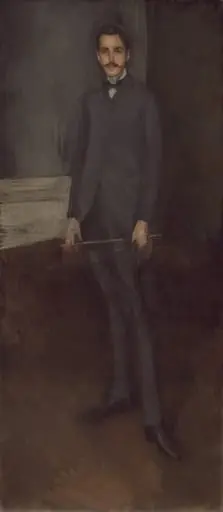 George W. Vanderbilt
 Symphony in White, No. 1: The White Girl
 Henry Irving as Philip II of Spain