Artwork
Axenfeld
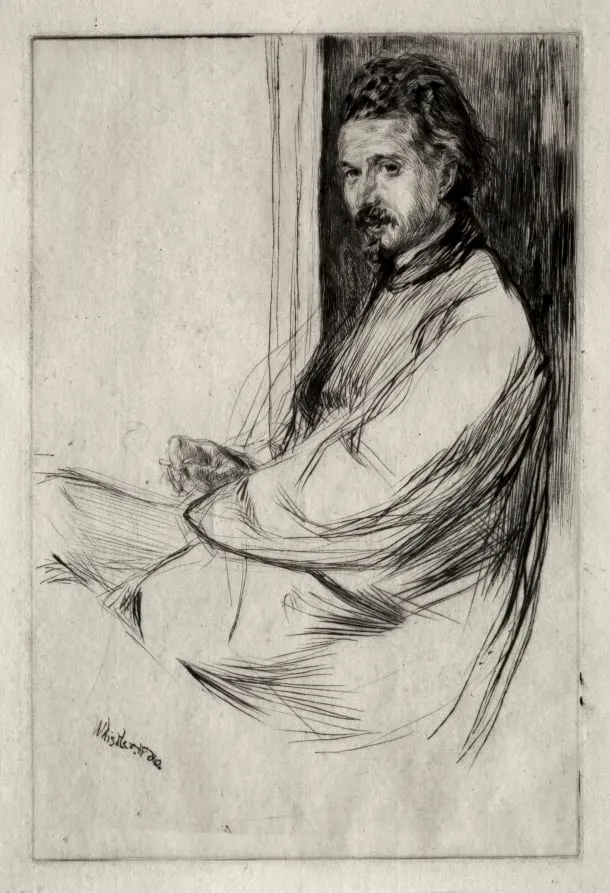
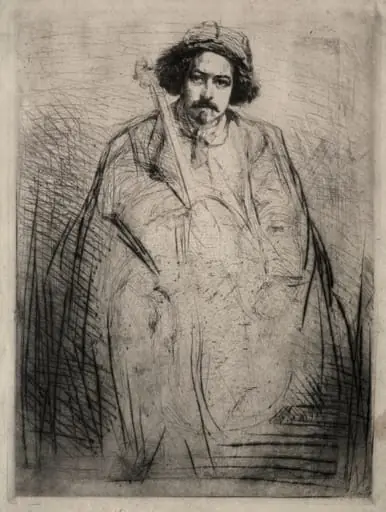
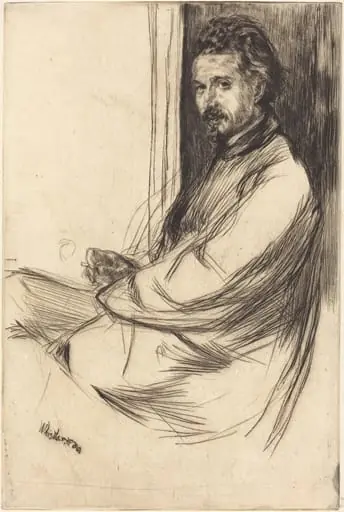
Axenfeld is a print by the Impressionist artist James McNeill Whistler. It dates from 1860 and is held in the collection of the Cleveland Museum of Art.
About this work
Overview
The work is part of the collection at The Cleveland Museum of Art and reflects Whistler’s early interest in intimate, psychologically nuanced portraiture.
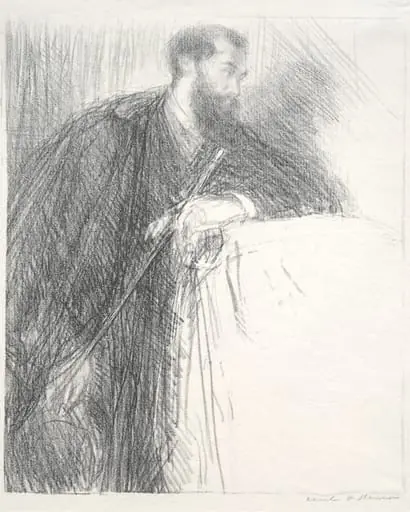
Axenfeld is a portrait lithograph by James McNeill Whistler, completed in 1860. It depicts a seated male figure, rendered with subtle tonal contrasts and minimal background detail. The work is part of the collection at The Cleveland Museum of Art and reflects Whistler’s early interest in intimate, psychologically nuanced portraiture. Unlike grand formal portraits, this piece emphasizes quiet presence over narrative.
Subject & Meaning
The subject is a man with dark hair and a full beard, seated in a simple chair and gazing to his right. His expression is calm and introspective, inviting quiet contemplation rather than dramatic engagement. Whistler avoids identifying the sitter’s profession or social role, focusing instead on the individual’s demeanor. The lack of contextual clues suggests an emphasis on inner life over external status.
Technique & Style
Whistler employed lithography to achieve soft gradations of tone, using chiaroscuro to model the face and hands with delicate light and shadow. The dark, undefined background isolates the figure, enhancing its three-dimensionality. Lines are restrained and fluid, avoiding sharp contours. This approach aligns with Whistler’s broader aesthetic, prioritizing harmony and mood over detailed realism.
History & Provenance
Created in 1860, Axenfeld was made during Whistler’s formative years in Europe, when he was exploring printmaking alongside painting. The work entered The Cleveland Museum of Art’s collection through documented acquisition, though the identity of the sitter remains unconfirmed. It is one of several portraits Whistler produced in this period, reflecting his experimentation with intimate subjects.
Context
In the 1860s, Whistler was moving away from academic traditions toward more personal, tonal compositions. Axenfeld aligns with contemporary European interest in psychological portraiture and the rise of lithography as a medium for artistic expression. Unlike commercial prints, this work was made for aesthetic rather than reproductive purposes, signaling a shift in how portraiture could function in fine art.
Legacy
Axenfeld exemplifies Whistler’s early commitment to tonal harmony and restrained expression, influencing later generations of printmakers who valued subtlety over detail. While not widely exhibited, it remains a key example of his transition from traditional portraiture to a more evocative, atmospheric style. The work contributes to understanding his development as a modernist in both painting and print.
Artist & collection
Artist
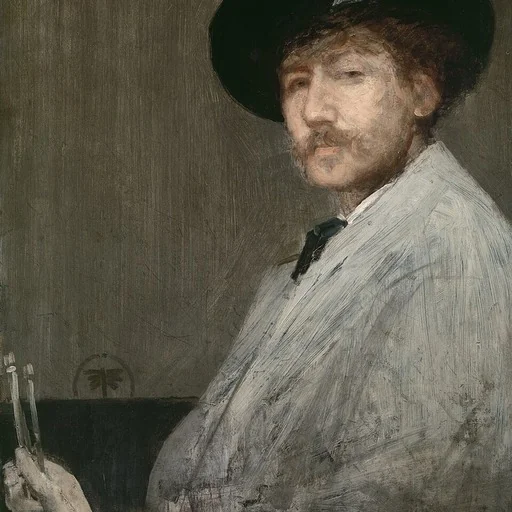
James Abbott McNeill Whistler was an American painter in oils and watercolor, and printmaker, active during the American Gilded Age and based primarily in the United Kingdom.

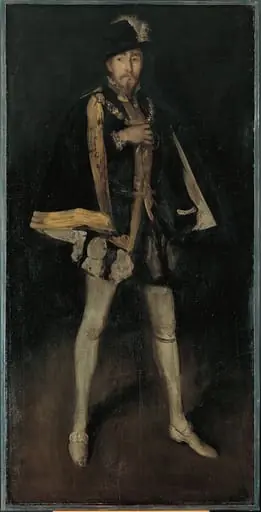 Arrangement in Black, No. 3: Sir Henry Irving as Philip II of Spain
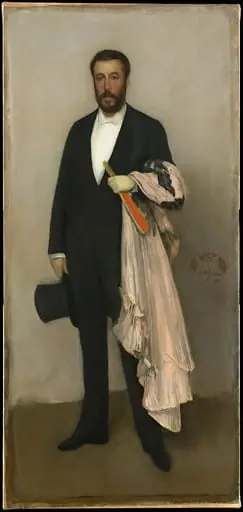 Arrangement in Flesh Colour and Black: Portrait of Theodore Duret
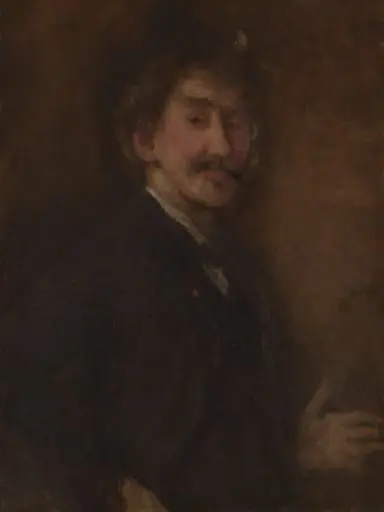 Gold and Brown: Self-Portrait
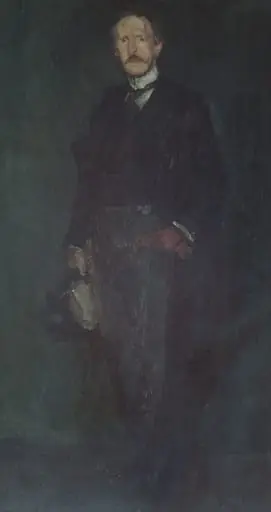 Edward Guthrie Kennedy
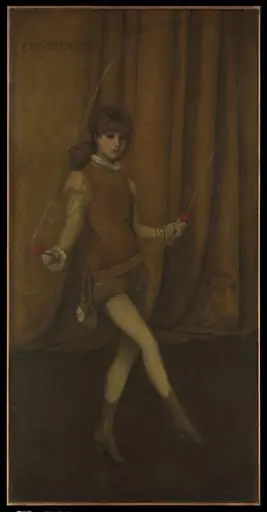 Harmony in Yellow and Gold: The Gold Girl—Connie Gilchrist
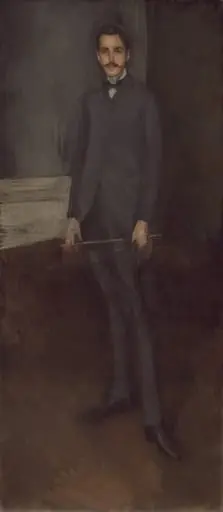 George W. Vanderbilt
 Symphony in White, No. 1: The White Girl
 Henry Irving as Philip II of Spain