Artwork
Illustration for "Count Bruckhardt" in "Once a Week"
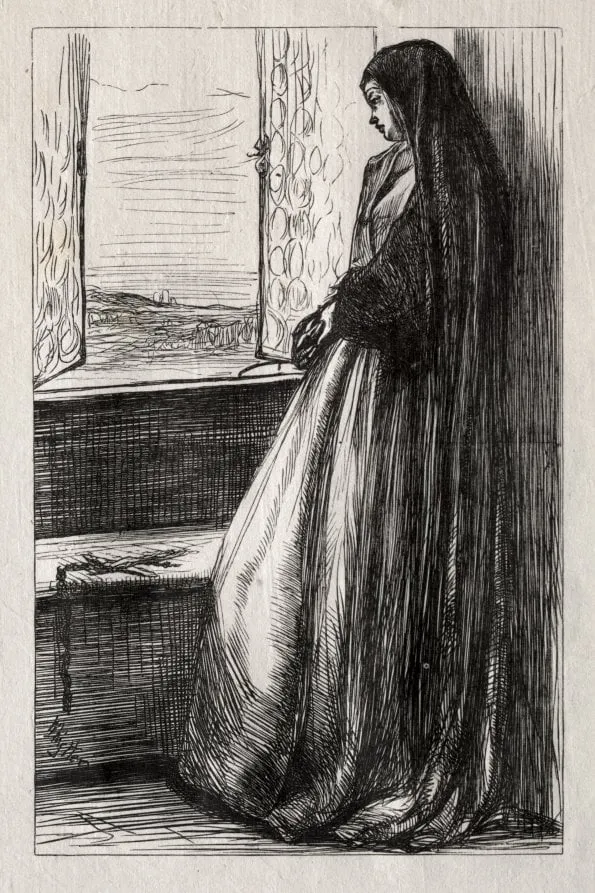
Illustration for "Count Bruckhardt" in "Once a Week" is a print by the Impressionist artist James McNeill Whistler. It dates from 1862 and is held in the collection of the Cleveland Museum of Art.
About this work
Overview
Executed in monochrome, it captures a solitary figure in a moment of stillness.
Created in 1862, this ink drawing by James McNeill Whistler was made as an illustration for the serialized story 'Count Bruckhardt' in the periodical Once a Week. Executed in monochrome, it captures a solitary figure in a moment of stillness. The work is part of a series of narrative illustrations Whistler produced during this period, reflecting his interest in literary subjects and intimate human scenes. It is now held in the collection of The Cleveland Museum of Art.
Subject & Meaning
The image depicts a woman in a long, hooded garment kneeling beside a window, her posture suggesting contemplation or prayer. The faint outlines beyond the glass imply an urban or rural landscape, but details are deliberately subdued, drawing focus to her isolation. The scene conveys quiet introspection rather than narrative action, aligning with Whistler’s preference for mood over plot in his illustrative work.
Technique & Style
Whistler employed rapid, expressive ink lines with dense cross-hatching to model form and suggest texture. The absence of color emphasizes tonal contrast, using shadow and light to define the figure and space. Loose, gestural strokes convey immediacy, as if the scene was observed and rendered in a single sitting. The composition avoids detail, relying instead on suggestion to evoke atmosphere and emotion.
History & Provenance
The drawing was produced for publication in Once a Week in 1862, during Whistler’s early career in London when he frequently contributed illustrations to periodicals. It remained in private hands until entering the Cleveland Museum of Art’s collection, where it is preserved as part of a broader group of his graphic works. Its provenance reflects its origin as ephemeral print media, later recognized for its artistic merit.
Context
In the early 1860s, Whistler was experimenting with narrative illustration as a means of income, working alongside writers and editors to visualize serialized fiction. This period coincided with his growing interest in Japanese prints and tonal harmony, both evident in the restrained composition and emphasis on atmosphere. His illustrations from this time bridge commercial demands and emerging aesthetic principles.
Legacy
Though created for mass publication, this drawing exemplifies Whistler’s shift toward evocative, minimalist expression that would later define his fine art. Its quiet intensity and technical economy influenced later artists exploring the emotional potential of line and tone. As a surviving example of his illustration work, it offers insight into the development of his visual language beyond portraiture and etching.
Artist & collection
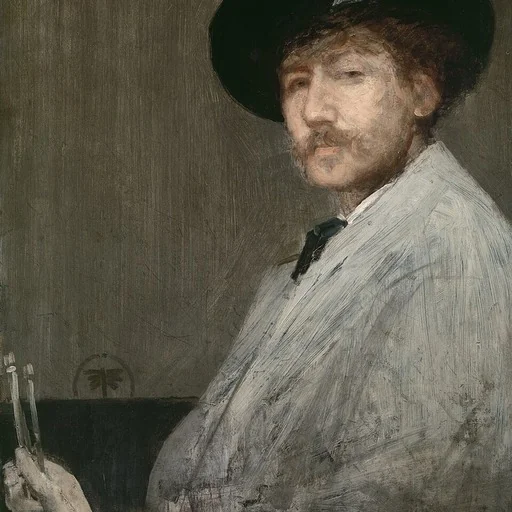
Artist
James Abbott McNeill Whistler was an American painter in oils and watercolor, and printmaker, active during the American Gilded Age and based primarily in the United Kingdom.

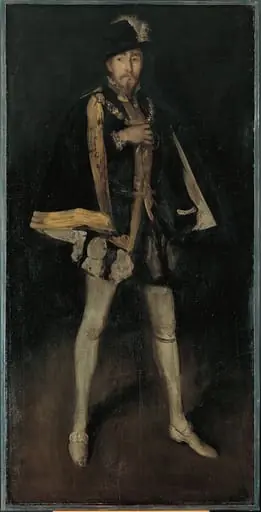 Arrangement in Black, No. 3: Sir Henry Irving as Philip II of Spain
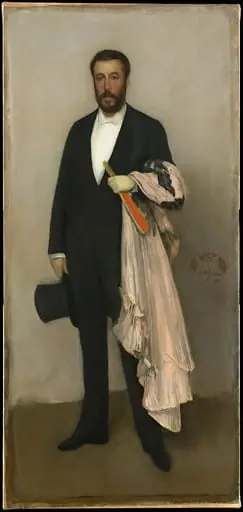 Arrangement in Flesh Colour and Black: Portrait of Theodore Duret
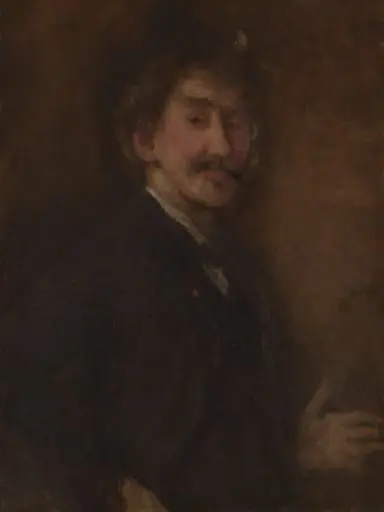 Gold and Brown: Self-Portrait
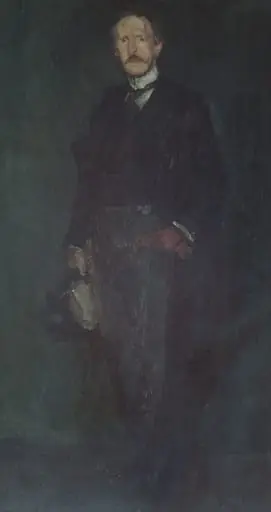 Edward Guthrie Kennedy
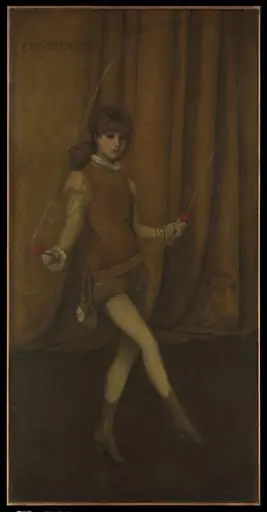 Harmony in Yellow and Gold: The Gold Girl—Connie Gilchrist
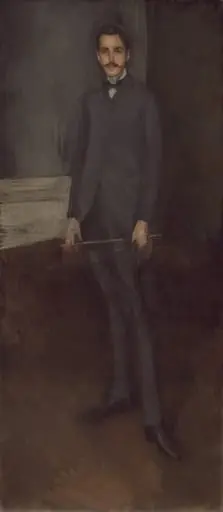 George W. Vanderbilt
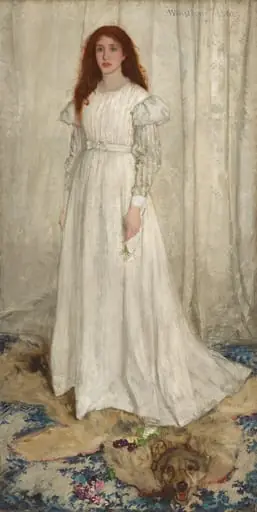 Symphony in White, No. 1: The White Girl
 Henry Irving as Philip II of Spain
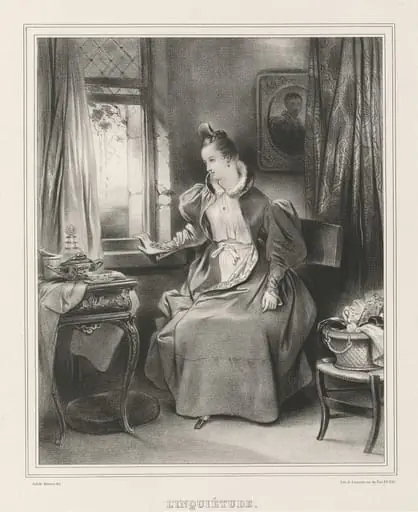 L'Inquietude
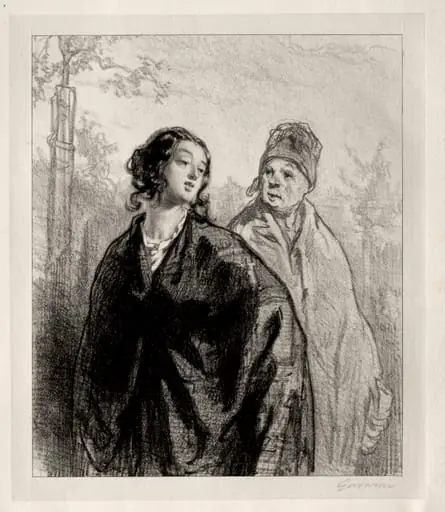 La Fille et la mère
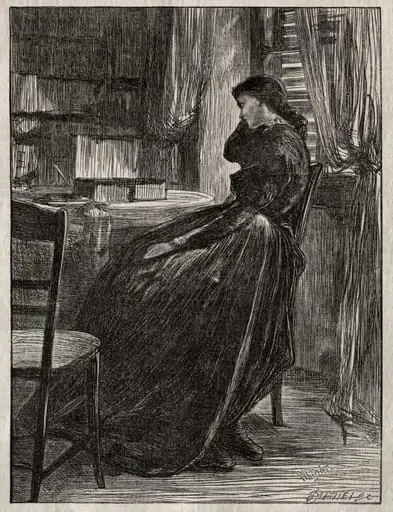 The Trial Sermon, Joanna Douglas at Her Desk
 Les Actrices: Le Rôle
 The Major's Daughter: Clara Vinrace's Farewell to her Father
 Richard Wagner and His Genius from Scenes of Rheingold
 Mrs. Otcheson at the Piano
 The Other Mrs. Johnson
 Repoussée ... une porte me reste ouverte ...
 The Actress
 Les Martyrs
 Les Actrices: Protegez Seigneur! un vierge chrétienne