Artwork
La Fille et la mère
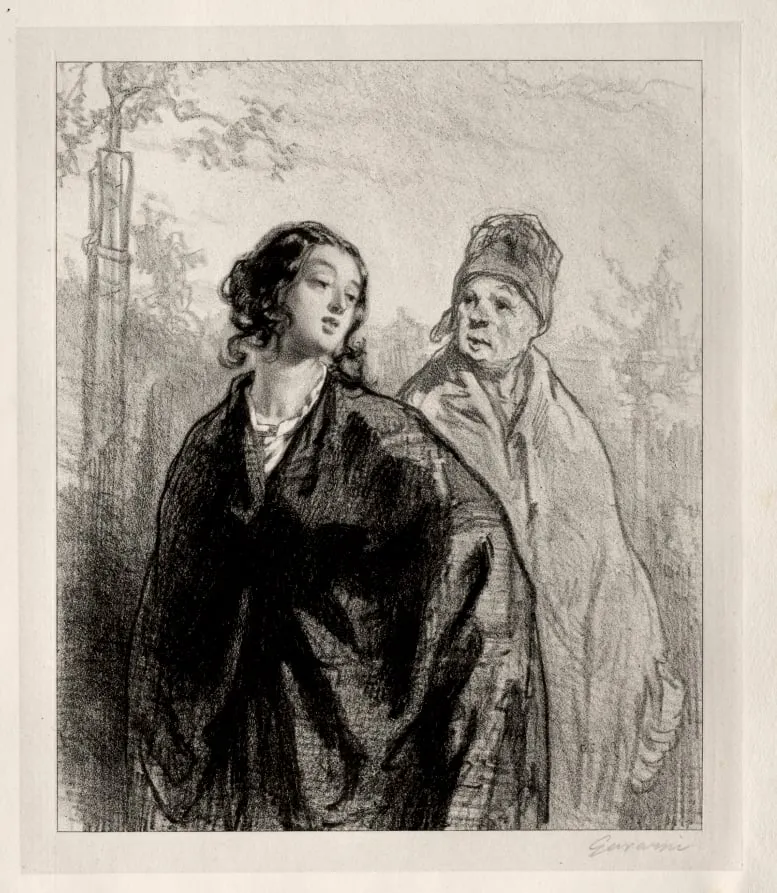
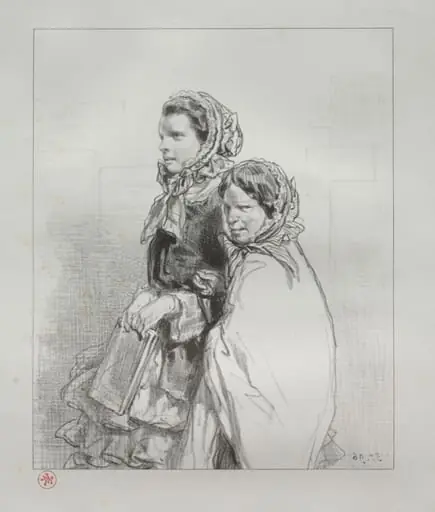
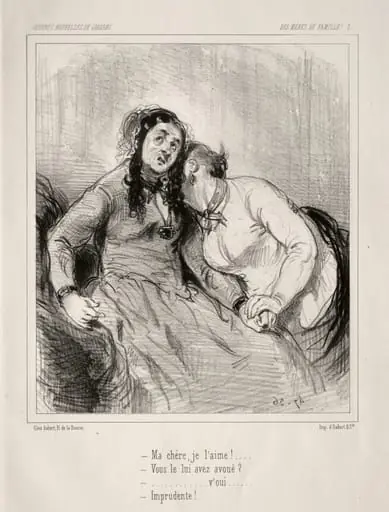
La Fille et la mère is a print by the Romanticist artist Paul Gavarni. It dates from 1855 and is held in the collection of the Cleveland Museum of Art.
About this work
Overview
The work captures a quiet moment between two figures moving through an urban night, rendered with subtle tonal contrasts rather than sharp outlines.
La Fille et la mère is a mid-19th-century lithograph by French artist Paul Gavarni, dated around 1855. It is part of the collection at The Cleveland Museum of Art. The work captures a quiet moment between two figures moving through an urban night, rendered with subtle tonal contrasts rather than sharp outlines. Its modest scale and intimate subject reflect Gavarni’s interest in everyday life, avoiding grand narratives in favor of quiet observation.
Subject & Meaning
The image depicts a young woman and an older female companion walking together under the cover of night. The elder, wrapped in a hooded garment and carrying a lantern, suggests guardianship, while the younger figure, with loose hair and a long coat, appears absorbed in the moment. The absence of facial detail invites interpretation, emphasizing the emotional resonance of their proximity rather than individual identity. The scene evokes themes of care, transition, and the quiet rituals of domestic life.
Technique & Style
Gavarni employed soft, graded shading to model form and suggest ambient light, using lithographic stone to achieve delicate gradations of gray. The figures emerge from a near-abstract background of indistinct trees and a faint streetlamp, their presence heightened by contrast. Minimal detail in the environment directs attention to the figures’ posture and relationship. This restrained approach reflects a preference for atmospheric suggestion over narrative clarity, aligning with emerging realist tendencies in French graphic art.
History & Provenance
Created during Gavarni’s active period in Parisian illustration, the print likely originated as part of a series documenting urban domestic scenes. It entered The Cleveland Museum of Art’s collection through established acquisition channels in the 20th century, though its specific provenance prior to museum ownership remains undocumented. Its survival in good condition reflects its status as a representative example of mid-century French lithography, valued for its technical finesse rather than fame.
Context
In the 1850s, French graphic arts increasingly turned to scenes of ordinary life, influenced by realism and the rise of illustrated periodicals. Gavarni, known for his social observations, contributed to this trend by capturing unguarded moments in public and private spaces. La Fille et la mère aligns with contemporaneous works that found dignity in mundane interactions, contrasting with the theatricality of academic painting and offering a quieter, more intimate vision of modernity.
Legacy
Though not widely reproduced or celebrated in major art historical narratives, the print endures as a quiet exemplar of Gavarni’s observational skill. It contributes to understanding how lithography served as a medium for nuanced social commentary outside the realm of high art. Its preservation in a major museum underscores its role as a document of 19th-century visual culture, valued for its restraint and emotional subtlety rather than its popularity.
Artist & collection

Artist
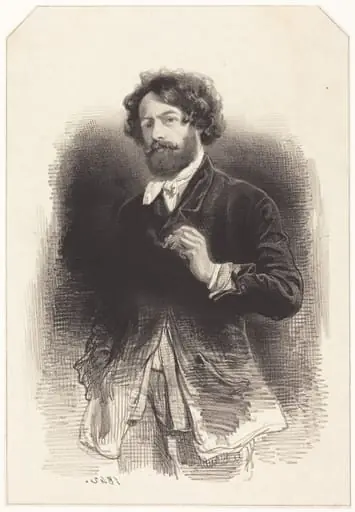
Paul Gavarni was the pen name of Sulpice Guillaume Chevalier (13 January 1804 – 24 November 1866), a French illustrator, born in Paris.

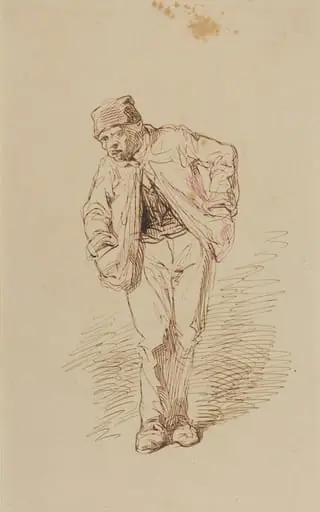
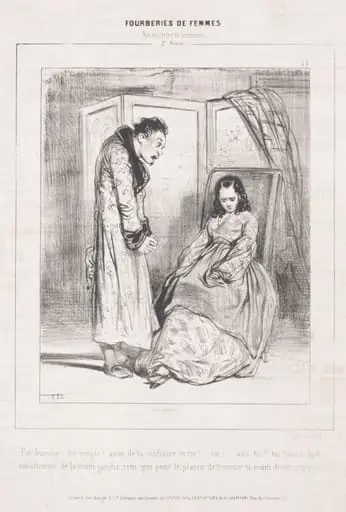 Fourberies de Femmes: En matière de sentiment
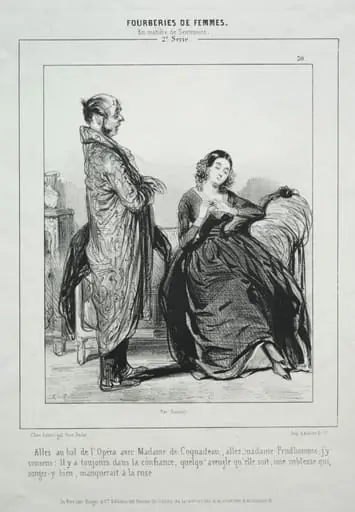 Fourberies de Femmes En Matière de Sentiment
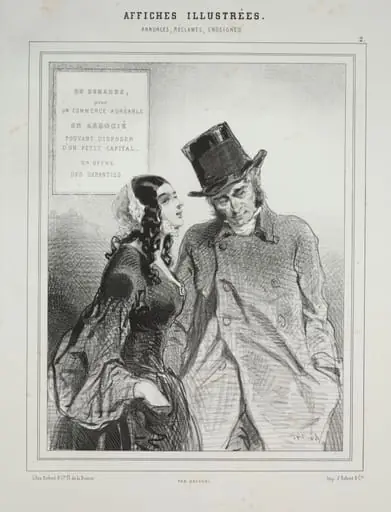 Affiches Illustrées
 Les Actrices: Le Rôle
 Vous êtes jolie...
 Masques et visages: Par-ci, par-la: M'ame Beauminet, ta majeste...
 Un Retour de jeunesse
 Par-ci, par-lá: My Daughter has sung
 Les Lorettes
 Illustration for "Count Bruckhardt" in "Once a Week"
 A portée de lorgnon
 Des Mères de Famille!