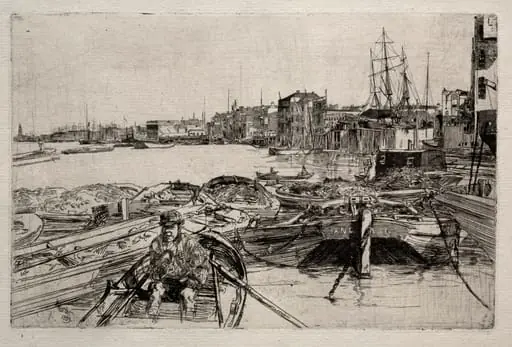
Artwork
Limehouse
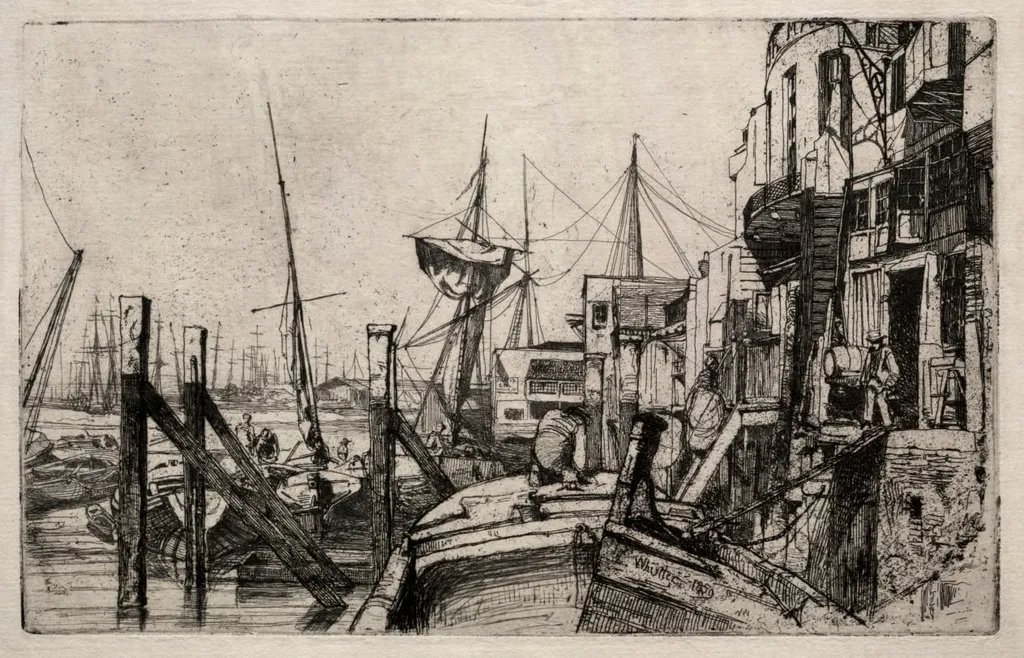
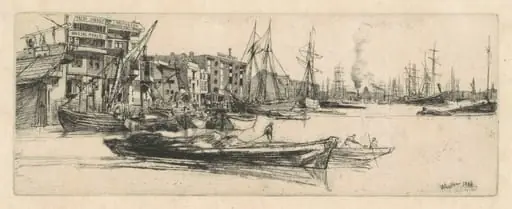
Limehouse is a print by the Impressionist artist James McNeill Whistler. It dates from 1859 and is held in the collection of the Cleveland Museum of Art.
About this work
Overview
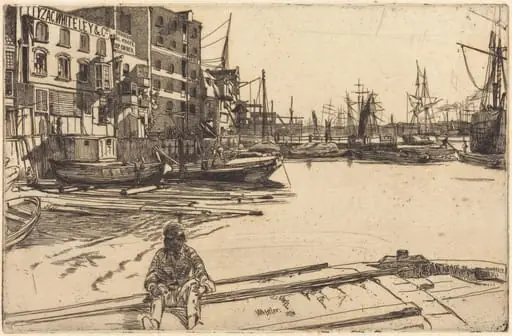
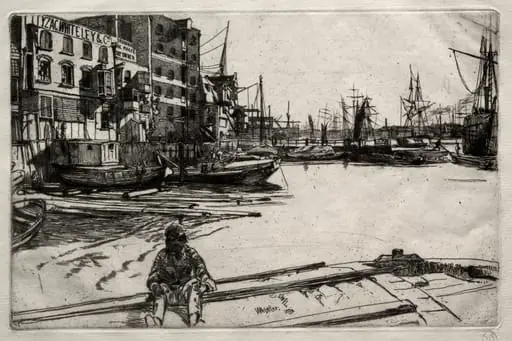
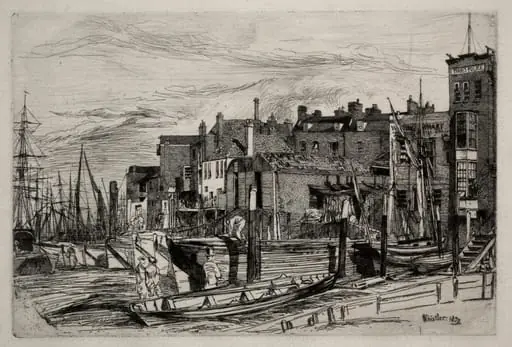
Limehouse is an 1859 print by James McNeill Whistler, presently in the collection of the Cleveland Museum of Art. The work depicts a bustling riverside dock, populated with ships, cranes, and a cluster of aging structures. Whistler renders the scene with a focus on the ordinary, industrious activity that defined the area during the mid‑nineteenth century.
Subject & Meaning
The composition centers on a busy harbor where vessels with towering masts lie alongside a tangle of ropes, wooden planks, and laborers moving about.
The composition centers on a busy harbor where vessels with towering masts lie alongside a tangle of ropes, wooden planks, and laborers moving about. The surrounding buildings appear weathered and slightly dilapidated, emphasizing the gritty reality of commercial life along the Thames. Whistler’s attention to these quotidian details suggests an interest in documenting the functional, often overlooked aspects of urban trade.
Technique & Style
Executed as an etching, the image relies on crisp, precise lines that delineate the complex network of rigging, scaffolding, and architectural forms. The contrast between light and shadow is rendered through varying line density, creating a sense of depth and movement. Whistler’s handling of line conveys both the structural rigidity of the dock and the fleeting dynamism of its workers.
History & Provenance
Created in 1859, Limehouse entered the Cleveland Museum of Art’s holdings as part of its nineteenth‑century print collection. The work reflects Whistler’s early period, before his later experiments with tonal harmony, and provides insight into his development as a printmaker during his London years.
Artist & collection
Artist
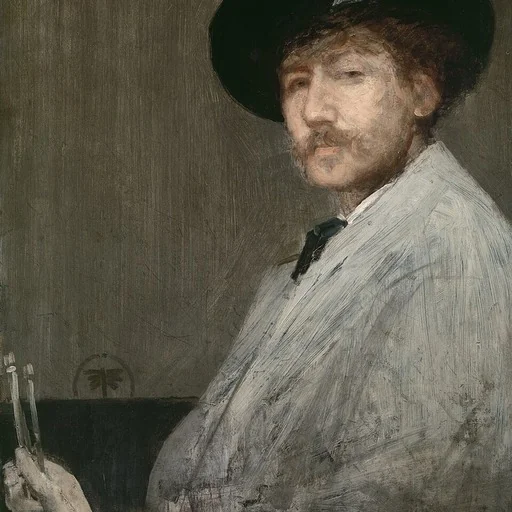
James Abbott McNeill Whistler was an American painter in oils and watercolor, and printmaker, active during the American Gilded Age and based primarily in the United Kingdom.

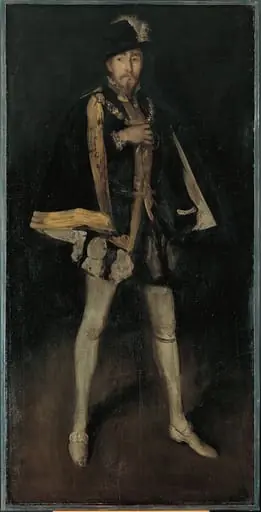 Arrangement in Black, No. 3: Sir Henry Irving as Philip II of Spain
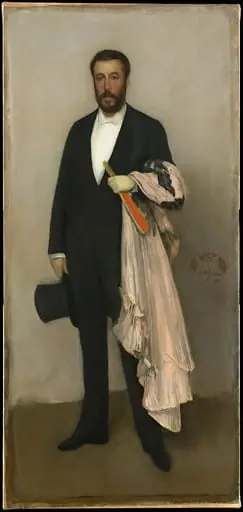 Arrangement in Flesh Colour and Black: Portrait of Theodore Duret
 Gold and Brown: Self-Portrait
 Edward Guthrie Kennedy
 Harmony in Yellow and Gold: The Gold Girl—Connie Gilchrist
 George W. Vanderbilt
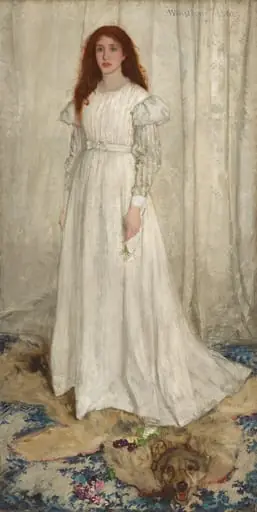 Symphony in White, No. 1: The White Girl
 Henry Irving as Philip II of Spain