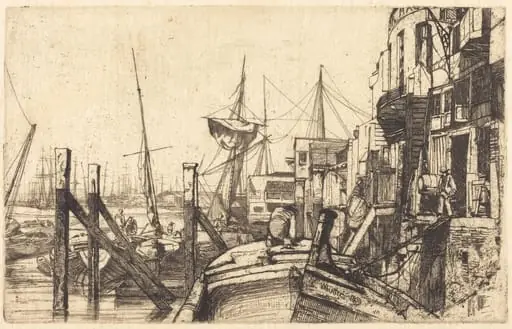
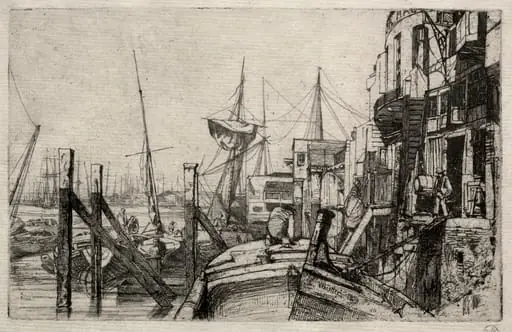
Artwork
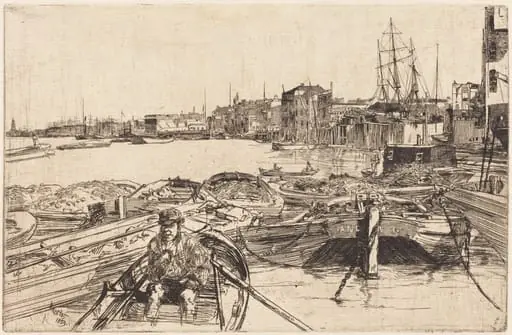
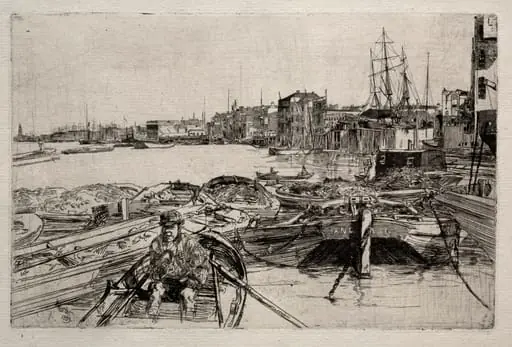
Eagle Wharf
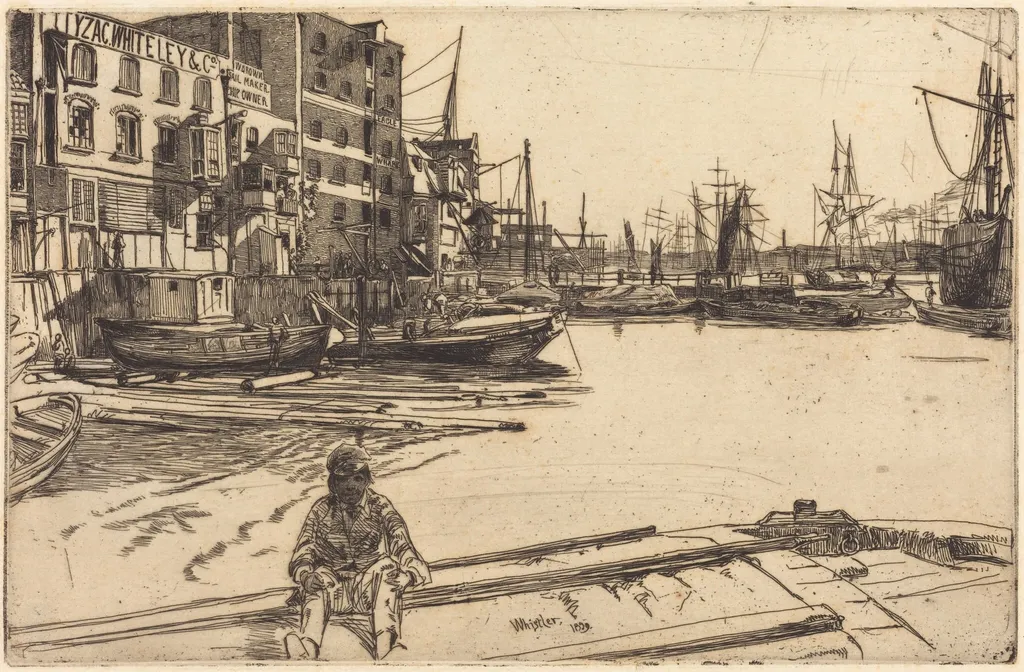
Eagle Wharf is an ink print by the Impressionist artist James McNeill Whistler. It dates from 1859 and is held in the collection of the National Gallery of Art.
About this work
Overview
Eagle Wharf is an 1859 etching on laid paper by James McNeill Whistler. Executed during his early period in England, the print presents a quiet, observational view of a bustling dock, rendered in monochrome line work without decorative coloration.
Subject & Meaning
The composition records a busy waterfront scene: ships moored along the quay, modest craft alongside larger vessels, and a laborer in work attire seated in the foreground holding a pole. A building bears a sign identifying a local business, anchoring the image in a specific commercial milieu rather than a narrative tableau.
Technique & Style
Whistler employed traditional etching methods, incising the image onto a copper plate with a needle and using acid to bite the lines. The resulting delicate, unadorned strokes convey texture in water, hulls, and architecture, emphasizing atmospheric clarity over overt detail.
History & Provenance
Created while Whistler was establishing his reputation in England, the print predates his later adoption of the butterfly monogram that would appear on his paintings. It reflects his early commitment to the principle of “art for art’s sake,” focusing on visual harmony rather than moral or narrative content.
Context
Eagle Wharf belongs to a period when Whistler was exploring printmaking as a means of investigating composition and tone. The work aligns with his broader avoidance of illustrative storytelling, instead offering a refined, almost abstracted view of everyday industrial life.
Own this work as a print
Artist & collection
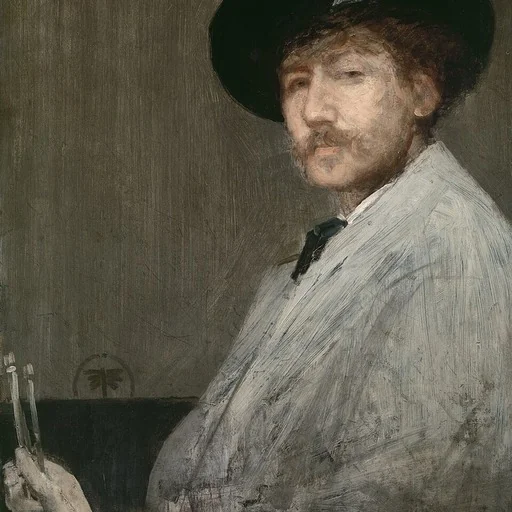
Artist
James Abbott McNeill Whistler was an American painter in oils and watercolor, and printmaker, active during the American Gilded Age and based primarily in the United Kingdom.

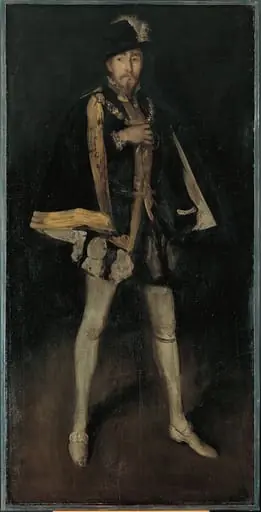 Arrangement in Black, No. 3: Sir Henry Irving as Philip II of Spain
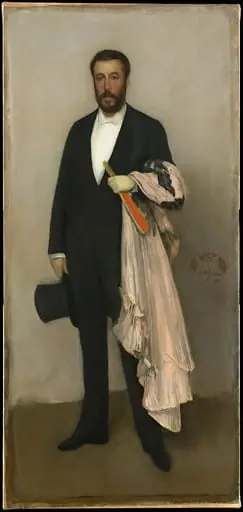 Arrangement in Flesh Colour and Black: Portrait of Theodore Duret
 Gold and Brown: Self-Portrait
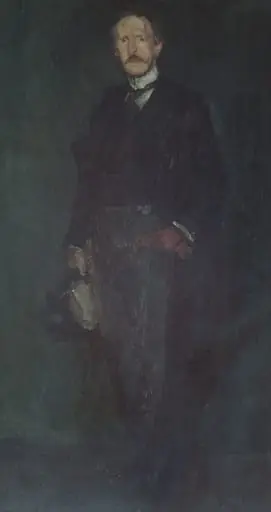 Edward Guthrie Kennedy
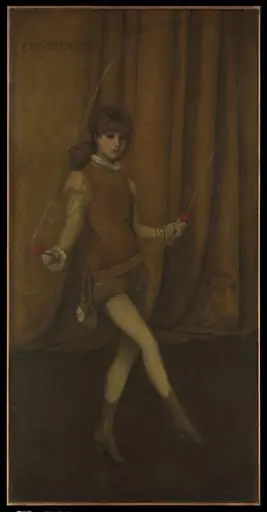 Harmony in Yellow and Gold: The Gold Girl—Connie Gilchrist
 George W. Vanderbilt
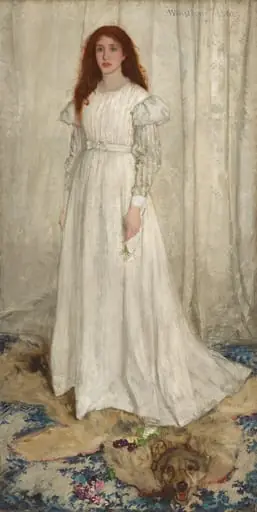 Symphony in White, No. 1: The White Girl
 Henry Irving as Philip II of Spain