Artwork
Nocturne: Palaces
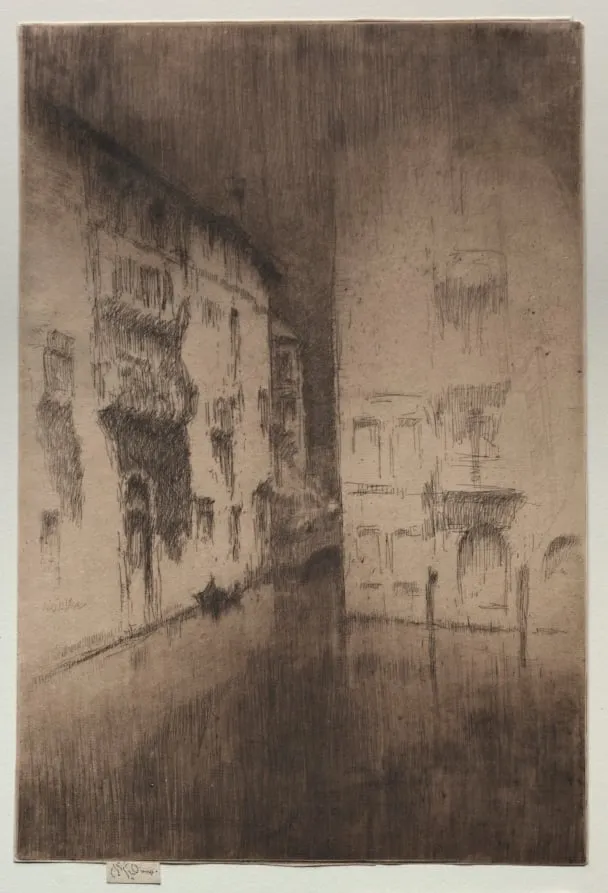
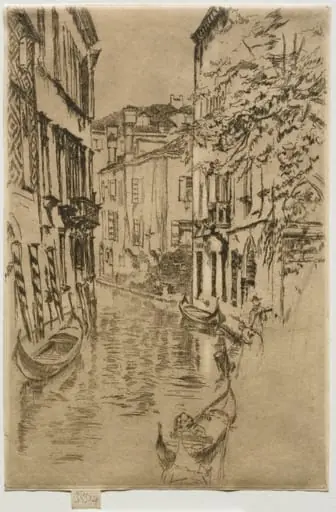
Nocturne: Palaces is a print by the Impressionist artist James McNeill Whistler. It dates from 1880 and is held in the collection of the Cleveland Museum of Art.
About this work
Overview
The composition avoids sharp definition, instead relying on subtle contrasts and soft, blended lines to evoke the stillness of evening.
Created in 1880, Nocturne: Palaces is a tonal etching by James McNeill Whistler, currently held at The Cleveland Museum of Art. It captures a quiet urban streetscape at night, rendered with minimal detail and a focus on atmosphere. The composition avoids sharp definition, instead relying on subtle contrasts and soft, blended lines to evoke the stillness of evening. This work belongs to Whistler’s series of nocturnes, which redefined how night scenes could be expressed in print.
Subject & Meaning
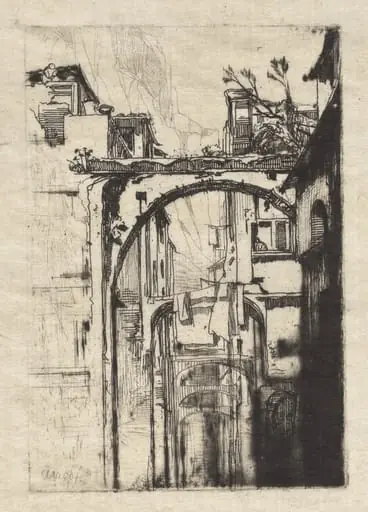
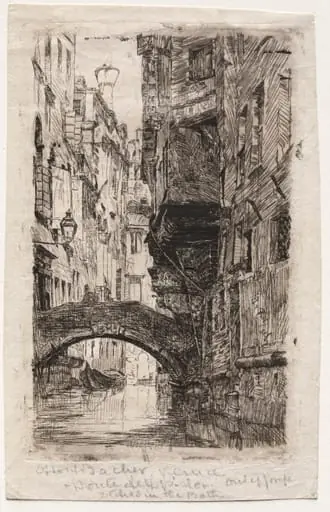
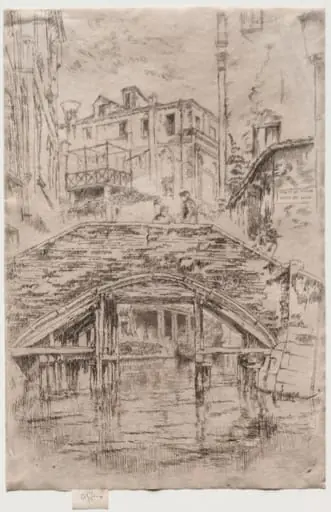
The scene depicts a dimly lit street flanked by buildings with darkened windows and faint balconies, curving gently toward a water’s edge where indistinct forms suggest figures or vessels. There is no narrative or human activity emphasized; the focus lies in the mood of solitude and quiet observation. Whistler sought to convey the emotional resonance of night rather than document its physical details, aligning the work with musical analogies in his titles.
Technique & Style
Whistler employed loose, fluid etching lines and delicate tonal washes to dissolve form into shadow. Edges are blurred, details suppressed, and light suggested through gradations rather than contrast. This approach rejected the precision of traditional printmaking, favoring suggestion over clarity. The result is a hazy, atmospheric image that prioritizes mood over topographical accuracy, anticipating later developments in modern print aesthetics.
History & Provenance
Nocturne: Palaces was produced during Whistler’s active period in London, when he was refining his nocturne series in both paint and print. The work entered The Cleveland Museum of Art’s collection in the early 20th century, part of a broader acquisition of Whistler’s graphic works. Its preservation reflects growing institutional recognition of his contributions to printmaking beyond his more famous paintings.
Context
In the 1880s, Whistler’s nocturnes stood apart from the detailed urban scenes popular in academic art. His emphasis on tone, mood, and abstraction aligned with emerging ideas in aestheticism and early Impressionism, though he resisted direct association with either movement. These works challenged the expectation that art must illustrate rather than evoke, influencing how artists approached light, time, and perception in urban environments.
Legacy
Whistler’s nocturnes, including this etching, helped shift the perception of printmaking from a reproductive medium to one capable of personal expression. His use of atmospheric suggestion and tonal harmony influenced later generations of printmakers and modernists who valued emotional resonance over literal representation. The work remains a quiet but significant step in the evolution of 20th-century visual language.
Artist & collection
Artist
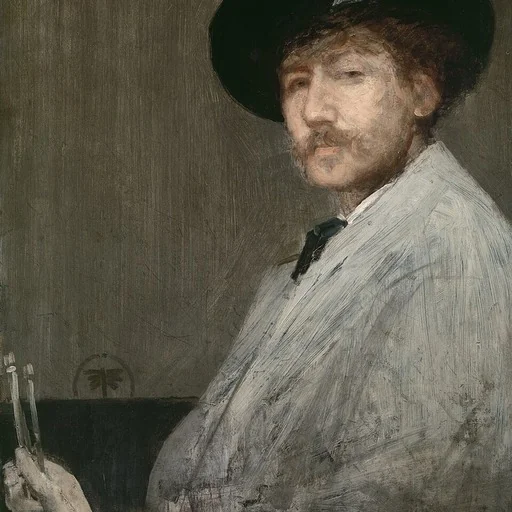
James Abbott McNeill Whistler was an American painter in oils and watercolor, and printmaker, active during the American Gilded Age and based primarily in the United Kingdom.

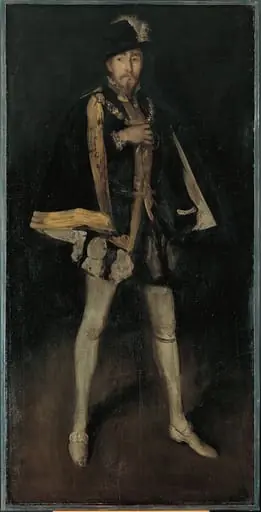 Arrangement in Black, No. 3: Sir Henry Irving as Philip II of Spain
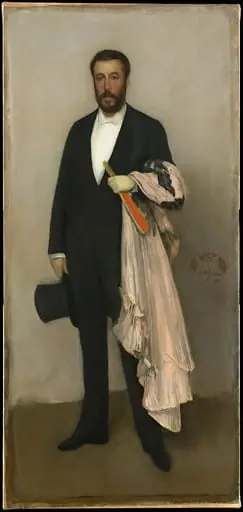 Arrangement in Flesh Colour and Black: Portrait of Theodore Duret
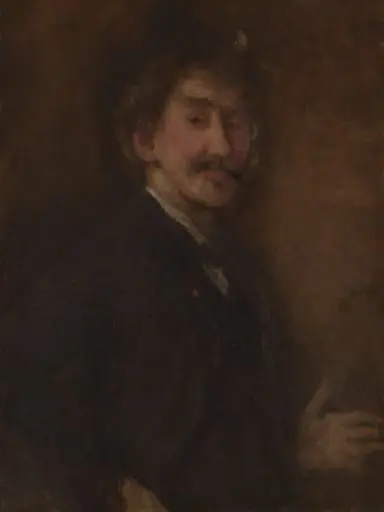 Gold and Brown: Self-Portrait
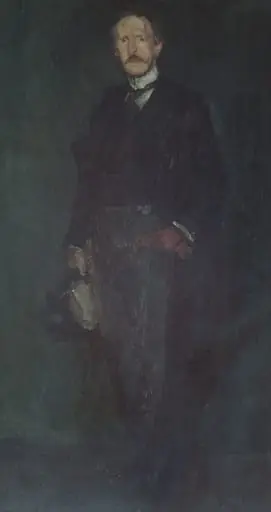 Edward Guthrie Kennedy
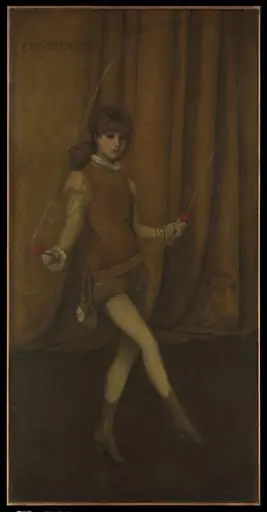 Harmony in Yellow and Gold: The Gold Girl—Connie Gilchrist
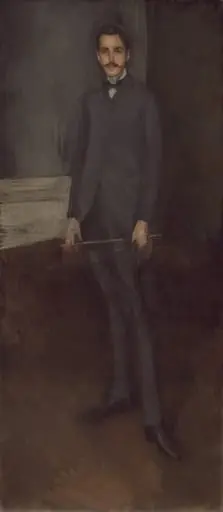 George W. Vanderbilt
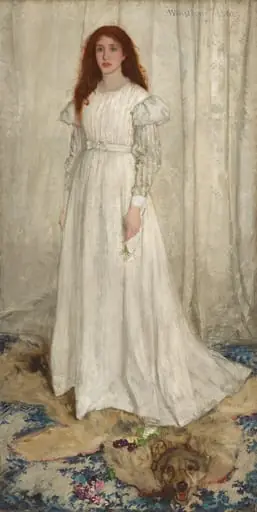 Symphony in White, No. 1: The White Girl
 Henry Irving as Philip II of Spain