Artwork
The Fair
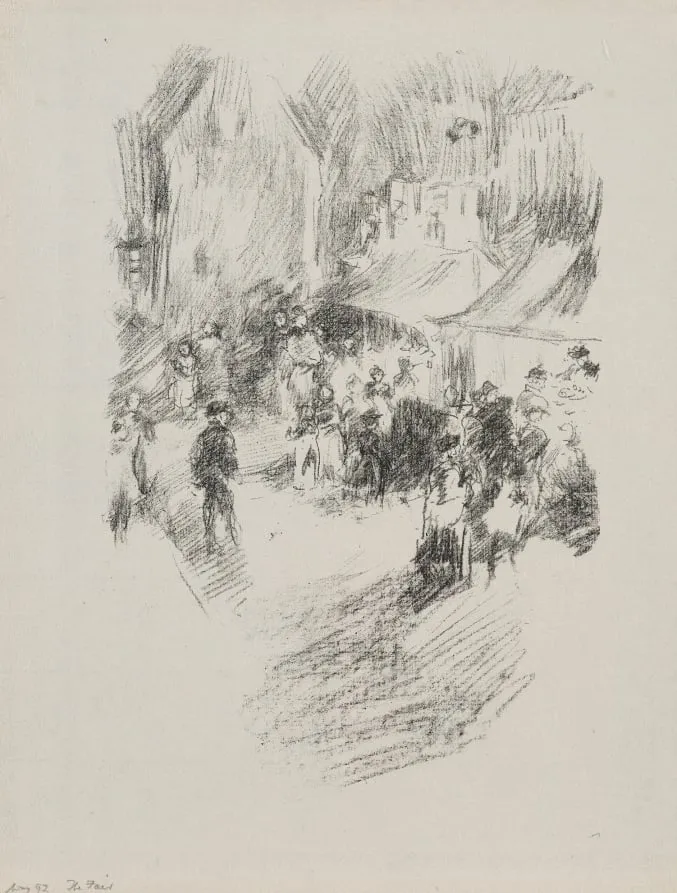
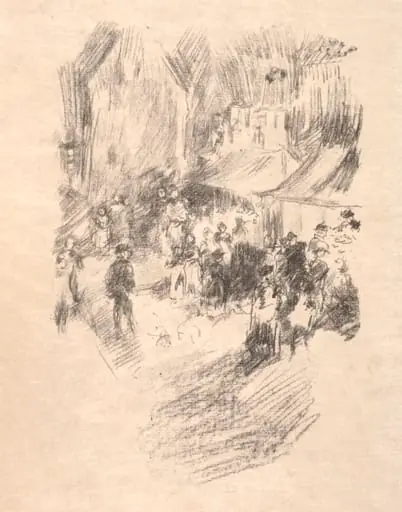
The Fair is a print by the Impressionist artist James McNeill Whistler. It dates from 1896 and is held in the collection of the Cleveland Museum of Art.
About this work
Overview
Unlike finished compositions, this work emphasizes immediacy and atmosphere, reflecting Whistler’s interest in transient moments and informal observation.
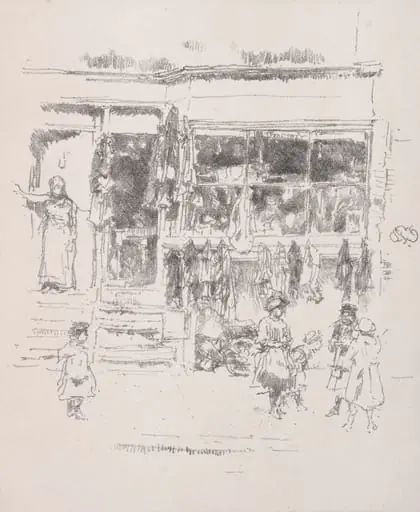
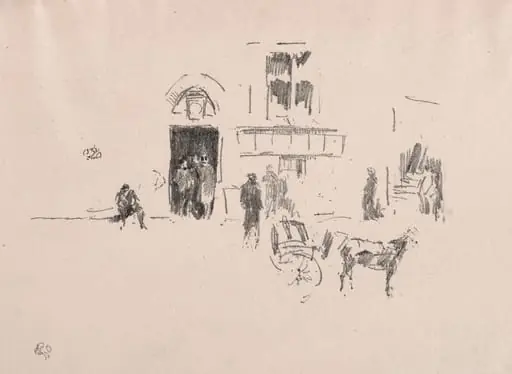
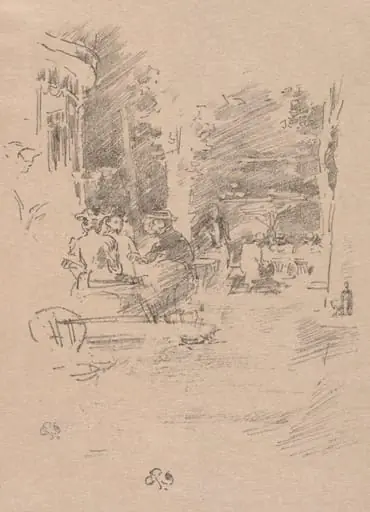
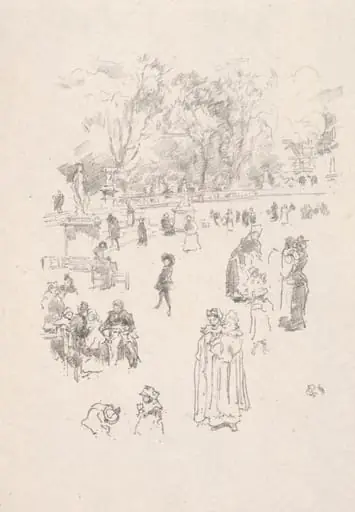
Created in 1896, The Fair is a pencil sketch by James McNeill Whistler, currently held at The Cleveland Museum of Art. It captures a bustling outdoor fairground with minimal detail and rapid, gestural lines. Unlike finished compositions, this work emphasizes immediacy and atmosphere, reflecting Whistler’s interest in transient moments and informal observation. The piece belongs to a broader tradition of artist sketches from the late 19th century, valued for their spontaneity over polish.
Subject & Meaning
The scene depicts a public fair, with figures scattered across the space—some walking, others standing, a few holding umbrellas. No single narrative dominates; instead, the focus is on the collective energy of the crowd. Whistler avoids identifying specific individuals or events, treating the fair as a study in human movement and urban leisure. The ambiguity invites viewers to experience the scene as a fleeting impression rather than a documented moment.
Technique & Style
Whistler employed loose, hurried pencil strokes to convey motion and texture, avoiding precise outlines or shading. Buildings in the background dissolve into smudged forms, while figures are suggested with minimal contours. This approach prioritizes rhythm and visual sensation over anatomical accuracy. The technique aligns with contemporary sketching practices that valued expressive brevity, echoing the observational methods of Realist and Impressionist artists working in similar contexts.
History & Provenance
The sketch was made in 1896, during Whistler’s later years, when he frequently turned to quick studies as a means of recording daily life. It entered The Cleveland Museum of Art’s collection through established acquisition channels, though its exact path from creation to museum remains undocumented. Its survival as a standalone work reflects growing 20th-century appreciation for artists’ preparatory drawings as autonomous expressions.
Context
In the 1890s, artists across Europe and America increasingly valued informal sketches as tools for capturing modern life. Whistler’s approach to The Fair aligns with this trend, paralleling the work of contemporaries who favored spontaneity over finish. The fairground setting, a common subject in urban sketches, offered a rich environment for observing social interaction and shifting light—themes central to the era’s evolving artistic priorities.
Legacy
The Fair exemplifies how late 19th-century artists redefined the sketch as more than a preparatory step. Its emphasis on movement and atmospheric suggestion influenced later generations interested in capturing ephemeral experiences. While not widely exhibited, the work contributes to understanding Whistler’s broader practice and the shifting status of drawing in modern art, where immediacy gained recognition as a legitimate aesthetic.
Artist & collection
Artist
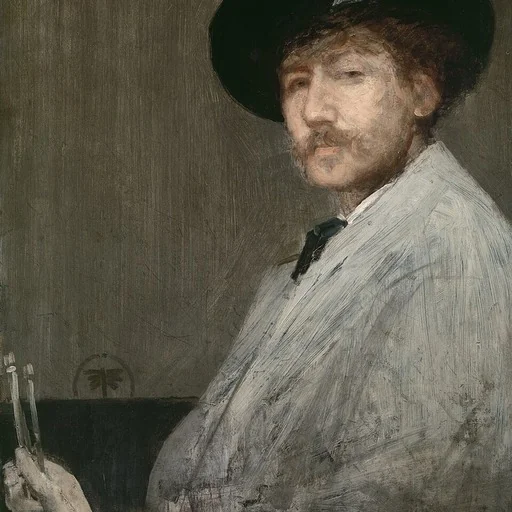
James Abbott McNeill Whistler was an American painter in oils and watercolor, and printmaker, active during the American Gilded Age and based primarily in the United Kingdom.

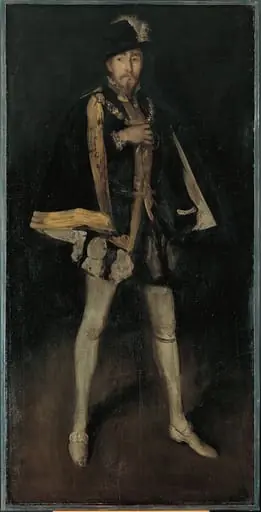 Arrangement in Black, No. 3: Sir Henry Irving as Philip II of Spain
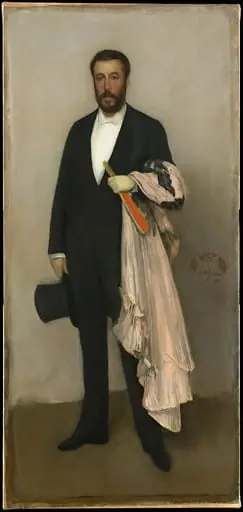 Arrangement in Flesh Colour and Black: Portrait of Theodore Duret
 Gold and Brown: Self-Portrait
 Edward Guthrie Kennedy
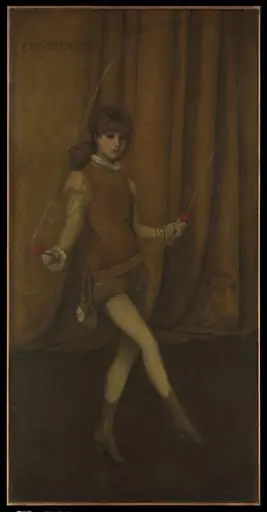 Harmony in Yellow and Gold: The Gold Girl—Connie Gilchrist
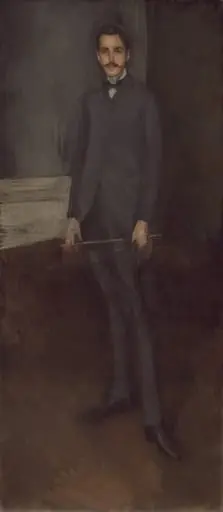 George W. Vanderbilt
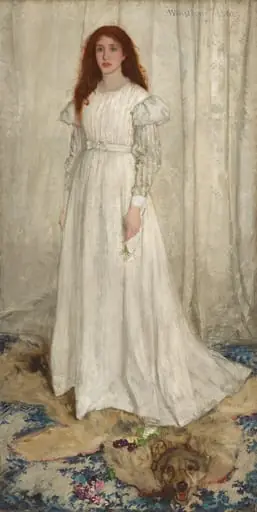 Symphony in White, No. 1: The White Girl
 Henry Irving as Philip II of Spain