Artwork
The Litte Café au Bois
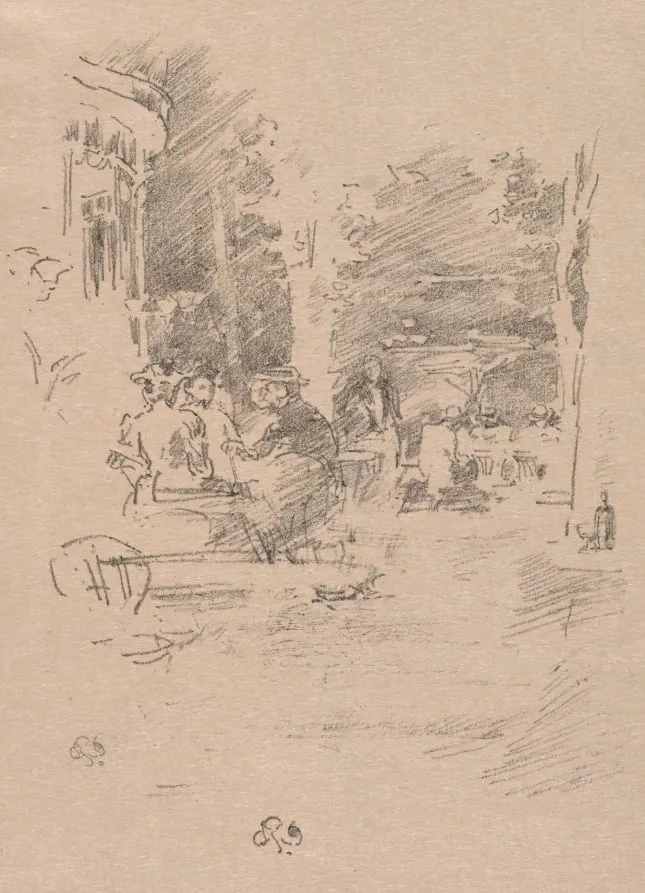
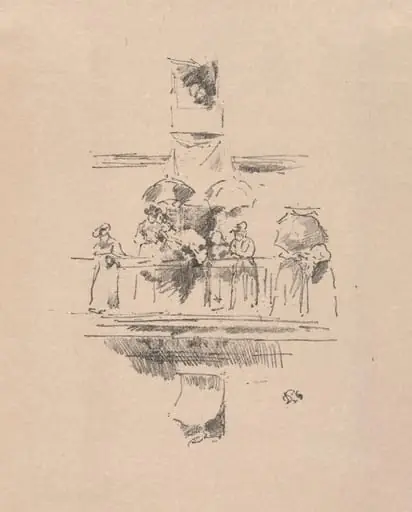
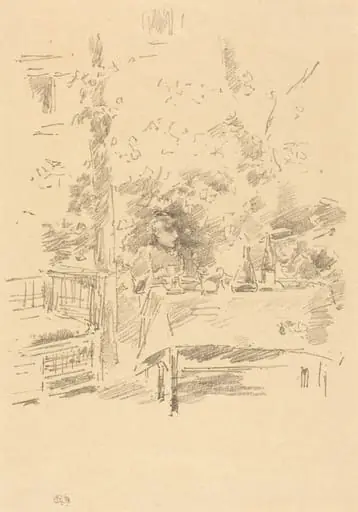
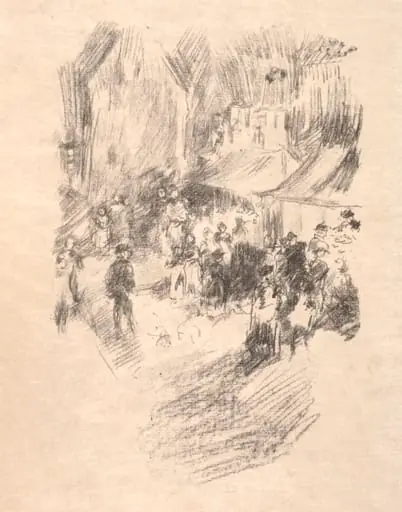
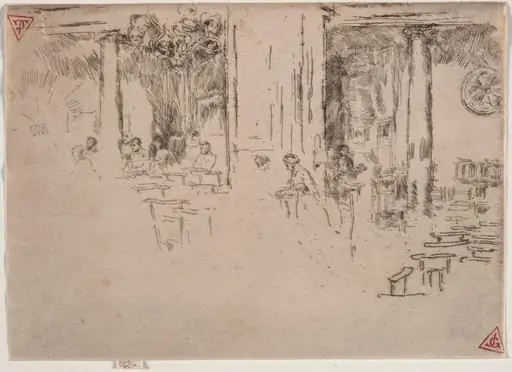
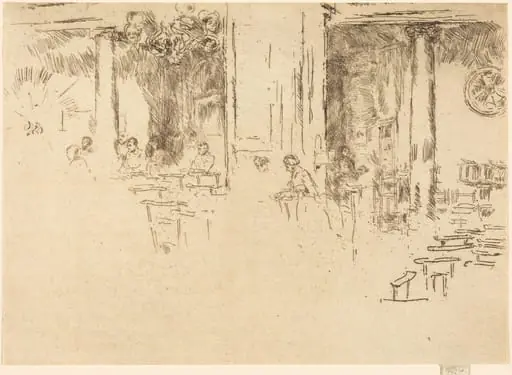
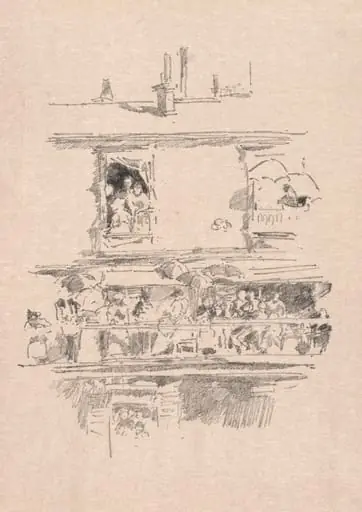
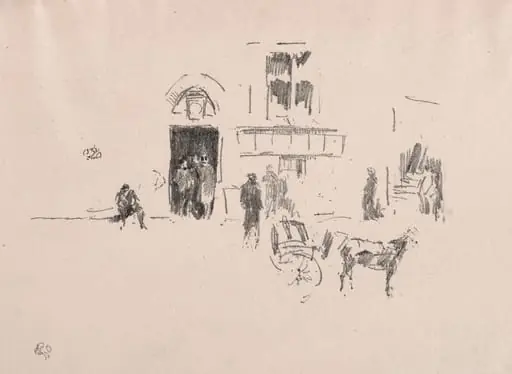
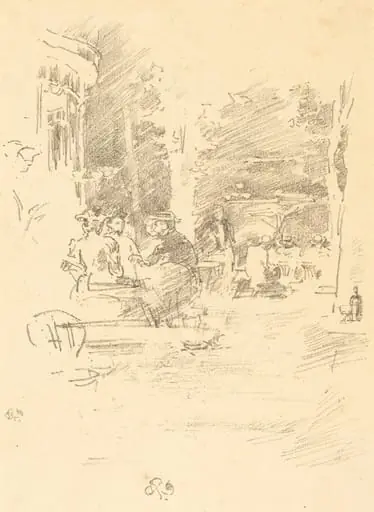
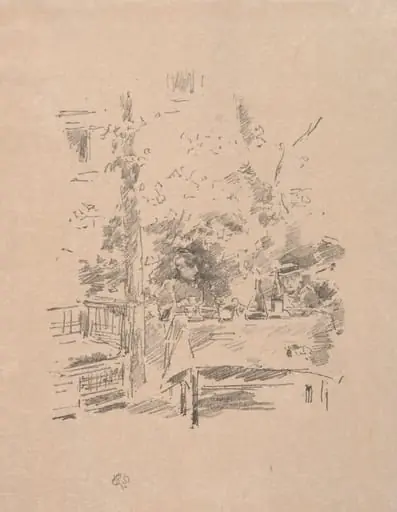
The Litte Café au Bois is a print by the Impressionist artist James McNeill Whistler. It dates from 1894 and is held in the collection of the Cleveland Museum of Art.
About this work
Overview
Created in 1894, The Little Café au Bois is a pen-and-ink sketch by James McNeill Whistler, now in the collection of The Cleveland Museum of Art.
Created in 1894, The Little Café au Bois is a pen-and-ink sketch by James McNeill Whistler, now in the collection of The Cleveland Museum of Art. It captures a fleeting moment at an outdoor café with minimal detail and no color, relying on the spontaneity of line and negative space to suggest movement and atmosphere. The work reflects Whistler’s interest in transient urban scenes and his affinity for the immediacy of drawing.
Subject & Meaning
The scene depicts a modest Parisian café terrace, with a few patrons seated at tables and passersby in the background. One figure leans forward in conversation, while others remain in quiet repose. The composition avoids narrative drama, instead emphasizing the quiet rhythm of daily life. Whistler’s focus on ordinary moments aligns with a broader 19th-century interest in the unembellished realities of public space.
Technique & Style
Whistler employed swift, fluid pen strokes to outline figures and architecture, leaving large areas of the paper untouched to imply light and depth. The lack of shading or refinement gives the drawing a provisional quality, as if captured in real time. This approach prioritizes observation over finish, echoing the aesthetic of sketchbook studies and aligning with contemporary practices in graphic art and early Impressionist drawing.
History & Provenance
The work was produced during Whistler’s later years, when he frequently traveled through France and England, making quick studies of urban environments. It entered The Cleveland Museum of Art’s collection in the 20th century as part of a broader acquisition of Whistler’s graphic works. Its provenance traces back to the artist’s personal archive, preserved by his estate and later dispersed to public institutions.
Context
In the 1890s, Whistler was increasingly drawn to intimate, observational drawings as a counterpoint to his more formal portraits and etchings. The Little Café au Bois reflects the influence of French Realism and the growing popularity of sketching as a means of recording modern life. Similar works by contemporaries like Degas and Toulouse-Lautrec reveal a shared fascination with café culture as a microcosm of urban society.
Legacy
Though not widely exhibited, the drawing exemplifies Whistler’s commitment to the expressive potential of line and composition over finish. It contributed to the reevaluation of sketchwork as a legitimate artistic form, influencing later generations of artists who valued spontaneity and direct observation. Its presence in a major museum underscores its role in documenting the evolution of modern graphic art.
Artist & collection
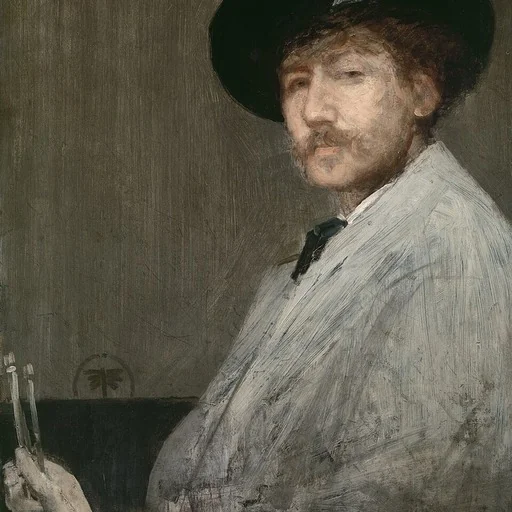
Artist
James Abbott McNeill Whistler was an American painter in oils and watercolor, and printmaker, active during the American Gilded Age and based primarily in the United Kingdom.

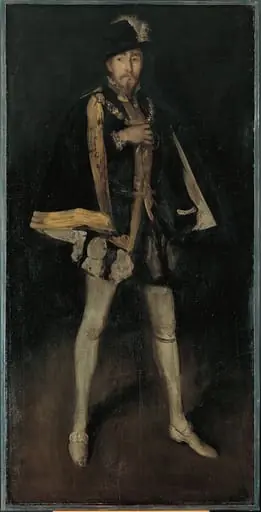 Arrangement in Black, No. 3: Sir Henry Irving as Philip II of Spain
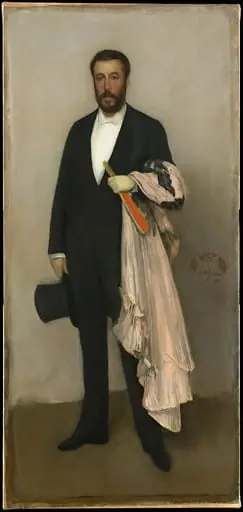 Arrangement in Flesh Colour and Black: Portrait of Theodore Duret
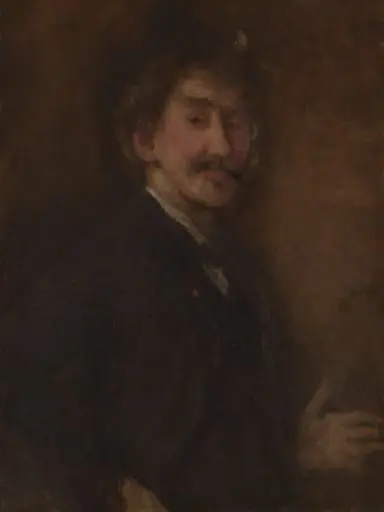 Gold and Brown: Self-Portrait
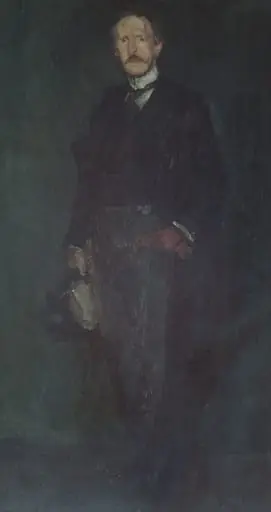 Edward Guthrie Kennedy
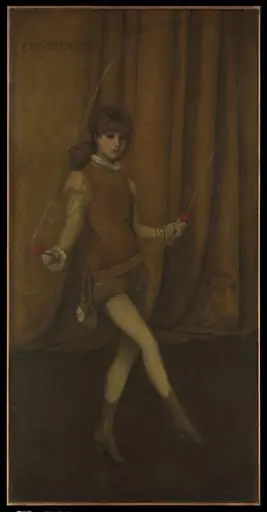 Harmony in Yellow and Gold: The Gold Girl—Connie Gilchrist
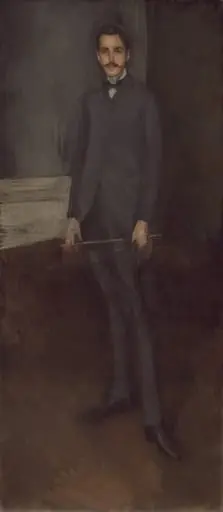 George W. Vanderbilt
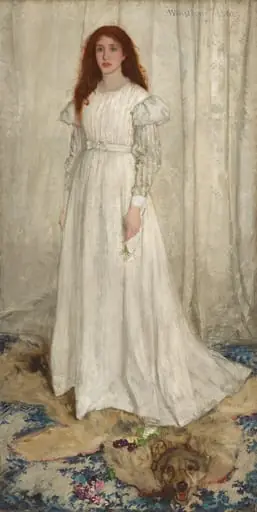 Symphony in White, No. 1: The White Girl
 Henry Irving as Philip II of Spain