Artwork
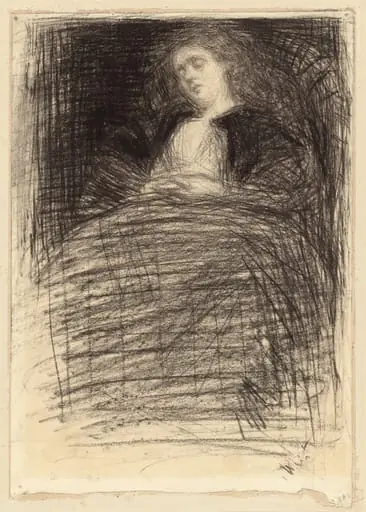
Weary
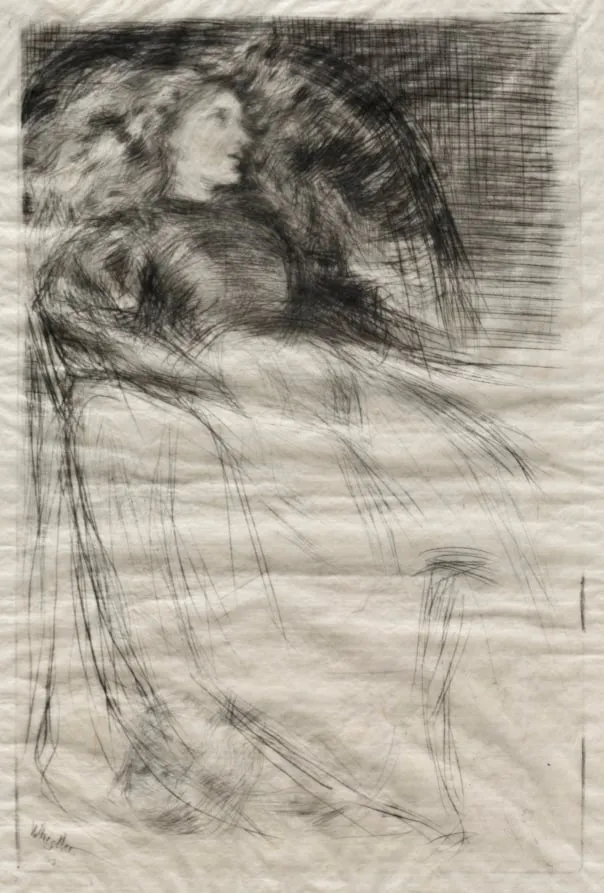
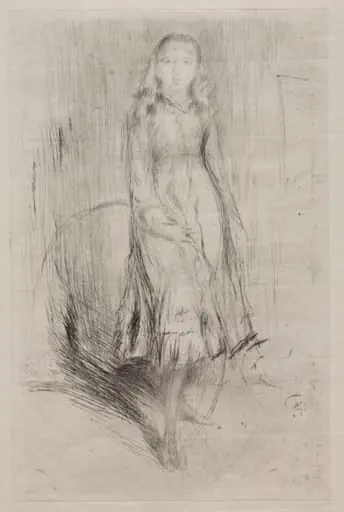
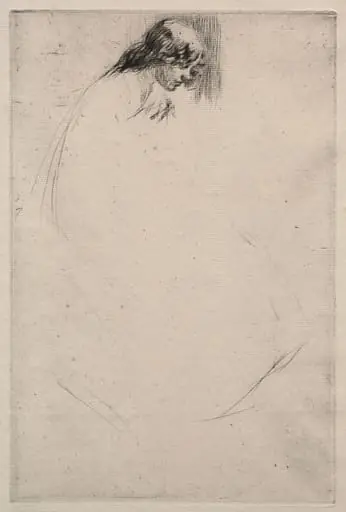
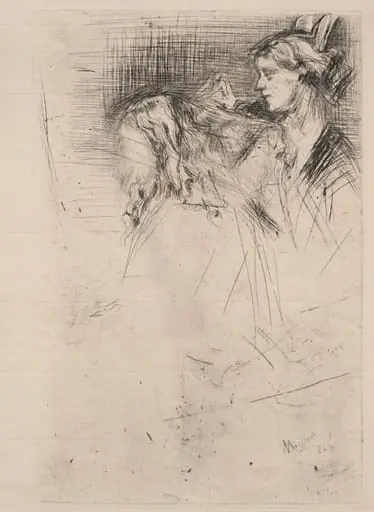
Weary is a print by the Impressionist artist James McNeill Whistler. It dates from 1863 and is held in the collection of the Cleveland Museum of Art.
About this work
Overview
Its monochromatic palette and simplified forms reflect his interest in atmospheric effect rather than literal representation.
Created in 1863, Weary is a print by James McNeill Whistler, now in the collection of The Cleveland Museum of Art. It depicts a solitary female figure in a moment of quiet fatigue, rendered with minimal detail and a restrained tonal range. The work belongs to Whistler’s early experiments in intimate portraiture, emphasizing mood over narrative. Its monochromatic palette and simplified forms reflect his interest in atmospheric effect rather than literal representation.
Subject & Meaning
The figure is a woman seated in repose, her head tilted back, eyes closed, and face pale against a shadowed background. Her long hair falls loosely, framing her features and enhancing the sense of withdrawal. The posture and expression suggest exhaustion, not sorrow—a quiet surrender to fatigue. Whistler avoids storytelling, instead inviting contemplation of inner stillness, aligning the image with aesthetic ideals of emotional restraint and poetic ambiguity.
Technique & Style
Whistler employs a limited grayscale palette and subtle contrasts to model form, drawing on chiaroscuro to define the figure’s contours without sharp outlines. The dark dress merges with the background, while soft light gathers around the head and shoulders, isolating the face as the focal point. The print’s delicate lines and muted tones reflect his mastery of etching and drypoint, techniques that allow for nuanced gradations and a hazy, intimate atmosphere.
History & Provenance
Weary was produced in 1863 during Whistler’s formative years in London, when he was exploring figural subjects outside of commissioned portraiture. The print remained in private hands until acquired by The Cleveland Museum of Art, where it entered the collection as part of a broader effort to document Whistler’s graphic work. Its provenance reflects its status as a personal, non-commercial piece, valued for its artistic integrity rather than popularity.
Context
In the early 1860s, Whistler was distancing himself from narrative-driven Victorian art, aligning instead with emerging ideas of art for art’s sake. Weary reflects this shift—its focus on mood, tonal harmony, and formal composition anticipates his later Nocturnes. The work resonates with contemporary European trends in intimate portraiture, particularly those influenced by Japanese prints and the French Realists, who favored quiet, unidealized subjects.
Legacy
Weary stands as an early example of Whistler’s move toward abstraction in emotional expression. Though not widely exhibited in his lifetime, it influenced later artists interested in psychological depth through minimal means. Its emphasis on tonal subtlety and psychological stillness contributed to the evolution of modern printmaking, reinforcing Whistler’s role in redefining portraiture beyond likeness toward emotional resonance.
Artist & collection
Artist
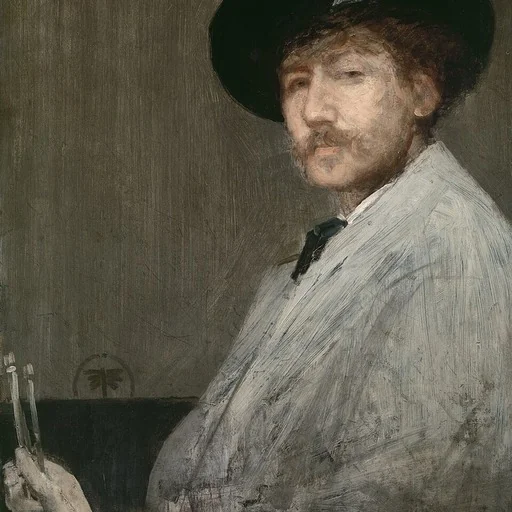
James Abbott McNeill Whistler was an American painter in oils and watercolor, and printmaker, active during the American Gilded Age and based primarily in the United Kingdom.

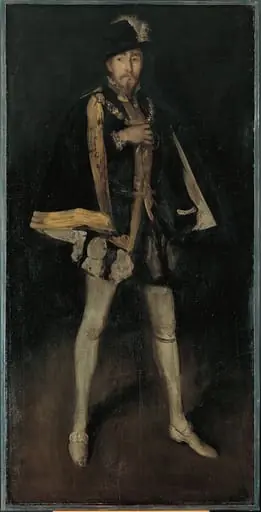 Arrangement in Black, No. 3: Sir Henry Irving as Philip II of Spain
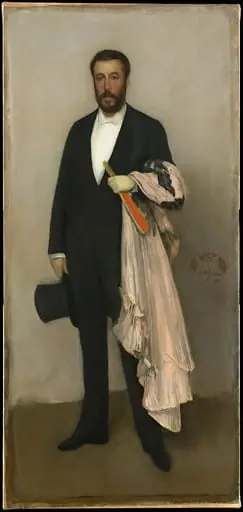 Arrangement in Flesh Colour and Black: Portrait of Theodore Duret
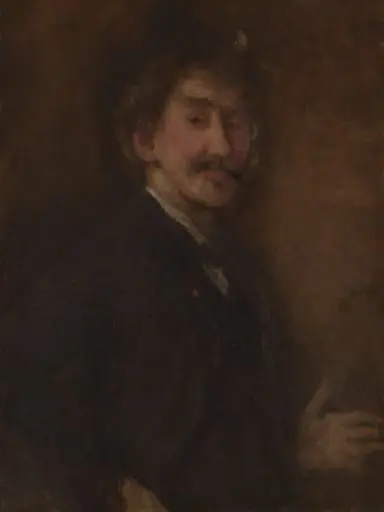 Gold and Brown: Self-Portrait
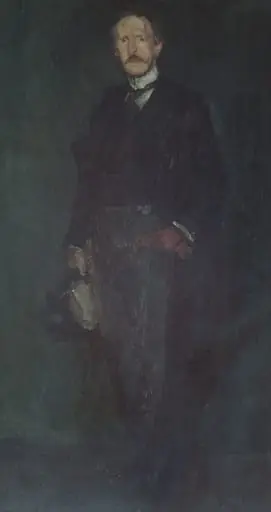 Edward Guthrie Kennedy
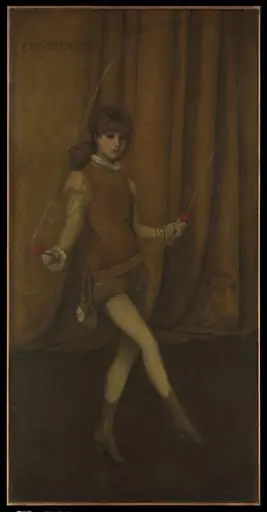 Harmony in Yellow and Gold: The Gold Girl—Connie Gilchrist
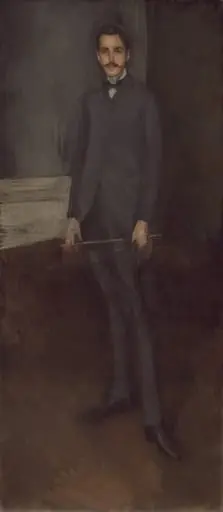 George W. Vanderbilt
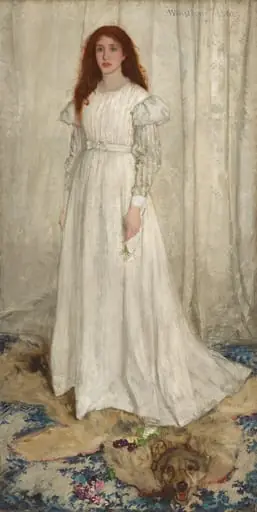 Symphony in White, No. 1: The White Girl
 Henry Irving as Philip II of Spain