Artwork
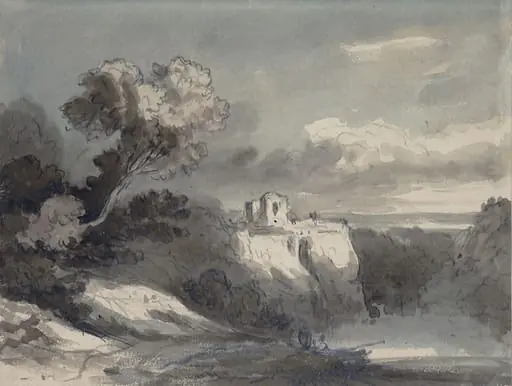
Landscape with Abbey by a Stream
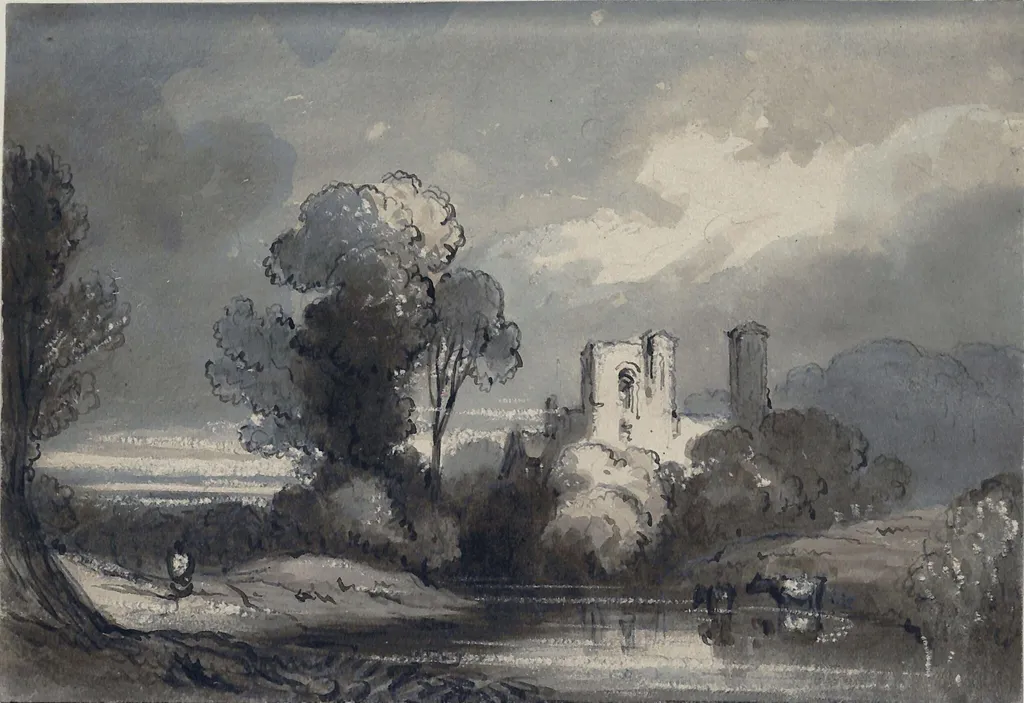
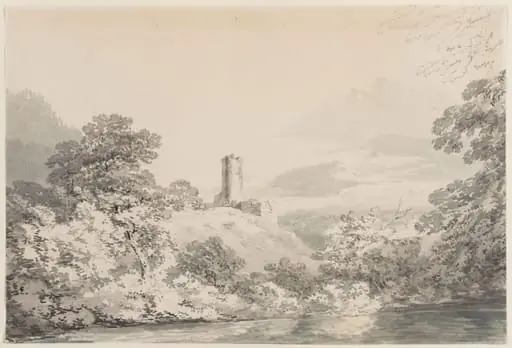
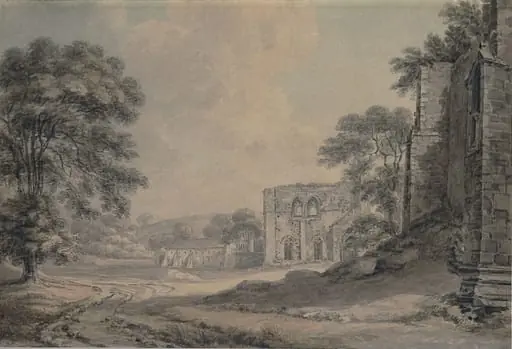
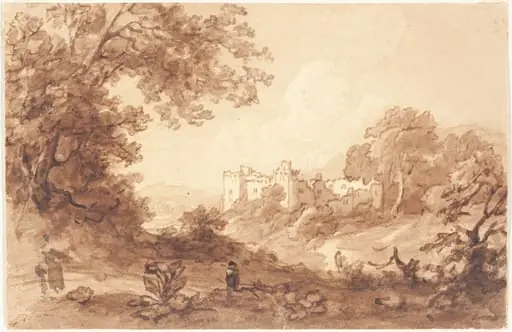
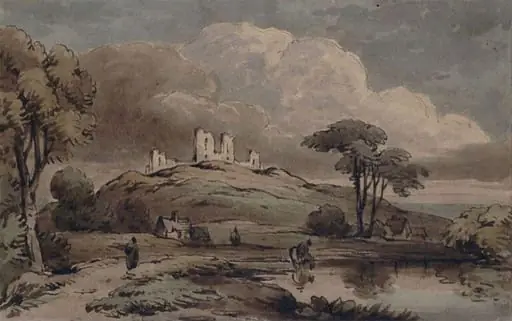
Landscape with Abbey by a Stream is a watercolor work on paper by the British Romanticist artist James Robertson. It dates from 1850 and is held in the collection of the Victoria and Albert Museum.
About this work
Overview
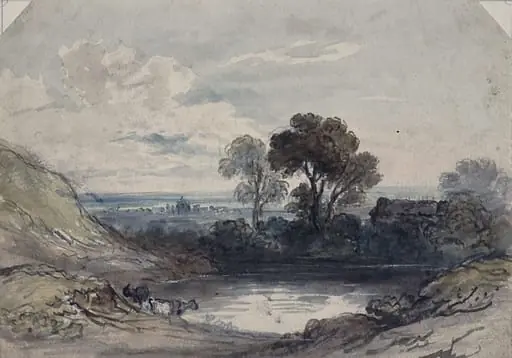
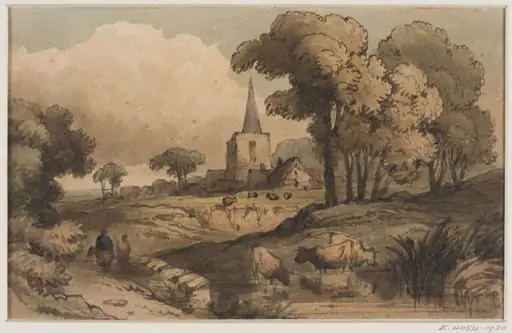
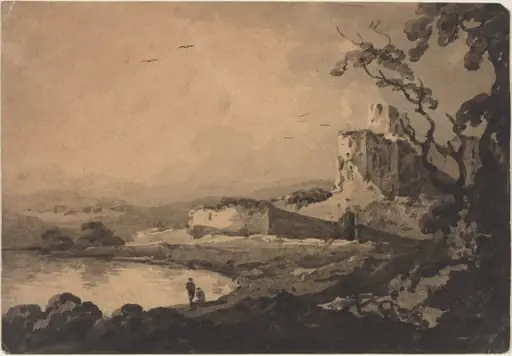
Painted in 1850, this watercolour by James Robertson captures a quiet rural scene with an abbey nestled beside a winding stream. Executed in transparent washes, the work reflects the artist’s interest in atmospheric landscape studies. Its modest scale and delicate handling align with 19th-century British watercolour traditions, emphasizing mood over narrative.
Subject & Meaning
The abbey, partially obscured by foliage, suggests decay and time’s passage. Its two towers rise above the trees, hinting at former religious significance now absorbed by nature. The stream, mirroring the sky and architecture, reinforces a sense of stillness and continuity. No human figures appear, deepening the impression of solitude and quiet reverence.
Technique & Style
Robertson employed loose, fluid brushwork to suggest texture without precise definition—trees are rendered in quick strokes, the sky in diluted washes. Colors remain subdued: cool greys and blues dominate, with faint ochre tones in the distant hills adding subtle warmth. The watercolour medium allows for transparency and soft edges, enhancing the hazy, atmospheric quality.
History & Provenance
The work is one of several landscape studies Robertson produced during his travels in Britain and Europe. Though not widely exhibited in his lifetime, it reflects his consistent focus on topographical accuracy combined with poetic sensitivity. Its survival suggests it was kept in private collections, likely by patrons interested in amateur watercolour practice.
Context
In mid-19th-century Britain, watercolour was valued for its portability and suitability for sketching outdoors. Robertson’s approach aligns with contemporaries like Turner and Cotman, who prioritized light and mood over detail. This piece exemplifies the shift from topographical recording to emotional landscape interpretation, a trend gaining traction among artists and collectors alike.
Legacy
Robertson’s watercolours, though not central to major art-historical narratives, contribute to the broader understanding of Victorian landscape practice. This work illustrates how artists used the medium to explore transience and nature’s reclamation of human structures—a theme that resonated with later generations of landscape painters and photographers.
Artist & collection
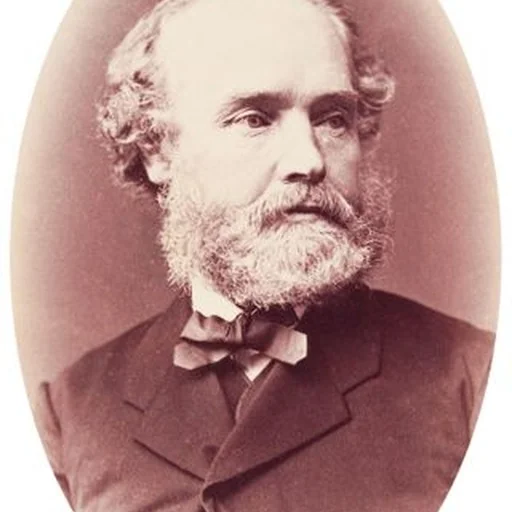
Artist
James Robertson (1813–1888) was an English gem and coin engraver who worked in the Mediterranean region, and who became a pioneering photographer working in the Crimea and possibly India.