Artwork
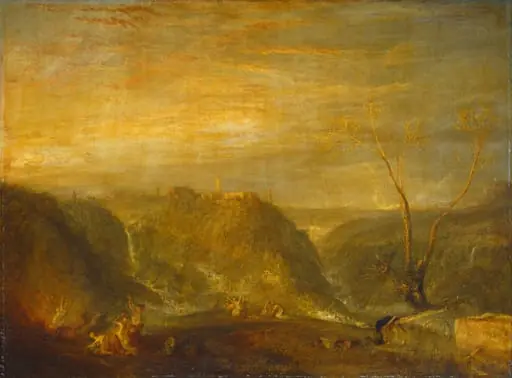
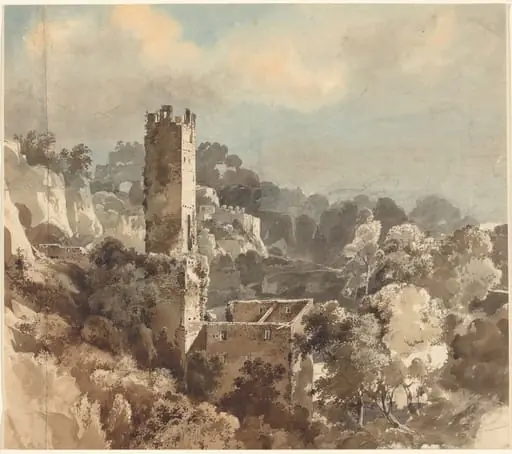
Landscape with tower on a rock
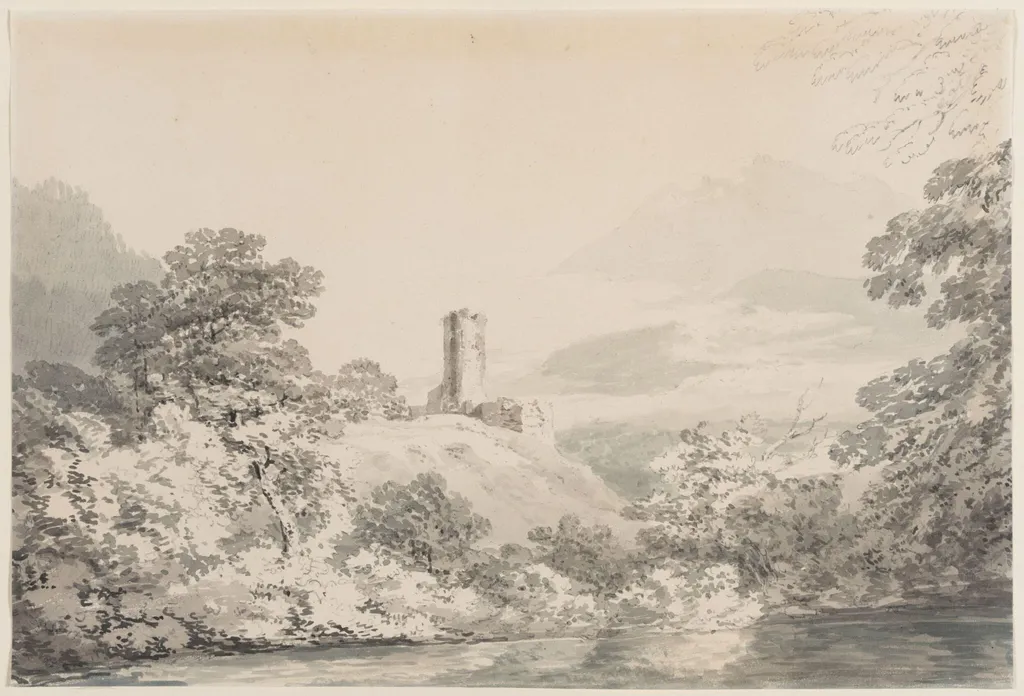
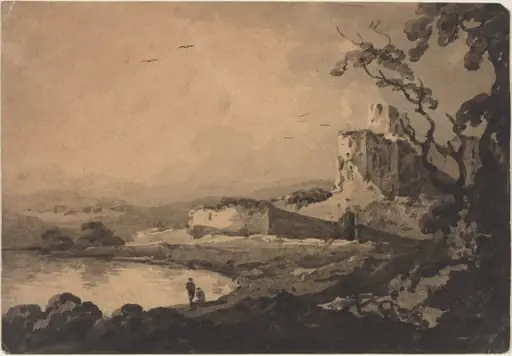
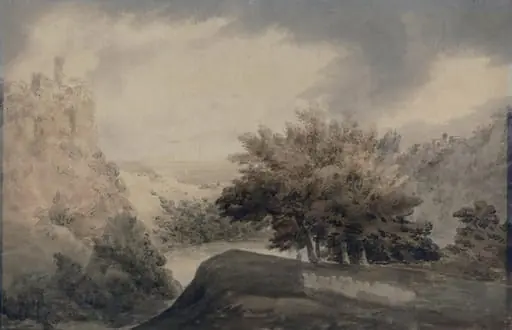
Landscape with tower on a rock is a watercolor work on paper by the Romanticist artist Joseph Mallord William Turner. It dates from 1795 and is held in the collection of the Victoria and Albert Museum. Painted in 1795, this watercolour by J.
About this work
Overview
A winding river traces the foreground, while sparse trees cling to the slopes, their forms blurred by gentle pigment layering.
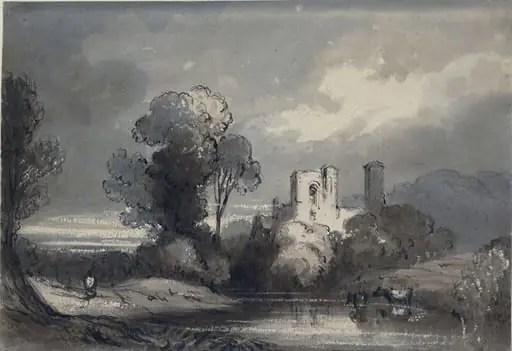
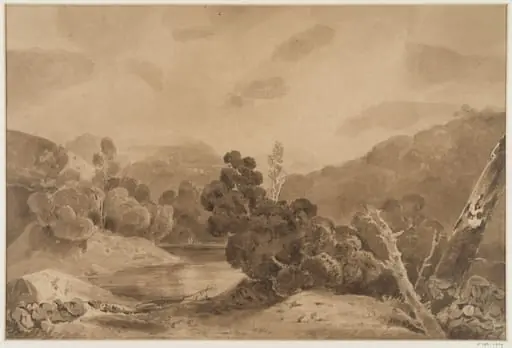
Painted in 1795, this watercolour by J.M.W. Turner depicts a solitary stone tower rising from a rugged cliff. The scene is rendered in delicate washes, with soft edges and subdued tones that suggest early morning mist. A winding river traces the foreground, while sparse trees cling to the slopes, their forms blurred by gentle pigment layering. The sky fades into the horizon, leaving the landscape feeling vast and still.
Subject & Meaning
The tower, weathered and isolated, stands as a silent witness to time and nature’s quiet dominance. Its placement on the rock suggests human presence long faded, reinforcing a theme of transience. The absence of figures or activity invites contemplation rather than narrative, aligning with emerging Romantic sensibilities that valued solitude and the sublime in nature.
Technique & Style
Turner employed thin, layered watercolour washes to achieve atmospheric depth. Colours are restrained—pale greys, muted greens, and faint ochres—blended wet-on-wet to dissolve boundaries between land, sky, and water. The brushwork is loose, allowing paper texture to show through, enhancing the sense of air and moisture. This method prioritizes mood over detail, a hallmark of his early landscape studies.
History & Provenance
Created during Turner’s formative years, this work likely originated from a sketching trip in Britain, possibly in Wales or the Lake District. It remained in the artist’s possession until his death, later entering the Turner Bequest. Its intimate scale and unfinished quality suggest it was a personal study, not a commissioned piece, reflecting his ongoing exploration of light and terrain.
Context
In the mid-1790s, Turner was refining his approach to landscape beyond topographical accuracy, influenced by contemporary poets and the growing interest in emotional responses to nature. This piece aligns with a shift toward lyrical, evocative scenes rather than precise documentation. Watercolour, then considered a medium for amateurs, was being elevated by artists like Turner into a vehicle for expressive depth.
Legacy
This watercolour exemplifies Turner’s early mastery of atmosphere, foreshadowing his later, more abstract works. Its quiet intensity contributed to the redefinition of landscape as a vehicle for introspection. Though modest in scale, it helped establish watercolour as a serious artistic medium in Britain, influencing generations of painters who sought to capture mood through light and texture.
Artist & collection
Artist
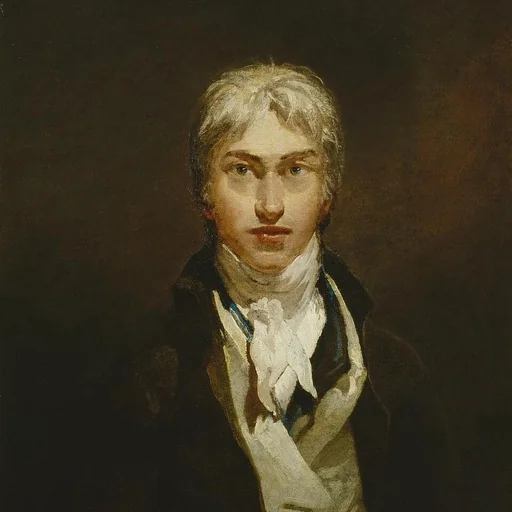
Joseph Mallord William Turner was born in 1775 at Maiden Lane, Covent Garden, where his father kept a barber and wig-making shop.