Artwork
Untitled
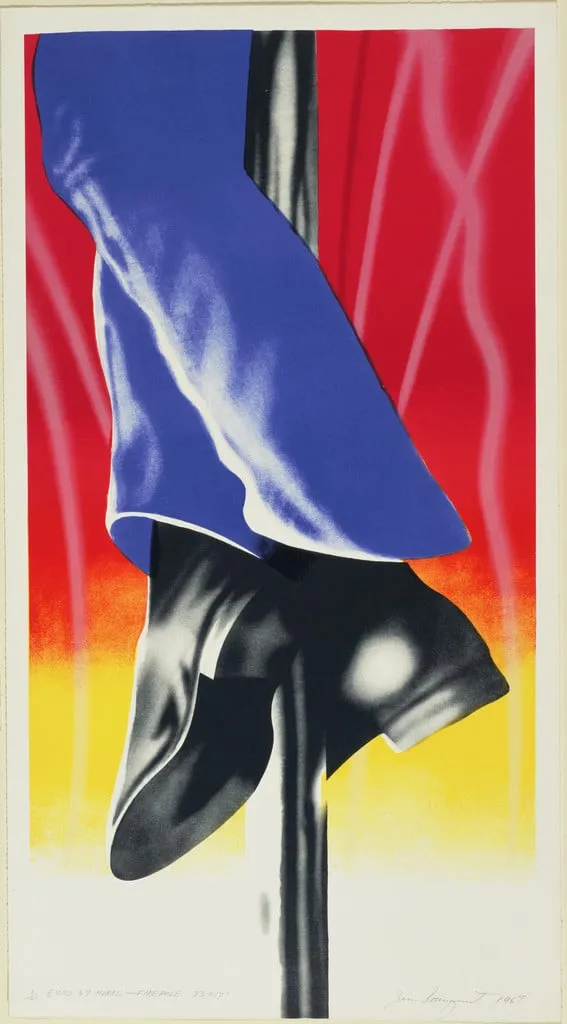
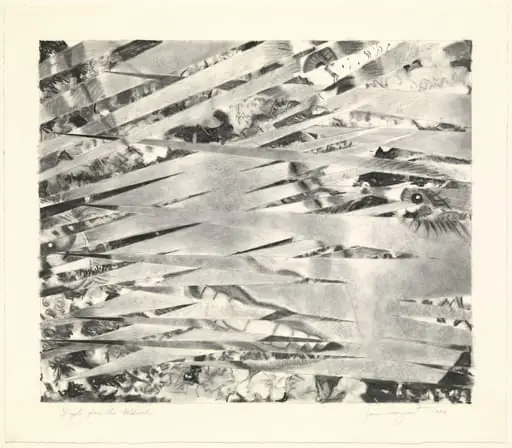
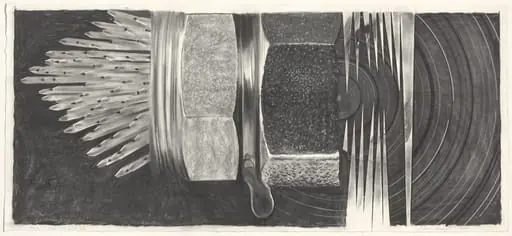
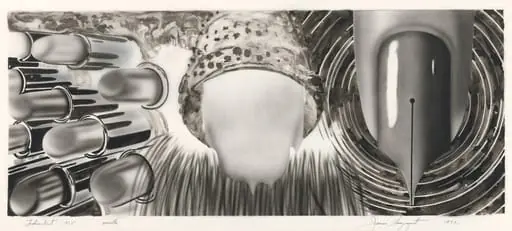
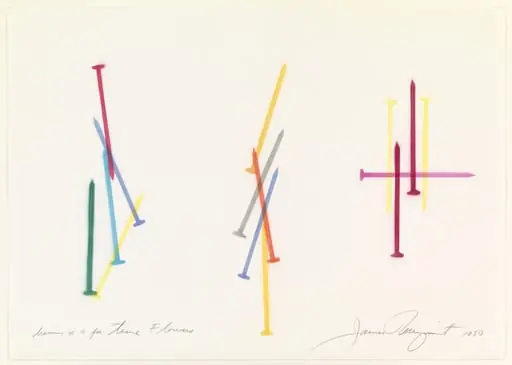
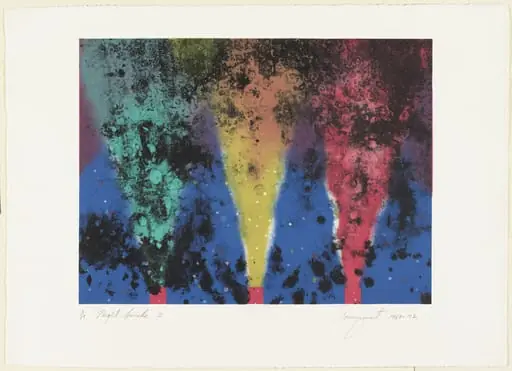
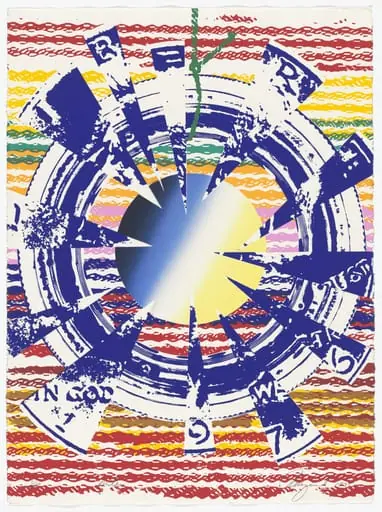
Untitled is an ink print by James Rosenquist. It dates from 1967 and is held in the collection of the Museum of Modern Art.
About this work
Overview
As a former commercial sign painter, Rosenquist translated advertising techniques into fine art, using printmaking to isolate and magnify ordinary objects.
Created in 1967, this lithograph by James Rosenquist is part of his exploration of visual language drawn from mass media and consumer environments. As a former commercial sign painter, Rosenquist translated advertising techniques into fine art, using printmaking to isolate and magnify ordinary objects. The work avoids narrative clarity, instead inviting attention to form, color, and scale as carriers of cultural meaning.
Subject & Meaning
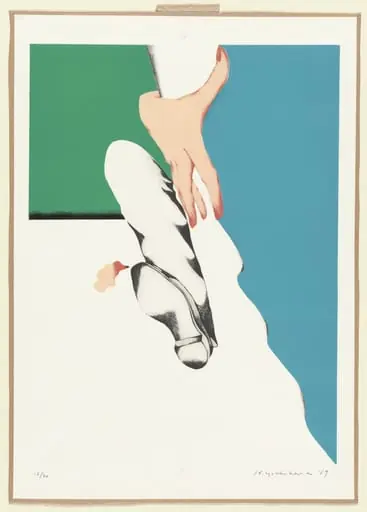
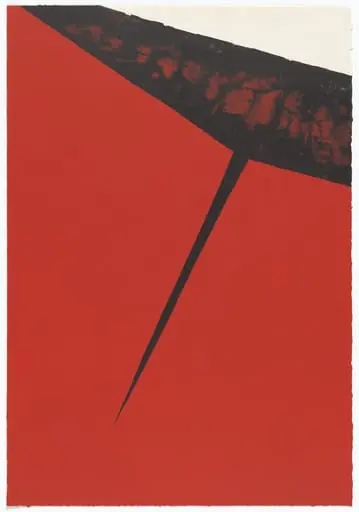
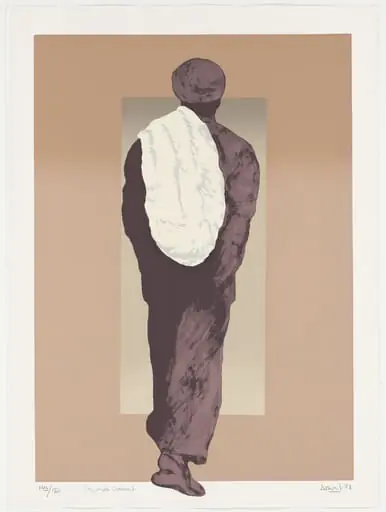
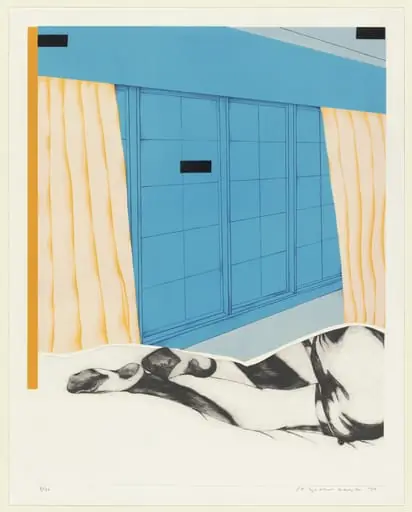
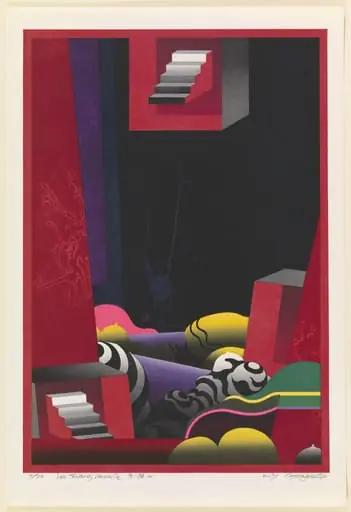
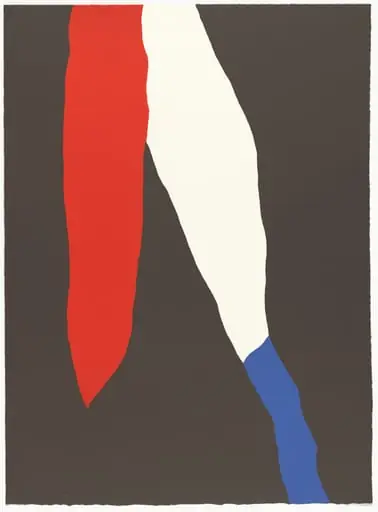
The image focuses on a single black shoe, partially filled with a folded blue sock and pant leg. The fragmentary composition suggests a moment of abandonment or use, stripped of context. By isolating this mundane detail, Rosenquist elevates it to a subject worthy of contemplation, questioning how everyday items acquire symbolic weight in a society saturated with commercial imagery.
Technique & Style
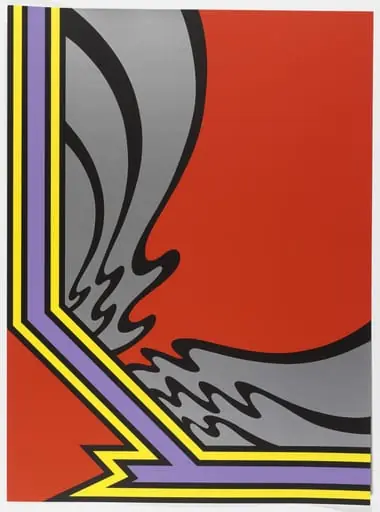
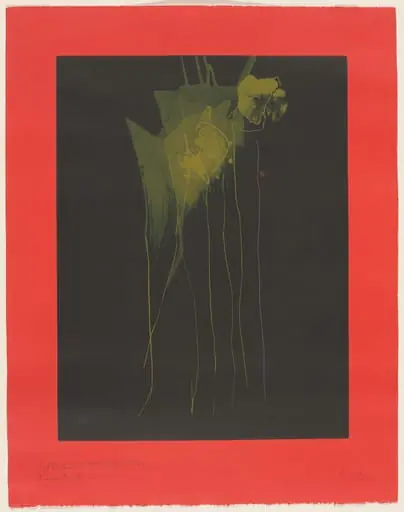
Executed in lithography, the print employs bold, flat areas of red, yellow, and blue with sharp, graphic edges. Shadows and crumpled fabric are rendered with precision, mimicking the clarity of commercial signage. The colors, though contrasting, are arranged to create visual equilibrium. The technique allows for crisp detail while retaining the tactile quality of folded textiles, bridging industrial reproduction and handcrafted observation.
History & Provenance
This lithograph was produced during a period when Rosenquist was deeply engaged with printmaking as a medium for expanding his pop art vocabulary. It was made in collaboration with a professional print studio, consistent with his practice of working with skilled artisans to realize complex images. The work entered public collections in the late 1960s and has since been included in major surveys of American printmaking and pop art.
Context
Emerging alongside Warhol and Lichtenstein, Rosenquist’s approach diverged by emphasizing fragmentation and scale over repetition or irony. His imagery, drawn from billboards and magazine spreads, avoided direct satire. Instead, he presented consumer objects as visual fragments—detached, luminous, and quietly unsettling—reflecting the disorienting pace of postwar American visual culture.
Legacy
The work exemplifies Rosenquist’s influence on how everyday objects are reimagined in contemporary art. His use of lithography to render commercial aesthetics with emotional restraint paved the way for later artists exploring the intersection of mass production and personal experience. The piece remains a quiet but persistent commentary on the persistence of the mundane in a world designed for spectacle.
Artist & collection
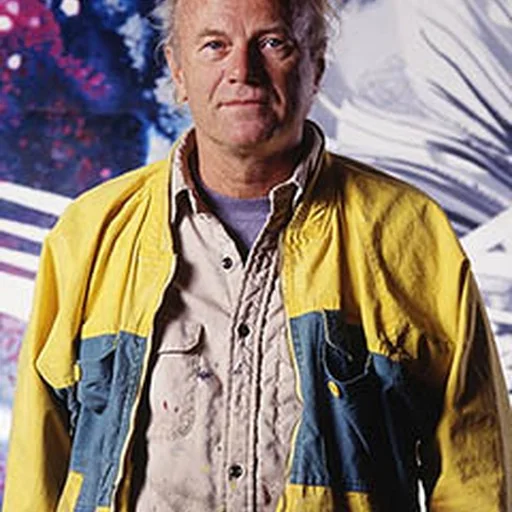
Artist
James Albert Rosenquist (November 29, 1933 – March 31, 2017) was an American artist and one of the proponents of the pop art movement.