Artwork
Coast Scene
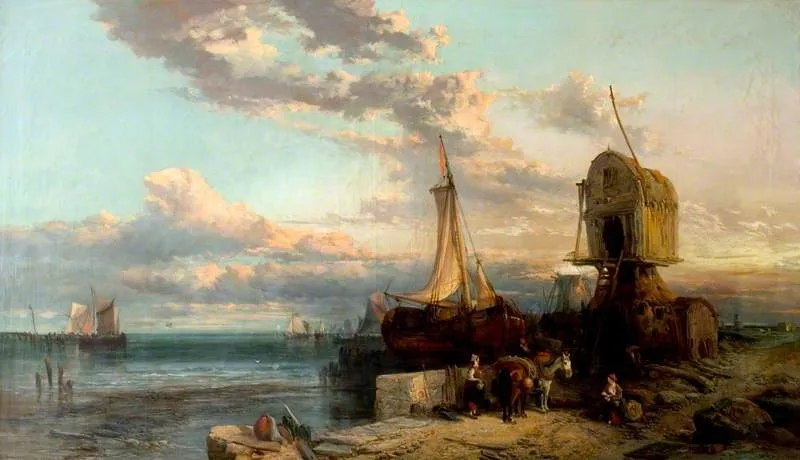
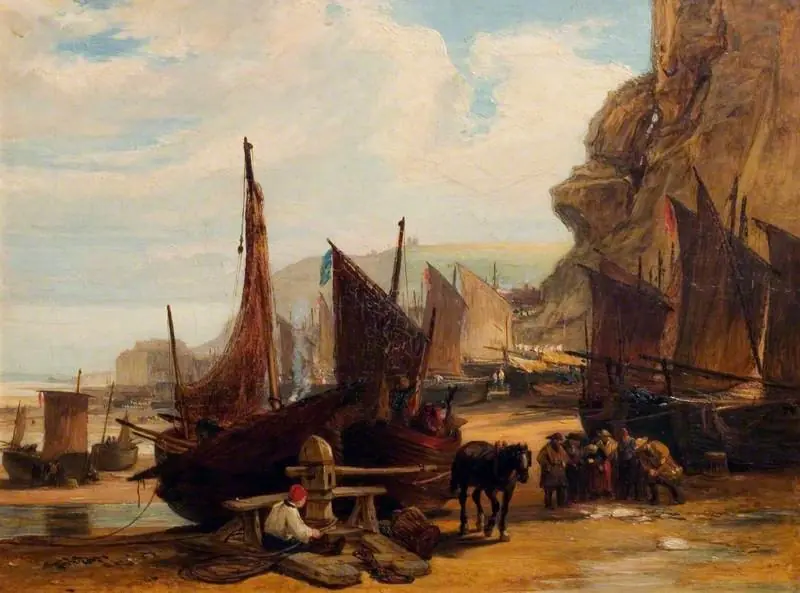
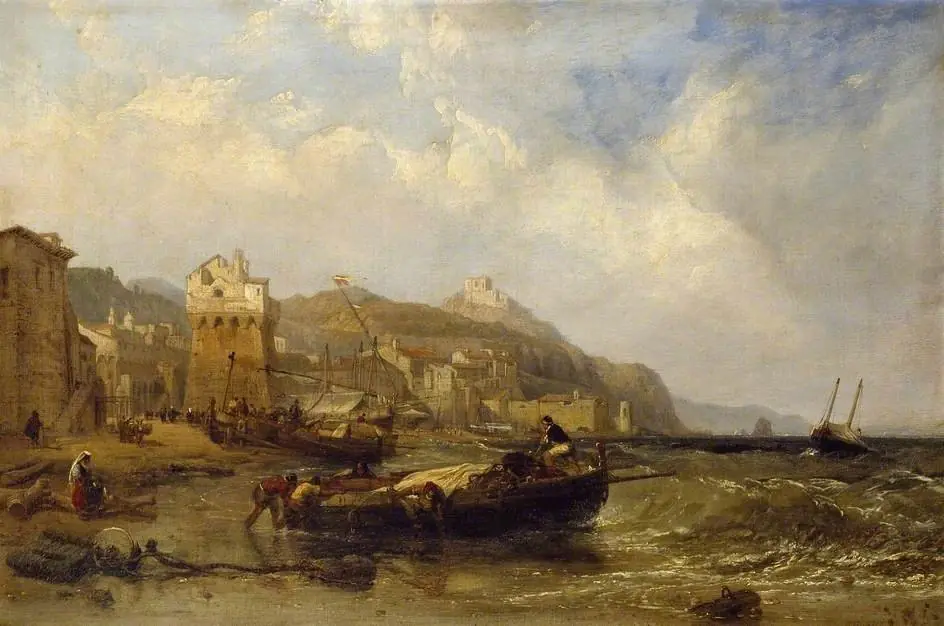
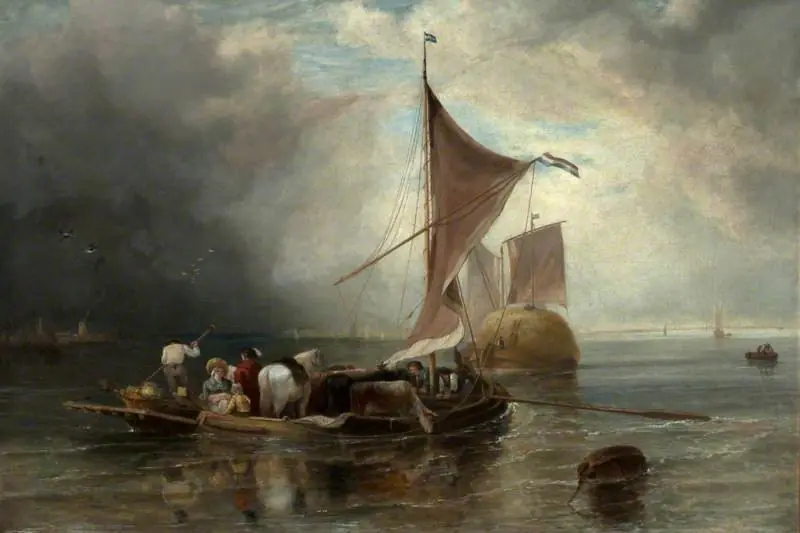
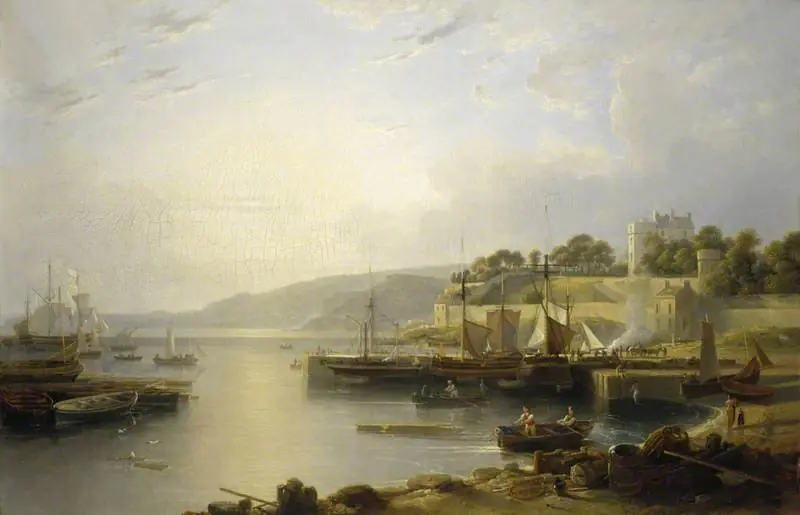
Coast Scene is an oil painting by James Webb. It dates from 1863 and is held in the collection of the Victoria and Albert Museum.
About this work
Overview
The composition centers on a windmill by the shore, its sails motionless, surrounded by a small group of figures and animals.
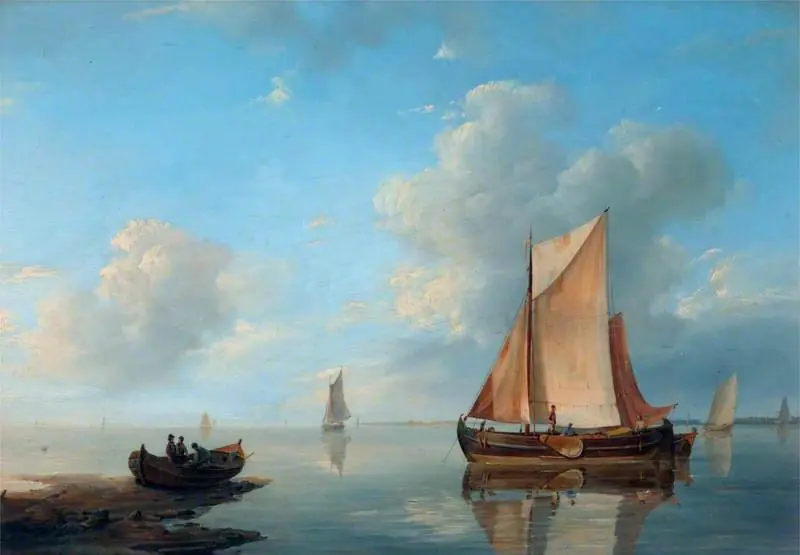
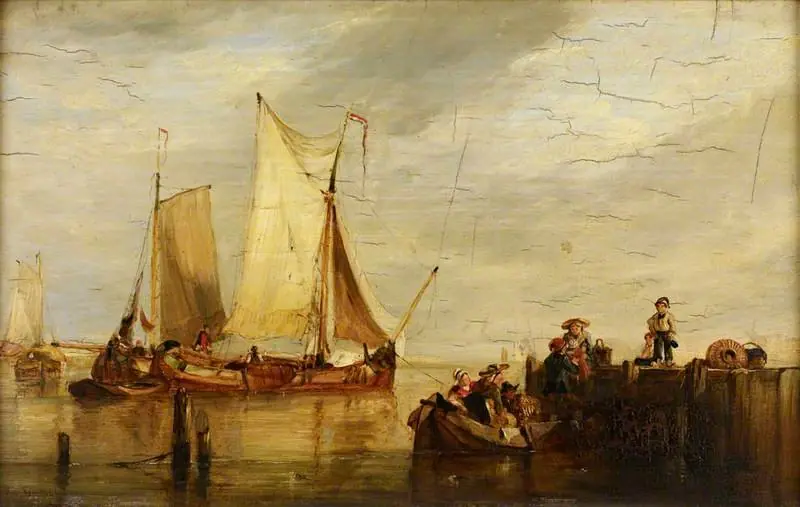
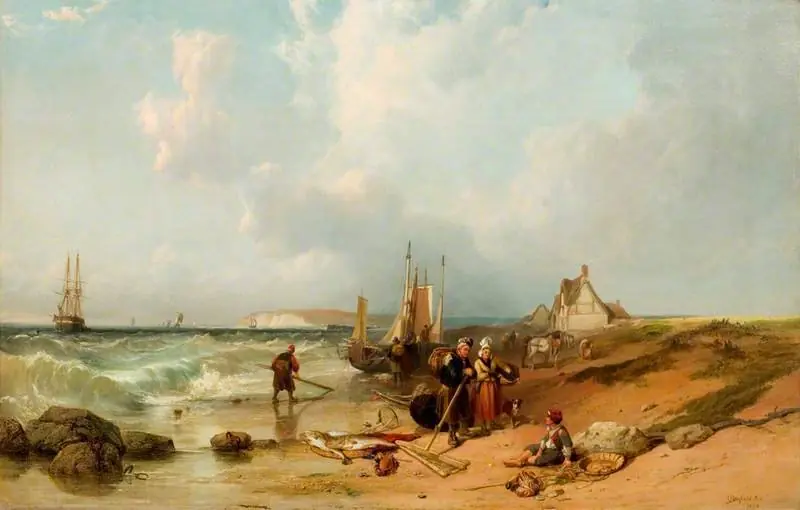
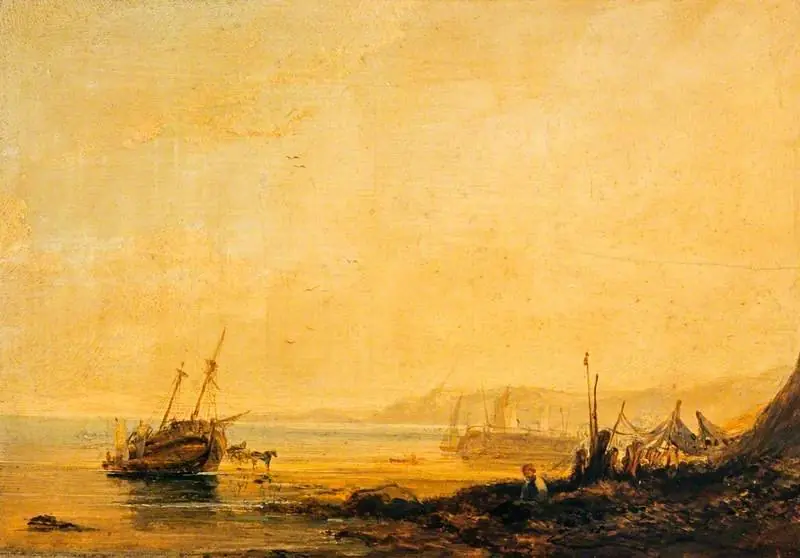
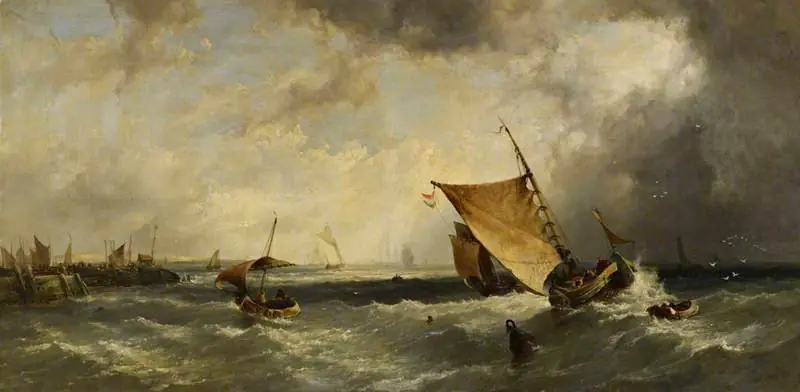
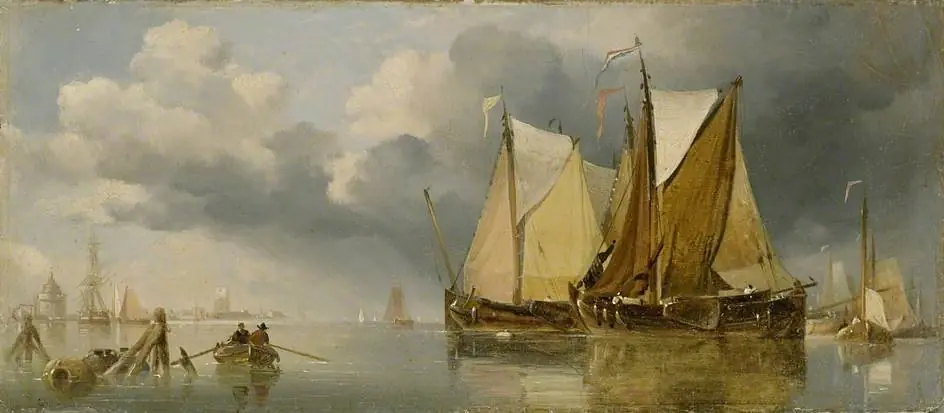
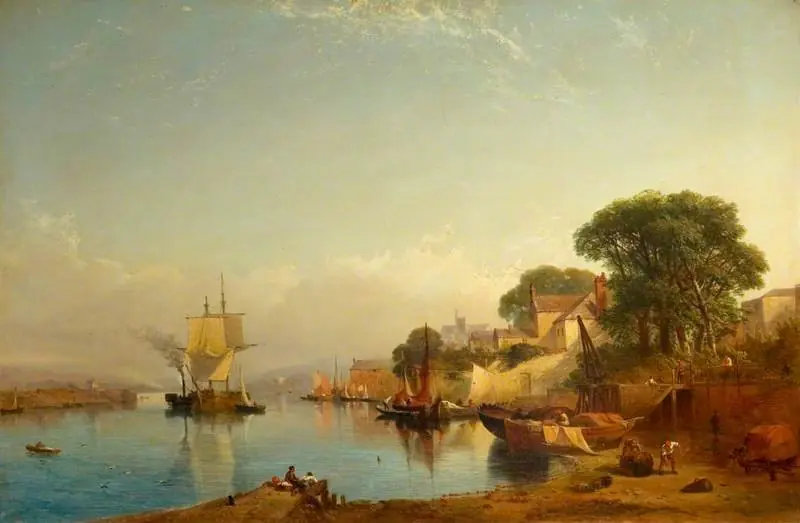
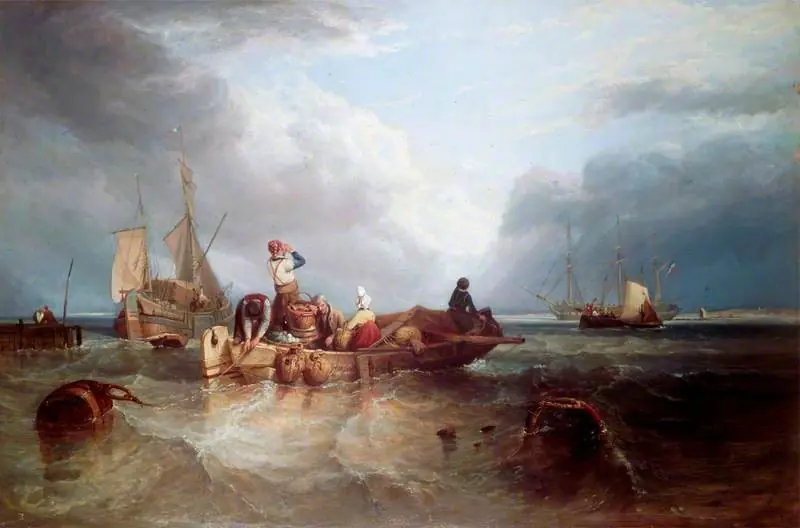
Coast Scene is an 1863 oil painting by James Webb, currently in the collection of the Victoria and Albert Museum. It presents a quiet coastal landscape, emphasizing stillness and subtle human presence. The composition centers on a windmill by the shore, its sails motionless, surrounded by a small group of figures and animals. The sea and sky form a calm backdrop, rendered with delicate tonal shifts that suggest time and weather without drama.
Subject & Meaning
The scene captures an uneventful moment along the coast, where daily life unfolds without urgency. A woman and child, accompanied by a horse and donkey, gather near the base of a windmill—likely a working structure now at rest. The presence of distant vessels hints at maritime activity, yet the focus remains on quietude. The painting suggests a rhythm of labor and pause, rooted in coastal existence rather than narrative spectacle.
Technique & Style
Webb employs soft, layered brushwork to convey atmospheric depth, particularly in the sky and water. Light falls gently across the windmill’s stonework and the weathered timber of the boats, revealing texture without overt detail. Shadows are muted, contributing to a hushed, diffused luminosity. The palette remains restrained, favoring earth tones and pale blues, reinforcing the scene’s tranquility and observational realism.
History & Provenance
Painted in 1863, the work entered the Victoria and Albert Museum’s collection through established acquisition channels of the period. Webb, known for coastal and rural subjects, produced this during a phase of heightened interest in everyday English landscapes. No record of prior ownership or exhibition history is widely documented, suggesting it was likely acquired directly from the artist or a contemporary dealer.
Context
In mid-19th century Britain, landscape painting increasingly turned to unidealized, local scenes over grand historical or romantic vistas. Webb’s work aligns with this shift, reflecting a broader cultural appreciation for quiet, familiar environments. The windmill, a common feature of coastal engineering, symbolizes utility rather than nostalgia, grounding the image in the practical rhythms of coastal communities.
Legacy
Though not widely exhibited today, Coast Scene remains a representative example of Webb’s commitment to understated realism. It contributes to a body of work that documented ordinary British coastal life during a period of industrial change. Its preservation in a major museum underscores its value as a quiet record of place and routine, rather than a dramatic statement.
Artist & collection
Artist
This 19th-century painter left behind quiet coastal scenes in oil. In 1863 they set brush to canvas for “Coast Scene,” showing waves, sand, and maybe a boat or two under an unhurried sky. The work is calm, direct, and…