Artwork
A Hermit Praying in a Ruin
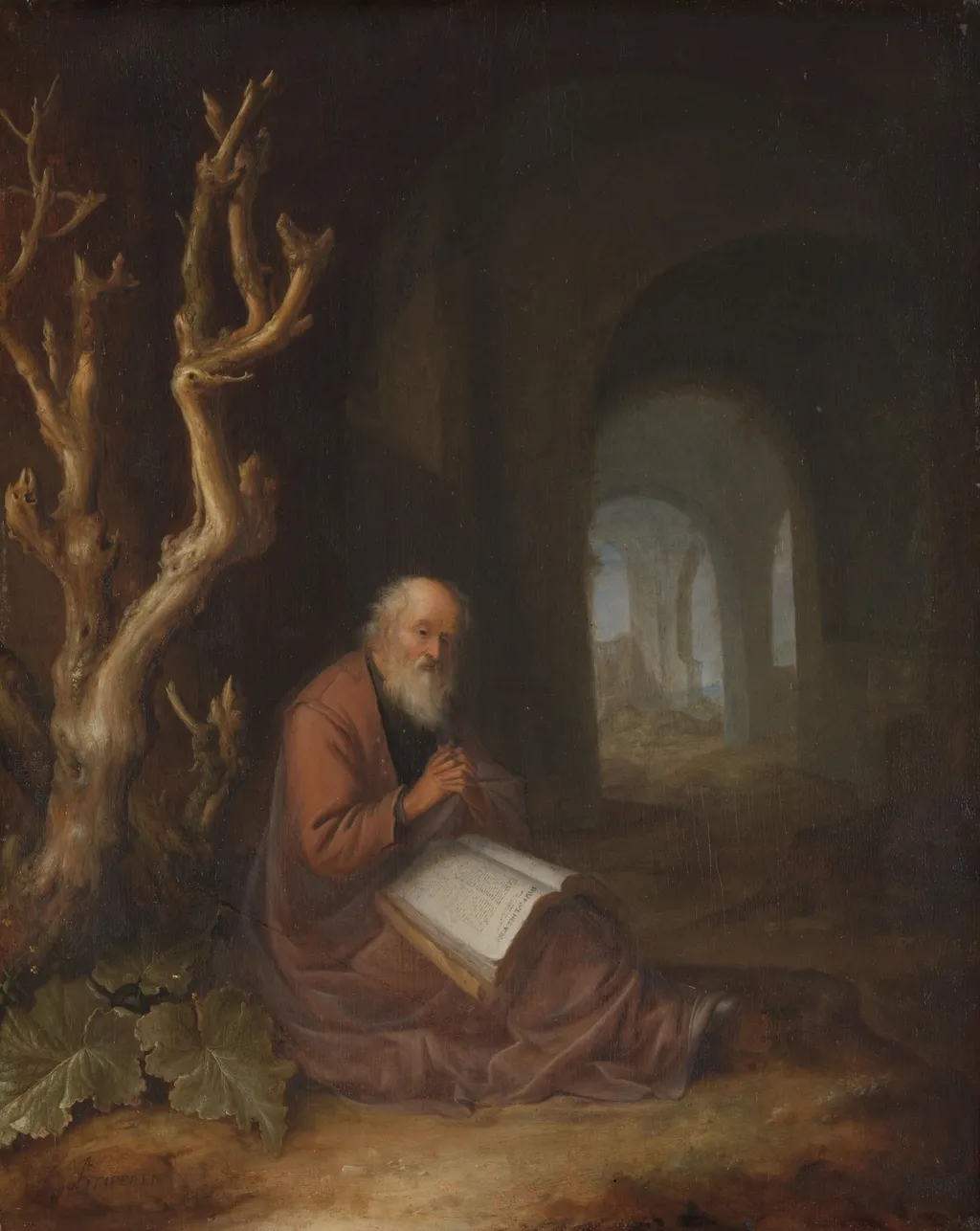
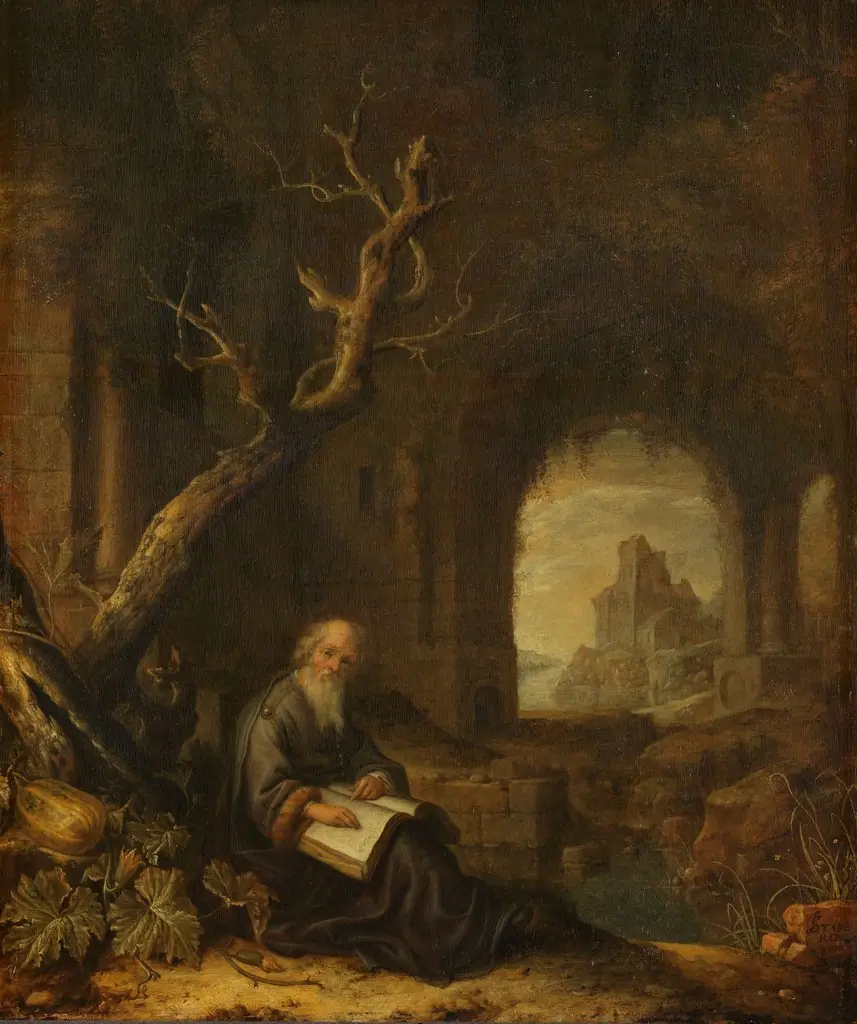
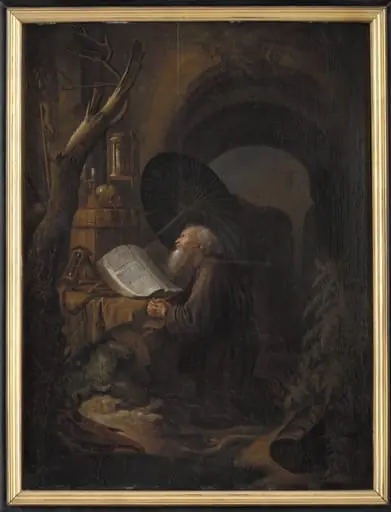
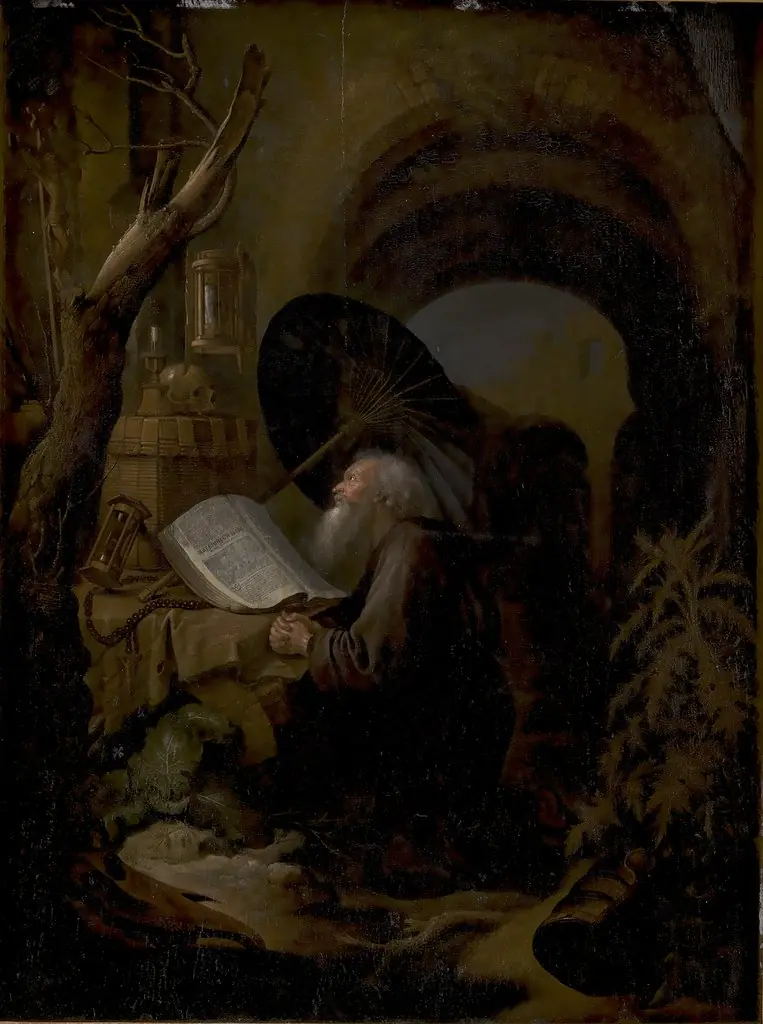
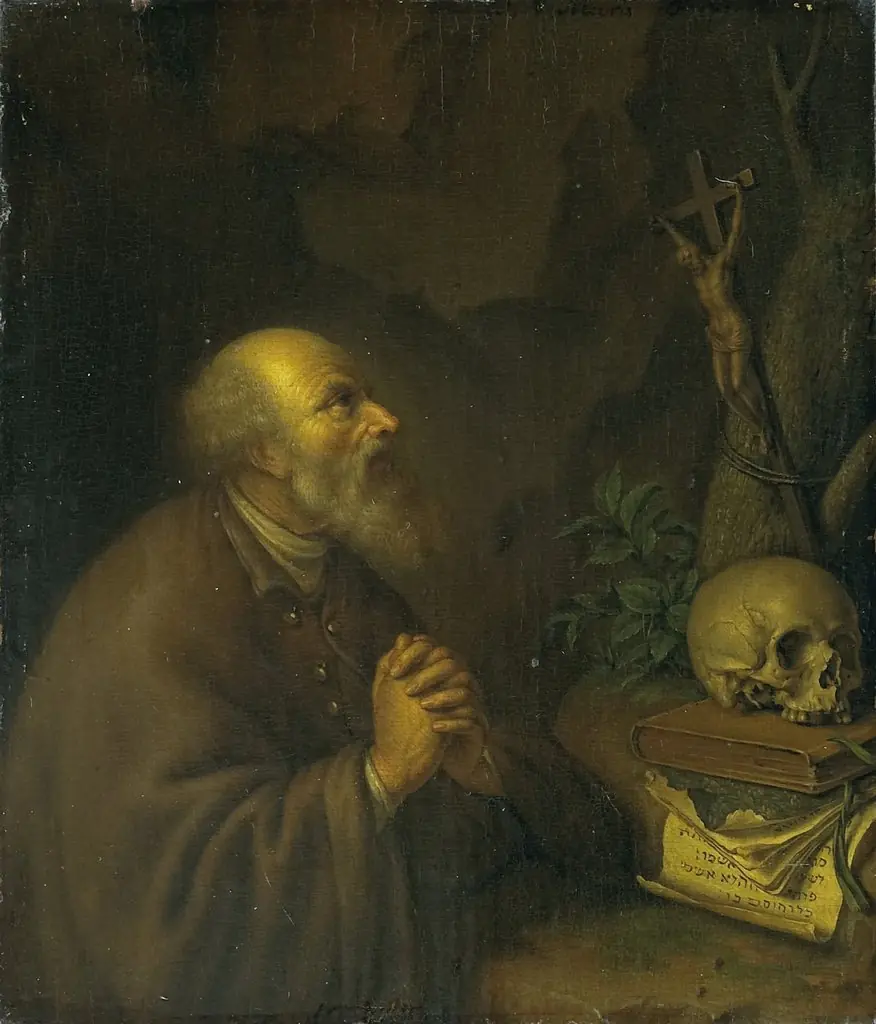
A Hermit Praying in a Ruin is an unspecified painting by the Dutch Golden Age artist Jan Adriaensz. van Staveren. It dates from 1659 and is held in the collection of the Rijksmuseum. This anonymous 17th-century painting depicts a solitary hermit in a state of prayer within the remnants of ancient architecture.
About this work
Overview
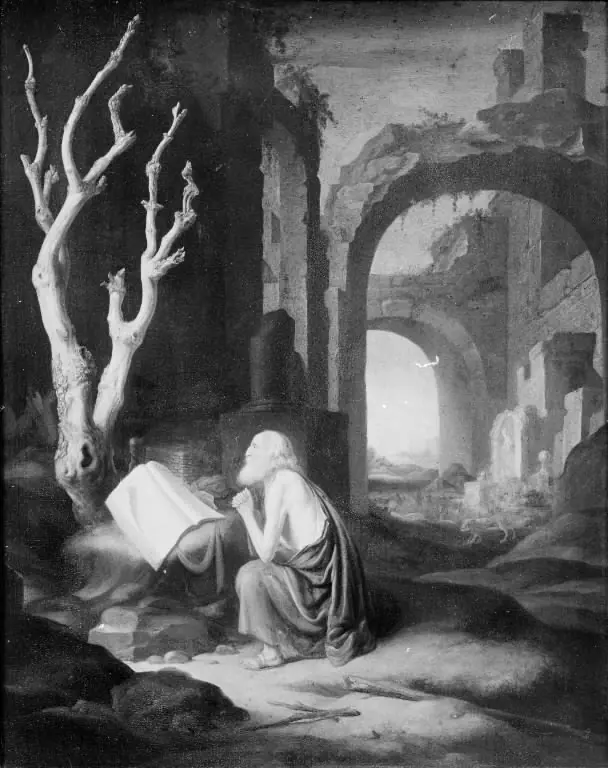
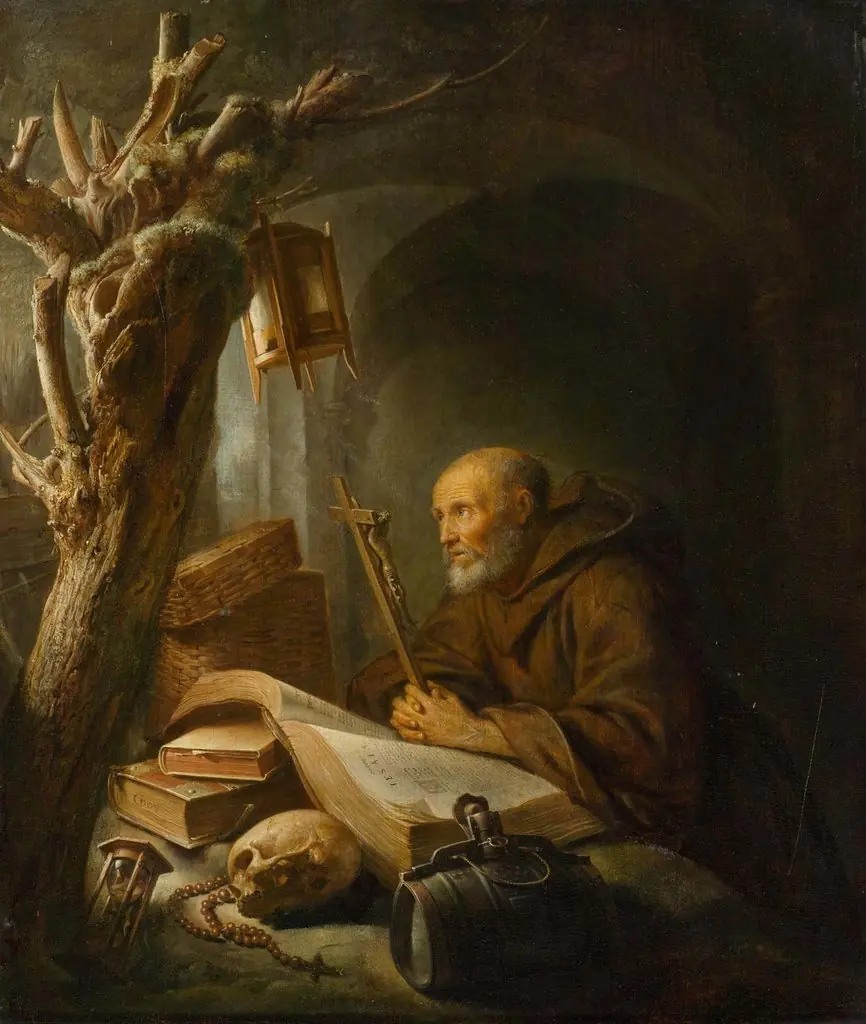
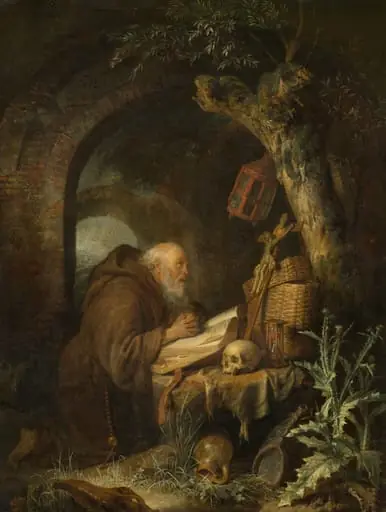
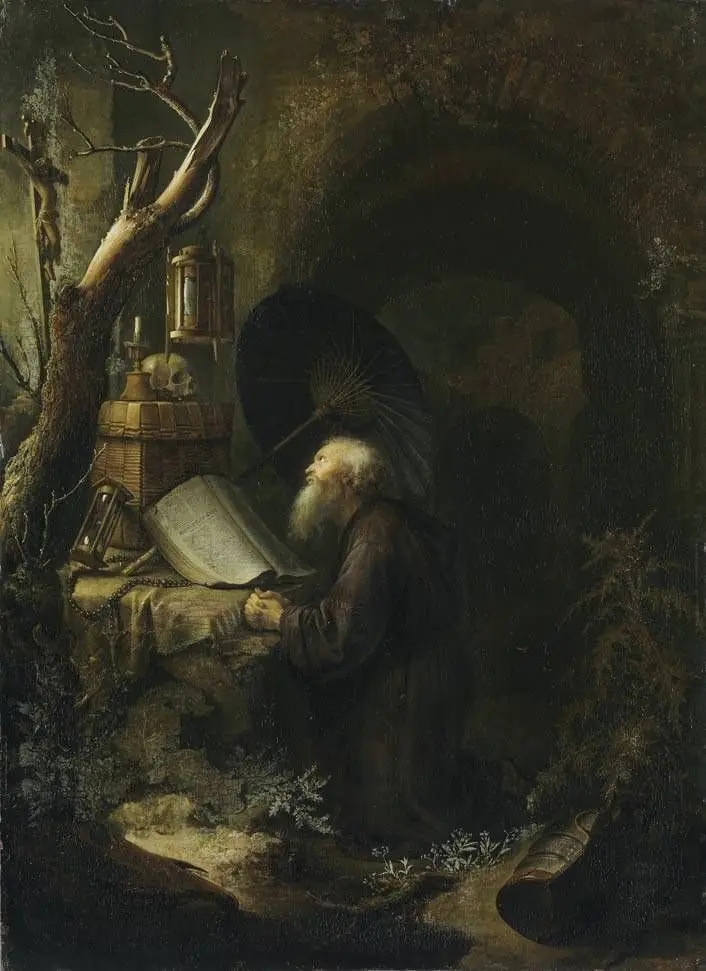
This anonymous 17th-century painting depicts a solitary hermit in a state of prayer within the remnants of ancient architecture. The figure is rendered with quiet precision, seated on the ground with a book resting on his lap and hands folded in devotion. The surrounding ruin and barren tree are rendered in deep shadow, emphasizing the figure’s stillness and the intensity of his focus.
Subject & Meaning
The hermit represents a life of contemplative faith, withdrawn from the world and immersed in spiritual practice. The presence of the book suggests scriptural study, while the decaying architecture and dead tree imply the passage of time and the endurance of belief amid ruin. The scene avoids narrative drama, instead conveying inner resolve through silence and solitude.
Technique & Style
The artist employs strong chiaroscuro to isolate the hermit’s face and open book from the surrounding darkness. Light falls selectively, drawing attention to the textures of skin and parchment while leaving the ruins in near obscurity. Brushwork is restrained, favoring atmospheric depth over detail, creating a sense of intimacy and reverence through contrast rather than ornament.
History & Provenance
Its attribution to a specific school or region is uncertain, though its style aligns with Dutch and Flemish devotional works of the late 1600s.
The painting’s origin remains undocumented; no signature, record of commission, or documented ownership before the 19th century survives. Its attribution to a specific school or region is uncertain, though its style aligns with Dutch and Flemish devotional works of the late 1600s. It entered the Rijksmuseum’s collection in the 1800s, where it has since been studied as an example of quiet religious imagery.
Context
In the Dutch Golden Age, religious subjects were often depicted with restraint, reflecting Calvinist values that favored humility over spectacle. Hermit imagery, though less common than biblical scenes, resonated with ideals of personal piety and withdrawal from worldly vanity. This painting fits within a broader tradition of introspective, minimalist devotional art produced outside official church patronage.
Legacy
Though unsigned and unattributed, the painting endures as a quiet testament to the power of understated spiritual expression. Its influence lies in its emotional clarity and compositional discipline, inspiring later artists to explore solitude and light as vehicles for inner life. It remains a touchstone in museum collections for its unadorned sincerity.
Own this work as a print
Artist & collection
Artist
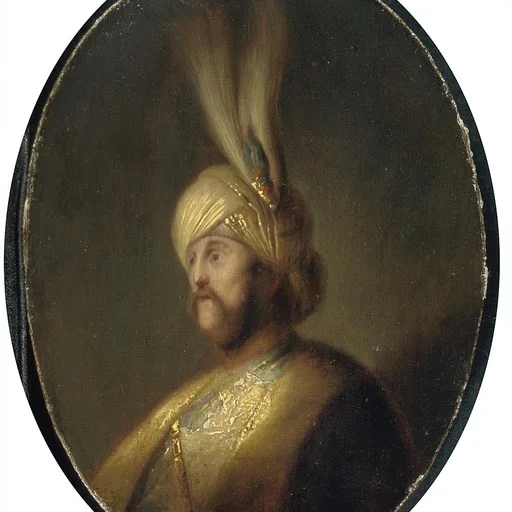
Jan Adriaensz. van Staveren (1614 in Leiden – 1669 in Leiden), was a Dutch Golden Age painter of the Leiden school of fijnschilders. According to the RKD he was fourteen when he entered his name in 1628 in the Leiden…